
8 Best Dash Cameras for Motorcycles That Actually Survive the Road
 Jake Miller
11 min read
Jake Miller
11 min read
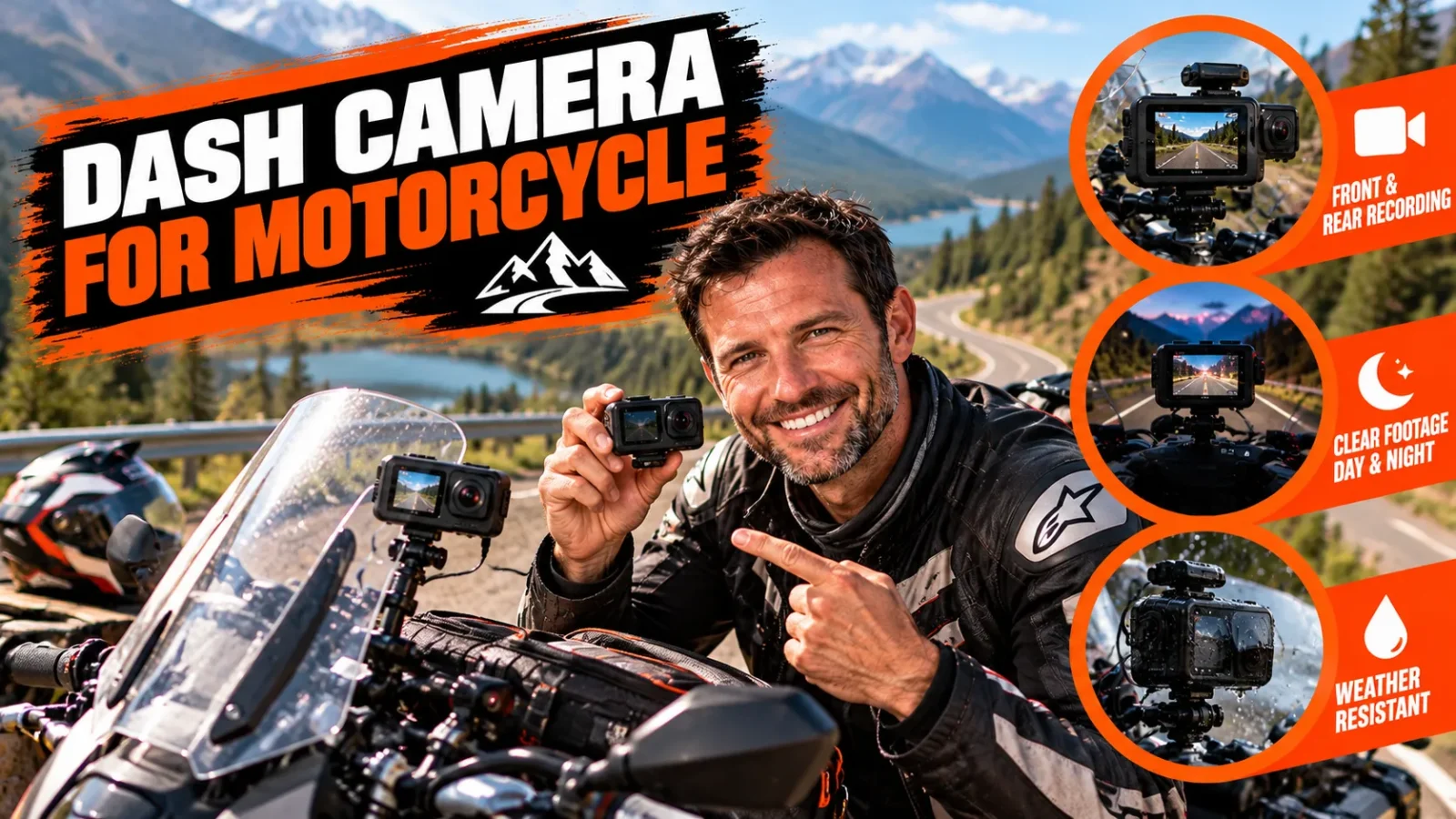
I’ve dropped my bike, been cut off by distracted drivers, and had more than one “he said, she said” moment at an intersection. That’s exactly why I never ride without a dash camera anymore. It’s cheap insurance for a hobby that carries real risk.
Over the past couple of years, I’ve mounted, wired, and abused a whole stack of motorcycle dash cameras in rain, dust, and highway heat. Some held up beautifully. Others fogged up, glitched out, or just died after a few months of vibration. I’m sharing the ones that actually earned a permanent spot on my bikes.
- My overall favorite is the Innovv K5 for its crisp 4K front footage and rock-solid build quality.
- If you want dual-camera protection without spending a fortune, the Techalogic QM-2 HD and Innovv K3 are excellent value picks.
- Waterproofing and vibration resistance matter more on a bike than on a car, so I only recommend systems rated IP67 or higher.
- A hardwired dash cam and a helmet-mounted action camera aren’t mutually exclusive; I actually run both on my touring bike.
- GPS-enabled models like the SYKIK Rider SR700 add speed and location data that can be a lifesaver in an insurance dispute.
1. Innovv K5 — Best Overall Motorcycle Dash Camera
The Innovv K5 is the camera I’d tell any serious rider to buy first. It shoots true 4K at 30fps from the front camera and 1080p from the rear, which is a massive step up in clarity from older motorcycle systems I’ve tested.
What sold me on the K5 is how well it handles low light. Riding home at dusk used to mean grainy, useless footage on my old setup. With the K5’s larger Sony sensor, headlights and license plates stay readable even after sunset.
Build Quality and Installation
Both camera housings are IP68-rated, and I’ve had mine through genuine downpours without a hint of moisture inside. The mounting brackets are aluminum rather than the flimsy plastic I’ve seen on cheaper units, which matters once highway vibration starts working on the screws.
Installation isn’t a five-minute job. You’re routing cables through fairings and wiring into your battery or ignition line, so budget an afternoon or pay a shop to do it. At around $500, the Innovv K5 isn’t cheap, but I consider it a one-time investment rather than a recurring expense.
2. Innovv K3 — Best Value Dual-Channel System
Before the K5 came along, the Innovv K3 was my go-to recommendation, and it’s still a fantastic buy if you don’t need 4K. It records at 1296p front and rear, which is more than sharp enough to read plates in daylight and most nighttime scenarios.
I ran a K3 on my daily commuter for over a year, through summer heat and salted winter roads, and it never skipped a beat. The GPS logger add-on (sold separately) tracks your speed, route, and lean angle if you want that extra layer of data.
Why It’s Still Worth Buying
At roughly $300 for the full kit, the Innovv K3 undercuts the K5 significantly while keeping the same waterproof housings and reliable wiring harness. If your budget caps out around three hundred bucks, this is honestly the smarter buy over cheaper no-name brands.
3. VSYS Moto M6C — Best Waterproof Build Quality
I’ll be honest, I was skeptical of the VSYS Moto M6C at first because it’s less well-known than Innovv. But after a wet, miserable ride through a mountain storm, I came away impressed with how sealed this thing is.
The M6C uses a Sony STARVIS sensor in both the front and rear cameras, recording at 1080p with genuinely solid night performance. It also runs on a supercapacitor instead of a lithium battery, which means it survives extreme heat under your fairing far better than battery-based competitors.
Standout Features
Loop recording, parking mode, and a discreet control box that tucks under the seat make this a clean, professional-feeling install. Pricing usually lands around $280, making it a strong middle-ground option between the Innovv K3 and pricier 4K systems.
4. Viofo MT1 — Best for Simple Installation
If wiring intimidates you, the Viofo MT1 is the easiest dual-channel motorcycle camera I’ve personally installed. Viofo built its reputation on car dash cams, and that plug-and-play mentality carries over nicely here.
The MT1 records 1080p from both cameras with a wide 130-degree field of view up front, which does a great job of capturing side-swipes and merging traffic, not just what’s directly ahead of you.
Real-World Performance
I appreciated the compact camera housings, which are noticeably smaller than the Innovv units and easier to tuck behind a windscreen or fairing without looking bulky. At around $260, it’s a great pick for riders who want reliable footage without a complicated setup.
5. Techalogic QM-2 HD — Best Budget Dual Camera
The Techalogic QM-2 HD is where I point friends who want dash cam protection but aren’t ready to spend three or four hundred dollars. It’s consistently one of the most affordable dual-channel systems that doesn’t feel like a toy.
Both the front and rear cameras record at 1080p, and the footage quality in daylight genuinely surprised me given the roughly $200 price tag. Night footage is decent, though not quite in the same league as the Innovv or VSYS sensors.
Where It Falls Short
The waterproofing is good but not quite as bombproof as pricier options, so I wouldn’t recommend it if you ride through heavy rain constantly. For fair-weather commuters and weekend riders, though, the Techalogic QM-2 HD punches well above its price.
6. BlueSkySea DV688 — Best for Long-Distance Touring
Touring riders rack up serious mileage, and the BlueSkySea DV688 was built with exactly that in mind. It offers a generous 140-degree wide-angle lens up front and a 2.7-inch display for quick playback at gas stops.
I like that BlueSkySea includes a hardwire kit with a proper fuse tap and voltage-cutoff protection, which prevents the camera from draining your battery overnight if you forget to unplug it. That’s a small detail that saved me from a dead battery more than once with a different brand.
Storage and Footage Management
The DV688 supports up to 128GB of loop recording storage, giving you plenty of buffer on multi-day trips before old footage starts overwriting itself. Priced around $220, it’s a smart pick for adventure and touring riders who log serious highway hours.
7. SYKIK Rider SR700 — Best for GPS and Data Logging
The SYKIK Rider SR700 stands out because it’s built by a company that focuses specifically on motorcycle telemetry, not just cameras. Alongside 1080p front and rear recording, it logs your speed, GPS coordinates, and route directly onto the footage overlay.
That data has actually helped a friend of mine dispute a speeding citation, since the timestamped GPS overlay proved his actual speed at the moment in question. It’s a feature I didn’t think I needed until I saw it work in real life.
Fit and Finish
The housings feel a bit more utilitarian than the Innovv or VSYS units, but functionally it’s held up fine on my test bike through a full riding season. Expect to pay around $270 for the complete SR700 system.
8. Insta360 X4 — Best Action-Cam Alternative for Riders Who Want Flexibility
Not everyone wants a permanently wired system, and that’s where the Insta360 X4 comes in. It’s technically an action camera rather than a dedicated dash cam, but its 360-degree 8K capture means you get front and rear coverage from a single unit mounted on your handlebars or helmet.
I keep one of these in my tank bag for trips where I don’t want to commit to a hardwired install, like a rental bike or a borrowed cruiser. The reframing software lets you pull a “front view” or “rear view” clip after the fact from the same 360-degree file.
How It Compares to Dedicated Dash Cams
Battery life is the tradeoff here, topping out around 45-100 minutes depending on settings, so it’s not a true set-it-and-forget-it solution like the Innovv or VSYS systems. If you’re curious about this route, I’ve gone much deeper into the options in my guide to the best action camera for motorcycle helmets.
How I Actually Chose These Cameras
I didn’t just skim spec sheets for this list. I judged each camera on things that matter once you’re actually riding, not sitting in a showroom.
Weatherproofing Above Everything
A dash cam on a bike lives outside, exposed to rain, road spray, and direct sun. Any unit rated below IP66 got cut from my shortlist immediately, because I’ve personally had a cheaper camera fog up and die after one wet commute.
Vibration and Heat Tolerance
Motorcycles shake a lot more than cars, and engine heat under a fairing can cook a lithium battery. I favored cameras using supercapacitors or heat-resistant components, since I’ve watched battery-powered units swell and fail in summer heat.
Footage Clarity Where It Counts
License plates and helmet details matter far more than fancy specs on a box. I always test footage at highway speed and in low light, since that’s when most real incidents seem to happen.
Dash Cam vs. Helmet Camera: Which One Do You Actually Need?
This comes up constantly, so let me settle it plainly: they solve different problems. A hardwired dash cam runs continuously and captures both front and rear angles without you having to remember to hit record.
A helmet or handlebar action camera, on the other hand, gives you better POV footage for content and a more dramatic angle of your own riding. If you’re weighing your options there, I’d point you toward my breakdowns of the best GoPro camera for motorcycle helmet setups and the right GoPro mounts for motorcycle helmets to pair with them.
Personally, I run a hardwired system like the Innovv K5 for legal protection and a helmet cam for the footage I actually want to share. They complement each other rather than compete.
A Quick Note on Mounting
Whichever route you choose, mount quality matters just as much as the camera itself. A loose mount vibrating at 70 mph will ruin your footage regardless of resolution, so I always recommend checking out proper GoPro adhesive mount setup for motorcycle helmets if you’re going the action-cam route alongside your dash cam.
My Final Take
If you only take one thing from this list, let it be this: don’t ride without some form of camera coverage anymore. Insurance claims, road rage incidents, and close calls happen fast, and footage settles disputes that would otherwise come down to your word against someone else’s.
My personal pick remains the Innovv K5 for anyone who wants the sharpest footage and sturdiest build. But if budget is tight, the Techalogic QM-2 HD or Innovv K3 will still have your back without draining your wallet.
Whatever you choose, get it installed properly, test it before a long trip, and check the footage occasionally to make sure it’s actually recording. I learned that lesson the hard way after a “dead” SD card left me without proof I really needed.
Frequently Asked Questions
Do I need a dash camera specifically made for motorcycles, or can I use a car dash cam?
You really do need a purpose-built motorcycle system. Car dash cams aren’t rated for constant vibration, engine heat, or direct rain exposure, and most lack the waterproof housings and low-profile mounts that a bike demands.
Where should I mount the rear camera on my motorcycle?
Most riders mount the rear unit under the tail light or on the rear fender facing backward, angled slightly upward to catch tailgaters. Just make sure the cable routing is secured away from the chain and exhaust.
Is a helmet-mounted action camera a good substitute for a dash cam system?
Action cameras like the ones covered in my best GoPro camera for motorcycle helmet guide are great for POV footage, but they have limited battery life and can’t run continuously like a hardwired dash cam. Many riders actually run both.
How much should I budget for a good motorcycle dash camera?
I’d budget somewhere between $150 and $500 depending on resolution and features. Sub-$150 units tend to have grainy night footage, while systems over $400 usually add GPS, radar detection, or 4K recording.

Related Articles

6 Best Rear View Cameras for Motorcycle: Riders Who Want Eyes in the Back of Their Head
I've tested the top rear view cameras for motorcycles so you don't have to. Here are my real-world picks for…
Jake Miller
12 min read

8 Best Cameras for Riding Motorcycle in 2026 (Rider-Tested Picks)
I've mounted, crashed, and rain-soaked dozens of cameras on my helmet and bike. Here are the 8 best cameras for…
Jake Miller
9 min read

9 Best Cameras for Motorcycle Travel: My Tested Picks for Long-Haul Rides
I've tested action cams, 360 cameras, and mirrorless bodies on thousands of touring miles. Here are the 9 best cameras…
Jake Miller
12 min read