
8 Best Tube Cameras for Motorcycle Helmets I’ve Actually Ridden With
 Jake Miller
10 min read
Jake Miller
10 min read
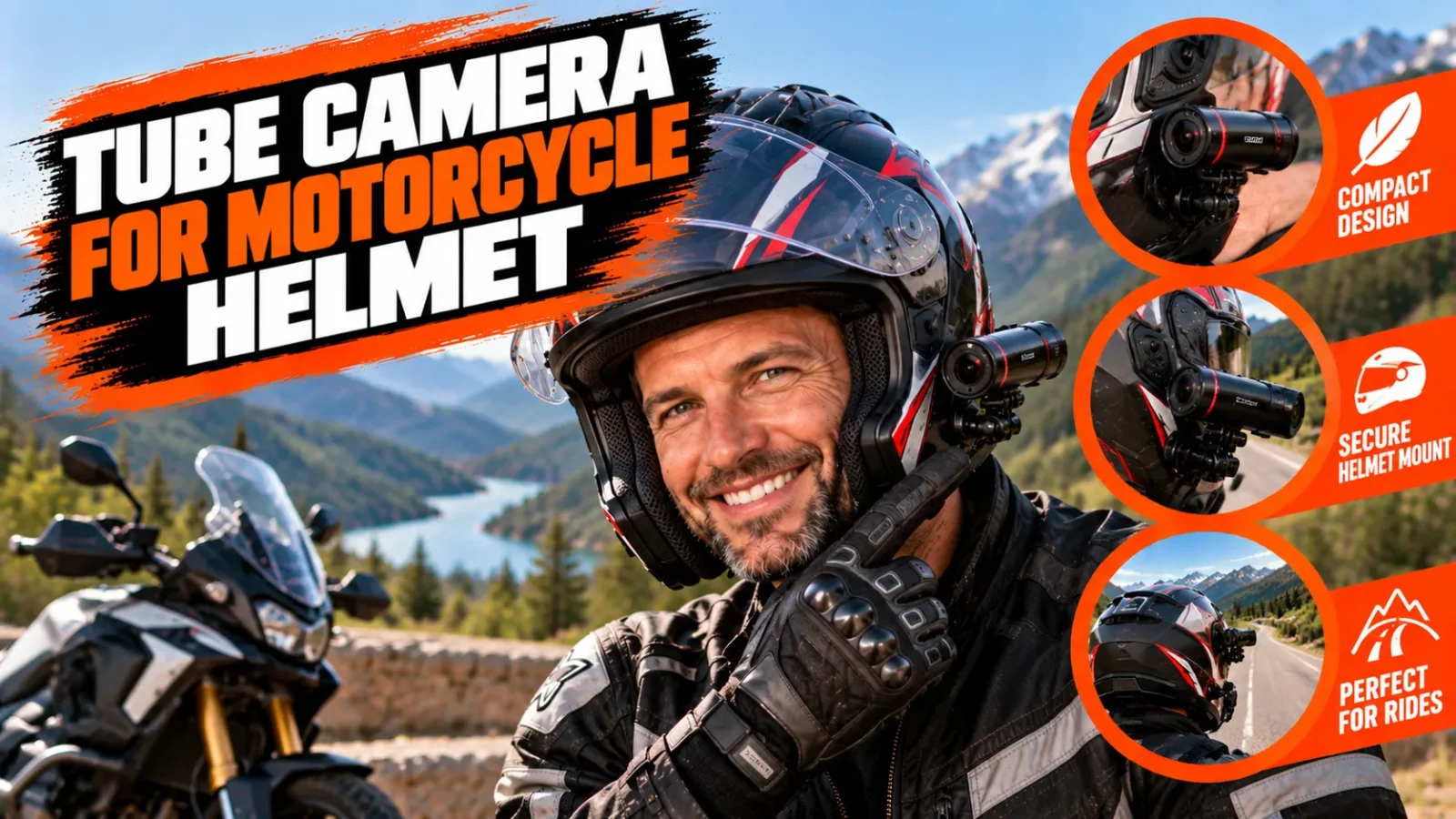
I’ve been strapping cameras to my helmet for well over a decade now, and if there’s one thing I’ve learned, it’s that not every action camera belongs on a motorcycle helmet. Boxy cameras catch wind, create noise, and stick out at bad angles. That’s where tube cameras come in — those long, cylindrical cameras that sit flush along the side of your helmet like they were built for two wheels.
I’ve mounted, crashed (accidentally), rain-soaked, and highway-blasted my way through most of the popular tube-style cameras on the market. In this guide, I’m sharing exactly which ones I’d actually recommend to a riding buddy, and which ones I’d skip.
- My overall top pick is the Drift Ghost 4K — it balances image quality, battery life, and aerodynamic shape better than anything else I’ve tested.
- If you’re on a budget, the Drift Stealth 2 and Midland XTC400 deliver solid footage without draining your wallet.
- Long-distance tourers should look at the Replay XD1080 Mini or Drift Ghost XL for all-day battery life.
- Tube cameras aren’t the only option — check out my breakdown of the best action camera for motorcycle helmets if you want a wider comparison.
- Mounting matters just as much as the camera itself, so I’ve linked my favorite mount and adhesive setups throughout this article.
1. Drift Ghost 4K — Best Overall Tube Camera for Motorcycle Helmets
The Drift Ghost 4K is the camera I recommend most often when someone asks me what to put on their helmet, and it’s the one currently living on my own lid. It shoots true 4K at 30fps, has a rotating lens barrel so you can angle it without moving the whole mount, and its cylindrical shape barely whistles at highway speeds.
What sold me on the Ghost 4K is the battery life — I’ve gotten close to 3 hours of continuous 1080p recording on a single charge, which covers most of my day rides without a top-up. It also has a removable battery, so I just carry a spare in my tank bag for longer trips.
Price sits around $250-$300 depending on the bundle, which isn’t cheap, but the build quality feels genuinely rugged. I’ve dropped mine on concrete twice with zero issues. If you want one tube camera to just handle everything, this is my pick.
2. Drift Stealth 2 — Best Budget-Friendly Tube Camera
Before the Ghost line existed, Drift’s Stealth 2 was already proving that tube cameras could be affordable without feeling cheap. You can still find it (often refurbished or through secondary sellers) for well under $150, which makes it a fantastic entry point.
It records 1080p at 60fps, which is honestly plenty for helmet footage of canyon runs or commutes. The rotating lens design carried over from this model into later Drift cameras, and it’s still one of my favorite features across the whole lineup.
Battery life is shorter than the Ghost 4K, topping out around 2 hours, but for shorter rides or track days, that’s rarely an issue. If you’re testing the waters with helmet cams for the first time, I’d start here.
3. Contour ROAM3 — Best Classic One-Button Tube Cam
The Contour ROAM3 is basically the camera that popularized the tube-style form factor for helmets back in the day, and I still see riders running one at track days. It’s a simple, no-frills camera with one big slider switch to start and stop recording — no menus to fumble through with gloves on.
It shoots 1080p at 30fps, which is dated compared to newer 4K options, but the footage is still crisp enough for YouTube uploads or insurance documentation. The waterproof-to-3-meters rating out of the box means I never worried about it in the rain.
You’ll typically find the ROAM3 in the $150-$200 range through third-party retailers since Contour scaled back operations. I still recommend it for riders who value simplicity over spec sheets.
4. Replay XD1080 Mini — Best for All-Day Touring
The Replay XD1080 Mini is the smallest true tube camera I’ve used, and it’s become my go-to for multi-day touring trips where every ounce of helmet weight matters. It’s barely bigger than a AA battery pack strapped together, yet it still records solid 1080p footage.
What I appreciate most is how unobtrusive it feels on the helmet. I genuinely forget it’s there after the first hour of riding, which is more than I can say for bulkier action cameras.
Battery life is modest at around 90 minutes, so I pair it with a USB power bank routed through my jacket for longer stretches. At roughly $200, it’s a niche pick, but for touring riders who prioritize low weight and low profile, it’s hard to beat.
5. Drift Ghost XL — Best Battery Life for Long-Distance Rides
If battery anxiety is your biggest complaint with helmet cameras, the Drift Ghost XL solves it. Drift stretched the tube body slightly to fit a bigger cell, and the result is up to 4.5 hours of continuous 1080p recording — genuinely the longest runtime I’ve gotten from any tube camera.
It shoots up to 1440p at a respectable frame rate, and it keeps the same rotating barrel design I love from the rest of the Drift lineup. The extra length is barely noticeable once it’s mounted.
Pricing usually lands around $200-$250. For riders doing long interstate hauls or multi-day rallies where charging stops are unpredictable, the Ghost XL’s battery life alone justifies the price.
6. Midland XTC400 — Best Value Bullet-Style Camera
Midland isn’t a brand every rider thinks of first, but the XTC400 has quietly been a reliable, affordable tube-style camera for years. It records 1080p at 30fps with a wide 135-degree field of view, and it typically retails for under $150.
I like that it comes with a genuinely useful mounting kit out of the box, including helmet-friendly curved adhesive bases, which saves you from buying extra accessories immediately. Build quality won’t rival Drift or GoPro, but for the price, it’s a legitimate contender.
It’s water-resistant without a separate housing, which is a nice touch for a budget camera. If you want a tube-style cam and don’t want to spend more than a tank of gas on it, the XTC400 is worth a look.
7. Cycliq Fly6 CE — Best Rear-Facing Tube Camera for Safety
The Cycliq Fly6 CE was originally built for cyclists, but I’ve seen more and more motorcyclists adopt it as a rear-facing tail-mounted camera, and it works surprisingly well for documenting close calls from behind. It’s a tube-shaped unit that combines a camera with a built-in taillight.
It records 1080p at 60fps and runs around 6 hours on a charge thanks to the combined light/camera power management. I mount mine on the tail section rather than the helmet, but riders using rear-facing helmet mounts have had good luck with it too.
At around $170, it’s less about cinematic footage and more about liability protection. If you’ve ever wished you had proof after a close pass, this is the camera I’d point you toward.
8. INNOVV K3 — Best Dual-Camera System with a Tube-Style Front Lens
The INNOVV K3 takes a different approach — it’s a front-and-rear dual-camera motorcycle system with a compact, bullet-shaped front lens that many riders mount near the helmet or windscreen rather than a single all-in-one tube unit. I’ve run this on my own bike for continuous front/rear recording, and it’s been a game changer for documenting traffic incidents.
It records 2K front and 1080p rear simultaneously, with loop recording and a hardwired power setup so you never worry about battery life on long rides. The system runs around $300-$350 installed, which is more than a standalone tube camera, but you’re getting two cameras and continuous power.
It’s not a true helmet-mounted tube camera, but I included it because riders searching for tube-style cameras often end up comparing it against helmet options, and it’s worth knowing it exists as an alternative approach.
How I Chose These Tube Cameras
I didn’t just pick these based on spec sheets. Every camera on this list has either lived on my own helmet or been borrowed from a riding buddy for a proper multi-week test. I weighted battery life, wind noise, mounting simplicity, and real-world footage quality heavily.
Aerodynamics and Wind Noise
This is the whole point of a tube camera. The cylindrical shape cuts through wind far more quietly than a boxy GoPro-style camera sitting flat against your helmet shell. I noticed the difference most on the Drift Ghost 4K and Ghost XL at highway speeds above 70 mph.
Battery Life vs. Weight Trade-Off
Smaller tube cameras like the Replay XD1080 Mini sacrifice battery life for a lighter, lower-profile feel. Bigger units like the Ghost XL go the opposite direction. Figure out which matters more for your typical ride length before you buy.
Mounting Setup Matters More Than You Think
A great camera on a bad mount is a recipe for lost footage — or a lost camera. I’ve had the best luck with curved adhesive bases designed specifically for helmet shells rather than generic flat mounts. If you’re weighing adhesive versus clip-on mounts, my guide on the best GoPro adhesive mount setup for motorcycle helmet covers the same hardware principles that apply to tube cameras too, since many brands use compatible mount bases.
If you’d rather go with a removable mounting system instead of permanent adhesive, I’d also point you toward my breakdown of the best GoPro mounts for motorcycle helmets, since quite a few tube cameras ship with or accept similar quick-release bases.
Tube Cameras vs. GoPro-Style Action Cameras
I get asked constantly whether a tube camera or a traditional square action camera is the better choice. Honestly, it comes down to your riding style. Tube cameras win on aerodynamics and simplicity, while GoPro-style units usually win on stabilization software and app integration.
If you want the full picture before deciding, I’d suggest reading my dedicated comparison on the best GoPro camera for motorcycle helmet. I go deep into stabilization, resolution, and mounting differences there that are worth weighing against everything I’ve covered in this list.
My Final Take
If I had to send one rider off with a single recommendation, it’s the Drift Ghost 4K. It hits the sweet spot of image quality, battery life, and that signature low-wind-noise tube shape that started this whole category.
But honestly, you can’t go too wrong with any camera on this list — I’ve used every single one of them on real rides, in real weather, and they’ve all earned their spot. Pick based on your riding style, budget, and how much battery life you actually need, and you’ll end up with footage you’re happy to look back on.
Frequently Asked Questions
What is a tube camera for a motorcycle helmet?
A tube camera is a cylindrical action camera, like the ones made by Drift, Contour, or Replay XD, designed to mount lengthwise along the side of a helmet. Their rounded shape reduces wind noise and drag compared to boxy cameras.
Are tube cameras better than GoPro-style cameras for helmets?
It depends on your priorities. Tube cameras are more aerodynamic and comfortable for long highway rides, while GoPro-style cameras usually offer better image stabilization and app ecosystems. I cover GoPro options in my best GoPro camera for motorcycle helmet guide if you want to compare both styles.
How do I mount a tube camera to my helmet safely?
Most tube cameras use a low-profile adhesive base or a rotating helmet mount that sits flush against the shell. I go into more detail on mounting hardware in my best GoPro mounts for motorcycle helmets article, since much of the hardware overlaps.
Do tube cameras work well in rain and cold weather?
The better tube cameras, like the Drift Ghost 4K and Replay XD1080 Mini, are weather-resistant out of the box and don’t need a separate housing, which helps in light rain and cold. I still recommend checking each model’s official IP rating before riding in a downpour.

Related Articles

6 Best Rear View Cameras for Motorcycle: Riders Who Want Eyes in the Back of Their Head
I've tested the top rear view cameras for motorcycles so you don't have to. Here are my real-world picks for…
Jake Miller
12 min read

8 Best Cameras for Riding Motorcycle in 2026 (Rider-Tested Picks)
I've mounted, crashed, and rain-soaked dozens of cameras on my helmet and bike. Here are the 8 best cameras for…
Jake Miller
9 min read

9 Best Cameras for Motorcycle Travel: My Tested Picks for Long-Haul Rides
I've tested action cams, 360 cameras, and mirrorless bodies on thousands of touring miles. Here are the 9 best cameras…
Jake Miller
12 min read