
Best Motorcycle Seat for Short Riders: How I Get Both Feet Down Without Giving Up Comfort
 Jake Miller
17 min read
Jake Miller
17 min read
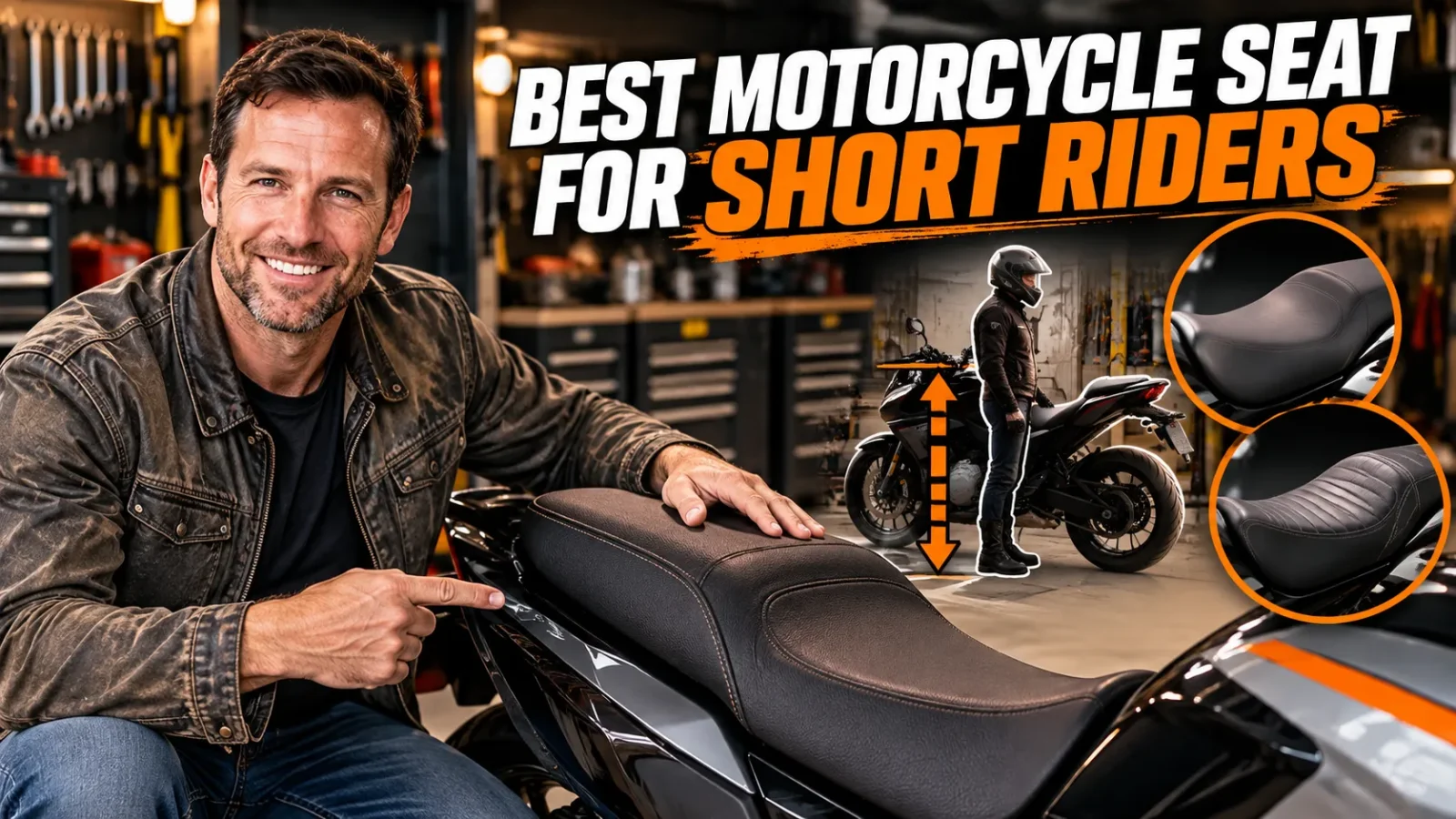
If you’ve ever tiptoed through a parking lot praying the bike doesn’t tip, this one is for you. A better seat can change how the whole motorcycle feels, and it’s not about being brave.
This post is part of my seat series, so if you want the full picture of foam, shape and fit first, start with my complete guide to choosing the best motorcycle seat and then come back here for the short-rider specifics.
- For short riders, seat width at the front matters as much as seat height. A narrow nose lets your legs drop straight down instead of splaying out.
- Reaching the ground with the balls of both feet is a reasonable target for most riders. Flat-footed on both sides is nice but not required.
- Lower seats can cost you knee room and support. Test the knee bend on the pegs before you commit to a very low saddle.
- A solo seat is often lower and narrower than a stock two-up seat, which is why many short riders prefer one. The trade-off is losing your passenger spot.
- Try the cheaper options first: shaving or reshaping foam, a lowering link, boots with thicker soles. Each one has trade-offs I explain below.
- Always confirm fitment for your exact make, model and year. See the full best motorcycle seat guide for what to check.
[IMAGE PLACEHOLDER 1: Featured image] Alt text: Short rider sitting on a cruiser motorcycle with both feet reaching the ground AI image prompt: Photorealistic image of a smiling rider of short stature sitting on a mid-size cruiser motorcycle in a parking lot, both feet planted on the ground, riding boots and a jacket, soft morning light, no visible brand logos, no readable license plate, 16:9.
Why Seat Height Feels Like Such a Big Deal
I’m going to say something that doesn’t get said enough: being unable to touch the ground comfortably isn’t a character flaw. It’s geometry.
When I started riding, a friend of mine, who is quite a bit shorter than I am, bought a bike that looked perfect on paper. The first time she had to stop on a slightly sloped driveway, she couldn’t get a foot down on the downhill side and had to lay the bike gently against a wall. She wasn’t hurt, but the bike sat in her garage for a month while she lost her nerve. She eventually fixed it, and the fix wasn’t “try harder.” It was a seat change and a small suspension adjustment.
That story is why I take this topic seriously. A rider who is nervous at every stop is a rider who isn’t looking down the road, and that’s a safety issue before it’s a comfort issue.
The good news is you have more options than most people realise, and you rarely need to replace the whole bike.
First, Understand What “Seat Height” Really Means
The number on the spec sheet is the height of the seat from the ground at its tallest point, usually measured with the bike unladen. That’s useful, but it isn’t the whole story.
Two seats with the same listed height can feel completely different at a stop, and the reason is width.
Seat Width at the Front
Imagine sitting with your legs on either side of a wide plank versus a narrow rail. The wide plank pushes your thighs apart, which means your feet sit further from the bike’s centreline and you effectively “lose” ground reach. A narrower front section lets your legs fall closer to vertical, so your feet reach the ground more easily even if the seat height is the same.
This is the single most underrated factor for short riders. I’d rather ride a slightly taller seat with a narrow nose than a lower seat that’s wide and flat.
Seat Height at the Rear
Many seats are tall at the back and sloped down toward the front, or the other way around. Where you actually sit matters. If your bottom naturally sits toward the rear of the seat, the height at that point is what counts.
Sag and Compression
Most bikes sink a little when you sit on them. Heavier riders sink more. A rider who weighs more may find the bike drops slightly and their feet reach better than the numbers suggest. A lighter rider may find the opposite. So the same bike can feel different from one rider to the next.
What Seat Height Should You Aim For? A Practical Guide by Rider Height
I want to be careful here, because I’m not going to hand you a magic number. Body proportions vary a lot: two people who are the same height can have very different inseam lengths. What I can give you is a way of thinking about it.
Measure your inseam, not just your height. Stand against a wall in the boots you ride in, place a book between your legs, and measure from the top of the book to the floor. That’s a far better guide than your height alone.
Here’s how I’d roughly think about it:
- If you’re around 5’0″ to 5’3″ (about 152 to 160 cm): you’ll likely be happiest on bikes with low seat heights, and a lowered or narrow seat is often a necessity rather than a luxury. Many riders in this range aim for a seat height in the mid-to-high 20s of inches, or lower.
- If you’re around 5’4″ to 5’6″ (about 163 to 168 cm): you have more flexibility. Many standard cruisers and some mid-size bikes work, especially with a narrower seat. This is the range where a quality lowered seat can be the difference between “fine” and “great.”
- If you’re around 5’7″ and taller but have a short inseam: you may still benefit from the same strategies, because inseam is what matters.
Treat these as starting points, not rules. If you can place the balls of both feet on the ground with a slight bend in your knees, most riders find that confident enough. If you can only touch one foot flat, that can still work for some people who are careful about where they stop, but you’ll need to think about it.
[IMAGE PLACEHOLDER 2: Inseam measurement] Alt text: Rider measuring inseam against a wall with a book between the legs AI image prompt: Clean instructional photo-style illustration of a person in riding boots standing against a wall, holding a hardcover book between their legs and a tape measure marking the inseam to the floor, plain light background, simple diagram labels in neutral style, no brand logos, 3:2.
The Three Ways to Make a Bike Lower (and What Each One Costs You)
Before you spend money on a seat, it helps to know the whole menu. Here are the three most common approaches and the downsides of each.
1. A Lower or Narrower Seat
This is the one I recommend most often, because it’s reversible and it targets both height and width at the same time.
- How it works: the seat has less foam, a thinner profile, a different shape, or all three.
- Pros: you keep your suspension geometry intact, and you can often improve comfort at the same time.
- Cons: less foam can mean less cushioning, which matters on long rides. And a seat that’s too low can leave your knees bent sharply, which gets uncomfortable.
2. Lowering the Suspension
Some bikes allow lowering links, adjustable shocks or fork changes.
- Pros: it can reduce overall height without touching the seat.
- Cons: it changes ground clearance, cornering lean angle and handling, and it can affect how the side stand sits. A bike that’s lowered too far can scrape hard parts in corners. This is a job to do carefully, ideally with advice from a good mechanic, and I’d only do it with parts made for your specific bike.
3. Boots with Thicker Soles
Some riders add a little height with riding boots that have thicker soles. It sounds like a gimmick, but it works. I’d only do it with boots designed for riding, since a clunky boot can interfere with shifting or braking. If you’re shopping for boots, my guide to motorcycle boots for beginners is a good place to begin.
My own rule: start with the seat, because it’s the least invasive. Move on to the others only if you still need more.
Solo Seats: Why Short Riders Often Prefer Them
A solo seat is a seat designed for one rider and no passenger. People often ask me about the best motorcycle solo seat for short riders, and there are real reasons they come up so often.
Why a Solo Seat Can Help
- They’re usually narrower and lower. There’s no passenger section to build in, so the rider’s section can be shaped more tightly.
- They often have a more supportive pocket. Because the seat only has to fit one person, designers can sculpt the rider area more precisely.
- They look cleaner. Plenty of riders like the minimalist look, though that’s purely about style.
The Trade-offs
- No passenger. This is obvious but important. If you ever ride two-up, even occasionally, a solo seat means you can’t. Some riders keep a solo seat for daily riding and swap back for trips.
- Less storage options. On some bikes the passenger area doubles as a luggage mount point.
- Resale and fitment. A solo seat may change how the rear of the bike looks and affect resale for some buyers.
If you’re considering one, think honestly about how often you actually carry a passenger. Many riders I know say “occasionally” and then realise it’s twice a year.
What to Look For in a Lowered Seat
When you’re comparing seats, here’s the checklist I’d use. It’s the same logic I describe in my main seat guide, with a short-rider twist.
- Narrow front section. Ask how wide the nose is, not just how tall the seat is.
- Enough foam where you actually sit. A seat can be low at the front and still have good cushioning at the sit bones. The best lowered seats do exactly this.
- Support, not just softness. A thin, soft seat bottoms out quickly. Look for dense foam and a supportive shape.
- A grippy but not sticky cover. On a lowered seat you may move around more, so a bit of grip helps. See my seat cover materials guide for details.
- Good return policy. Fit is personal. A seller that lets you return a seat if it doesn’t work for you is worth a lot.
- Confirmed fitment. The seat must fit your exact bike and year.
Brands and Types to Research
I’m not going to crown a winner, because I haven’t tested every lowered seat on every bike, and a seat that suits one rider may not suit another. What I can do is point you toward names that are widely known for producing seats in different heights and shapes, so you can research them yourself:
- Mustang: widely associated with cruiser seats, including reduced-reach options on certain models.
- Saddlemen: offers a range of cruiser and touring seats, some designed to be lower or narrower.
- Corbin: known for custom-built seats made around the rider, which can be useful if you have unusual proportions.
- Sargent: often discussed for comfort-focused seats, with some low-profile options for certain bikes.
- Danny Gray: known for seats with distinctive shapes, including some designed to reduce reach on specific models.
Everything depends on your bike. Availability changes, fitment varies, and prices shift, so check each manufacturer’s current listing and confirm compatibility before you buy. And read reviews from riders who are close to your own height and weight. That’s far more useful than any star rating.
The Knee-Angle Trap
I want to spend a moment on something I see riders get wrong. If you lower the seat dramatically but leave the footpegs where they are, your knees bend more sharply. At first that feels fine. After an hour, it can be genuinely uncomfortable.
A good test: sit on the bike (or the new seat, if you can) with your feet on the pegs. Your knees should have a natural bend, not a tight fold. If they’re cramped, a very low seat may not be right for you, and you might want to consider a seat that’s lower at the front but a bit taller at the back, or a bike with lower, forward-set controls that suit your frame.
If you’re riding a bike that has forward controls, such as many cruisers, a low seat can work beautifully. On a bike with mid or rear-set pegs, a very low seat tends to cramp your legs.
[IMAGE PLACEHOLDER 3: Knee angle comparison] Alt text: Diagram comparing a comfortable and a cramped knee angle on a motorcycle AI image prompt: Side-by-side flat vector illustration of a rider silhouette on a motorcycle showing two knee angles: left with a relaxed bend labeled comfortable, right with a sharply bent knee labeled cramped. Muted colors, white background, no brand logos, 16:9.
Women Riders and Seat Fit
Plenty of women ask about the best motorcycle seat for women riders, so let me address it directly.
First, there’s no such thing as a “women’s seat” that works for every woman, any more than there’s a men’s seat that works for every man. What matters is the shape of the seat compared to the shape of your body. That said, many women do find that wider hips and a different pelvic structure make some narrow, aggressive seats uncomfortable, even when height isn’t an issue.
So for women riders who are also short, the checklist gets a little longer:
- A seat that’s narrow at the front for reach but not so narrow at the back that it pinches.
- A supportive seat pan shape that spreads load across the sit bones.
- A lower seat that doesn’t leave you with a cramped knee angle.
Try as many seats as you can before buying. A shop that lets you sit on different seats, or a riding community where you can sit on someone else’s bike, is a huge help. If you’re new to riding altogether, my beginner motorcycle riding tips and my guide on what motorcycle classes cost may help you decide on a first bike.
Getting Comfortable Before You Buy Anything
Here are some things you can do right now, for free, that might help.
- Practise your stop. Learn to stop with your weight shifted toward one side, putting down the foot on the side that’s most convenient. Many shorter riders get used to favouring one foot.
- Choose stopping spots. Avoid stopping on sloped surfaces or in gravel if you can help it.
- Take a rider course. A good rider course teaches low-speed control and balance, which makes a big difference. Look for one that lets you practise on a bike that suits your size.
- Try the bike with real gear on. Boots add height. Sit on the bike in the boots you’ll actually wear.
What I’d Do If I Were Buying for a Short Rider Today
If a friend of mine came to me and said “I’m short, I love this bike, but I can’t reach,” here’s the order I’d go through:
- Measure the inseam.
- Sit on the bike in riding boots and check how the balls of both feet reach.
- If it’s close, try a narrower or lower seat first.
- If it’s still not enough, consider boots with a thicker sole.
- Only then look at lowering the suspension, and only with parts made for that bike.
- If the bike just doesn’t suit you, consider a different bike. This isn’t failure. Some bikes simply aren’t designed for your frame, and choosing a better fit is smart.
Maintenance Note: Look After a Lower Seat
Lowered seats often use thinner foam, which means they can wear faster. Keep the cover clean and protected, and replace foam if it starts to flatten. I’ve written a full guide on how to clean, protect and waterproof a motorcycle seat. And if you ever decide to rebuild or reshape foam yourself, my DIY seat rebuild guide walks through the materials.
Methodology: How I Put This Guide Together
Because seats are personal, I want to be transparent about how I approached this.
- I focused on principles that apply across many bikes (width, height, knee angle) rather than listing a “top 10” that could date quickly.
- I haven’t tested every seat for every bike, and I’ve said so wherever I mention brands.
- I’ve kept pricing out of the post, because it changes and varies by region.
- I’ve relied on what I’ve learned from my own riding, from friends who ride bikes of all sizes, and from the common patterns riders report.
If you try a seat and it works (or doesn’t), I’d love to hear about it. Real-world feedback from riders of different sizes is the best data there is.
Frequently Asked Questions
What is the best motorcycle seat for short riders?
There isn’t one best seat. Look for a seat that’s narrow at the front, lower overall, and still dense enough to support you. Confirm it fits your exact bike, and try to sit on it before buying if you can.
What is the best seat height for a short rider?
It depends on your inseam and your bike. As a rule of thumb, being able to place the balls of both feet on the ground with a slight bend in your knees is a good target. Measure your inseam in your riding boots rather than relying on height alone.
Is a solo seat better for short riders?
Often, yes, because solo seats tend to be narrower and lower. The trade-off is that you can’t carry a passenger. Think about how often you actually ride two-up.
What is the best seat height for a 5’4″ rider?
At 5’4″, many riders find seats in the mid-to-high 20s of inches workable, but it depends on your inseam and the bike’s width. A narrower seat can make a taller seat feel lower than it looks on paper.
What is the best seat height for a 5’6″ rider?
A 5’6″ rider has more options, and many standard cruisers and mid-size bikes can work. A narrow seat may still help. Check your inseam, and test the bike in your riding boots.
Will a lowered seat hurt comfort?
It can if it uses too little foam or leaves your knees cramped. A good lowered seat keeps dense padding where you sit and keeps a comfortable knee angle. Pay attention to both.
Should I lower the suspension instead?
I’d try the seat first. Lowering suspension changes ground clearance and handling, so it’s a bigger step. If you go that route, use parts designed for your specific bike and get help from a qualified mechanic.
Are there seats designed for women riders?
Some seats are marketed that way, but fit matters more than labels. Look for a shape that suits your body, and try to sit on as many as possible before you buy.
Can I reshape my seat myself?
Some riders trim foam, but it’s easy to go too far, and it can weaken the seat’s support. If you do it, take your time and read my DIY rebuild guide first.
Final Thoughts
Being short on a motorcycle isn’t the problem. Riding a bike that doesn’t fit you is. With the right seat, a bit of technique, and a realistic view of what your bike can and can’t do, you can ride with a lot more confidence.
Start with your inseam. Look at width as well as height. Test your knee angle. And be honest about whether a solo seat fits how you really ride.
Keep Reading in the Seat Series

Related Articles
Best Motorcycle Seats for Tailbone and Back Pain Relief: What Helps and What Doesn’t
Riding hurts? Here's what I look for in a motorcycle seat for tailbone pain, a bad back and pressure problems,…
Jake Miller
13 min read
Best Motorcycle Seat for Tall Riders: Room to Stretch, Support That Lasts
Tall, big or riding two-up? Here's how I choose a motorcycle seat with enough reach, support and room, from seat…
Jake Miller
13 min read
Best Rolling Seat for Cleaning and Working on a Motorcycle: What I Look For in a Mechanic’s Stool
Tired of crouching to clean wheels and chains? Here's how I choose a rolling mechanic's stool for motorcycle cleaning and…
Jake Miller
13 min read