
Best Seat Cushion for Long-Distance Motorcycle Touring: Gel, Air, Foam or Sheepskin?
 Jake Miller
13 min read
Jake Miller
13 min read
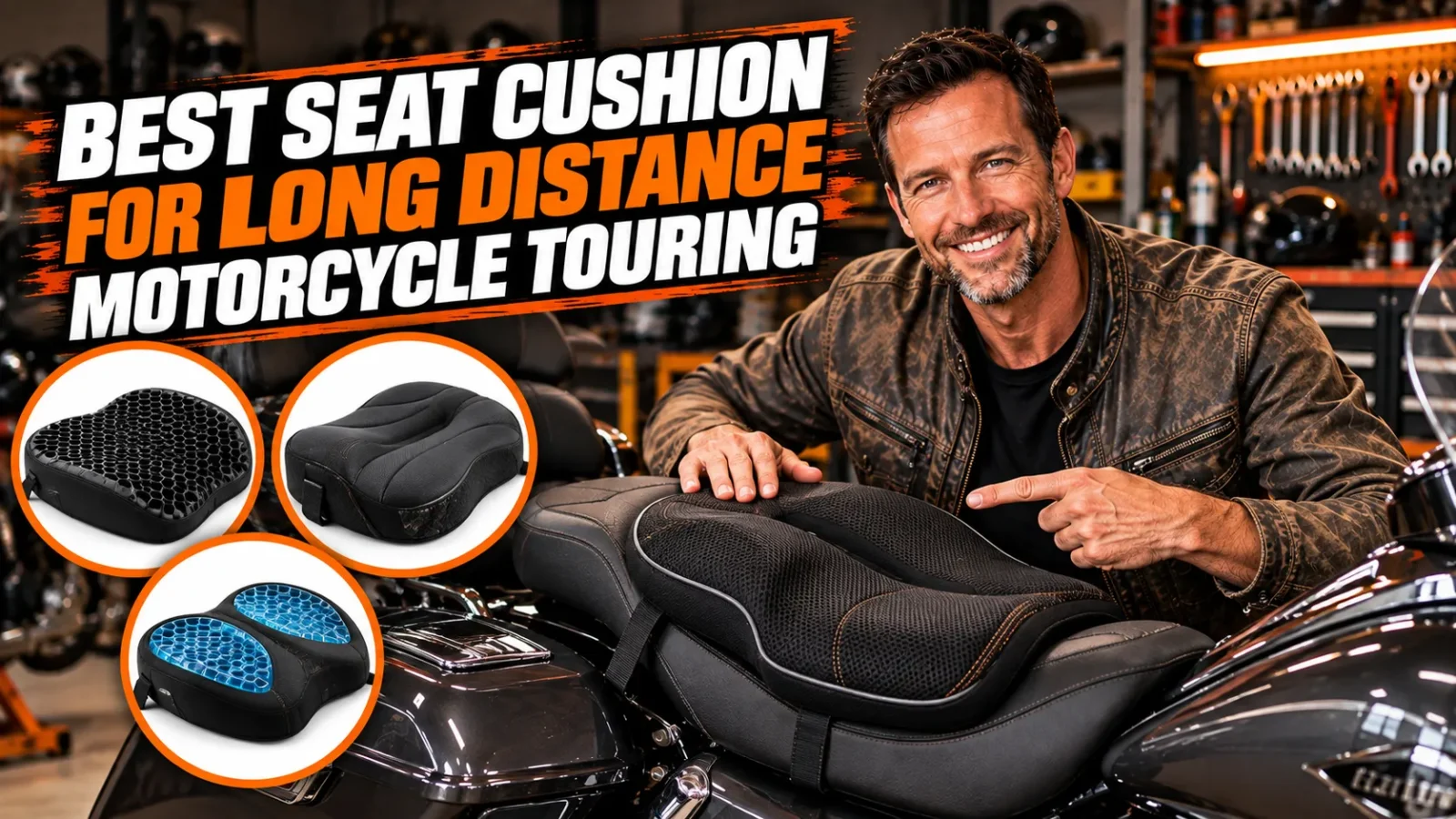
A cushion is the cheapest way to find out whether your seat is the problem. Pick the wrong one and you’ve wasted money; pick the right one and you might add hours to your riding day.
This post is part of my seat series. If you’d like the bigger picture first, read my complete guide to the best motorcycle seat, then come back here to choose a cushion.
- There are four main cushion types: gel, air, memory foam and sheepskin. Each solves a slightly different problem.
- Gel spreads pressure and softens vibration but can feel warm. Air is adjustable but needs attention. Memory foam molds to you but can sink and run hot. Sheepskin breathes and reduces friction.
- A cushion can’t fix a badly shaped seat. If it doesn’t help, the problem is likely seat shape or riding position.
- Check that the cushion has a non-slip base and fits your seat size. A cushion that slides around is a safety problem.
- Cushions raise your seating height slightly. That’s a plus for tall riders and a minus for short ones.
- For the bigger picture, including when to replace the seat, see my best motorcycle seat guide.
[IMAGE PLACEHOLDER 1: Featured image] Alt text: Gel seat cushion fitted on a touring motorcycle seat before a long ride AI image prompt: Photorealistic close-up of a black gel seat cushion strapped onto a touring motorcycle seat, parked on a gravel shoulder with a long road stretching behind it, early morning light, no visible brand logos, no readable license plate, 16:9.
Why I Reach for a Cushion Before a New Seat
When someone tells me their seat is uncomfortable, my first question is always the same: “Have you tried a cushion?”
Not because a cushion is the best long-term answer, but because it’s the cheapest experiment. A new aftermarket or custom seat can cost serious money. A cushion costs a fraction of that, and the result tells you a lot:
- If a cushion helps a lot, you may not need a new seat.
- If it helps a little, the seat shape is probably the issue.
- If it makes things worse, you’ve learned something without spending much.
I’ve tried several kinds on long rides over the years. I haven’t tested every product on the market, and I won’t pretend to rank brands I haven’t used. What I can do is explain how each type behaves and how to choose one that suits you.
The Four Main Types of Cushion
1. Gel Cushions
Gel pads and inserts are probably the most common option, and for good reason.
What they do well
- Spread pressure over a wider area
- Absorb some vibration
- Usually inexpensive compared with other options
- Easy to fit and remove
Where they fall short
- Can feel warm in hot weather
- Add some weight
- Some feel firm or “wobbly”
- A thin gel layer over a hard seat only helps so much
Who they suit: riders who want a simple, low-cost upgrade, and anyone looking for the best gel pad for a motorcycle seat without a big investment. If you’re hunting for the best bang for buck long-distance gel seat cushion, gel is usually where the value is, but quality varies, so read reviews carefully.
2. Air Cushions
Air cushions use inflatable cells that you adjust to your weight and preference.
What they do well
- Adjustable firmness
- Can reduce pressure points very effectively
- Usually lightweight
Where they fall short
- Need correct inflation. Too much air feels hard, too little and you bottom out.
- Can feel unstable in corners for some riders
- Punctures and leaks are possible
- Cost more than basic gel pads
Who they suit: riders who want to tune the feel, and those who want the best air seat for a motorcycle for long days. They’re a personal-preference product, so if you can try one first, do.
3. Memory Foam Cushions
Memory foam softens with body heat and molds to your shape.
What it does well
- Conforms to your body
- Feels very comfortable at first
- Often inexpensive
Where it falls short
- Can run warm
- May sink too much, leaving you on the hard base underneath
- Stiffens in cold weather
- Some types absorb moisture
Who it suits: riders who want contouring, ideally as a thin top layer. If you’re looking for the best memory foam for a motorcycle seat, I’d generally choose a firmer, higher-density type and avoid thick, soft layers.
4. Sheepskin
Sheepskin covers have been used for generations, and riders still swear by them.
What they do well
- Breathe well in heat
- Insulate in cold
- Reduce friction and sweat build-up
- Feel pleasant and soft
Where they fall short
- They don’t spread pressure the way gel or air can
- Need care and drying if they get wet
- Can slip if not secured
- Natural sheepskin costs more than synthetic
Who they suit: riders who want temperature comfort and reduced friction. If you want the best sheepskin for a motorcycle seat, look for a thick, dense pile with a firm backing, and consider whether you want natural or synthetic.
[IMAGE PLACEHOLDER 2: Cushion type comparison] Alt text: Four motorcycle seat cushions side by side: gel, air, memory foam and sheepskin AI image prompt: Studio product-style photo of four unbranded motorcycle seat cushions side by side on a neutral grey background: a clear gel pad, an air cushion with cells, a black memory foam pad and a cream sheepskin cover. Soft shadows, consistent lighting, no logos, 16:9.
Quick Comparison
| Type | Best for | Watch out for |
|---|---|---|
| Gel | Pressure and vibration, low cost | Heat, weight, wobbly feel |
| Air | Adjustable firmness, pressure points | Inflation, stability, punctures |
| Memory foam | Contouring comfort | Heat, sinking, cold stiffness |
| Sheepskin | Temperature and friction | Doesn’t spread pressure, needs care |
Most riders will land on one of these, but some combine them. I know riders who use a thin gel pad under a sheepskin cover, for example, to get both pressure relief and breathability.
How to Choose: My Checklist
Here’s how I’d decide.
1. Identify Your Main Problem
- Numb or sore sit bones? Look at gel or air.
- Sweat and heat? Sheepskin or a breathable mesh-style cushion.
- Vibration and buzz? Gel can help.
- Friction or saddle sores? Sheepskin or a smooth cover.
- General discomfort over several hours? A combination may work.
2. Check the Size and Fit
A cushion must suit your seat. Too large and it hangs over the edges. Too small and it doesn’t cover the contact area. Measure your seat’s rider section, and check the cushion’s dimensions.
3. Look at the Base
A non-slip base or secure straps matter. A cushion that slides around while you ride is distracting and potentially dangerous. Check that straps are strong and don’t interfere with moving parts.
4. Think About Height
A cushion adds thickness, which raises you slightly. If you’re tall, that can help with knee angle. If you’re short, it can cost you ground reach. My guides for short riders and tall riders explain the trade-off.
5. Consider Your Weather
If you ride in heat, avoid thick, non-breathable cushions. If you ride in cold, sheepskin and some foams add warmth.
6. Check Weight Ratings
Some cushions list a weight limit. If you’re a heavier rider, make sure the product is designed for you.
7. Read Real Reviews
Look for reviews from riders with a similar bike and body type. Ignore reviews that just say “great product” with no detail.
How to Test a Cushion Properly
Here’s the method I use, so you don’t judge a cushion after ten minutes.
- Start with a baseline. Ride your normal route without the cushion and note when and where discomfort starts.
- Fit the cushion. Make sure it’s secure and sits where it should.
- Ride the same route. Same distance, similar conditions.
- Compare. Does discomfort start later? Is it less intense? Is it in the same place?
- Give it time. A cushion that feels odd at first may feel better after a few rides, and one that feels great at first may disappoint at hour three.
- Check the return policy. If you can return it, you can test it properly.
When a Cushion Isn’t Enough
Cushions are great, but they have limits. If you’ve tried a few and nothing helps, the problem is likely one of these:
- Seat shape. A seat that tilts you backward or forward can’t be fixed by padding.
- Riding position. Bars, pegs and posture matter. See my guide to motorcycle seats for pain relief.
- Worn foam. If your stock foam has flattened, a cushion on top is a patch. Rebuilding the foam may be a better answer. My DIY seat rebuild guide explains how.
- A medical issue. Persistent pain deserves a professional opinion.
When it’s time for a new seat, my complete seat guide covers what to look for.
Cushion Care and Safety
A cushion is part of your riding setup, so treat it like it matters.
- Secure it properly. Use straps, a non-slip base, or both, and check them before every ride.
- Keep it clean. Wipe gel and foam with mild soap and water, and let it dry completely. Follow the maker’s care instructions.
- Dry sheepskin thoroughly. Wet sheepskin can smell and degrade. Let it dry away from direct heat.
- Check for damage. Look for cracks, leaks or torn straps, and replace if needed.
- Don’t cover vents or moving parts. Make sure the cushion doesn’t interfere with the bike.
- Consider your seat. Moisture trapped under a cushion can damage a vinyl or leather seat. See my guide on how to clean, protect and waterproof a motorcycle seat.
Cushions by Riding Style
Long-Distance Touring
Touring riders put in hours at a time, so pressure relief and breathability matter most. Many choose a gel or air cushion, sometimes with sheepskin on top. Plan regular stops too. A cushion isn’t a substitute for breaks.
Daily Commuting
Commuters sit for shorter stretches but more often, and want something easy to fit and remove. A thin gel pad or sheepskin often fits the bill.
Adventure and Off-Road
If you ride standing and sitting, a bulky cushion can get in the way. Look for something thin and secure, or consider a better-shaped seat instead.
Cruiser Riding
Cruisers often cause tailbone pressure. A supportive cushion helps, but the seat shape matters more. A bucket-style seat may do more than any pad.
Hardtail Riding
With no rear suspension, vibration comes straight through. A gel or air cushion can help, but the right seat matters most. See my guide to seats for hardtail motorcycles.
Cheap vs Premium: Is It Worth Paying More?
I get asked this a lot. Here’s my honest view.
- Cheap cushions can be perfectly fine for short rides and for testing whether a cushion helps at all. Quality varies, and some feel flimsy or slip around.
- Premium cushions often use better materials, better construction and better straps. They tend to last longer and feel more refined. They aren’t guaranteed to suit you, though.
My advice: start with a reasonably priced option, see if it helps, and only spend more if you find yourself wanting better. If a cheap gel pad transforms your ride, you’ve saved money. If it helps a little, you’ve learned what to look for.
I’m deliberately not quoting prices or naming a single “best” model. Prices change, and what suits me may not suit you. Well-known names riders research include AirHawk, Skwoosh and Roho among others, but check current availability and reviews rather than relying on my list.
Common Mistakes With Cushions
- Buying the thickest one. More isn’t always better. A very thick cushion can feel unstable.
- Ignoring grip. A cushion that slides is a problem.
- Judging too quickly. Give it a few rides.
- Forgetting heat. A cushion that traps heat can be worse in summer.
- Treating it as a cure-all. A cushion can’t fix a bad seat or a bad riding position.
- Skipping care. Moisture and dirt can wear a cushion, and damage your seat.
Methodology: How I Approached This Guide
- I focused on how each cushion type behaves rather than ranking specific models I haven’t tested.
- I haven’t tried every product, and I’ve said so.
- I’ve avoided prices, because they change.
- I based my advice on my own riding, on friends’ experience with different types, and on patterns riders commonly report.
If you’ve found a cushion that works for you, I’d love to hear about it, along with your bike and ride length.
Frequently Asked Questions
What is the best seat cushion for long motorcycle trips?
There isn’t one best option. Gel and air cushions are popular for pressure relief, sheepskin for breathability, and memory foam for contouring. Choose based on your main problem, your climate and your seat.
Are gel seat pads worth it?
For many riders, yes. They’re affordable, easy to fit and can reduce pressure and vibration. They may feel warm in hot weather and won’t fix a poorly shaped seat.
Is an air cushion better than gel?
Air cushions offer adjustable firmness and can be very good at reducing pressure points, but they need correct inflation and may feel less stable. Some riders prefer gel for simplicity.
Is memory foam good for motorcycle seats?
It can be, especially as a thin top layer. Thick, soft memory foam can sink too far and run warm.
Is sheepskin worth buying?
Many riders like it for breathability and reduced friction, and it can help in both hot and cold weather. It doesn’t spread pressure like gel or air, and it needs drying and care.
Will a cushion make my seat taller?
Yes, slightly. That helps tall riders with knee angle but can reduce ground reach for shorter riders.
How do I stop a cushion from sliding?
Choose one with a non-slip base and secure straps, and check it before every ride. If it still slides, it isn’t a good fit.
Can a cushion damage my seat?
It can trap moisture, which may harm vinyl or leather over time. Keep both clean and dry, and check under the cushion regularly.
When should I replace my seat instead of using a cushion?
If you’ve tried a few cushions and a position change and still hurt, the seat shape or your fit is probably the issue. See my full seat guide.
Final Thoughts
A cushion is the easiest, cheapest way to test whether your seat is holding you back. Choose based on your actual problem, check the fit and grip, and give it a fair trial.
If it works, you’ve saved money. If it doesn’t, you’ve learned what to look for, and your next step will be better informed.
Keep Reading in the Seat Series

Related Articles
Best Motorcycle Seats for Tailbone and Back Pain Relief: What Helps and What Doesn’t
Riding hurts? Here's what I look for in a motorcycle seat for tailbone pain, a bad back and pressure problems,…
Jake Miller
13 min read
Best Motorcycle Seat for Tall Riders: Room to Stretch, Support That Lasts
Tall, big or riding two-up? Here's how I choose a motorcycle seat with enough reach, support and room, from seat…
Jake Miller
13 min read
Best Motorcycle Seat for Short Riders: How I Get Both Feet Down Without Giving Up Comfort
Short rider and tired of tiptoeing at red lights? Here's how I choose a lower, narrower motorcycle seat, including solo…
Jake Miller
17 min read