
Best Motorcycle Seat: How I Choose One for Comfort, Fit and Long Rides
 Jake Miller
18 min read
Jake Miller
18 min read
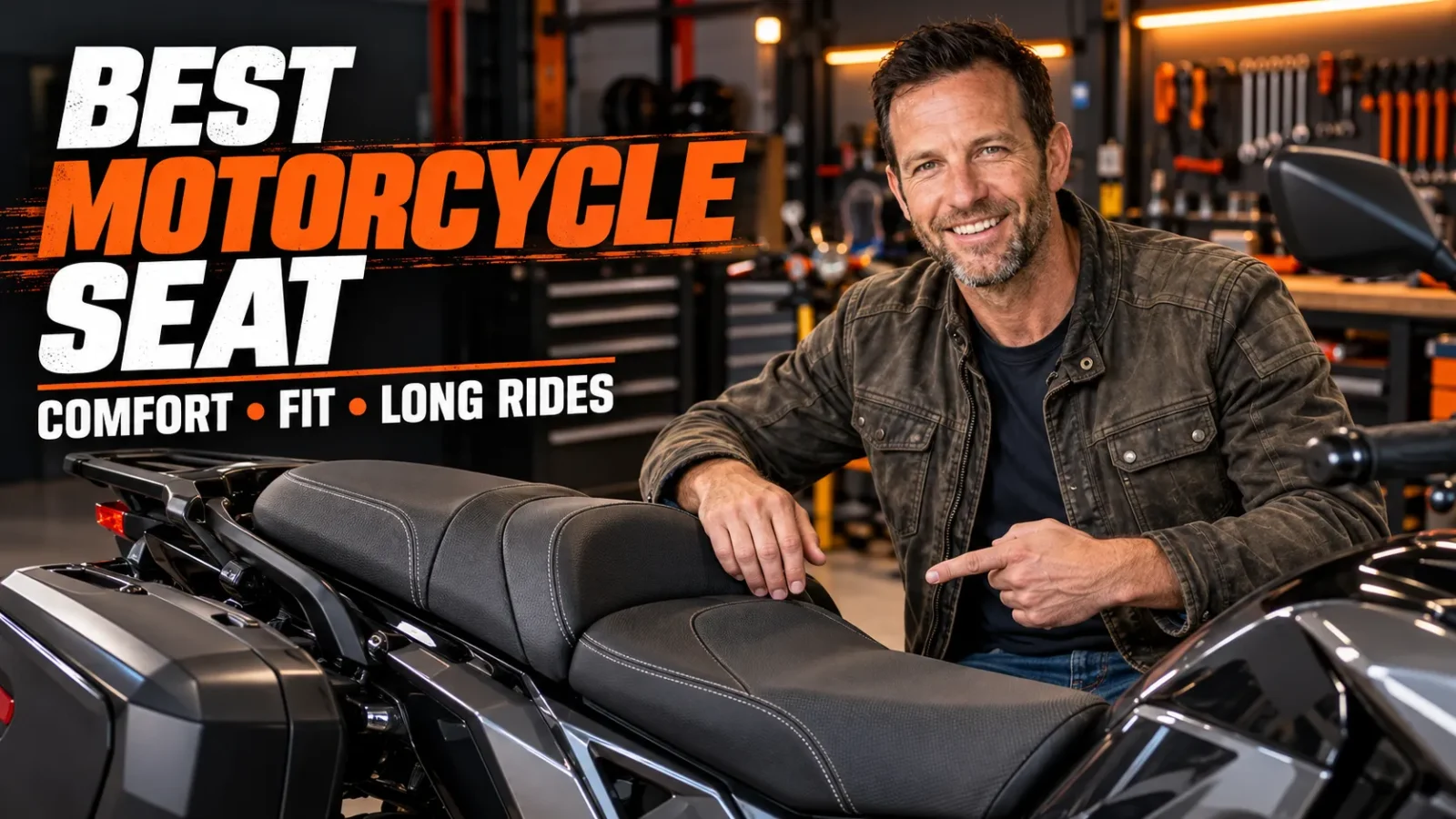
The stock seat is designed to look good on a showroom floor, not to carry you for 300 miles. This is how I stopped dreading hour two of every ride, and how you can find the right seat for your body and your bike.
If you’re still building out your riding setup, start with my ultimate motorcycle gear guide and then come back here, because a seat is the one piece of gear you sit on for every single mile.
- The best motorcycle seat is the one that fits your body, your bike and your riding style. There is no single winner.
- Shape and support matter more than softness. A plush seat often feels great for 20 minutes and punishing after two hours.
- Check seat height and width first. If your feet can’t reach the ground confidently, comfort is irrelevant. See my guides for short riders and tall riders.
- Try cheaper fixes first (a gel pad, sheepskin, a better riding position), then go aftermarket or custom if the problem is the seat’s shape.
- Pain is a signal. Persistent tailbone, back or other pain deserves proper attention. See my pain relief seat guide and talk to a doctor if it doesn’t go away.
- Look after the seat you buy. Cleaning and waterproofing add years to its life.
[IMAGE PLACEHOLDER 1: Featured image] Alt text: Rider’s view of a touring motorcycle seat on a long open road at golden hour AI image prompt: Photorealistic image of a black touring motorcycle parked on an empty highway shoulder at golden hour, shot from a low angle focusing on the stitched leather seat, soft sunlight, shallow depth of field, mountains in the distance, no people, no visible brand logos, 16:9.
Why I Take Seats Seriously (A Quick Confession)
I used to treat the seat as an afterthought. Helmets, jackets, tires: those got my research time. The seat was just “what came with the bike.”
That changed on a day ride that was supposed to be easy. About 90 minutes in, I was shifting on the saddle every few minutes, standing on the pegs at every red light, and counting down to the next fuel stop for the wrong reason. By the end I wasn’t enjoying the road anymore. I was just surviving the seat.
Since then I’ve ridden a lot of different bikes on a lot of different seats: stock saddles, gel-padded add-ons, a sheepskin cover, and a couple of aftermarket seats on friends’ bikes that I borrowed for long days. I haven’t tested every seat on the market, and I won’t pretend otherwise. What I have is a clear idea of what makes a seat work or fail, and that’s what this guide is about.
How I Evaluate a Motorcycle Seat (My Methodology)
Since a seat is so personal, it’s worth being transparent about how I judge one. Here’s the checklist I actually use:
- Fit before comfort. Can I put my feet down the way I need to? Does the seat’s width let my legs sit naturally?
- Support over softness. Does the seat spread my weight, or does it just feel soft in the shop?
- The two-hour test. A seat can only be judged after a couple of hours. I pay attention to what hurts first and where.
- Position freedom. Can I slide back and forward a little? A seat that locks you into one spot becomes a problem on long days.
- Materials and weather. How does the cover handle sun, rain and heat? How does it feel in a cold start?
- Maintenance. How hard is it to keep clean, and does it hold up?
An honest limit: a seat that works perfectly for me may not work for you. Body shape, weight, riding position and bike geometry all change the answer. So wherever I recommend something below, I explain who it’s for, not just that it’s “good.”
What Actually Makes a Motorcycle Seat Comfortable
Before you spend money, it helps to understand what you’re buying. A seat has four parts, and each one affects comfort differently.
1. The Seat Pan (The Foundation)
The pan is the rigid base the foam sits on. It sets the seat’s overall shape, and it’s usually the part people overlook. A poorly shaped pan can’t be fixed with extra padding. Pans are commonly plastic or metal, and if you’re rebuilding a seat yourself, the material matters. I cover that in my DIY seat rebuild guide.
2. The Foam (Where Comfort Is Won or Lost)
Foam density and thickness decide how a seat feels at hour three. Too soft and you “bottom out,” meaning you compress through to the pan and feel pressure at your sit bones. Too firm and you get hot spots straight away. Most riders on long trips prefer a medium-firm foam that supports without feeling hard.
3. The Shape
Shape decides where your weight goes. A good seat spreads load across your sit bones and thighs and keeps pressure off soft tissue and your tailbone. A flat, wide seat suits some riders; a contoured, scooped one suits others.
4. The Cover
The cover affects grip, heat, water resistance and how the seat ages. Vinyl is common and easy to clean. Leather looks great but needs care. Textured and grippy covers help you stay put but can wear riding pants faster. I go deeper on this in my seat cover materials guide.
[IMAGE PLACEHOLDER 2: Seat anatomy diagram] Alt text: Cutaway diagram of a motorcycle seat showing pan, foam layers and cover AI image prompt: Clean technical cutaway illustration of a motorcycle seat on a white background, showing four labeled layers: rigid seat pan, dense foam base, softer comfort foam top layer, and stitched vinyl cover. Minimalist infographic style, thin lines, muted colors, 3:2.
Foam, Gel and Air: What I’ve Learned
This is the part where most riders get confused, so here’s the short version.
Foam is the standard. Quality foam holds its shape over thousands of miles. Cheap foam flattens quickly, which is why a seat that felt fine when new can feel terrible two years later.
Memory foam molds to your body and feels great at first, but it can feel warm and sometimes lets you sink too far. I find it works best in a thin top layer over firmer foam rather than as the entire seat.
Gel spreads pressure and helps with vibration. A gel pad or gel insert can be a cheap way to improve a stock seat. The trade-off is weight and, in hot weather, heat.
Air cushions let you adjust firmness and can be very comfortable, but they can also feel unstable in corners and need a bit of attention to inflation. They are a personal-preference product.
If you want to try a cushion before replacing the whole seat, I’ve put together a full comparison in my guide to the best seat cushions and pads for long-distance touring.
Seat Height and Fit: Start Here
I’m putting this ahead of the product talk because height is a safety issue, not just a comfort one. If you can’t plant your feet securely, you’ll be nervous at every stop, in every parking lot and on every slow turn.
If You’re a Shorter Rider
A seat that’s too tall or too wide makes the bike feel enormous. Narrower, lower or sculpted seats can help your feet reach the ground without compromising support. I cover specific options, solo seats and what to look for at different heights in my guide to the best motorcycle seat for short riders.
A quick tip: when you test a lower seat, check that your knee angle still works on the pegs. Dropping the seat too much can cramp your legs on long rides.
If You’re a Taller Rider
The opposite problem shows up. A stock seat can leave your knees bent too tightly, or put you too close to the tank. Taller or extended-reach seats give you room to stretch out, and that matters even more if you ride two-up. My tall rider seat guide goes through this in detail, including bigger riders and passenger comfort.
Bigger Riders
Heavier riders need firmer foam and a stronger pan, because soft foam bottoms out faster. If you’re bigger, look for dense foam, a wider seat platform and a supportive shape. Don’t assume “extra soft” means “extra comfortable.”
[IMAGE PLACEHOLDER 3: Seat height comparison] Alt text: Two riders of different heights sitting on the same motorcycle showing different foot reach AI image prompt: Side-by-side illustration of a shorter rider and a taller rider on identical cruiser motorcycles, showing foot-to-ground reach and knee angle, flat vector style, simple background, neutral clothing, no brand logos, 16:9.
When Your Body Is Telling You Something
Some seat discomfort is normal. Pain that keeps coming back isn’t. Tailbone pain, lower-back aching and soreness in sensitive areas are the three complaints I hear most from riders.
In many cases the cause is a seat that tilts you backward onto your tailbone, a seat that’s too flat or too hard, or a riding position that loads your spine badly. Changing seat shape, adding the right cushioning or adjusting your position can help.
I want to be clear about one thing: I’m a rider, not a doctor. If you have persistent or severe pain, numbness or any medical issue, please see a medical professional. A seat can reduce pressure, but it doesn’t replace proper advice. For the seat side of the problem, my guide to motorcycle seats for pain relief covers tailbone pain, back pain and other pressure issues in more detail.
The Best Motorcycle Seat by Bike Type
Different bikes put you in different positions, so the “best” seat changes. Here’s how I think about each.
Cruisers
Cruisers put your weight low and back, often with feet forward. That posture tends to load your tailbone, so cruiser seats need good lumbar support and a shape that stops you sliding backward. When riders ask about the best aftermarket seat for a cruiser, I tell them to look for a seat with a supportive rear “bucket” and enough width to spread weight. Test the shape against your riding position, not just the padding.
Harley-Davidson Touring Bikes
Touring Harleys are built for long days, and the factory seat isn’t always up to it. Riders often want something narrower or lower, or something with more support for two-up trips. I’ve put together a full guide to the best seat for a Harley touring bike, including lowered and narrow options.
Harley Sportster
The Sportster has its own challenges: a smaller, more compact platform and often a stiffer ride. Seats here need to work with a different geometry, so I’ve given it its own post: best seat for a Harley Sportster.
Hardtails
Hardtail frames have no rear suspension, so your seat is doing a lot of the work. Vibration and impact come straight through, so cushioning and shape matter more than usual. I cover this in my guide to the best seats for hardtail motorcycles.
Adventure and Dual-Sport Bikes
Adventure riders need a seat they can ride sitting and standing on. That means a narrower front, firm support and a cover that handles mud and rain. Many stock dual-sport seats are on the thin side for all-day comfort. For a specific example, I wrote a guide to the best seat for a Kawasaki KLX250, and the principles carry over to other lightweight dual-sports.
Sport and Naked Bikes
These put you forward, with weight on your wrists and a more aggressive position. Seats are often firm and narrow by design. If it’s the riding position that hurts rather than the seat, a cushion or minor tweaks may help more than a new saddle.
[IMAGE PLACEHOLDER 4: Seat styles by bike type] Alt text: Collage of cruiser, touring, adventure and sport motorcycle seats AI image prompt: Four-panel photo collage of motorcycle seats only (no brand logos): a cruiser bucket seat, a wide touring saddle, a narrow adventure seat, and a sporty stepped seat. Studio lighting, neutral grey background, consistent framing, 16:9.
Brands Worth Shortlisting
I’m deliberately not giving you a “number one” here, because the right brand depends on your bike. But these are well-known names that I’d put on a shortlist when researching long-ride comfort:
- Corbin: known for custom-built seats designed around rider and bike.
- Mustang: popular for cruiser and Harley seats with distinctive shapes.
- Saddlemen: wide range of seats for cruisers and tourers, including options built around specific riding positions.
- Sargent: associated with long-distance comfort and adjustable options on certain models.
- Russell Day-Long: a well-known name for riders who put in big mileage.
- Seat Concepts: often considered for adventure and dual-sport bikes.
Important: model availability, fitment and pricing change often, and not every brand makes a seat for every bike. Always confirm the exact fitment for your make, model and year before ordering, and check current pricing with the seller. Also, read reviews from riders with a body type and bike similar to yours, because that’s more useful than a star rating.
Cheaper Fixes Before You Buy a New Seat
A new seat can be expensive, so it’s worth trying simpler options first.
- Gel pad or cushion: quick, reversible and inexpensive compared with a new seat.
- Sheepskin cover: breathable and comfortable in both heat and cold, though it needs some care.
- Adjusting your position: small changes to handlebar angle, footpeg position or posture can make a big difference.
- Riding technique: shifting your weight, standing briefly and taking breaks all help.
- Better riding gear: padded riding shorts or the right pants can also help.
If a cushion doesn’t fix it, that tells you the problem is probably the seat’s shape or your fit, which is when a proper replacement makes sense.
When Custom Is Worth It
A custom seat is made or modified to fit you and your bike. It’s an investment, but for riders with unusual proportions, specific pain issues or a bike with limited aftermarket options, it can be the only real answer.
If you go custom, you’ll also choose materials. Standard vinyl is practical. Leather and specialty finishes look great but cost more and take more care. Some riders even choose exotic skins for a distinctive look. That’s purely a style decision, and it comes with durability and maintenance trade-offs. I cover the options in my seat cover materials guide.
A practical note on color: dark seats absorb heat in the sun, while lighter colors stay cooler to sit on. In cooler climates, a dark seat can warm up faster. Pick a color that suits where you ride.
Doing It Yourself: Rebuilding or Reupholstering a Seat
If you like working on your bike, a seat rebuild is a satisfying project. You can replace worn foam, recover the seat, or reshape the padding to suit you. It takes patience and the right materials: suitable foam, a good adhesive, a staple gun, strong thread and a sound seat pan.
I’ve written a step-by-step walkthrough, including what materials to choose and what to avoid, in my DIY motorcycle seat rebuild guide. If you’re newer to wrenching, my maintenance on a motorcycle overview is a good place to build confidence first.
Keeping Your Seat in Good Shape
A good seat is an investment, and sun, rain and dirt will wear it down if you ignore it. I treat the seat as part of regular maintenance, alongside the checks in my T-CLOCS pre-ride inspection guide.
My simple routine:
- Clean the seat with a cleaner suited to the material (vinyl and leather need different products).
- Protect with a suitable protectant, avoiding anything that leaves the top slippery.
- Waterproof where needed, especially if the bike lives outside.
- Cover the bike when parked, and store it properly in winter. My winterizing guide covers the full process.
Avoid slick, silicone-heavy products on the top of the seat, because you don’t want to slide off. For the full process, see my guide on how to clean, protect and waterproof a motorcycle seat. And if you spend a lot of time washing and working on the bike, a rolling seat for cleaning and maintenance saves your back, and I’ve reviewed the options in that post. Pair it with my guide on how to wash your motorcycle.
[IMAGE PLACEHOLDER 5: Seat cleaning] Alt text: Rider cleaning a vinyl motorcycle seat with a microfiber cloth in a garage AI image prompt: Photorealistic image of a rider’s gloved hand wiping a black vinyl motorcycle seat with a microfiber cloth in a tidy garage, cleaning spray bottle nearby, soft natural light, close-up, no brand logos visible, 3:2.
Quick Comparison: Which Seat Approach Fits You?
| If you are… | Start with… | Read next |
|---|---|---|
| A shorter rider with foot-reach worries | Lower or narrower seat | Short rider seats |
| A taller or bigger rider | Extended or firmer, wider seat | Tall rider seats |
| Dealing with tailbone or back pain | Supportive shape, then cushion | Pain relief seats |
| Not ready to replace the seat | Gel pad, air cushion or sheepskin | Seat cushions |
| Riding a Harley touring bike | Narrow or lowered touring seat | Harley touring seats |
| Riding a Sportster | Seat built for its compact frame | Sportster seats |
| Riding a hardtail | Well-cushioned, vibration-absorbing seat | Hardtail seats |
| Riding a dual-sport like the KLX250 | Narrow, firm, durable seat | KLX250 seats |
| A DIYer | Rebuild with the right materials | DIY rebuild |
| Choosing a cover or color | Match material to climate | Cover materials |
Common Mistakes I See Riders Make
- Buying the softest seat. Soft feels great in the shop and bottoms out on the road.
- Ignoring fitment. A seat that doesn’t fit your exact model year can cause mounting problems.
- Judging by photos alone. Shape matters, and photos hide it.
- Treating pain as normal. If something hurts every ride, change something.
- Forgetting foot reach. A comfortable seat you can’t stop on safely is the wrong seat.
- Skipping maintenance. A cracked or waterlogged seat loses support quickly.
If you’re newer to riding, my beginner motorcycle riding tips cover some of these basics. And if you ride two-up regularly, think about your passenger’s comfort too, including their helmet and your communication setup. A well-planned touring luggage setup also affects how you sit and carry weight.
My Buying Checklist
Before you spend money, run through this:
- I know my seat height and foot-reach needs.
- I’ve identified where it hurts and when (after 30 minutes? 2 hours?).
- I’ve tried a cushion or position change first.
- I’ve confirmed the seat fits my exact make, model and year.
- I’ve read reviews from riders of similar size and riding style.
- I’ve checked the return policy.
- I know how I’ll clean and protect it.
Frequently Asked Questions
What is the best motorcycle seat?
There isn’t one best seat for everyone. The best seat is the one that fits your body, your bike and how far you ride. Fit, shape and support matter more than how soft the padding feels.
What is the best motorcycle seat for long rides?
For long rides, look for a supportive shape, medium-firm foam and enough room to change position. Many riders also add a gel pad or sheepskin. See my long-distance seat cushion guide for details.
Is a gel seat pad worth it?
For many riders, yes, especially as a low-cost first step. Gel can spread pressure and soften vibration, though it can feel warm in hot weather. If the seat’s shape is the problem, a pad may only help a little.
What is the best seat for a cruiser?
Look for a seat with good rear support and a shape that keeps you from sliding backward, since cruiser positions tend to load the tailbone. Always confirm fitment for your specific bike.
What seat is best for short riders?
A lower, narrower seat that lets you plant your feet confidently, with enough support that you’re not sacrificing comfort. See my short rider seat guide.
What seat is best for tall riders or riding two-up?
Seats with extra reach and room, plus supportive foam for the added load of a passenger. Read my tall rider seat guide.
Can a seat help with tailbone or back pain?
It can reduce pressure, depending on the cause. Shape, support and your riding position all play a part. Persistent pain should be checked by a doctor. More in my pain relief seat guide.
Is a custom motorcycle seat worth the money?
It can be, if you have unusual proportions, specific pain issues or a bike with few aftermarket options. For many riders, a good off-the-shelf seat plus a cushion is enough.
How do I clean and protect my motorcycle seat?
Use a cleaner suited to the cover material, then a protectant that doesn’t leave the surface slippery, and waterproof if the bike is stored outside. Full steps are in my seat care guide.
Can I rebuild my own motorcycle seat?
Yes, if you’re patient and use the right materials: good foam, suitable adhesive, a staple gun and strong thread. See my DIY seat rebuild guide.
Final Thoughts
If I could go back to that miserable day ride, I’d tell myself one thing: comfort isn’t a luxury, it’s what lets you ride farther, enjoy more and stay alert. A seat that fits you turns a 90-minute ride into a whole weekend.
Start with fit. Try the simple fixes. Be honest about where it hurts. Then choose a seat for your body and your bike, and look after it once you have it.
Your Next Reads (Full Seat Series)
- Best Motorcycle Seat for Short Riders
- Best Motorcycle Seat for Tall Riders
- Best Motorcycle Seats for Pain Relief
- Best Seat Cushion for Long-Distance Touring
- Best Seat for Harley Touring
- Best Seat for Harley Sportster
- Best Seats for Hardtail Motorcycles
- Best Seat for Kawasaki KLX250
- DIY Motorcycle Seat Rebuild Guide
- Best Motorcycle Seat Cover Materials
- How to Clean, Protect and Waterproof a Motorcycle Seat
- Best Rolling Seat for Cleaning a Motorcycle

Related Articles
Best Motorcycle Seats for Tailbone and Back Pain Relief: What Helps and What Doesn’t
Riding hurts? Here's what I look for in a motorcycle seat for tailbone pain, a bad back and pressure problems,…
Jake Miller
13 min read
Best Motorcycle Seat for Tall Riders: Room to Stretch, Support That Lasts
Tall, big or riding two-up? Here's how I choose a motorcycle seat with enough reach, support and room, from seat…
Jake Miller
13 min read
Best Motorcycle Seat for Short Riders: How I Get Both Feet Down Without Giving Up Comfort
Short rider and tired of tiptoeing at red lights? Here's how I choose a lower, narrower motorcycle seat, including solo…
Jake Miller
17 min read