
Best Motorcycle Seat for Tall Riders: Room to Stretch, Support That Lasts
 Jake Miller
13 min read
Jake Miller
13 min read
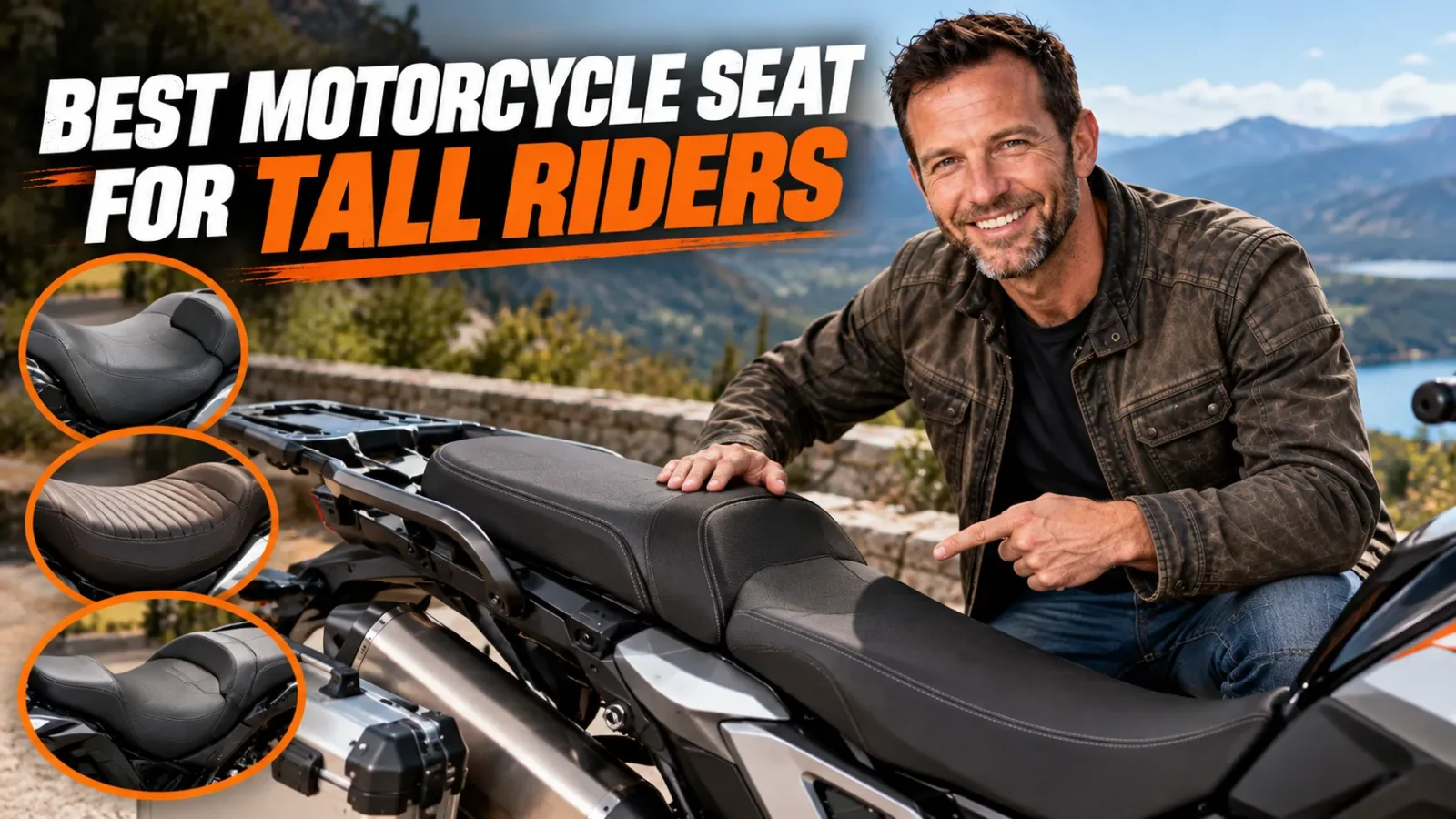
Tall riders get told “you’ll love it, there’s plenty of bike for you,” then spend three hours with knees up near their elbows. The fix is usually the seat, and it’s easier than you’d think.
This is part of my seat series. If you want the foundations first (foam, shape, pan and cover), read my complete guide to the best motorcycle seat and then come back for the tall-rider details.
- Tall riders usually suffer from cramped legs and a bike that feels too small, not from too little seat height. The seat affects both.
- Look for a taller or extended-reach seat that moves you back or raises you, so your knee angle opens up. Check that you can still reach the bars comfortably.
- Bigger and heavier riders need dense foam and a strong seat pan. Very soft seats bottom out quickly and punish you after an hour.
- Riding two-up changes everything: you need a rider section with enough room and a passenger section that doesn’t push you forward.
- Try small adjustments first: handlebar risers, footpeg position, and sitting position. Sometimes they fix more than a new seat.
- Always verify fitment and read reviews from riders of similar size. See my full seat buying guide for the checklist.
[IMAGE PLACEHOLDER 1: Featured image] Alt text: Tall rider on a touring motorcycle with a relaxed knee angle on an open highway AI image prompt: Photorealistic image of a tall rider in a touring jacket and full-face helmet riding a large touring motorcycle on a scenic highway, relaxed posture with open knee angle, golden hour, mountains in the background, no visible brand logos, no readable license plate, 16:9.
The Problem Nobody Warns Tall Riders About
For years I assumed tall riders had it easy. You reach the ground, you see over traffic, you fit on big bikes. Then I rode a long day with a friend who is quite a bit taller than I am, and I watched him do something I now recognise instantly: he kept stretching his legs out at red lights, shifting forward and back, and standing on the pegs every so often.
When we stopped for lunch he said, “It isn’t that the seat’s hard. It’s that I’m folded up like a lawn chair.”
That one sentence explains most tall-rider seat problems. The issue is rarely “not enough seat.” It’s geometry: the distance between your seat, your pegs and your bars. On many bikes, that triangle is designed around an average-sized rider, and if your legs are long, your knees end up bent tightly and pushed up high.
The good news is a seat can change that triangle without changing the bike.
Understanding the Rider Triangle
Three contact points decide how you sit on a bike:
- The seat (where your weight sits)
- The footpegs or floorboards (where your feet rest)
- The handlebars (where your hands reach)
Move any one of them and the other two feel different. For tall riders, the usual problem is that the distance from seat to pegs is too short. The seat is too close to the pegs, so your knees bend sharply.
You have a few ways to open that up:
- Raise the seat so your hips sit higher relative to the pegs.
- Move the seat position back (some seats shift you rearward).
- Move the pegs lower or forward, if the bike allows it.
- Adjust the bars, so the whole triangle feels less cramped.
A taller seat is the most direct approach, and it’s usually the first thing I’d try.
What Kind of Seat Helps Tall Riders
Here’s what I’d look for.
1. A Taller Profile
A seat with more height lifts your hips and opens the knee angle. Many aftermarket manufacturers make taller or “reach” seats for common bikes. Keep an eye on the effect on your ground reach, though. If you’re tall, you probably have plenty, but a very tall seat can still cause problems at stops if you’re riding a large bike.
2. An Extended-Reach or Rearward Position
Some seats position the rider further back. That can add legroom, but it also changes how far you have to stretch to the bars. If the bars are already far away, moving back may leave you leaning too far forward. Sit on the bike (or at least check the dimensions) before you decide.
3. A Longer Rider Section
Taller riders tend to have longer femurs, which means thighs need more support. A seat that’s too short at the rider section leaves your thighs hanging and puts pressure on your tailbone.
4. Enough Width at the Rear
Many tall riders are also bigger overall, and need a seat with enough width at the back to spread load across the sit bones. That brings me to the next group.
For Bigger and Heavier Riders
Some tall riders are also heavier, and some heavier riders aren’t tall. Either way, the best motorcycle seat for big guys has a few shared traits.
Dense Foam, Not Plush Foam
This is the most common mistake I see. Heavier riders buy the softest seat they can find, and within a few months it’s flat. Soft foam compresses fast under load. A firmer, denser foam holds its shape and distributes weight better. It may feel firm for the first few rides, but it’ll feel better on a long ride.
A Sturdy Seat Pan
The pan is the rigid base that supports everything. A heavier rider puts more stress on it, so look for a pan made of strong materials and designed to resist flexing. If you’re rebuilding a seat yourself, the pan matters a lot. I’ve covered materials in my DIY motorcycle seat rebuild guide.
A Wider Platform
A wider seat spreads load over more surface area. That reduces pressure points. The trade-off is that very wide seats can push your legs apart and make ground reach worse, which is rarely a problem for tall riders but can matter for anyone else.
Check Weight Ratings
Some cushions, pads and accessories list a weight rating. If you’re heavier, it’s worth checking that the product is designed for your weight. I’d be cautious of anything that doesn’t say.
Riding Two-Up: The Part That Changes Everything
A lot of people search for the best motorcycle seat for tall riding two-up, and that’s no surprise. Two-up riding adds a few problems at once.
The Passenger Pushes You Forward
On many bikes, the passenger sits behind you and effectively pushes you toward the tank. If you’re tall, you’re already tight on space, so you may feel squeezed. A seat with a properly sculpted rider section and a passenger section that doesn’t crowd you can help a lot.
Passenger Comfort Matters Too
If your passenger is uncomfortable, the ride is shorter and the trip is less fun. Many passenger seats are firm and flat. A seat with a supportive, well-shaped passenger section, plus a backrest or sissy bar if the bike has one, makes a real difference.
Weight Changes Handling
Two people means more load on the rear suspension. A seat won’t fix that, but it’s worth remembering that how you sit affects how the bike handles. If the rear suspension is adjustable, set it for the extra load.
Don’t Forget the Gear
Passenger comfort isn’t just the seat. A good helmet for a passenger and a decent communication system for rider and passenger make long days far more enjoyable. And think about how you pack: my guide to touring luggage explains how luggage affects balance and passenger space.
[IMAGE PLACEHOLDER 2: Two-up seat setup] Alt text: Rider and passenger on a touring motorcycle with comfortable spacing on a two-up seat AI image prompt: Photorealistic image of a rider and passenger on a large touring motorcycle parked at a scenic overlook, both wearing helmets and touring jackets, comfortable spacing between them on a wide two-up seat, soft daylight, no visible brand logos, no readable license plate, 16:9.
Seat Height Guidance for Tall Riders
Several riders ask about the best motorcycle seat height for 6’3″ (roughly 190 cm), and the honest answer is that it depends on your inseam, your bike and your riding style.
Here’s how I’d approach it.
- Think in terms of knee angle, not just seat height. Sit on the bike with your feet on the pegs. Your knees should bend naturally, not fold tightly. If they’re cramped, you probably need more height or reach.
- Check ground reach. As a tall rider, you probably have it, but double-check on larger bikes.
- Look at the whole bike. If the bike is simply too small for you, no seat will make it perfect. Some bikes, especially compact or sport-oriented ones, are designed for smaller frames.
If you’re still choosing a bike, sit on as many as you can in your riding boots. A bike that fits your frame saves you money on modifications.
Cheaper Fixes to Try First
A new seat is often the right answer, but there are less expensive steps worth trying.
Handlebar Risers or Adjustments
If the bars feel too low or too far forward, risers can change how you sit. This helps back and shoulder fatigue, though it doesn’t change knee angle.
Footpeg or Control Adjustments
Some bikes allow you to move footpegs or controls. Lower or forward-set pegs open up the knee angle. Check what’s available for your specific bike and make sure any changes don’t affect ground clearance.
Adjusting Your Position
Slide back or forward on the seat, and see how the triangle changes. It sounds basic, but many riders never experiment.
Sheepskin or Gel Pads
If the problem is more about pressure than geometry, a pad may help. See my guide to seat cushions for long-distance touring. Just remember that adding a cushion raises you slightly, which can be a plus for tall riders.
Brands and Options to Research
As always, I won’t claim a single winner, because I haven’t tested every seat for every bike. These are names tall riders frequently research, and you should check each maker’s current catalogue for your exact model:
- Corbin: known for custom-built seats that can be shaped around a taller rider.
- Mustang: offers various cruiser seat shapes, including some with more reach options on certain models.
- Saddlemen: broad range, including touring seats built for longer rides.
- Sargent: often discussed for comfort-focused seats and options built for rider fit.
- Russell Day-Long: a name associated with long-mileage comfort.
- Seat Concepts: frequently looked at for adventure and dual-sport models.
Fitment is everything. A seat that suits one model year may not fit another. Confirm compatibility before you order, check the return policy, and read reviews from riders of similar height and weight.
The Tall Rider’s Seat Checklist
Before I’d spend money, here’s the checklist I’d run through.
- I know where my knees feel cramped, and how much.
- I’ve tried adjusting my position, pegs or bars first.
- I know what seat height I need for knee comfort.
- I’ve confirmed the seat fits my exact make, model and year.
- I know my weight and chosen a foam density that suits it.
- If I ride two-up, I’ve considered my passenger’s comfort too.
- I’ve checked the seller’s return policy.
Common Mistakes Tall Riders Make
- Assuming a taller seat is always better. Too much height can push you toward the bars and strain your arms.
- Buying the softest seat. Soft foam flattens quickly, especially for heavier riders.
- Ignoring the bars. If the triangle is wrong, fix the whole triangle.
- Forgetting passenger comfort. A great rider seat with a miserable passenger section isn’t a great seat.
- Skipping fitment checks. A tall seat that doesn’t fit your model year is a very expensive paperweight.
A Note on Back and Joint Comfort
Cramped legs and long hours in one position can lead to stiffness. If you have persistent back, hip or knee pain, please talk to a doctor or physiotherapist. A seat can reduce pressure, but it doesn’t replace proper medical advice. For the seat side of that conversation, my guide to motorcycle seats for pain relief covers the options.
Methodology: How I Built This Guide
Since fit is personal, here’s how I approached this.
- I focused on principles that work across many bikes (knee angle, foam density, pan strength) rather than a ranked list that could age quickly.
- I haven’t tested every seat on every bike, and I’ve said so whenever I mention brands.
- I’ve avoided pricing, because it changes and varies by region.
- I drew on my own riding, conversations with taller riding friends, and the common patterns riders report.
If you’ve found a seat that works well for your height and bike, I’d welcome your experience.
Frequently Asked Questions
What is the best motorcycle seat for tall riders?
There isn’t a single best seat. Look for a taller or extended-reach seat with dense foam and a supportive shape, and confirm it fits your exact bike. Pay attention to knee angle, not just seat height.
What seat height is best for a 6’3″ rider?
It depends on your inseam and your bike. Focus on whether your knees bend comfortably on the pegs and whether you can still reach the bars naturally. Test in your riding boots.
What is the best seat for riding two-up when you’re tall?
Look for a seat with a roomy rider section and a supportive passenger section that doesn’t push you forward. Consider your passenger’s comfort and the bike’s rear suspension too.
What is the best motorcycle seat for big guys?
Dense foam, a strong seat pan and a wider platform tend to work best. Very soft seats often flatten quickly under heavier loads.
Will a taller seat hurt my ground reach?
For most tall riders, no, but on a very large bike it can. Check that you can still put your feet down comfortably.
Should I change my bars or pegs instead?
Sometimes, yes. If the whole rider triangle is the problem, small adjustments to bars or pegs can help as much as a new seat. Try them first if you can.
Can a seat fix leg or back pain?
It can reduce pressure and improve position, but it isn’t a medical fix. See a professional for persistent pain.
How do I know if a seat fits my bike?
Check the manufacturer’s fitment list for your exact make, model and year, and confirm with the seller before buying.
Are gel pads good for tall or heavy riders?
They can help, but check weight ratings, and remember a pad won’t fix poor geometry. Read my long-distance cushion guide for details.
Final Thoughts
Being tall shouldn’t mean being folded into a bike that doesn’t fit. Look at the whole triangle, choose dense foam, check your knee angle, and think about your passenger if you ride two-up.
A good seat doesn’t just make you more comfortable. It lets you ride longer, stay sharper and enjoy the road.
Keep Reading in the Seat Series

Related Articles
Best Motorcycle Seats for Tailbone and Back Pain Relief: What Helps and What Doesn’t
Riding hurts? Here's what I look for in a motorcycle seat for tailbone pain, a bad back and pressure problems,…
Jake Miller
13 min read
Best Motorcycle Seat for Short Riders: How I Get Both Feet Down Without Giving Up Comfort
Short rider and tired of tiptoeing at red lights? Here's how I choose a lower, narrower motorcycle seat, including solo…
Jake Miller
17 min read
Best Rolling Seat for Cleaning and Working on a Motorcycle: What I Look For in a Mechanic’s Stool
Tired of crouching to clean wheels and chains? Here's how I choose a rolling mechanic's stool for motorcycle cleaning and…
Jake Miller
13 min read