
Best Seat for Harley Touring Bike: Lowered, Narrow and Built for Long Days
 Jake Miller
12 min read
Jake Miller
12 min read
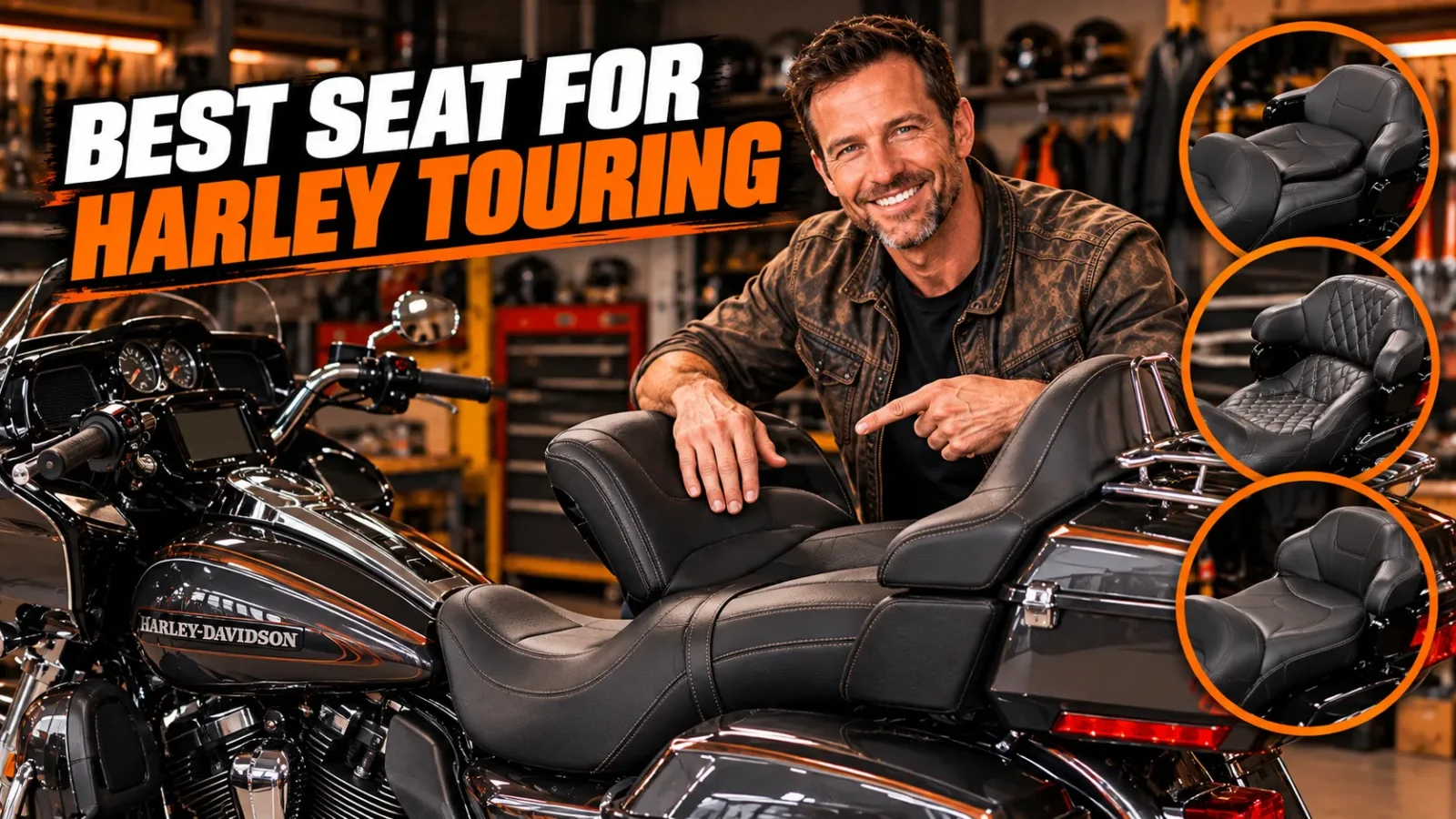
A Harley touring bike is built to cover big distances, but the factory seat doesn’t always agree. Here’s how I think about replacing it, and how to avoid buying the wrong one.
This post is part of my seat series. If you’d like the fundamentals first, including foam, pan and shape, read my complete guide to the best motorcycle seat and come back here for the Harley-specific details.
- Touring Harleys are big, heavy bikes, and the stock seat is often tall or wide for shorter riders and not supportive enough for long days.
- Lowered and narrow seats help riders who struggle with ground reach, but they trade away some foam depth. Check that you still get good support.
- Fitment is critical. Touring models have different seat mounts across model years and trims, so confirm your exact bike before ordering.
- Two-up riders should look at both rider and passenger sections, and think about backrests and passenger comfort.
- Try a cushion or position adjustments first if you’re unsure. See my cushion guide.
- Brands riders commonly research include Mustang, Saddlemen, Corbin, Danny Gray, Sargent and Russell Day-Long. Check current fitment and reviews.
[IMAGE PLACEHOLDER 1: Featured image] Alt text: Touring cruiser motorcycle with a wide stitched seat parked on a scenic highway AI image prompt: Photorealistic image of a large dark touring cruiser motorcycle with saddlebags and a wide stitched two-up seat parked on a scenic highway pull-off at sunset, mountains in the distance, no visible brand logos or badges, no readable license plate, 16:9.
Why Harley Touring Seats Get So Much Attention
If you spend any time in rider forums, you’ll notice that Harley touring owners talk about seats constantly. There’s a reason.
Touring Harleys are designed for long distances: big fairings or windshields, saddlebags, stereo systems, and plenty of luggage space. Plenty of owners ride them for hundreds of miles in a day. Yet the seat is often the first thing they want to change.
A friend who rides a touring bike told me that after about two hours on his stock seat he’d start sliding around, then shifting, then dreading the next leg. The bike was perfect. The seat was the only thing keeping him from riding all day. After he replaced it, he said the biggest change wasn’t that it felt softer. It was that he stopped thinking about it.
That’s what a good seat does. It disappears.
I haven’t owned every Harley touring model and I haven’t ridden every aftermarket seat, so I’m not going to rank products I haven’t tested. What I can do is explain what to look for, what the common choices are, and how to avoid the most expensive mistakes.
Why the Stock Seat Falls Short for Some Riders
Harley’s factory seats work for a lot of riders. But common complaints include:
- Too tall or too wide for shorter riders. Touring bikes are heavy, and not being able to put your feet down easily is a safety concern.
- Not enough support for long days. Some riders feel pressure at the tailbone or sit bones after a couple of hours.
- Passenger seat issues. If you ride two-up, your passenger’s comfort matters too.
- Foam wear. Over years of riding, the foam compresses and the seat loses support.
None of these are universal. Plenty of riders are happy with the stock seat. But if you’re not, there are good options.
What to Look For in a Harley Touring Seat
1. Fitment First
This is the most important point. Touring models have been through many changes over the years, including different frame designs, fuel tanks and seat mounting systems. A seat made for one model year or trim may not fit another.
- Check the manufacturer’s fitment list for your exact year, model and trim.
- Confirm with the seller if you’re unsure.
- Check the return policy.
I can’t stress this enough. A seat that doesn’t fit is a very expensive mistake.
2. Lowered and Narrow Designs
If ground reach is a concern, look at seats designed to be lower or narrower at the front. Narrower seats let your legs drop straighter, which helps you reach the ground even if the overall height isn’t much lower.
For detailed advice on reach and fit, my guide to the best motorcycle seat for short riders explains why width matters as much as height.
The trade-off: a lowered seat usually has less foam depth. Look for dense foam and a supportive shape so you don’t bottom out.
3. Support for Long Days
For touring, you want a seat that distributes weight and supports your lower back. Look for:
- A shaped rider section that supports the sit bones
- Good lumbar or lower-back support
- Dense foam that holds its shape
- A design that lets you shift position slightly
4. Two-Up Comfort
If you ride with a passenger, think about both sides of the seat.
- A passenger section with enough area and support
- Whether the seat works with your backrest or sissy bar
- How the combination affects your own position
My tall rider guide has more on two-up considerations, and my guides to passenger helmets and rider-passenger intercoms cover other pieces of the passenger experience.
5. Cover Material
The cover affects grip, heat, water resistance and appearance.
- Vinyl is common, durable and easy to clean.
- Leather looks great but needs care.
- Textured covers give grip but can wear clothing.
- Perforated or mesh sections may help with heat.
See my seat cover materials guide for a full comparison.
[IMAGE PLACEHOLDER 2: Touring seat shape comparison] Alt text: Side view comparison of a stock wide touring seat and a narrow lowered touring seat AI image prompt: Side-by-side technical illustration of two touring motorcycle seat profiles on a white background: left a wide stock-style two-up seat, right a narrower lowered seat with a sculpted rider pocket. Dimension lines and labels like width and height, muted colors, no brand logos, 16:9.
Brands Riders Commonly Research
I’m not going to declare a winner, because I haven’t tested every seat and because the best one depends on your bike and body. These are names that come up often in conversations about Harley touring seats. Check each maker’s current catalogue for your model:
- Mustang: widely known for cruiser and Harley seats, with several designs for touring models.
- Saddlemen: offers touring seats with a range of shapes and features for different riders.
- Corbin: known for custom-built seats that can be tailored to rider and bike.
- Danny Gray: known for seats with distinctive shapes, including options designed to reduce reach on certain models.
- Sargent: often discussed for comfort-focused seats built for long distances.
- Russell Day-Long: a name associated with high-mileage comfort.
Remember, availability and models change, so confirm everything before you buy. And read reviews from riders who ride the same model and are a similar size to you.
Model-by-Model Thinking
Harley’s touring lineup has several body styles, and they put you in different positions. I won’t claim detailed knowledge of every model year, but here’s the general thinking.
Street Glide and Road Glide Style Bikes
These have a fairing (a batwing or frame-mounted one) and are often ridden for long distances. The riding position is fairly upright, and the seat plays a big part in comfort. Riders often look at touring seats with extra lumbar support.
Road King Style Bikes
These have a windshield rather than a fairing and a more classic look. Riders sometimes find the seat position leans them back, which can load the tailbone. A supportive shape matters here.
Ultra and Tri Glide Style Bikes
These are often ridden by riders who plan to go far, and sometimes with passengers. Comfort for both rider and passenger is usually a priority.
I’m keeping this general on purpose. Seat fitment changes between model years and trims, so use this only as a way to think about the bike’s character, then verify the details for yours.
Lowered and Narrow: Getting It Right
If you’re searching for a lowered and narrow seat for a Harley touring motorcycle, here are my suggestions.
- Measure your inseam. Stand against a wall in your riding boots with a book between your legs. This gives you a better guide than height alone.
- Sit on the bike. If you can, try the bike with your own boots on, and see how far your feet reach.
- Look at width, not just height. A narrow front can feel much lower than the numbers suggest.
- Check knee angle. A seat that’s too low can leave you cramped, especially on bikes with floorboards that are set where they are.
- Check foam depth. A thin seat needs dense foam to avoid bottoming out.
- Think about resale. Keep the stock seat if you can, in case you want to return the bike to original.
Remember, a lowered seat won’t fix a bike that’s simply too big for you. Choose a bike that fits your frame whenever you can.
Before You Spend: Cheaper Things to Try
If you’re not sure whether you need a new seat, these may help.
- A cushion or pad. A gel, air or sheepskin option can show you whether pressure is the problem. See my seat cushion guide.
- Adjusting your position. Small changes to bars, floorboards or riding posture can make a difference.
- Fresh foam. If your stock foam is worn, rebuilding it may help. See my DIY rebuild guide.
- Riding technique. Shifting your weight, standing briefly when safe, and taking regular stops all help.
If these don’t solve the problem, it’s time to look at a new seat.
Care and Maintenance
A touring seat spends a lot of time in the sun and rain, so look after it.
- Clean it regularly with a cleaner suited to the cover.
- Protect it with a suitable protectant, avoiding anything that leaves the top slippery.
- Waterproof if the bike lives outside.
- Cover the bike when parked.
My guide on how to clean, protect and waterproof a motorcycle seat goes through each step. And if you’re getting ready for the off-season, my winterizing guide covers storage.
Touring Setup Beyond the Seat
A comfortable seat is part of a good touring setup, but not the whole thing. A few other things affect how you feel on long rides.
- Luggage. How you pack affects balance and passenger room. See my touring luggage guide.
- Wind protection. Buffeting is tiring. My guide to stopping windshield buffeting may help.
- Helmet. A good helmet for touring reduces fatigue.
- Jacket. A comfortable, protective touring jacket matters across weather.
- Communication. If you ride with others, a good communication system makes the ride easier.
A Checklist Before You Buy
- I’ve confirmed my exact year, model and trim.
- I’ve checked fitment with the manufacturer or seller.
- I know whether I need lower, narrower or taller.
- I’ve considered my passenger’s comfort.
- I’ve checked foam density and support.
- I’ve tried a cushion or position adjustments first.
- I’ve read reviews from riders of similar size on the same model.
- I’ve checked the return policy.
- I know how I’ll care for the cover.
Common Mistakes Harley Touring Riders Make
- Skipping the fitment check. Wrong seat, wasted money.
- Buying the softest seat. It bottoms out on long rides.
- Going too low. A very low seat can cramp your knees.
- Ignoring the passenger. If they’re miserable, the trip ends sooner.
- Expecting the seat to fix everything. Bars, floorboards and posture matter too.
- Not keeping the stock seat. You may want it for resale.
Methodology: How I Approached This Guide
- I focused on principles that apply across Harley touring models rather than detailed claims about specific model years, because fitment changes.
- I haven’t tested every seat, and I haven’t tried to rank brands.
- I’ve avoided pricing, because it varies.
- My advice comes from my own riding, from conversations with Harley touring owners, and from common patterns riders report.
If you’ve found a seat that works well on your touring Harley, I’d love to hear the model, year and what you changed.
Frequently Asked Questions
What is the best seat for a Harley touring bike?
There isn’t one best seat. Look for a supportive, well-shaped seat with dense foam, confirm fitment for your exact model, and think about your height and passenger. Compare a few reputable makers and read reviews from similar riders.
What is the best lowered and narrow seat for a Harley touring bike?
Look for a seat that’s narrow at the front and lower overall but still has dense foam in the sitting area. Check your knee angle and foam depth, and confirm fitment.
Will a lowered seat fit every touring model?
No. Fitment varies by year, model and trim. Always check the manufacturer’s list and confirm with the seller.
Are aftermarket seats better than stock?
Often they offer more options for shape, height and support, but not always. Some riders are very happy with the stock seat.
What is the best seat for two-up touring?
One with a supportive rider section and a comfortable, well-shaped passenger section. Think about backrests and how the seat affects your riding position.
Should I try a cushion first?
If you’re unsure, yes. A cushion is a cheap way to see whether pressure is the problem. See my cushion guide.
Can I rebuild my stock seat instead?
Possibly. If the foam is worn, rebuilding it can help. My DIY guide covers materials.
Will a new seat affect resale?
It can. Some buyers prefer stock. Keep the original seat if you can.
How do I keep a leather seat in good shape?
Clean and condition it with products made for leather, and protect it from sun and water. See my seat care guide.
Final Thoughts
A good touring seat doesn’t just feel nice. It lets you ride farther, enjoy more and arrive in better shape.
Start with fitment. Think about your height and your passenger. Look for dense foam and good support. And try the cheap options first if you’re unsure.
Keep Reading in the Seat Series

Related Articles
Best Motorcycle Seats for Tailbone and Back Pain Relief: What Helps and What Doesn’t
Riding hurts? Here's what I look for in a motorcycle seat for tailbone pain, a bad back and pressure problems,…
Jake Miller
13 min read
Best Motorcycle Seat for Tall Riders: Room to Stretch, Support That Lasts
Tall, big or riding two-up? Here's how I choose a motorcycle seat with enough reach, support and room, from seat…
Jake Miller
13 min read
Best Motorcycle Seat for Short Riders: How I Get Both Feet Down Without Giving Up Comfort
Short rider and tired of tiptoeing at red lights? Here's how I choose a lower, narrower motorcycle seat, including solo…
Jake Miller
17 min read