
Honda Ruckus Top Speed: What I Actually Get on My Own Build (And How to Squeeze Out More)
 Jake Miller
7 min read
Jake Miller
7 min read
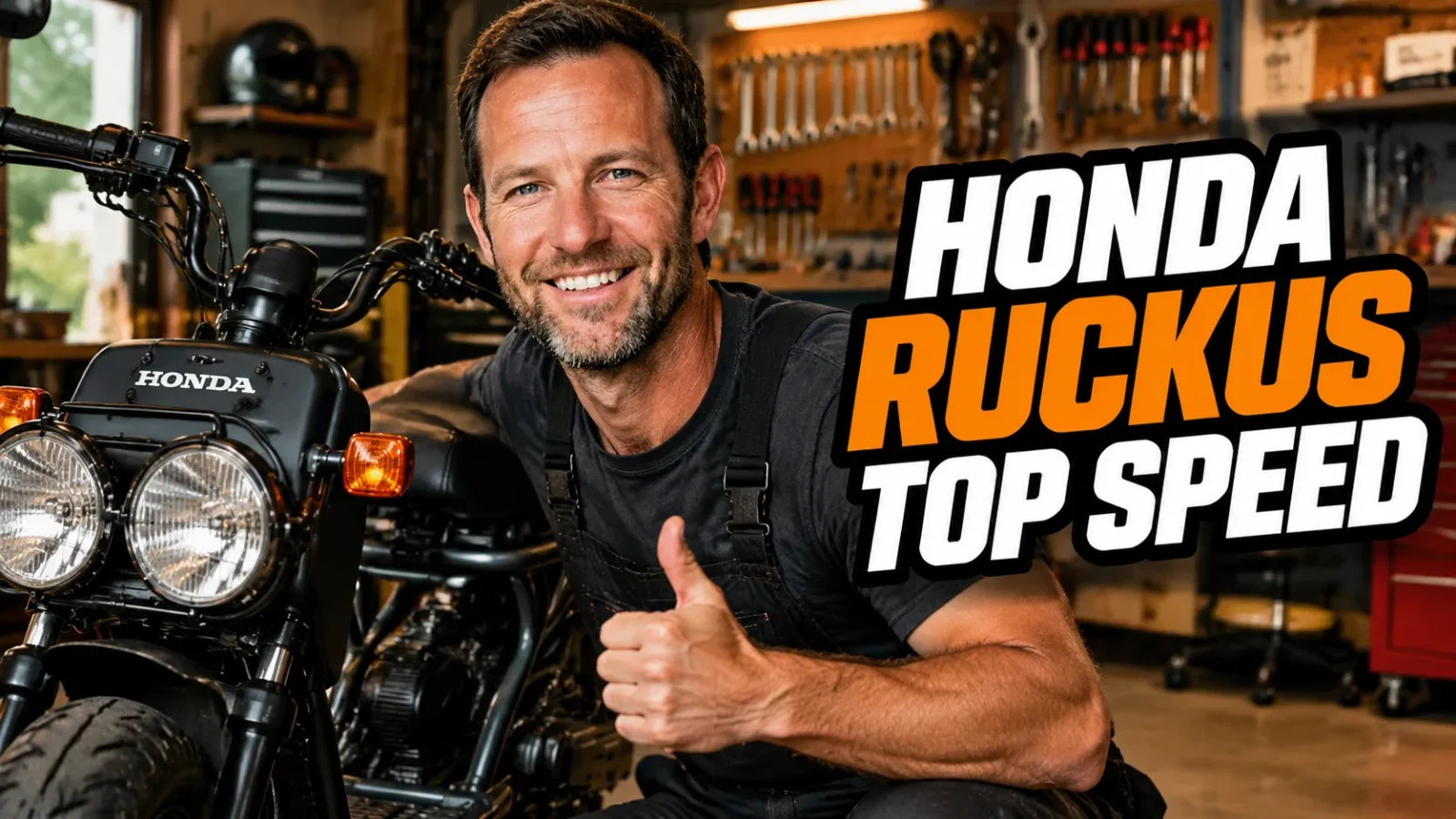
I still remember the first time I pinned the throttle on my bone-stock Honda Ruckus and waited for something dramatic to happen. Nothing did. I crept past 30 mph, watched the speedo needle crawl, and topped out somewhere around 38 mph on a flat stretch of road.
That number surprised me at first. Then I rode one for a few years, tore into the engine, swapped parts, and learned exactly what this little 49cc scooter can and can’t do.
So if you’re wondering what a Honda Ruckus top speed really looks like in the real world, here’s everything I’ve learned from owning and modifying these bikes.
- A stock Honda Ruckus realistically tops out at 35 to 40 mph on flat ground.
- Rider weight, wind, hills, and tire pressure swing that number by 3 to 5 mph in either direction.
- Basic mods (variator, exhaust, rejet, CDI) might get you to 42 to 45 mph.
- Hitting 50 mph requires a big bore kit and a lot of tuning patience.
- Any real speed gain costs money and usually some reliability.
What the Spec Sheet Says vs. What You Actually Get
Honda rates the Ruckus at a top speed of around 40 mph from the factory. That number assumes a 150-pound rider, flat pavement, no wind, and a perfectly broken-in engine.
In my experience, that’s optimistic but not crazy. I’ve seen a stock Ruckus touch 40 mph on a long downhill with a tailwind. On flat ground, I usually hover between 35 and 38 mph.
The bigger the rider, the lower that number drops. At 220 pounds, I noticed my bike struggling to hold 34 mph on mild grades.
Why 49cc Is the Real Bottleneck
The Ruckus runs a 49cc liquid-cooled single that makes roughly 4 horsepower. That’s it. Four. A lawn mower makes more.
You can’t cheat physics. To go faster you need either more power, less drag, or less weight. The stock Ruckus gives you almost none of those.
Speed Limiting Factors Nobody Talks About
Tire pressure matters more than people realize. I once gained 2 mph just by topping off both tires to spec.
Wind resistance is brutal on an upright scooter too. Tucking down low is uncomfortable but I’ve measured a genuine 2 to 3 mph improvement at full tuck.
The Mods That Actually Add Speed
I’ve tested a lot of parts. Some work. Most don’t do much on their own.
1. Performance Variator
A good variator is the single best bang-for-buck mod I’ve done. It changes how the CVT behaves and lets the engine stay in its powerband.
With a Polini or similar variator, I picked up an honest 3 to 4 mph. Not massive, but you feel it immediately in acceleration.
2. Aftermarket Exhaust and Rejet
An exhaust alone does almost nothing. An exhaust plus a proper carb rejet is a different story.
I did both and gained around 2 mph at the top, with noticeably better midrange. If you’re unfamiliar with tuning fuel delivery, this is similar in spirit to following a harley pushrod adjustment chart — get the baseline wrong and nothing else matters.
3. CDI Box Upgrade
The stock CDI limits RPMs. An aftermarket one raises the ceiling.
Here’s the catch: on a stock engine, raising the rev limit doesn’t help because you’re not making power up there. I learned this the expensive way. It only pays off once you’ve done other breathing mods.
4. Big Bore Kit
This is the real path to 50 mph. A 58cc or 65cc big bore kit transforms the bike.
I ran a 65cc kit for a season. It pulled hard to almost 50 mph on flats, but fuel economy dropped, heat went up, and I had to tune constantly.
The Truth About 50 MPH Ruckus Builds
You can absolutely build a Ruckus that does 50 mph. Plenty of guys have.
But it’s not cheap, and it’s not plug-and-play. You’re looking at a big bore kit, a free-flowing intake, an exhaust, a variator, clutch springs, and a lot of jetting trial and error.
I spent way more money than I want to admit chasing those last few mph. Was it worth it? For me, yes. For someone who just wants reliable around-town cruising, absolutely not.
Rider Weight Makes a Huge Difference
I weigh about 190 pounds. My buddy weighs 135, and his identical Ruckus is consistently 3 to 4 mph faster than mine.
That’s not a fluke. Every 20 pounds you add costs you roughly 1 mph up top. There’s no mod that “fixes” that.
How the Ruckus Compares to Other Bikes I’ve Owned
Stepping off a tuned Ruckus and onto a big V-twin is a different universe. My Harley will cruise at 80 mph without breaking a sweat.
Ironically, I’ve spent just as much time troubleshooting that bike as I have the Ruckus. Big twins come with their own headaches — I’ve written about Shovelhead years to avoid and common Harley Davidson Switchback problems for exactly that reason.
The point is: speed is relative. A fast Ruckus is a slow motorcycle, and that’s fine.
What Real Ruckus Owners Report
I’ve talked to dozens of owners. The consensus is remarkably consistent.
Stock bikes land between 35 and 40 mph depending on rider and conditions. Modded bikes with just bolt-ons sit at 42 to 45. Full builds push 48 to 52.
Anyone claiming a stock Ruckus does 55 mph is either lying or going downhill.
Do You Actually Need More Speed?
Here’s my honest take: for city riding, 35 to 40 mph is plenty. The Ruckus was never designed to be fast. It’s designed to be fun, tough, and cheap to run.
Chasing top speed on a 49cc scooter is a bit like upgrading a cruiser for drag racing. You can do it — people dump serious money into harley stage 4 upgrade cost builds all the time — but you’re fighting the platform’s nature.
When Speed Mods Make Sense
If you ride on roads where the speed limit is 45 mph, stock just isn’t safe. You’ll be a rolling roadblock.
In that case, a variator, exhaust, rejet, and CDI are a reasonable investment to make the bike more usable in traffic.
When They Don’t
If you’re only riding around your neighborhood or campus, leave it alone. A stock Ruckus is more reliable, gets better fuel economy, and starts every single time.
I honestly miss my stock setup for that reason. It just worked, every day, no fuss.
Legality and Insurance Notes
Most states classify the Ruckus as a moped or scooter, which means speed-restricted. Some states cap scooters at 30 mph for certain license classifications.
If you mod the bike past that limit, you may technically be riding something that no longer fits its legal category. Check your state laws before you go wild.
Insurance companies also aren’t fans of undisclosed performance mods. I’ve seen claims denied because a bike no longer matched its registered class.
Maintenance That Protects Your Speed
A neglected Ruckus loses speed quietly. Valve clearance drifts, the belt wears, and the air filter clogs.
I check valve lash every 2,000 miles or so. It’s the same principle as reading is Harley Davidson in trouble articles about brand health — small, boring maintenance items decide everything in the long run.
Fresh oil, a clean filter, and a properly tensioned belt will keep your Ruckus at its peak.
Belt Wear Is the Silent Killer
A worn drive belt can cost you 3 to 5 mph without any obvious symptoms. I replace mine every 4,000 miles or so.
My Final Numbers and Recommendation
After years of testing, here’s where I land.
Stock Ruckus: 35 to 40 mph. Modified bolt-on build: 42 to 45 mph. Full big bore build: 48 to 52 mph.
If you want more speed, start with the variator. Then add exhaust and rejet together. Only go big bore if you’re committed to the tuning grind.
And if you’re happy at 38 mph? That’s genuinely fine. The Ruckus was never about going fast — it was about going anywhere with a grin on your face.
Frequently Asked Questions
What is the real top speed of a stock Honda Ruckus?
In my experience, a fully stock Ruckus tops out around 35 to 40 mph on flat ground with a 150 lb rider. Bigger or heavier riders usually see 32 to 37 mph.
Can a Honda Ruckus hit 50 mph?
Yes, but not with the stock engine. Reaching 50 mph realistically requires a big bore kit, a performance variator, an aftermarket exhaust, and rejetting the carburetor.
Does a CDI box really increase Ruckus speed?
An aftermarket CDI removes the factory rev limiter and can free up a few mph, but only if your engine can pull those extra RPMs. On a stock GET engine, gains are usually minimal.
Is it worth modifying a Honda Ruckus for more speed?
If you love the Ruckus platform, absolutely. Just know that speed mods cost money, hurt reliability, and may not be street legal in your state.
