
6 Most Powerful Indian Motorcycles Ranked by Factory Horsepower
 Jake Miller
10 min read
Jake Miller
10 min read
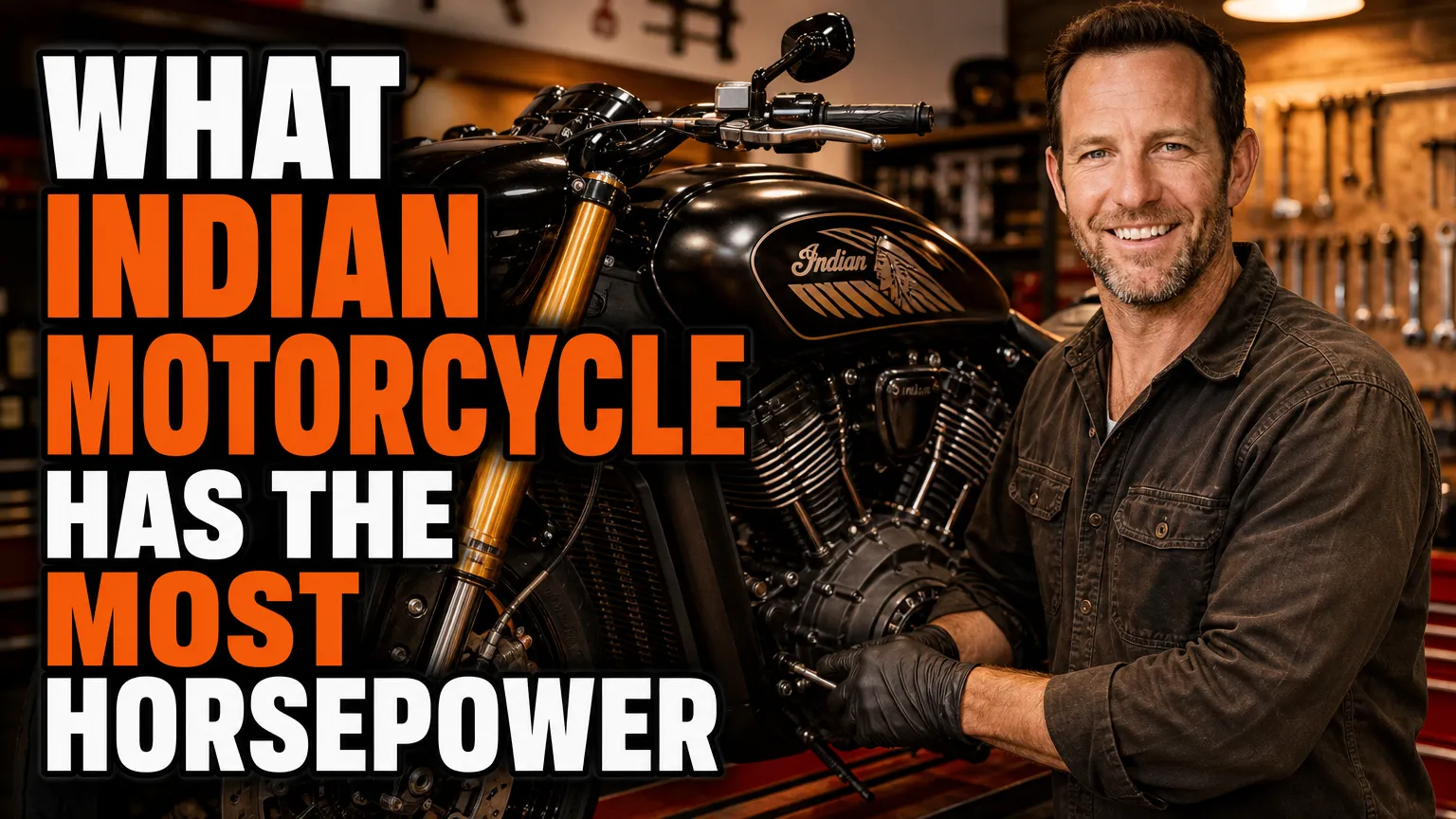
When I compare Indian motorcycles by horsepower, one engine stands above the rest: the PowerPlus 112, rated at up to 126 hp in select Challenger and Pursuit models. That makes those big touring machines the horsepower leaders in the Indian range I’m considering here, although the FTR 1200 and Scout 101 deliver plenty of performance in very different packages.
I’ve put together this list to show which specific models reach the highest published figures, what their engines are like, and how I’d think about those numbers as a rider. I also explain why a horsepower rating alone doesn’t tell me which motorcycle will feel fastest or suit my riding best.
- The Indian Challenger and Pursuit with the PowerPlus 112 lead this list at up to 126 hp.
- The Challenger and Pursuit Elite and Dark Horse versions can share that top engine rating.
- The FTR 1200 is a sportier alternative rated at 120 hp, while the Scout 101 is rated at 111 hp.
- I treat manufacturer horsepower as a useful comparison, not a guarantee of what a bike will show at the rear wheel.
1. Indian Challenger Elite: Up to 126 hp in a premium bagger
When someone asks me, “What Indian Motorcycle has the most horsepower?” I start with the Indian Challenger Elite equipped with the PowerPlus 112. Indian rates this liquid-cooled, 112-cubic-inch V-twin at up to 126 hp, putting the Elite in the top group for published horsepower.
I like that this engine pairs its strong output with a design intended for sustained highway riding, rather than treating power as a number for a spec sheet alone. Its liquid cooling, overhead camshafts, and four valves per cylinder are part of what helps distinguish the PowerPlus from the air-cooled engines found in other Indian cruiser families.
Why I’d consider it
The Challenger Elite gives me the most appealing version of the high-output bagger idea: serious acceleration, wind protection, and touring equipment in one package. I’d look closely at its premium finish and trim as well as its engine, because the Elite is aimed at riders who want more than the base model’s performance.
That performance comes in a sizable motorcycle, so I wouldn’t choose it on horsepower alone. When I’m comparing bikes for long days in the saddle, I also consider seating position, luggage, passenger comfort, and weather protection. Those are the same kinds of factors I’d weigh when researching a most luxurious cruiser motorcycle for long distance.
What the rating means on the road
I read 126 hp as an indication of the engine’s potential, not a promise that the bike will feel light or nimble. A big touring motorcycle has to move substantial mass, and the way its power arrives, along with gearing and throttle response, shapes the ride just as much as the peak figure.
Specifications can differ by model year and market, so I’d verify the engine listed on the exact Challenger Elite I’m considering. In particular, I’d check whether it has the PowerPlus 112 rather than assuming every bike with the Challenger name has the same output.
2. Indian Pursuit Elite: 126 hp with full touring intent
The Indian Pursuit Elite is another top contender when it has the PowerPlus 112 engine. Its published rating reaches 126 hp, tying it with the highest-output Challenger models rather than beating them outright.
When I compare the Pursuit with the Challenger, I see two versions of a powerful bagger-style platform aimed at different touring preferences. The Pursuit is the more fully equipped touring choice, with features and bodywork designed around comfort and carrying capability, while the Challenger has a more stripped-back performance-bagger character.
My take on its touring power
I’d value the Pursuit’s horsepower most when riding with a passenger, luggage, or both. That extra capacity can make a strong engine feel useful during highway passing and climbs, although I’d still pay attention to load limits and ride within the motorcycle’s handling and braking capabilities.
For me, the important point is that a touring bike’s power has to work alongside comfort and control. I’d want to sit on the Pursuit, check how easily I can manage it at low speed, and assess whether its size fits my routes before letting a headline horsepower number make the decision.
3. Indian Challenger Dark Horse: Muscle with a darker style
The Indian Challenger Dark Horse belongs in this list when equipped with the PowerPlus 112, which is rated at up to 126 hp. In horsepower terms, I put it level with the Challenger Elite and the comparable Pursuit models that use the same high-output engine.
I find the Dark Horse appealing if I want the Challenger’s performance-bagger layout with a more subdued, dark-finish look. The name describes the trim’s styling and presentation; it doesn’t automatically mean a different horsepower figure. I’d confirm the engine specification for the particular model year and version rather than relying on the badge alone.
Why I wouldn’t compare it by horsepower alone
Peak horsepower tells me how much power an engine can produce at a particular point in its rev range, but it doesn’t fully describe the everyday feel. I’d also look at torque, throttle calibration, transmission gearing, and the motorcycle’s weight to understand how it pulls away from a stop or accelerates to pass.
I also think about how I’ll use a large, powerful bike. If most of my riding is urban commuting or slow-speed practice, I may get more value from a manageable motorcycle than from the highest-output option. I’d first consider my experience and needs, just as I would when comparing the best motorcycle engine size for beginners.
4. Indian Pursuit Dark Horse: The same top rating in a touring setup
The Indian Pursuit Dark Horse, when equipped with the PowerPlus 112, is also rated at up to 126 hp. It ties with the other 112-powered entries here, so I don’t describe it as a higher-horsepower machine than the Challenger Elite or Challenger Dark Horse.
I’d shortlist the Pursuit Dark Horse if I wanted the touring-focused Pursuit package and preferred the Dark Horse trim’s styling. Its performance story is still centered on that powerful PowerPlus engine, but its touring configuration is what gives it a distinct place on my list.
How I’d choose between the Pursuit and Challenger
When I’m picking between the two families, I focus less on their shared maximum horsepower and more on how I plan to ride. I’d lean toward the Pursuit if I prioritize a more fully equipped long-distance setup, and toward the Challenger if I prefer the bagger profile and its particular combination of touring protection and performance character.
I’d also compare the exact equipment on each trim, since features can vary across model years. Luggage, infotainment, passenger accommodations, and accessories can affect price and touring convenience, even when the engine rating is identical.
5. Indian FTR 1200: A more athletic 120-hp option
The Indian FTR 1200 takes a different route to performance. Published specifications rate the 1,203 cc liquid-cooled V-twin at around 120 hp, which puts it below the PowerPlus 112’s 126 hp but makes the FTR one of Indian’s most powerful sport-oriented choices.
For my taste, the FTR’s appeal isn’t just its output. Its more athletic layout gives it a different feel from a large touring bagger, and its upright riding position and road-focused character make it the model I’d consider if I wanted Indian performance in a more compact, responsive package.
Why 120 hp can feel plenty fast
I wouldn’t assume the Challenger or Pursuit will feel quicker in every situation just because its peak figure is higher. The FTR’s lighter, sportier character can make its power feel immediate and engaging, while a bagger’s mass and touring mission shape how its acceleration is experienced.
Model versions and specifications have varied, so I’d check the published data for the precise FTR year and trim I’m shopping for. I’d also confirm local availability, since model-year ranges and dealer inventory change over time.
I think it’s useful to keep engine size in context, too. A smaller-displacement motorcycle can still be fast for its class, but it won’t necessarily match a big V-twin’s output; for a separate look at smaller-bike performance, I’d read about how fast can a 150cc motorcycle go unleashing top speeds and how fast can a 300cc motorcycle go.
6. Indian Scout 101: 111 hp in a lighter cruiser package
The Indian Scout 101 is rated at up to 111 hp, so it doesn’t top the list, but I consider it a noteworthy performance option in the Scout family. Its 1,250 cc liquid-cooled V-twin gives it a strong published figure in a cruiser format that’s distinct from both the FTR and the touring-focused PowerPlus models.
I’d look at the Scout 101 if I wanted muscular acceleration and a more compact cruiser experience without moving to a large touring motorcycle. Its lower horsepower rating doesn’t make it slow; it simply sits below the 120-hp FTR and 126-hp PowerPlus models in this specific comparison.
Where it fits for me
I’d compare the Scout 101 with other Scout trims and pay attention to the differences in engine tuning, equipment, and ergonomics. The Scout name covers more than one configuration, so I wouldn’t assume the 101’s output applies to every Scout—or that another trim has the same suspension and braking equipment.
When I’m new to a category, I find it helpful to judge a bike by how comfortably I can handle it, not just its displacement or output. That’s especially true with cruisers, where seat height, weight distribution, and reach to the controls can matter a lot in everyday riding.
How I compare Indian horsepower figures
My short answer is that the Indian Challenger and Pursuit models fitted with the PowerPlus 112 reach the highest published figure in this group: up to 126 hp. The Elite and Dark Horse versions can share that rating when they use the same engine, so trim level by itself doesn’t always determine which one makes more power.
I treat manufacturer horsepower as a useful starting point, not a direct comparison with a rear-wheel dynamometer result. The measurement method, model year, market, and test conditions can all affect how a number is reported. Before buying, I’d check the official technical details for the exact motorcycle and engine combination.
I also separate a motorcycle’s horsepower from its brand origin and manufacturing details. Those are related ownership questions, but they don’t change the answer to which Indian model has the highest output; I’d explore what motorcycle is made in india separately if that’s part of my research.
My final pick for maximum Indian horsepower
If maximum published horsepower is my main priority, I’d shortlist a PowerPlus 112-equipped Indian Challenger or Pursuit rated at up to 126 hp. I wouldn’t claim there’s a single winner among all versions using that engine, because multiple specific trims share the same top figure.
If I wanted a more athletic road bike, I’d compare the FTR 1200 at around 120 hp. If I wanted a cruiser with a strong but lower rating, I’d consider the Scout 101 at 111 hp. I’d test-ride the models available to me, confirm the precise specifications, and choose the one whose ergonomics and power delivery fit my real riding best.
Frequently Asked Questions
Which Indian Motorcycle has the most horsepower?
The 2025 Indian Challenger and Pursuit models equipped with the PowerPlus 112 engine are rated at up to 126 hp.
How much horsepower does the Indian FTR make?
The Indian FTR 1200 is rated at 120 hp in published specifications, depending on model and market.
Is the Indian Scout 101 more powerful than the FTR?
No. The Scout 101 is rated at 111 hp, while the FTR 1200 is rated at 120 hp.
Are Indian Motorcycle horsepower figures measured at the rear wheel?
Not necessarily. Published horsepower is generally a manufacturer figure, so I recommend checking the specific model’s technical documentation before comparing it with a dynamometer result.

Related Articles

7 Fastest Indian Motorcycles for Speed, Power, and Real-World Riding
Explore the quickest Indian Motorcycle models, engine specs, realistic speed estimates, and my picks for riders seeking performance and comfort.
Jake Miller
12 min read

5 Most Expensive Indian Motorcycles: Elite Touring Models Compared
Compare the priciest Indian Motorcycle models, from the Pursuit Elite to premium touring trims, with 2025 U.S. MSRP context, key…
Jake Miller
9 min read

6 Lightest Indian Motorcycles Ranked by Weight, Specs and Riding Feel
Find the lightest Indian motorcycle for your riding style. I compare six models by published weight, engine, features, price and…
Jake Miller
11 min read