
6 Harley-Davidson Cruisers That Give Bigger Riders Room to Settle In
 Jake Miller
11 min read
Jake Miller
11 min read
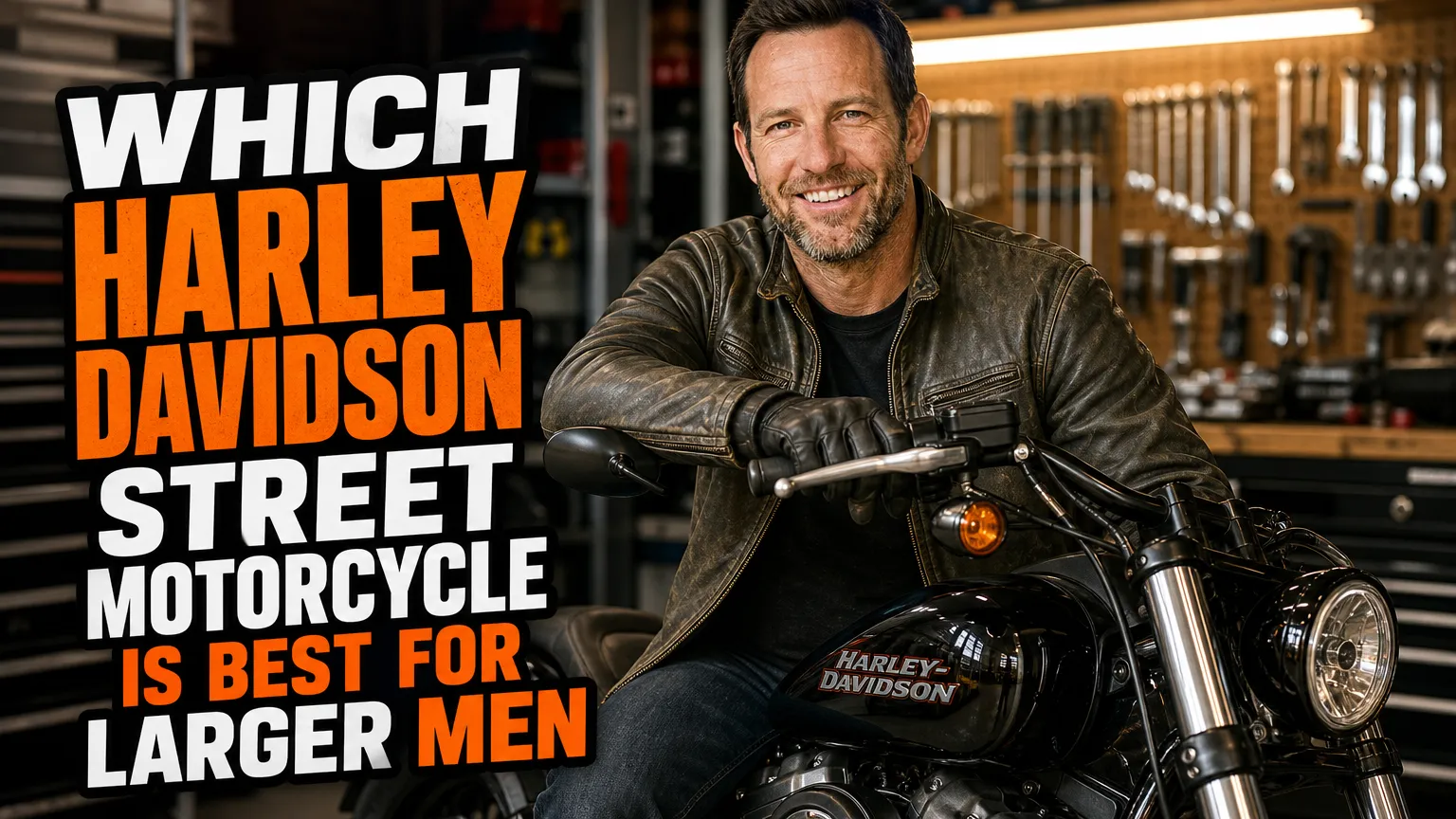
When I’m choosing a Harley-Davidson for a larger rider, I look beyond engine size and the number on the scale. Seat shape, room for my legs, handlebar reach, suspension setup, and how easy the bike feels to manage at low speed all matter. A motorcycle can look substantial yet still leave a tall rider cramped or a heavier rider wishing for a better seat.
My shortlist below focuses on Harley-Davidson cruisers that offer useful combinations of road presence, touring comfort, and adjustable or adaptable ergonomics. Model specifications and availability can change by year and market, so I’d confirm the current details with a local dealer and take a proper test ride before deciding.
- I’d start with the Heritage Classic for a relaxed, versatile ride and useful touring equipment.
- The Low Rider ST is my pick for a more performance-minded bike with wind protection and storage.
- The Street Bob is a simpler, lighter-feeling starting point, while the Fat Boy offers a broad, substantial cruiser stance.
- I’d check weight capacity, seat comfort, and control reach on the exact model year rather than choosing by appearance alone.
1. Harley-Davidson Heritage Classic — My Comfort-First All-Rounder
If I wanted one Harley for commuting, weekend rides, and longer trips, I’d put the Heritage Classic near the top of my list. Its relaxed cruiser layout and touring-friendly equipment give me more options for settling in than I’d expect from a stripped-down city bike. The Milwaukee-Eight 117 V-twin in recent versions also gives it ample displacement for relaxed highway riding.
The Heritage Classic’s low seat height can make stops feel less intimidating, but I wouldn’t treat that measurement as a promise of perfect fit. Seat width affects how far my legs have to reach, and a low saddle can still leave a tall rider’s knees sharply bent. I’d spend time checking the knee angle, foot-control position, and how naturally I can reach the handlebars.
Why I’d consider it for a larger frame
I like that the bike’s touring orientation makes it easier to imagine adding luggage and spending hours in the saddle. Depending on model year and trim, its wind protection and storage features can reduce fatigue on longer rides. I’d still assess the stock seat in person, since comfort is personal and a seat that suits one body shape may create pressure points for another.
It is a substantial motorcycle, so I’d pay attention to parking-lot handling and the owner’s manual’s maximum vehicle weight. Rider, passenger, and luggage all count toward that limit. For broader guidance on matching a bike to the kind of roads I ride, I’d also browse this guide to the best motorcycle for street riding.
2. Harley-Davidson Low Rider ST — My Pick for Highway Miles and Storage
I’d choose the Low Rider ST if I wanted a muscular cruiser that feels ready for regular highway use. Its Milwaukee-Eight 117 engine, frame-mounted fairing, and hard saddlebags give it a different kind of practicality from a bare-bones bobber. That combination is attractive when I want wind protection and a place for everyday gear without moving to a full-dress touring motorcycle.
The ST’s riding position is more forward and sporty than the Heritage Classic’s, which is important for a larger rider to assess carefully. I’d check whether the bars make me lean too far forward and whether the foot controls put uncomfortable pressure on my knees or hips. If the basic fit is close but not quite right, I’d ask a qualified dealer about compatible seat, bar, or control changes.
What I’d test before buying
Its fairing can make a noticeable difference in wind exposure, but the airflow that feels good at one height may buffet another rider’s helmet. I’d test the bike at the speeds I actually ride and make sure I can turn the bars fully without feeling cramped. The hard bags are useful, but I’d also check their capacity against the gear I plan to carry.
The Low Rider ST is not a lightweight option, and a loaded bike can feel different from one ridden solo. I’d practice slow turns and backing into a parking space before committing. For me, it makes most sense when highway comfort and built-in luggage matter more than having the simplest possible cruiser.
3. Harley-Davidson Street Bob — My Simple, Adaptable Cruiser Choice
The Street Bob is the Harley I’d consider when I want a classic cruiser with a cleaner, less touring-focused setup. Recent versions use the Milwaukee-Eight 117, while engine and equipment details vary by model year. Its relatively stripped-back character appeals to me because I can focus on the riding position first and decide later whether I need changes such as a different seat or handlebars.
A low seat can help me feel connected to the ground at a stop, but a compact bobber layout may not give every tall rider enough legroom. I’d look at how my knees sit beside the tank and whether the bars bring my shoulders into a relaxed position. Larger riders should also consider whether the stock seat distributes pressure comfortably over the rides they actually take.
Why I’d keep its limits in mind
I’d describe the Street Bob as a useful all-around cruiser rather than a ready-made long-distance tourer. It has less built-in wind protection and storage than the Low Rider ST or Heritage Classic, so longer trips may call for accessories. Before adding luggage or a passenger, I’d check the motorcycle’s specified maximum load and choose compatible equipment.
For a first big-twin purchase, I wouldn’t assume that more displacement automatically means a better fit. I’d compare experience, use, and confidence with the advice in this overview of the best motorcycle engine size for beginners. The Street Bob suits me best when I want a straightforward street cruiser and am prepared to personalize its contact points if needed.
4. Harley-Davidson Fat Boy — My Choice for a Broad, Planted Feel
The Fat Boy has the visual substance and broad stance that many riders picture when they think of a classic Harley cruiser. Its Milwaukee-Eight 117 and distinctive solid-disc wheels give it a strong identity, while the low seat makes it approachable at a stop for many riders. I’d consider it when I want a substantial-looking machine and a relaxed, feet-forward riding style.
That stance is not automatically ideal for every larger rider. The seat, tank shape, and foot-control location determine how my hips and knees line up, and the bike’s heft matters when I’m maneuvering it without momentum. I’d sit on one for more than a minute and, if possible, ride it through a few tight turns before deciding that the size feels reassuring rather than cumbersome.
When I’d pick the Fat Boy
I’d lean toward the Fat Boy if its wide, planted character feels natural and I mostly ride paved roads. It is not the choice I’d make for someone who wants a lightweight-feeling commuter or frequent gravel-road flexibility. I’d also compare its real-world wind protection with what I need, since a classic cruiser setup may expose me more than a touring-oriented model.
As with any motorcycle, I’d confirm the precise year’s weight and load specifications instead of guessing from its physical size. A big-looking bike is not necessarily more accommodating in the saddle. My deciding question would be whether I can comfortably reach every control and manage the bike confidently at walking pace.
5. Harley-Davidson Breakout — My Style-Forward Option for a Confident Fit
I’d consider the Breakout when I want a custom-inspired cruiser with a long, low profile and a strong Milwaukee-Eight 117 engine in recent versions. Its stretched appearance and broad rear tire make it stand out, and its seat is low enough to give many riders a secure-feeling stop. For me, it is an option to choose because I genuinely like its character, not simply because it looks large.
The long profile and feet-forward ergonomics are the parts I’d test most carefully. I’d check how much room I have to move my legs, how easily I can reach the bars, and whether the riding posture stays comfortable after time in the saddle. A rider with long legs may appreciate the open stance, while another may find the control position awkward.
Who I think it suits
The Breakout makes the most sense to me as a style-led street cruiser for someone who is comfortable with a substantial machine. I’d be realistic about its limited touring practicality compared with bikes that include more wind protection or luggage. Before purchasing, I’d verify the current model-year features and test the exact motorcycle rather than relying on photos or seat-height figures alone.
I’d also think about the roads I use most. If my riding includes rough surfaces or trails, I would compare a road cruiser with a more versatile design and read about the best dual purpose motorcycle for street and trail riding. The Breakout is firmly a paved-road choice in my book.
6. Harley-Davidson Low Rider S — My Sportier Solo-Riding Pick
The Low Rider S gives me a performance-minded cruiser option without the Low Rider ST’s touring-style saddlebags and fairing. Recent versions feature a Milwaukee-Eight 117 engine and a more aggressive riding character than a relaxed classic cruiser. I’d put it on my list if I wanted strong road presence and responsive-feeling street manners for mostly solo riding.
Its ergonomics deserve a careful fit check, particularly for anyone with a larger build. The riding position can feel more active, and I’d make sure that the bars, seat, and foot controls let me stay relaxed rather than bracing my weight through my wrists. For me, comfort means being able to shift position naturally, not just finding a seat that feels soft at the showroom.
How I’d compare it with the ST
I’d compare the Low Rider S directly with the Low Rider ST because they share a family resemblance but suit somewhat different priorities. The S is the simpler, sportier direction; the ST adds a fairing and hard bags that I’d value for regular longer rides. I’d choose based on how much wind protection and storage I actually use, not on which version looks tougher.
Neither model should be judged by engine size alone. A large-displacement Harley can feel very different from a small-displacement motorcycle in power delivery, weight, and handling. If I’m comparing bikes across categories, I might also look at practical explainers on how fast a 150cc motorcycle can go and how fast a 300cc motorcycle can go, while remembering that speed figures alone say little about fit or comfort.
How I’d Make the Final Choice
My overall comfort-first starting point is the Heritage Classic, while the Low Rider ST is my pick when I want a more modern, sport-oriented feel with useful touring equipment. I’d look at the Street Bob for a simpler cruiser, and I’d choose the Fat Boy or Breakout when their particular styling and riding positions genuinely suit me. Those are starting points, not substitutes for a test ride.
My quick fit checklist
- Check the load limit: I’d include my weight, passenger, luggage, and accessories, then compare the total with the exact model-year owner’s manual.
- Assess the contact points: I’d test seat width, knee angle, foot controls, and handlebar reach rather than relying on seat height alone.
- Try low-speed handling: I’d make sure I can steer, stop, and maneuver the motorcycle confidently, especially if it is heavy or fitted with luggage.
- Match the bike to the ride: I’d prioritize wind protection and storage for longer trips, or a simpler layout for shorter rides around town.
- Ask about setup: I’d discuss suspension adjustment and compatible seating or control changes with a Harley-Davidson dealer before modifying the bike.
For a larger rider, the best Harley is the one that supports a relaxed position and feels manageable in the situations I encounter every day. I’d compare the Heritage Classic and Low Rider ST first for comfort and versatility, then choose the model that fits my body, experience, budget, and riding plans. A careful test ride and a load-limit check are worth more than picking a bike by its name or appearance alone.
Frequently Asked Questions
Which Harley-Davidson is most comfortable for a larger rider?
I would start with the Heritage Classic or Low Rider ST, then compare seat width, legroom, and handlebar reach during a test ride.
Is the Street Bob a good choice for a heavier rider?
It can be, but I would check the owner’s manual for the model-year weight capacity and account for rider, passenger, and luggage together.
Does a low seat height guarantee a comfortable fit?
No. I also check the seat’s width, foot-control position, handlebar reach, and how my knees and hips feel after riding.
Should a larger rider choose the biggest Harley-Davidson?
Not automatically. I would prioritize a comfortable riding position, manageable weight, and intended use over engine size alone.

Related Articles

5 Best Harley-Davidson Motorcycles for New Riders, From Easygoing to Used-Model Gems
Compare five Harley-Davidson motorcycles for new riders, from the approachable Nightster to used bargains, with fit, power, costs, and practical…
Jake Miller
10 min read

7 Harley-Davidson and LiveWire Bikes: Which Ones Ride Without Shifting?
Find out whether Harley-Davidson offers automatic motorcycles, how LiveWire electric bikes work, which Harley models still use a clutch, and…
Jake Miller
11 min read

8 Best Used Harley-Davidson Motorcycles I’d Choose for Different Kinds of Riding
I compare eight used Harley-Davidson models by riding style, engine, comfort, and value, plus share the inspection tips I use…
Jake Miller
13 min read