
5 Best Harley-Davidson Motorcycles for New Riders, From Easygoing to Used-Model Gems
 Jake Miller
10 min read
Jake Miller
10 min read
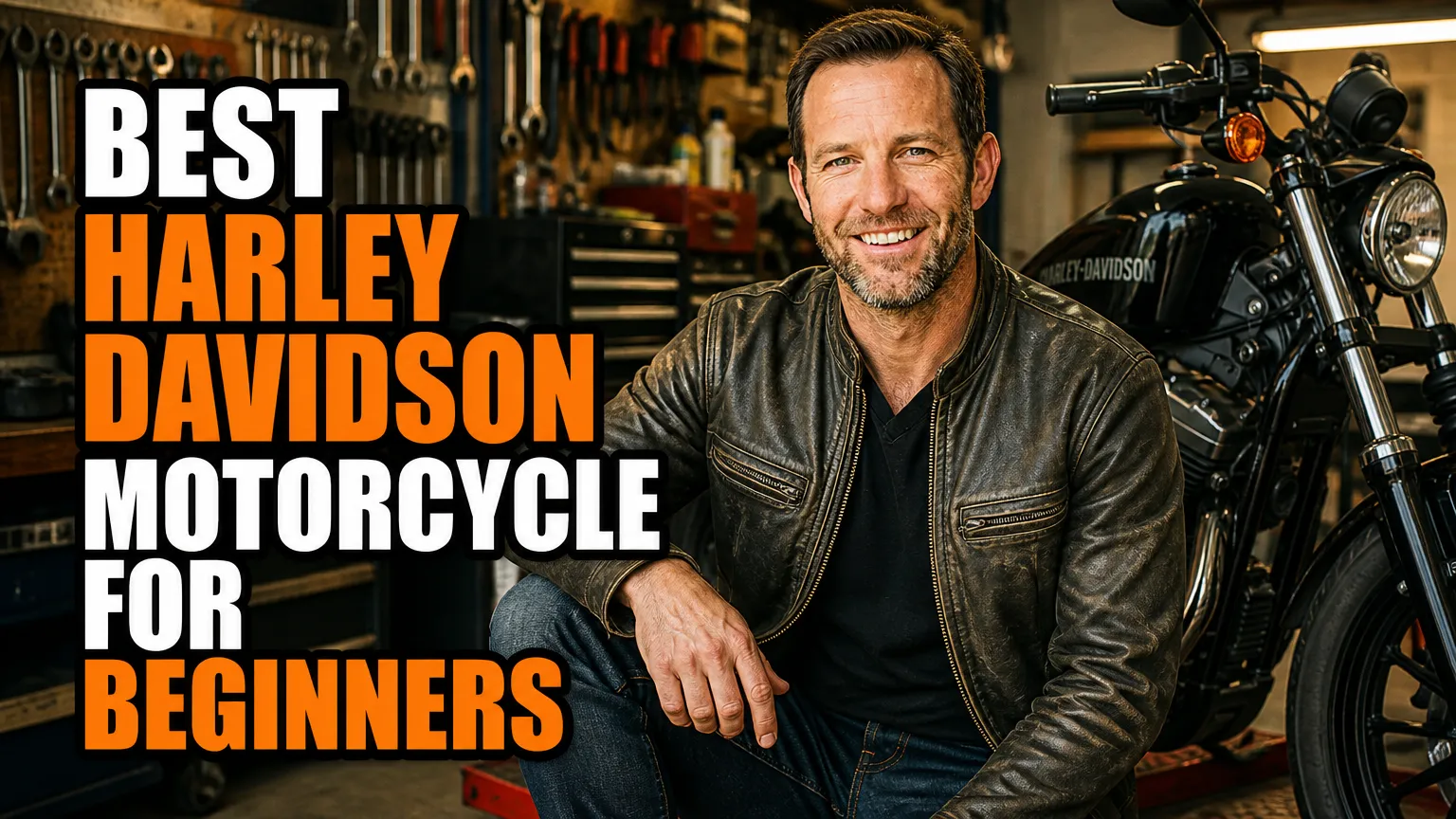
Choosing my first Harley would be about more than the badge or the sound. I’d want a bike that fits my body, feels manageable at parking-lot speeds, and leaves enough room to grow as my riding skills improve.
Harley-Davidson’s current smaller-displacement options are limited, so I’m including both newer Nightster models and older motorcycles that I’d shop for used. Availability, condition, and equipment vary by model year, and I’d take any candidate for a careful test ride before deciding.
- I’d begin my search with the Nightster for its low seat and lighter feel compared with most Harleys.
- The Nightster Special adds useful technology, but costs more and has the same lively 975cc engine.
- Used Street 500 and Iron 883 models can work, provided their condition and fit are right for me.
- I’d take a beginner riding course and practice low-speed control before choosing any motorcycle.
How I’d Choose a First Harley
I wouldn’t choose a beginner bike by engine displacement alone. I’d consider wet weight, where the weight sits, seat height, clutch feel, throttle response, and whether I can comfortably put a foot down at a stop.
I’d also be honest about my experience. A motorcycle that feels exciting in a showroom can feel intimidating during a tight U-turn or on a sloped driveway. I’d try to sit on several bikes, ask a dealer about a supervised test ride, and leave room in my budget for protective gear and training.
New model or used motorcycle?
If I wanted modern safety aids and a warranty, I’d look first at the Nightster range. If I wanted a lower purchase price or a gentler engine, I’d consider a used Street 500 or Iron 883, but only after checking service records and paying for a mechanical inspection.
Riders who are still comparing engine sizes may also find my guides to the best 125cc motorcycle for beginners, best 250cc motorcycle for beginners, best 300cc motorcycle for beginners, and best 400cc motorcycle for beginners useful. Harley’s beginner-friendly choices don’t always match the smaller engine sizes many new riders first consider.
1. Harley-Davidson Nightster — My First New Harley to Try
For a new Harley, I’d start by sitting on the Harley-Davidson Nightster. Its Revolution Max 975T is a liquid-cooled 975cc V-twin, and recent model specifications list about 91 horsepower and 70 lb-ft of torque. That is plenty of performance, so I wouldn’t mistake its approachable size for a low-powered beginner bike.
What attracts me is the Nightster’s relatively compact layout and low seat, listed at about 27.1 inches on recent models. Its curb weight is roughly 480 pounds, depending on year and equipment. That is still substantial, but I’d find it less intimidating to maneuver than many larger Harley cruisers.
What I like, and what I’d watch
I like that the Nightster’s liquid-cooled engine, fuel injection, and rider aids make it a modern everyday option. Recent versions include features such as ABS, selectable ride modes, and traction control; I’d check the exact year and trim because equipment can change.
The shortcoming is its punchy engine. I’d use a gentle throttle hand, practice smooth starts, and avoid treating the Nightster as a forgiving learner bike just because it has a low seat. Recent new-bike pricing has generally started around the $10,000 mark in the United States, though dealer prices and model years vary.
My take: I’d shortlist the Nightster if I wanted a new Harley and was ready to take training seriously. I’d compare it with lighter learner motorcycles before committing, especially if I’m nervous about weight or throttle response.
2. Harley-Davidson Nightster Special — My Pick for More Everyday Features
The Harley-Davidson Nightster Special gives me the same basic 975T engine platform in a more feature-rich package. Its power and low seat height remain close to the standard Nightster, so I wouldn’t expect it to be substantially easier to ride simply because it has “Special” in its name.
Depending on model year, the Nightster Special can add equipment such as a passenger seat and footpegs, a larger display, Bluetooth connectivity, cruise control, and additional rider-focused features. I’d verify the specific bike’s equipment with the dealer or owner rather than assume every year includes the same kit.
When I’d pay extra
I’d consider the Nightster Special if I expected to commute, ride longer distances, or make regular use of its added display and touring conveniences. Recent U.S. starting prices have typically been around $12,000, but trim, year, freight, taxes, and dealer availability can shift the actual cost.
I’d still focus on the fundamentals during a test ride: whether I can hold the bike upright, reach the controls, operate the clutch smoothly, and manage a slow turn. Extra technology can be useful, but it can’t replace good fit or practice.
My take: I’d choose the Nightster Special over the standard Nightster only if I valued its specific extra features enough to justify the price. For a brand-new rider, I’d keep some of that budget for a quality helmet, protective clothing, and a certified course.
3. Harley-Davidson Street 500 — My Used-Bike Choice for Modest Power
The Harley-Davidson Street 500 is no longer a new-bike showroom choice, but I’d consider a clean used example. Its 494cc liquid-cooled Revolution X V-twin produces considerably less power than the Nightster’s engine, making it a more modest option for a rider who wants a Harley with a less forceful acceleration response.
Street 500 motorcycles are commonly available through used-bike listings, although their age and condition vary widely. I’d pay close attention to maintenance records, tire age, brake condition, battery health, and signs of damage or neglect. A low asking price wouldn’t persuade me to skip an independent inspection.
What makes it worth a look
I’d value the Street 500 for its relatively approachable power and city-friendly scale. Its weight is still around the 500-pound range, depending on the year and specification, so I’d practice balancing and maneuvering it before deciding it feels easy.
Because the Street 500 is discontinued, I’d also ask a local Harley dealer or independent shop about parts and service support in my area. Used prices can vary substantially with mileage and condition, so I’d compare several listings rather than rely on one advertised bargain.
My take: I’d look at the Street 500 if I wanted lower power than the newer Nightster and found a well-maintained example at a sensible price. If I’m a smaller rider trying to compare fit, I’d also read this guide to the best motorcycle for short beginners before narrowing my options.
4. Harley-Davidson Iron 883 — My Used Pick for Classic Sportster Character
The Harley-Davidson Iron 883 is a recognizable Sportster that I’d consider only as a used motorcycle. Its air-cooled 883cc Evolution engine has a more traditional feel than the Nightster’s liquid-cooled motor, and the Iron 883’s low seat—about 25.7 inches on many model years—can help me feel planted at a stop.
I wouldn’t confuse a low seat with light weight. Depending on model year, the Iron 883 weighs roughly 560 pounds ready to ride. That heft can make parking-lot turns, backing uphill, and picking the motorcycle up after a fall much more challenging than the seat height suggests.
What I’d inspect before buying
I’d look for evidence of regular oil and filter changes, check the tires and brakes, and inspect for leaks, damaged controls, or poorly installed modifications. I’d also confirm the title and vehicle history, then arrange a test ride with an experienced rider or mechanic if I wasn’t yet licensed or confident.
The Iron 883 was discontinued after its final model years, so current examples are used-market purchases. Prices depend heavily on year, mileage, condition, and modifications; I’d compare local listings and budget for any deferred maintenance rather than assume an older Harley will be inexpensive to own.
My take: I’d choose the Iron 883 for its classic styling and familiar Harley character, not because it’s automatically the easiest beginner bike. I’d only recommend it to myself if its weight felt manageable and I could find a clean, unmodified example.
5. Harley-Davidson Street 750 — My Used Option for a Step Up in Power
The Harley-Davidson Street 750 is another discontinued model I’d shop for used rather than expect to find new. Its 749cc Revolution X engine offers more power than the Street 500, while remaining different in character and output from the modern 975cc Nightster.
I’d think of the Street 750 as a possible choice for a beginner who has completed training, feels comfortable with a heavier motorcycle, and wants something for both local trips and faster roads. I wouldn’t pick it simply because the engine size sounds like a sensible middle ground: weight, condition, and how smoothly I can control the clutch matter more.
Used-market considerations
As with the Street 500, I’d confirm parts availability and ask a local shop whether it regularly services this model. A pre-purchase inspection is especially worthwhile on an older motorcycle, and I’d test the lights, switches, charging system, brakes, and suspension before buying.
In my view, the Street 750 makes most sense when its fit and condition suit me better than the alternatives. I’d compare it directly with the Street 500 and Iron 883, and I’d avoid buying one that feels top-heavy or awkward just because the price seems attractive.
My take: I’d consider the Street 750 a used step-up option, not my automatic first recommendation. If I wanted to compare it with lighter small-displacement choices, I’d also look at a 300cc motorcycle for beginners before deciding that a Harley is the right fit.
My Final Checklist Before I Buy
Before choosing any of these motorcycles, I’d take a certified beginner riding course and get comfortable with braking, shifting, and low-speed turns. Training gives me a better foundation for judging a bike than a showroom sit alone, and it may also help me qualify for insurance or licensing benefits in some areas.
- Fit: I’d check reach to the bars, footpeg position, and whether I can confidently support the motorcycle at a stop.
- Control: I’d pay attention to clutch engagement, throttle sensitivity, braking feel, and slow-speed balance.
- Costs: I’d price insurance, protective gear, maintenance, registration, and any needed repairs—not just the bike.
- Condition: For a used motorcycle, I’d review service records and get an independent inspection.
- Practice: I’d spend time in a safe practice area before riding in traffic or carrying a passenger.
My overall starting point would be the Nightster if I wanted a newer Harley, or a carefully inspected Street 500 if I wanted a used bike with more modest power. I’d consider the Nightster Special for its added equipment, and I’d choose an Iron 883 or Street 750 only after making sure their weight, condition, and controls suited me.
There isn’t one perfect first Harley for every rider. I’d make the final call based on a real test ride, honest assessment of my experience, and whether I can control the motorcycle comfortably—not simply on the model’s reputation or engine size.
Frequently Asked Questions
Which Harley-Davidson is easiest for a beginner to manage?
I’d start by sitting on a Nightster and checking that you can support it comfortably. Its low seat and manageable size help, but its 975cc engine still deserves a careful test ride.
Is a Harley-Davidson Iron 883 a good first motorcycle?
It can be a good used option for a rider who is comfortable with its weight and has completed training. I’d inspect its condition carefully and compare it with a newer Nightster before buying.
Should a beginner buy a Harley-Davidson Street 500?
A well-maintained used Street 500 can suit a new rider who wants modest power, but parts, service history, and condition matter. I’d have a mechanic inspect it before purchase.
Are Harley-Davidson motorcycles too heavy for beginners?
Some are, but not all. I’d prioritize low-speed balance, seat fit, controllable power, and training over engine size or appearance.

Related Articles

6 Harley-Davidson Cruisers That Give Bigger Riders Room to Settle In
Compare six Harley-Davidson cruisers for larger riders, with practical notes on seat height, engine, ergonomics, weight, and what to check…
Jake Miller
11 min read

7 Harley-Davidson and LiveWire Bikes: Which Ones Ride Without Shifting?
Find out whether Harley-Davidson offers automatic motorcycles, how LiveWire electric bikes work, which Harley models still use a clutch, and…
Jake Miller
11 min read

8 Best Used Harley-Davidson Motorcycles I’d Choose for Different Kinds of Riding
I compare eight used Harley-Davidson models by riding style, engine, comfort, and value, plus share the inspection tips I use…
Jake Miller
13 min read