
8 Women’s Motorcycle Gear Picks for Safer, More Comfortable Rides
 Jake Miller
12 min read
Jake Miller
12 min read
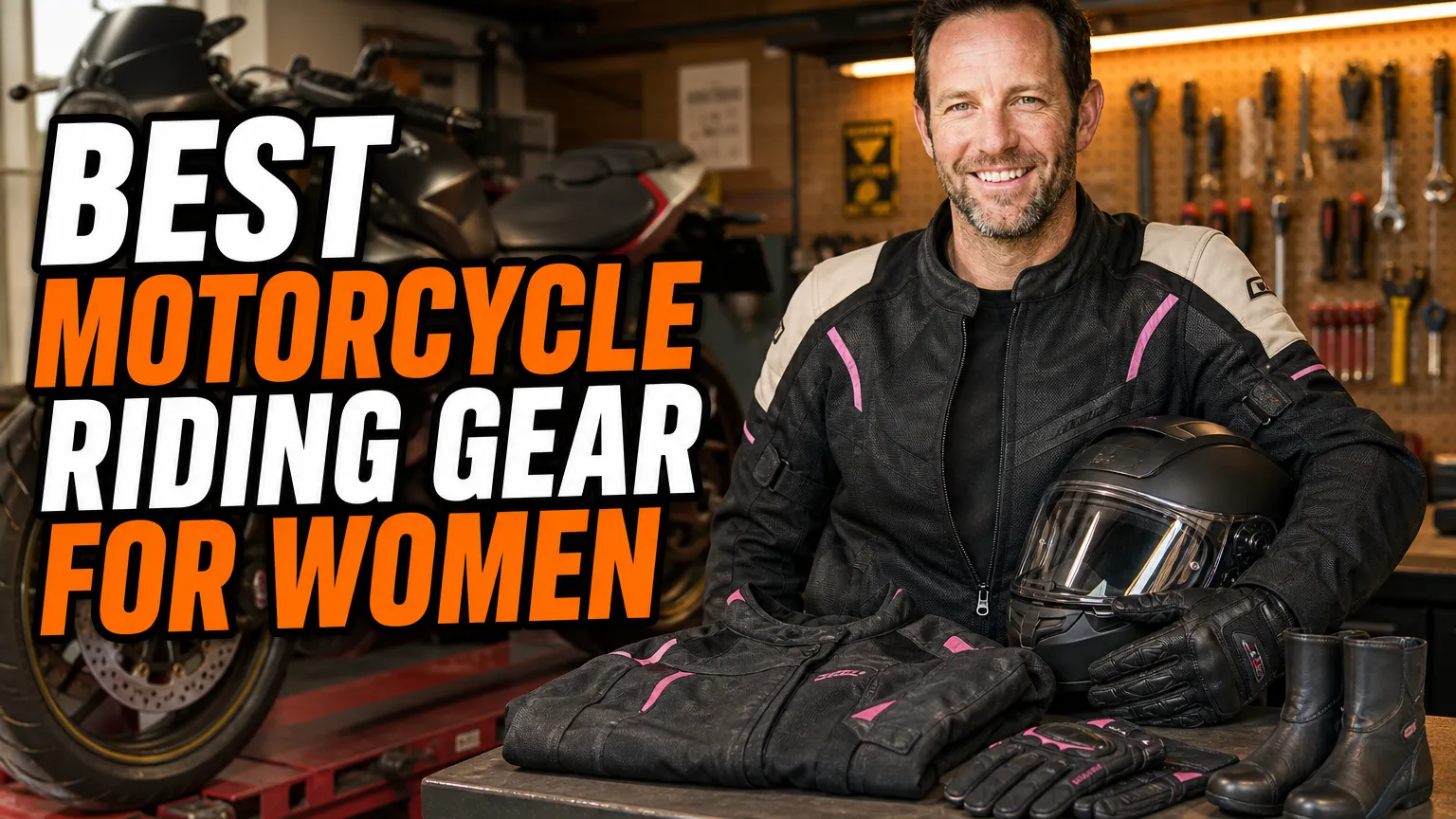
I choose motorcycle gear by starting with protection, then narrowing the options by fit, weather, and the kind of riding I actually do. Women’s sizing can make a real difference, but I never assume that a product fits just because it is marketed to women; I check how it sits in a riding position and whether the armor stays where it should.
Below, I’ve gathered eight specific products I’d consider for a practical riding setup, from a full-face helmet to protective boots. Models, prices, and availability can vary by region, so I recommend checking the current specifications and certification label before buying.
- I prioritize a correctly fitted, certified helmet and protective gear that stays in place.
- The Alpinestars Stella Andes v3 Drystar suits riders seeking weather versatility.
- The REV’IT! Eclipse 2 Ladies jacket and Airwave 4 Ladies pants are worth considering for warm rides.
- I treat fit, armor coverage, and garment certification as essential, not optional extras.
1. Shoei RF-1400 — My Full-Face Helmet Pick
I put a helmet at the top of every gear list because it is the piece I will not compromise on. The Shoei RF-1400 is a premium full-face helmet with a shell made from Shoei’s Multi-Ply Matrix AIM construction, a multi-density EPS liner, and a Pinlock-ready face shield. It is designed for road riding, with a snug fit that I would assess carefully before committing.
In the United States, the RF-1400 is sold with DOT certification and is also available in versions carrying Snell certification. I always check the exact helmet’s label and current model details rather than assuming every regional version has identical approvals. Its price is typically in the premium range, often around $600–$700 USD depending on graphics and retailer.
What I check before buying
I try a helmet on for several minutes and check for even pressure, secure cheek contact, and no painful hotspots. The RF-1400’s fit will not suit every head shape, so I would not buy it based on a size chart alone. I also make sure I can fasten the chin strap correctly and operate the shield with gloves on.
A women-specific helmet is not a requirement for me; a correctly fitted, appropriately certified helmet is. If the Shoei feels wrong on my head, I keep looking, even if I like its ventilation or finish.
2. Alpinestars Stella Andes v3 Drystar — My Touring Jacket Choice
For changing weather and longer days in the saddle, I’d consider the Alpinestars Stella Andes v3 Drystar. This women’s textile touring jacket uses a reinforced poly-fabric outer shell and Alpinestars’ Drystar waterproof, breathable membrane. It also includes removable thermal insulation, which gives me more flexibility as temperatures change.
The Stella Andes v3 Drystar includes Nucleon Flex Plus armor at the shoulders and elbows, with a pocket for a compatible back protector. I would check which back protector is included or sold separately in my market, and confirm the jacket’s current CE garment rating on its label. It commonly sits around the mid-price range for touring jackets, though retailer pricing changes.
Why I like the touring-focused details
I value adjustable cuffs, waist adjustment, and useful storage because small fit changes can make a jacket more comfortable over a full day. I’d also test the jacket over the layers I plan to wear, rather than judging its fit over a thin shop T-shirt. A waterproof membrane is useful, but I still pack rain protection for a long trip where weather can be persistent.
If I were comparing other beginner-friendly options, I’d also read this guide to the best motorcycle clothing for beginners. It helps me think through what I need before I spend on specialized touring features.
3. REV’IT! Eclipse 2 Ladies — My Warm-Weather Jacket Pick
When the forecast is hot, I look for airflow without giving up motorcycle-specific construction. The REV’IT! Eclipse 2 Ladies jacket is a lightweight mesh option with a women’s cut, polyester mesh panels, and polyester fabric in areas where more coverage is needed. It is a simple design compared with an insulated touring jacket, which is part of its appeal for warm commutes and shorter summer rides.
The Eclipse 2 Ladies is made to accommodate SEESMART CE-level 1 shoulder and elbow protectors, and it has a pocket for a back protector. I check the supplied armor and the garment’s CE marking at the point of sale because package details may vary. Its usual price is in the more accessible jacket range, often roughly $150–$200 USD.
Where I’d use it
I’d choose the Eclipse 2 Ladies for hot-weather riding when a heavy, waterproof jacket would be uncomfortable. Mesh can move air well, but it does not provide the same weather coverage as a waterproof touring layer, so I wouldn’t treat this as an all-season solution. I’d also make sure the sleeves and waist stay secure when I lean forward.
For more warm-weather layering ideas, I’d browse the guide to the best motorcycle gear for summer. I find it useful to compare ventilation needs across jackets, gloves, and other kit instead of focusing on one item alone.
4. KLIM Artemis — My Adventure-Touring Jacket Pick
For riders who mix pavement with gravel roads and longer trips, the KLIM Artemis is a women’s adventure-touring jacket I’d put on my shortlist. It is built with a durable textile shell, weather protection, and ventilation options intended for changing conditions. KLIM has designed the Artemis around a women’s fit, which matters to me when I need room for layers without excess fabric bunching at the waist or shoulders.
The Artemis is a higher-priced choice, with pricing commonly landing well above basic mesh jackets and varying by model year and retailer. I’d inspect the current product listing for exact materials, armor included, and its EN 17092 garment class, since specifications can change between versions. I’d also confirm whether the back protector is included or an add-on before comparing prices.
My fit and use notes
I’d try the Artemis while wearing the base and mid-layers I expect to use on a trip. An adventure jacket should let me reach the bars comfortably and move around on the bike, but it should not feel so loose that its protectors can shift. I also look closely at pocket access and vent placement, because those details matter when I’m wearing gloves or stopping frequently.
For off-pavement rides, I pair a jacket with purpose-built pants, gloves, and boots rather than assuming one protective layer covers every risk. I’d use this guide to best protective gear for motorcycle trail riding to help plan a more complete setup.
5. REV’IT! Airwave 4 Ladies — My Ventilated Riding Pants Pick
I like the REV’IT! Airwave 4 Ladies pants as a warm-weather textile option to pair with a mesh jacket. They combine ventilating mesh panels with stronger abrasion-resistant textile zones and are cut for women. I pay attention to the knee position when I try them on, because knee armor only helps as intended when it lines up with my joints in a riding posture.
The Airwave 4 Ladies is designed for use with knee and hip protectors, but I verify exactly which protectors come in the version I’m buying. I also check the garment’s CE rating and the protector certification rather than relying on a retailer’s broad description. These pants generally cost more than ordinary riding jeans, with actual prices depending on size, color, and local stock.
What I look for in the changing room
I sit down as if I’m on my motorcycle and check whether the waistband stays comfortable and the leg length still covers my ankles. I want enough room to move, but not so much excess fabric that the armor can rotate. If I’m planning to wear the Airwave 4 Ladies with a jacket, I check whether the two pieces can connect using their compatible attachment features.
Ventilated pants are a useful choice in heat, but I would not mistake them for rain gear. For cooler conditions, I’d add a base layer or choose a more weather-resistant option designed for the season.
6. Alpinestars Stella Missile v2 Leather Pants — My Sport-Riding Option
For a more protective, close-fitting sport setup, I’d consider the Alpinestars Stella Missile v2 leather pants. These women’s leather pants are designed to work with compatible Alpinestars jackets and feature stretch panels to help with movement on the bike. Compared with lightweight mesh textile pants, leather offers a different balance of abrasion resistance, comfort, and ventilation, so I’d choose it for the riding I actually do.
The Stella Missile v2 includes protective features such as knee armor and is designed to accept compatible hip protection. Exact armor, certification, and compatibility details can depend on the specific version and market, so I would confirm them before ordering. Leather sport pants are typically a substantial investment, and I’d budget for the required armor and any compatible jacket connection if those are separate.
My practical cautions
I would not buy these pants without trying them in a tucked riding position. Leather needs a secure fit, but it should not pinch or restrict me when I bend my knees and hips. I’d check that the knee protectors remain centered and that the waist works with my jacket without leaving a gap.
This is not the most versatile pick for every rider. I’d choose the Stella Missile v2 for sport-oriented riding and a fitted leather setup, while I’d lean toward ventilated textile pants for everyday summer commuting.
7. Alpinestars Stella SMX-1 Air v2 — My Warm-Weather Glove Pick
I take gloves seriously because my hands are exposed and instinctively reach out if I fall. The Alpinestars Stella SMX-1 Air v2 is a short-cuff women’s glove with a mix of leather and mesh construction, making it a sensible option for warm conditions. Its design includes a hard knuckle protector and reinforcement in high-impact areas.
The short cuff is convenient for quick rides and warm weather, but I check that it overlaps securely with my jacket sleeve in my riding position. I also look for a snug wrist closure and enough fingertip control to operate the brake, clutch, and switches. The SMX-1 Air v2 is usually priced in the mid-range for branded summer gloves, though prices vary by retailer.
How I assess glove fit
I close my hand around an imaginary handlebar and check for excess material at the fingertips. I want the knuckle protection to stay aligned and the palm to feel secure without bunching. A glove that is too tight can be tiring, while one that is loose can shift at the moment I need it most.
I would not use a ventilated short-cuff glove as my only option for cold rain or long-distance touring. I keep another pair for colder or wetter rides, and I check the glove’s certification and label details before purchase.
8. TCX Street 3 Lady WP — My Everyday Waterproof Boot Pick
For a practical boot that looks less like a race boot, I’d consider the TCX Street 3 Lady WP. This women’s waterproof riding shoe has a casual sneaker-inspired profile, a waterproof membrane, and protection features intended for motorcycle use. It offers more ankle coverage and reinforcement than an everyday sneaker, while remaining convenient for walking around after I park.
The Street 3 Lady WP includes protective elements such as ankle inserts and reinforced areas, but I check its current certification information and product details before choosing a size. Waterproof construction is useful for commuting and unsettled weather, although no boot can guarantee dry feet in every storm or under every riding condition. Pricing is generally in the mid-range for purpose-built motorcycle footwear.
Why I choose riding footwear over regular shoes
I want a secure closure, a sole that grips the foot pegs, and enough ankle coverage to suit my riding. I check that the heel does not lift excessively and that the boot does not snag on controls. I also practice shifting and braking in new footwear before heading into traffic, since even a comfortable boot can feel different on the bike.
The TCX Street 3 Lady WP is a useful everyday-style option, but it is not a tall touring boot. For long trips, rough weather, or more demanding off-road use, I’d compare taller boots with more coverage and choose based on the risks of my route.
How I Put Together a Safer, Better-Fitting Setup
I think about gear as a system, not a collection of attractive products. I start with a properly fitted helmet, then choose a jacket and pants with appropriate armor and a secure fit. I finish with gloves and footwear that protect my hands and feet without interfering with controls.
I check the labels, not just the marketing
Before I buy, I look for the garment’s CE classification under EN 17092 where applicable and the certification information for its armor. Joint protectors may be marked to EN 1621-1, while back protectors use a separate standard. I check the exact product documentation because included armor and certification can differ by version or region.
I fit gear in a riding position
I try jackets and pants while sitting as I would on my motorcycle. I check sleeve and leg length, armor placement, waist coverage, and whether the gear remains secure when I move. If I order online, I review the return policy and size chart first, and I avoid removing tags until I’ve confirmed the fit.
I match the gear to my rides
For hot commuting, a ventilated jacket and pants may feel more comfortable; for touring, I may prefer weather protection and removable insulation. For off-road routes, I’d prioritize gear designed for trail use and add the right boots and gloves. I choose based on my climate and riding plans, rather than expecting one outfit to work perfectly in every season.
My favorite setup is the one I will wear consistently and that fits correctly, not simply the one with the most features. I’d compare the specific models above, verify their current specifications, and take time to test the fit before riding. Good gear should let me focus on the road while giving me dependable protection and comfort.
Frequently Asked Questions
How should I choose motorcycle gear that fits a woman’s body?
I start with a brand’s women’s size chart, then check fit while seated on my bike. Armor should stay over the joints, and the gear should feel secure without restricting movement.
Does motorcycle gear need to be made specifically for women?
Not necessarily, but a women’s cut can improve fit at the shoulders, waist, hips, and knees. I prioritize correct fit and certified protection over the label.
What protection rating should I look for in motorcycle clothing?
I check the garment’s CE rating under EN 17092 and the armor’s certification, such as EN 1621-1 for joint protectors. I also look for a helmet that meets the safety standard required where I ride.
Can I wear regular jeans and sneakers on a motorcycle?
I avoid relying on everyday jeans and sneakers because they may not have motorcycle-grade abrasion protection or secure ankle coverage. I choose purpose-built riding pants and boots instead.

Related Articles

5 Motorcycle Wrist Braces and Guards I’d Choose for Confident Riding
Compare five wrist braces and guards I’d consider for street and dirt riding, with fit, support, glove compatibility, and buying…
Jake Miller
11 min read

7 Under Armour Base Layers I’d Choose for Comfortable Motorcycle Rides
Discover seven Under Armour base layers for hot and cold rides, plus my fit tips and safety advice for wearing…
Jake Miller
10 min read

8 Best Motorcycle Base Layers for Staying Warm on Cold Rides
Compare eight rider-ready thermal base layers, from merino to synthetic options, with fit, warmth, layering advice, and picks for cold-weather…
Jake Miller
11 min read