
8 Best Motorcycle Rain Suits and Waterproof Over-Layers for Wet-Weather Rides
 Jake Miller
12 min read
Jake Miller
12 min read
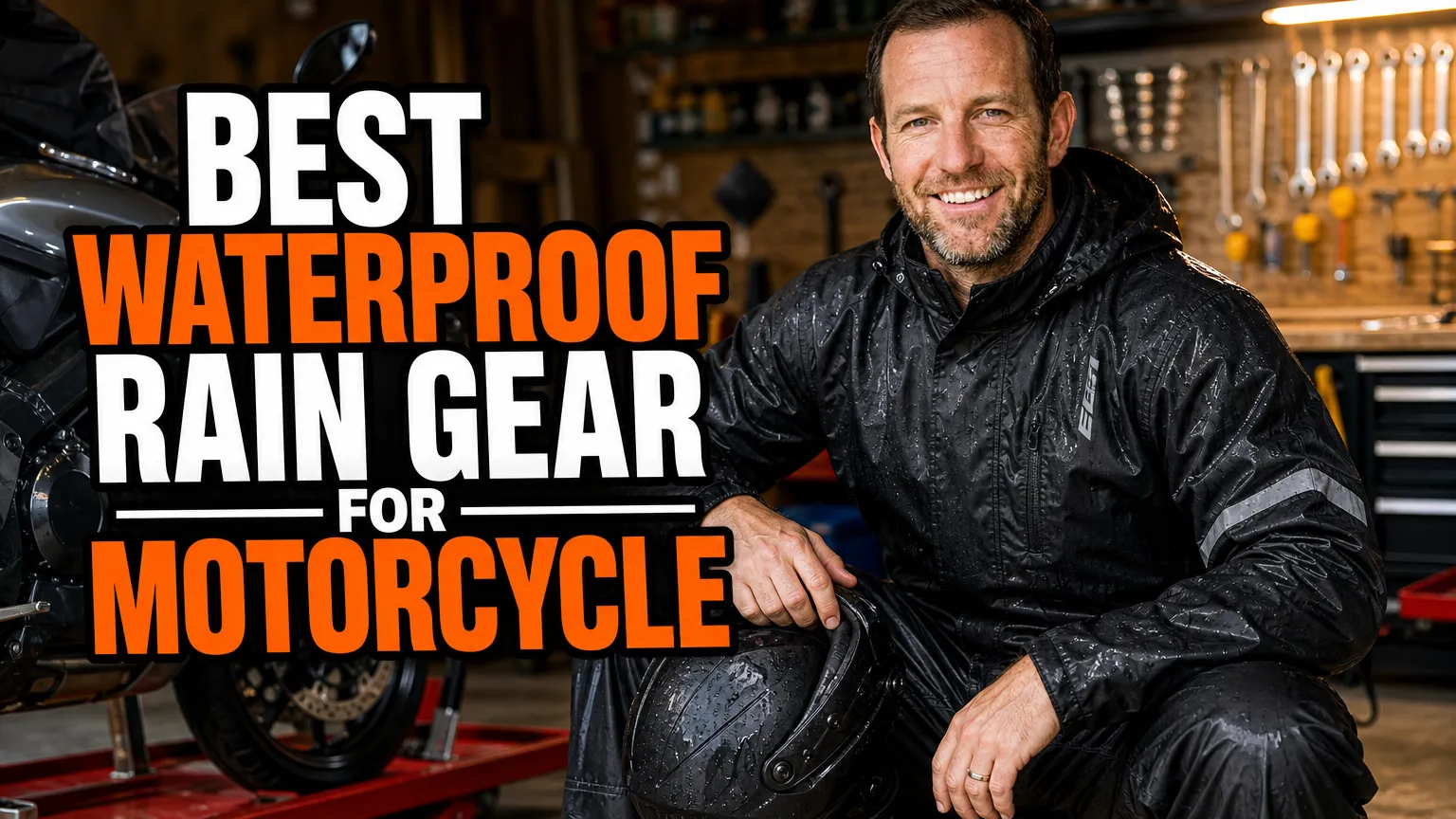
I never count on a clear forecast for an entire ride. When I choose motorcycle rain gear, I look for a reliable barrier against water, a fit that works over riding layers, and closures that stay put at speed. The right setup can make a wet commute manageable and a long-distance ride far less miserable.
Below, I’ve gathered specific rain suits and over-layers I’d consider for different budgets and riding styles. I also explain what I’d check before buying, because even a waterproof garment can disappoint if it flaps, rides up, or doesn’t fit over your regular gear.
- I’d choose the Klim Forecast for premium waterproof over-layers and the REV’IT! Pacific 4 H2O for a dedicated one-piece suit.
- I look for generous sizing, sealed construction, secure cuffs, and a jacket hem that overlaps my pants when I’m seated.
- I treat rain suits as weather shells, not crash protection, and wear them over motorcycle gear with appropriate armor.
- I test the fit at home in full riding position before trusting a new suit on a long, wet ride.
1. Klim Forecast Jacket and Pants — Best Premium Over-Layers
When I want rain protection that can go over my regular riding outfit, I’d put the Klim Forecast jacket and pants near the top of my list. The Forecast is built as a waterproof riding over-layer, with GORE-TEX construction and a design intended to fit over motorcycle clothing rather than replace it.
I like this setup for touring, commuting, and trips where rain might last for hours. The separate jacket and pants give me more flexibility than a one-piece suit, and I can pack only the piece I need when the forecast is uncertain. Reflective details also help make the shell more noticeable in gloomy conditions.
What I’d consider before buying
The biggest trade-off is price: Klim Forecast pieces generally sit in the premium range, and buying both can cost considerably more than an entry-level rain suit. I’d check the sizing chart carefully and try the garments over my actual jacket and pants, especially if those layers have bulky armor or winter insulation.
I’d choose the Forecast if I ride often in changing weather and want a dedicated, high-end shell. I wouldn’t expect any over-layer to provide the abrasion resistance of a motorcycle jacket, so I’d wear it over protective gear rather than as a substitute.
2. REV’IT! Pacific 4 H2O — Best One-Piece Suit
The REV’IT! Pacific 4 H2O is the one-piece rain suit I’d consider when I want to reduce the number of openings water can find. Its waterproof outer construction, storm-focused front closure, and elasticated sections are designed to make it practical to pull over riding gear when the weather turns.
I appreciate a one-piece design for longer stretches of heavy rain because it avoids relying on a separate jacket-to-pants overlap. The Pacific 4 H2O is also made to pack down for carrying, and reflective details can help with visibility when rain and low light arrive together.
Where it fits best
I’d look at the REV’IT! Pacific 4 H2O for touring riders and commuters who want a dedicated over-suit rather than assembling separate rain layers. Before buying, I’d check the fit over my own gloves, jacket, and boots; getting in and out of a one-piece suit can be awkward if it is too tight.
It costs more than basic rainwear, but I value the simpler coverage when the forecast calls for sustained showers. Like other rain over-suits, it is for weather protection, not impact armor or crash abrasion protection.
3. Alpinestars Hurricane Rain V2 — Best Lightweight Two-Piece Suit
I’d consider the Alpinestars Hurricane Rain V2 when I want a lightweight jacket-and-pants set from a motorcycle gear brand. The two-piece design makes it easier to put on than a one-piece suit, and its waterproof construction is intended to be worn over riding apparel.
For me, the major advantage of a two-piece suit is versatility. I can wear the jacket alone over a mesh jacket during a quick shower, or add the pants when rain is persistent. The Hurricane Rain V2 is also designed to pack away between showers, which matters when storage space is limited.
My fit and use notes
I’d make sure the pants rise high enough and the jacket stays overlapped with them while I’m leaning forward on the bike. I’d also check that the cuffs work with my gloves and boots, since water can run inside a loose wrist or ankle opening even when the main fabric is waterproof.
The Hurricane Rain V2 is a sensible pick for riders who want a recognizable, motorcycle-focused rain set without moving into the highest price bracket. I’d treat it as a shell over my protective riding clothes, not as a stand-alone riding suit.
4. Nelson-Rigg SR-6000 Stormrider — Best Practical Touring Suit
The Nelson-Rigg SR-6000 Stormrider is a two-piece rain suit I’d shortlist for touring and everyday riding. It is designed to pull over motorcycle clothing, with waterproof construction, reflective detailing, and adjustable areas intended to help keep the fit manageable in wind and rain.
I like that a separate jacket and pants make bathroom stops and quick layer changes simpler than with a one-piece. Nelson-Rigg has long made motorcycle luggage and riding accessories, so the Stormrider is an appealing option for riders who want dedicated motorcycle rainwear rather than an ordinary outdoor shell.
What I’d check on a test fit
I’d try it over my heaviest riding layers, then sit on the bike and check the knees, seat, and lower back for exposed gaps. I’d pay particular attention to the leg openings and jacket cuffs, because a secure closure matters as much as the waterproof fabric in sustained rain.
The Stormrider usually costs less than premium technical shells, making it a useful value-minded touring choice. I’d still inspect it periodically for wear around seams and closures, especially if it spends a lot of time compressed in a saddlebag.
5. Tour Master Defender 2.0 Rain Suit — Best for Regular Commuting
I’d consider the Tour Master Defender 2.0 for commuting and weekend rides where I want a straightforward jacket-and-pants rain set. Its motorcycle-oriented cut is intended to layer over riding clothes, and the suit includes weather-focused closures and reflective elements that are useful when visibility is poor.
For daily use, I value rainwear that is quick to pull on and easy to keep in a top case or pannier. The Defender 2.0’s two-piece format makes it easier to adjust the jacket and pants independently, which can help me get a more comfortable fit over different base layers.
How I’d decide if it suits me
I’d compare the sizing with my actual riding jacket and pants rather than my casual clothing size. I’d also test my range of motion: a rain suit that pulls tight across the shoulders or knees can become distracting on the bike, while overly loose fabric may flap at speed.
The Defender 2.0 is a practical option if I want motorcycle-specific rainwear without paying for a premium membrane system. I’d check current product details and sizing from the retailer, since availability and specifications can vary by season.
6. Oxford Rainseal Over Jacket and Trousers — Best Separate-Piece Value
Oxford Rainseal over-jacket and over-trousers are a useful choice when I prefer to buy or replace rain layers separately. I’d use the jacket and trousers over my normal motorcycle kit, with the layered design making it easier to adjust coverage for short showers or longer wet rides.
I like the flexibility of separate pieces: if my pants wear out first, I don’t necessarily need to replace the jacket as well. The Rainseal range is made for rain protection and packability, so I’d consider it for commuting or as a backup set stored on the bike.
My coverage checklist
Before setting off, I’d make sure the jacket hem overlaps the trousers while I’m seated, not just while I’m standing. I’d check the cuffs, collar, and closures too, then confirm that the over-trousers fit comfortably over my riding pants and boots.
Oxford Rainseal pieces can be a good fit for riders who prefer modular layers and want to keep costs manageable. I’d confirm that the jacket and trousers I’m buying are the intended matching versions, and check the latest retailer listing for details on materials and sizing.
7. Dainese Storm 2 — Best Coordinated Jacket-and-Pants Set
The Dainese Storm 2 jacket and pants offer another motorcycle-focused route to wet-weather coverage. I’d look at them as separate over-layers that can be combined when rain becomes serious, rather than as a protective riding outfit on their own.
I like the coordinated approach for riders who want rainwear from a brand that also makes motorcycle apparel. A dedicated jacket and pants set can be easier to layer than a one-piece, while reflective details and rain-oriented closures help address the realities of riding in poor weather.
Who I’d recommend it to
I’d consider the Storm 2 if I already wear Dainese or want a matching set from a well-known motorcycle equipment maker. My first step would be checking how the jacket and pants fit over the gear I actually use, since matching labels don’t guarantee a comfortable fit across every body shape.
Pricing and stock can vary, so I’d compare current listings before choosing the set. For additional protective clothing ideas, I’d also read this guide to best gear for motorcycle safety top protective clothing and accessories; I keep weather protection and crash protection as separate decisions.
8. Frogg Toggs All Sport Rain Suit — Best Low-Cost Backup
The Frogg Toggs All Sport Rain Suit is an inexpensive, lightweight rainwear option I’d consider as emergency backup gear. Its nonwoven polypropylene material is designed to be waterproof and breathable, and the suit’s low weight makes it easy to stash in a bag for unexpected showers.
I wouldn’t treat it as my first choice for fast, all-day motorcycle travel. Lightweight outdoor rain suits can flap in wind, and a looser fit may be less comfortable at speed than a suit designed specifically for motorcycling. I’d use it for occasional wet rides or slower trips, after checking that it fits securely over my riding layers.
Important limitations
I’d check the manufacturer’s current care and use guidance, and inspect the suit after each outing for tears or worn areas. Most importantly, I’d wear it over proper motorcycle clothing; a lightweight rain suit is not a replacement for abrasion-resistant fabric, impact protection, or motorcycle boots.
For a new rider assembling a complete kit, I’d pair rainwear research with a broader look at the best motorcycle clothing for beginners. I’d also remember that gear needs change with temperature, so I use a separate guide to the best motorcycle gear for summer when planning hot-weather rides.
How I Choose Rain Gear That Works on a Motorcycle
I check the fit in riding position
I never judge rain gear only by how it fits standing in a shop. I put it on over my riding jacket and pants, sit in my normal position, and check whether the back, wrists, knees, and ankles remain covered. A snug but comfortable fit helps limit flapping without making it hard to move.
I look at closures and openings
Water can enter through cuffs, collars, zippers, and the gap between a jacket and pants. I look for storm flaps or secure closures, then check that my gloves and boots work with the rain suit’s cuffs. I also arrange the layers so water runs over the outside rather than into an opening.
I separate weather protection from safety protection
I use over-suits to stay dry, not to protect me in a crash. Underneath, I wear appropriate motorcycle apparel with protective construction and armor. For more specialized off-road needs, I’d consult this guide to best protective gear for motorcycle trail riding, and I use a broader overview of the best clothes for motorcycle riding when comparing everyday layers.
I consider visibility, storage, and maintenance
Reflective panels or piping can make rain gear easier to notice in gray weather, although I never rely on them alone. I also consider how small the suit packs, whether I can put it on at the roadside, and how easily it dries after a ride. I follow the maker’s care instructions and check the seams and closures regularly.
My Final Picks for Different Riders
If I wanted premium rain protection for frequent touring, I’d start with the Klim Forecast jacket and pants. For a one-piece design, I’d compare the REV’IT! Pacific 4 H2O with the Alpinestars Hurricane Rain V2, while the Nelson-Rigg Stormrider, Tour Master Defender 2.0, and Oxford Rainseal offer practical two-piece options to consider.
My final choice would depend on how often I ride in rain, how much space I have for storage, and what fits comfortably over my protective gear. I’d rather buy a suit that fits properly and stays secure than choose solely by price or a waterproof label.
Frequently Asked Questions
What should I wear over motorcycle gear in heavy rain?
I prefer a motorcycle-specific rain suit with a roomy fit, sealed seams, secure closures, and enough length to cover my riding jacket and boots.
Are motorcycle rain suits protective in a crash?
Most over-suits are designed for weather protection, not abrasion resistance or impact protection. I wear them over proper motorcycle apparel and armor.
Is a one-piece or two-piece motorcycle rain suit better?
I choose a one-piece suit for fewer openings in heavy rain, and a two-piece set for easier layering, ventilation, and quick bathroom breaks.
How can I keep my motorcycle rain gear from leaking?
I check the fit, close storm flaps and cuffs carefully, and make sure the jacket overlaps the pants while seated. I also inspect seams and closures regularly.

Related Articles

5 Motorcycle Wrist Braces and Guards I’d Choose for Confident Riding
Compare five wrist braces and guards I’d consider for street and dirt riding, with fit, support, glove compatibility, and buying…
Jake Miller
11 min read

7 Under Armour Base Layers I’d Choose for Comfortable Motorcycle Rides
Discover seven Under Armour base layers for hot and cold rides, plus my fit tips and safety advice for wearing…
Jake Miller
10 min read

8 Best Motorcycle Base Layers for Staying Warm on Cold Rides
Compare eight rider-ready thermal base layers, from merino to synthetic options, with fit, warmth, layering advice, and picks for cold-weather…
Jake Miller
11 min read