
8 Best 125cc Motorcycles for Beginners (2025 Real-World Picks)
 Jake Miller
11 min read
Jake Miller
11 min read
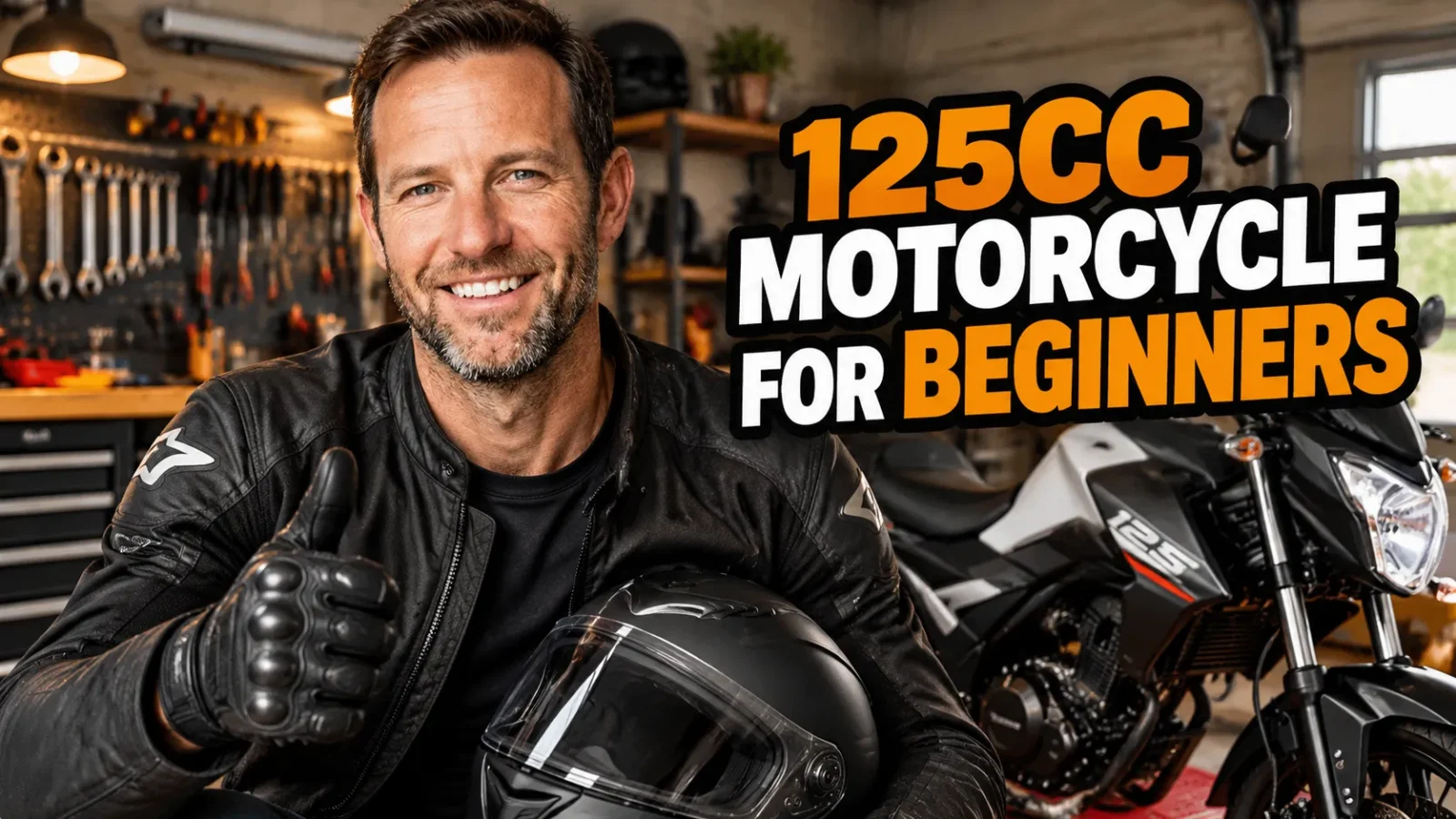
I’ve spent years riding and coaching new riders, and the 125cc class remains my favorite starting point. You get enough power to keep up with city traffic, but not so much that a small throttle mistake turns into a disaster. I also love how light and forgiving these bikes feel when you’re still figuring out clutch control and low-speed balance.
Before you choose, it helps to understand what separates a genuinely good beginner 125 from a mediocre one. I look at seat height, weight, linear power delivery, ABS availability, and how expensive it is to repair when you inevitably drop it in a parking lot.
If you’re also curious about the electrical side of ownership, I’ve put together a guide on what are the different types of motorcycle batteries ultimate guide, because a dead battery is the most common frustration for new riders.
- The Honda CB125R is my top overall pick for its premium brakes, light weight, and manageable power.
- The KTM 125 Duke offers the sharpest handling and best tech, but it costs more to maintain.
- Mini bikes like the Kawasaki Z125 Pro and Honda Grom are brilliant for building confidence with zero intimidation.
- Full-faired 125s like the Yamaha YZF-R125 and Suzuki GSX-R125 deliver sportbike looks without scary power.
- Whatever you pick, invest in crash protection and the right oil to keep your 125 running happily.
1. Honda CB125R — Best Overall 125cc Beginner Motorcycle
I start almost every new rider on the Honda CB125R if they can find one. It shares the Neo Sports Café styling of Honda’s bigger CB300R and CB650R, so you don’t look like you’re on a toy. The 124.9cc liquid-cooled single makes about 14.7 hp, which feels just right around town.
The CB125R has a 41mm Showa Separate Function Fork and a radial-mount front caliper, which is unusual at this price. That means the front end feels planted and the brakes inspire confidence. It still weighs only about 130 kg wet, so it’s easy to paddle around and catch if you lose balance.
Why it works for new riders
Seat height is 816mm, which may be tall for shorter riders, but the narrow tank helps a lot. I also appreciate the full LCD dash and ABS as standard on most markets. The clutch pull is light, and the fueling is smooth enough that you won’t stall constantly in stop-and-go traffic.
Real-world ownership notes
Honda reliability is the biggest selling point here. You won’t need to think about major repairs during your first season. To keep it running perfectly, I always recommend using the best oil for 125cc motorcycle from day one, because clean oil is the cheapest insurance for a small engine.
2. KTM 125 Duke — Best for Tech and Handling
The KTM 125 Duke is the bike I recommend when a new rider wants something with a sharper edge but not too much power. It’s built on the same trellis frame as the bigger 390 Duke, so it feels like a full-size motorcycle. The 125cc single produces about 15 hp, which is class-leading.
I love the WP Apex suspension and the aggressive riding position, but the seat height of 800mm and relatively wide bars make it manageable. The TFT display is better than what I see on many larger bikes, and KTM’s optional quickshifter is a fun novelty that teaches smooth clutchless upshifts.
What I love
The handling is the sharpest in the class. You can change direction with just a thought, and the brakes have real bite. I’ve seen new riders gain confidence quickly on this bike because it responds predictably to inputs.
What to watch
KTM parts and service intervals are pricier than Japanese rivals, so factor that into your budget. Still, for pure riding feedback, the 125 Duke is hard to beat. If you later feel ready for more displacement, you might compare it against the best 250cc motorcycle for beginners to see how much heavier and more powerful that step feels.
3. Yamaha MT-125 — Best Naked Streetfighter for City Riding
I have a soft spot for the Yamaha MT-125 because it borrows the aggressive “Dark Side of Japan” styling from the MT-07 and MT-09. Underneath, it uses a 125cc liquid-cooled single with variable valve actuation, giving it a surprisingly lively top end. I’ve found it feels quicker than its 14.8 hp figure suggests when you rev it out.
The MT-125 gets a 41mm inverted fork, LED lighting, and a negative LCD dash that flips to a bright white display in sunlight. It also has a slipper clutch, which makes downshifts smoother and reduces rear-wheel chatter if you misjudge engine speed.
City manners
At 140 kg wet and a 785mm seat height, it’s one of the easier bikes for shorter riders to flat-foot. The upright bars and slightly forward pegs give you great visibility in traffic. I’d happily commute on this every day.
Power delivery
The VVA system means the engine feels docile below 7,000 rpm but wakes up above that. For a new rider, that gives you a gentle learning zone down low with a little excitement when you’re ready to explore the rev range.
4. Kawasaki Z125 Pro — Best Mini Naked Bike for Playful Learning
The Kawasaki Z125 Pro is a different animal. It’s a 12-inch-wheel mini bike, but I’ve seen complete beginners learn clutch control faster on this than on any full-size machine. The 125cc air-cooled single makes only about 9 hp, but the 102 kg weight means you never feel intimidated.
I use the Z125 Pro as a confidence builder. The seat height is just 780mm, but because the bike is so narrow, even a 5-foot rider can flat-foot it easily. The four-speed gearbox is simple, and the low power means you can grab a fistful of throttle without looping it.
Who it’s for
If you’re nervous about dropping a bike, starting on the Z125 Pro is a smart move. It’s so light that you can catch it with one foot. It also makes slow-speed maneuvers feel effortless, which is exactly what new riders need to master before moving up.
Limitations
It’s not a highway bike, and I wouldn’t take it on roads above 50 mph for long. But for learning balance, braking, and clutch modulation in a parking lot or neighborhood, it’s one of the best teaching tools I’ve used. The styling also looks like a shrunken Z H2, which gets a lot of compliments.
5. Suzuki GSX-R125 — Best Full-Faired Sportbike for New Riders
If you dream of a supersport but need to start small, the Suzuki GSX-R125 is my top pick. It’s a proper fully faired motorcycle with aggressive GSX-R family styling, yet the 124.4cc single makes a friendly 15 hp. The riding position is sporty but not as committed as a 600cc supersport, so you can ride it daily without aching wrists.
The GSX-R125 gets a digital LCD dash, LED headlights, and a keyless ignition on some versions. I’ve found the gearbox to be one of the smoothest in the class, and the 11-liter tank gives decent range for weekend rides.
Sportbike feel without the fear
The fairing gives real wind protection, and the clip-on style bars are raised enough that you won’t feel folded over. The chassis feels stable at speed but still light enough to flick around. It’s the bike I’d choose for a new rider who wants to learn body position and cornering technique.
Practical concerns
Keep in mind that full fairings cost more to repair after a tip-over, so frame sliders are a must. I still think it’s worth it for the confidence the wind protection gives you at speed. Many new riders outgrow the power but keep the bike because it looks so good.
6. Honda Grom (MSX125) — Best Urban Playfulness and Customization
The Honda Grom is arguably the most fun you can have on two wheels at 125cc. I’ve owned one and taught several friends on it, and it always puts a grin on my face. The 124.9cc air-cooled single makes only about 9.7 hp, but the Grom’s 104 kg weight and tiny dimensions make it feel like a pit bike for the street.
What sets the Grom apart is the massive aftermarket. You can change bodywork, exhausts, bars, and even engine internals, which makes it a great bike to learn basic maintenance on. The five-speed gearbox is new for the latest generation, and the clutch is light enough for a child to pull.
Why it’s a learner’s dream
The seat height is 761mm, but the narrow waist means anyone can manage it. I don’t recommend it for long highway stints, but for campus, city, and backroad hooning, the Grom is nearly perfect. It’s also one of the cheapest bikes to insure as a new rider.
Customization potential
Because Grom parts are cheap and widely available, you can practice wrenching without fear of breaking an expensive machine. I’ve learned more about basic motorcycle maintenance on a Grom than on any other bike. That knowledge pays off when you eventually move to a larger bike.
7. Yamaha YZF-R125 — Best Sporty Commuter with Race Styling
The Yamaha YZF-R125 is the bike I point to when a new rider wants a sportbike look with daily usability. It carries the same R-series DNA as the YZF-R7 and R1, with sharp fairings and a low clip-on style handlebar. The 125cc liquid-cooled four-valve single with VVA delivers about 14.7 hp, and the midrange feels stronger than some rivals.
I’ve spent time on the YZF-R125 in tight city streets, and the 41mm inverted fork and 320mm front disc give it real stopping confidence. The riding position is more relaxed than a 600cc, but you’ll still feel like you’re on a proper sportbike. The 785mm seat height also helps shorter riders.
Styling and chassis
The YZF-R125 looks nearly identical to its bigger R-series siblings, which means you’ll get plenty of attention at bike nights. The chassis is stable, and the suspension handles rough pavement better than I expected. It feels like a much more expensive motorcycle.
Daily usability
The only downside is that the full fairings are expensive if you drop it. I always recommend crash protection. If you’re tempted to jump straight to a middleweight, I’d first read my comparison on the best 300cc motorcycle for beginners to see whether that extra power is really worth the extra weight and cost for your first season.
8. Aprilia Tuono 125 — Best Styling and Electronics
The Aprilia Tuono 125 is the Italian option that I think many beginners overlook. It’s based on the RS 125 but with a more upright naked handlebar, which makes it much friendlier for daily riding. The 124.2cc single produces around 15 hp, and the chassis feels sharp without being twitchy.
What I appreciate most is the styling. The triple LED headlight and vivid color schemes make it look far more exotic than a learner bike has any right to. You also get a full-color TFT display, ride-by-wire throttle, and switchable riding modes, which are rare at this displacement.
Unique selling points
The electronics package alone puts the Tuono 125 ahead of many rivals. Having selectable riding modes on a 125cc might sound gimmicky, but it actually helps new riders by softening throttle response in rain or city traffic. I found the Rain mode genuinely useful during wet commutes.
Considerations
The seat height is 820mm, so shorter riders may struggle, and Aprilia dealer support can be sparse in some areas. Still, if you want something different from the usual Japanese options, the Tuono 125 is a genuine head-turner that won’t overwhelm you with power.
How to Move Up from a 125cc When You’re Ready
After a season or two on a 125, you’ll probably feel ready for more power. My advice is to move up in small steps, not giant leaps. A jump from a 125cc to a best 400cc motorcycle for beginners is already significant in weight, throttle response, and braking demands.
Some riders ask me about skipping straight to a 600cc sportbike. Let me be blunt: a best 600cc motorcycle for beginners is not a beginner bike, even if the title sounds welcoming. The power band, insurance costs, and crash consequences are brutal for someone with only a few thousand miles under their belt.
Most new riders are far better off spending a full year on a 125cc, then reassessing. You’ll build muscle memory, learn to read traffic, and develop throttle discipline without the penalty of a heavy, powerful machine. By the time you do upgrade, you’ll actually be ready to enjoy the extra performance instead of fighting it.
Frequently Asked Questions
What is the best 125cc motorcycle for a beginner rider?
My top overall pick is the Honda CB125R because it offers premium brakes, a light clutch, and forgiving power delivery, but the KTM 125 Duke is better if you want a sharper, tech-focused ride.
Is a 125cc motorcycle enough for highway riding?
Most 125cc bikes can reach 60 to 70 mph, but sustained highway use is not their strength. I recommend sticking to city streets, backroads, and short highway stretches until you gain confidence.
How much should I budget for a 125cc beginner motorcycle?
Plan for $3,500 to $5,500 for a new Japanese or European 125cc bike, plus $300 to $600 for quality gear and insurance. Used examples often sell for $2,000 to $4,000.
Should I start on a 125cc or a 250cc motorcycle?
A 125cc is lighter, cheaper to insure, and less intimidating for most new riders. If you weigh over 200 lbs or live in an area with fast highways, a 250cc beginner bike might be the better first step.

Related Articles

Scooters vs Motorcycles: My Honest, First-Hand Comparison After Riding Both for Years
After thousands of miles on both scooters and motorcycles, I break down cost, comfort, maintenance, and safety to help you…
Jake Miller
10 min read

7 Scooters That Look Like Motorcycles for Riders Who Want Style and Storage
Explore my top 7 scooters that look like motorcycles, from adventure crossovers like the Honda X-ADV to sporty maxis like…
Jake Miller
9 min read

How Long Do Honda Motorcycles Last? My 20-Year Owner’s Reality Check
Discover how long Honda motorcycles really last from an owner with 100k+ miles of experience. Learn maintenance secrets, high-mileage examples,…
Jake Miller
10 min read