
Running Dual Batteries on Your Motorcycle: My Complete Guide to Double Battery Setups
 Jake Miller
15 min read
Jake Miller
15 min read
Why I Started Exploring Dual Battery Systems
I’ll be honest—the first time someone suggested running two batteries on my motorcycle, I thought they were joking. One battery had always been enough, right? But after a winter camping trip where my heated gear drained my battery to the point where I couldn’t start my bike in freezing temperatures, I knew something had to change.
That experience sent me down a rabbit hole of research, wiring diagrams, and real-world testing. I’ve now built dual battery systems on three different bikes, made plenty of mistakes along the way, and learned what actually works versus what just sounds good in theory.
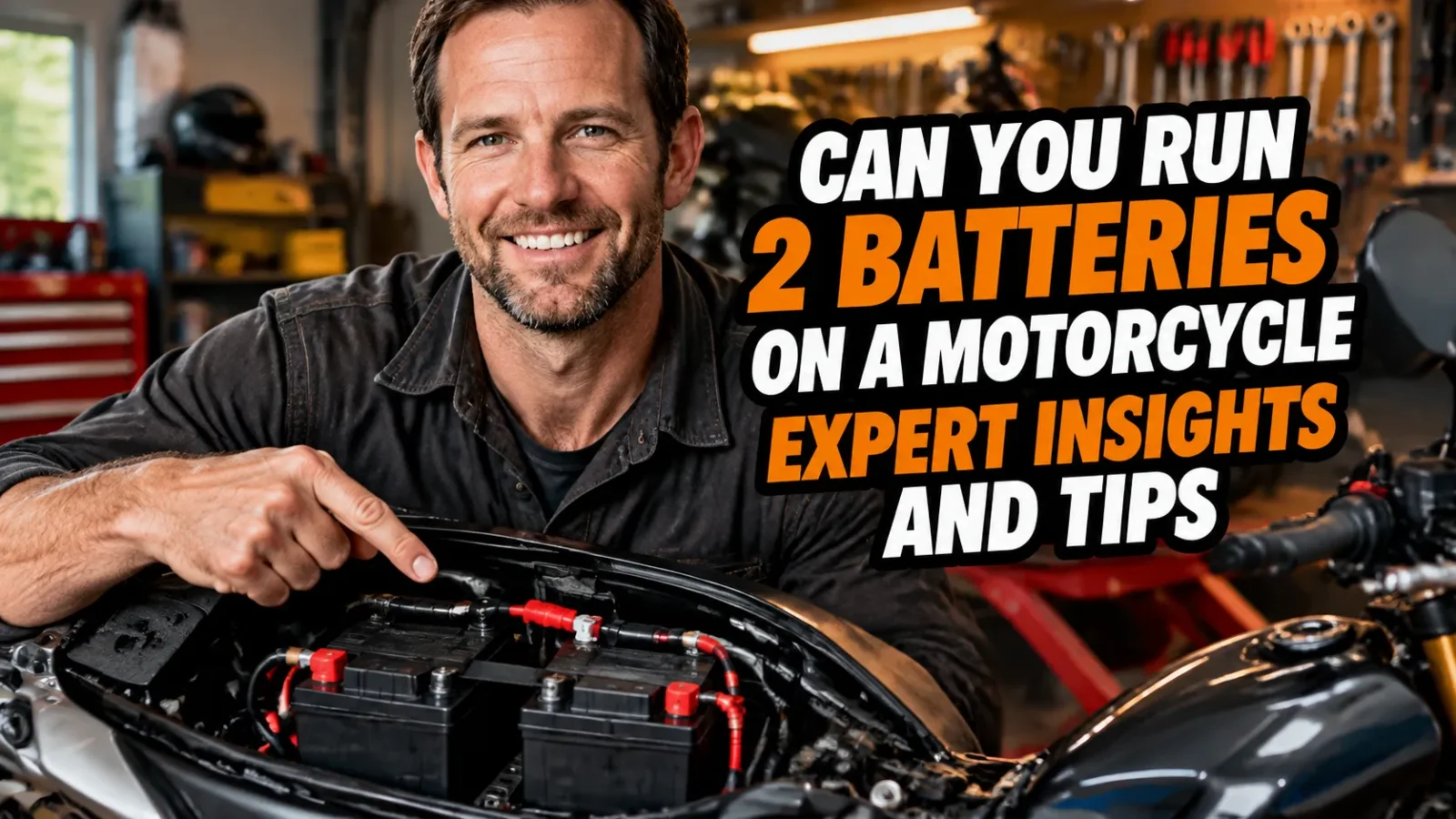
The short answer is yes, you absolutely can run two batteries on a motorcycle—and in many situations, you probably should. But there’s a right way and several wrong ways to do it.
- Dual batteries must be wired in parallel (never series) to maintain proper 12V system voltage
- Main benefits include doubled capacity for accessories, cold-weather reliability, and emergency backup power
- Battery isolators are highly recommended to prevent one dead battery from draining the other
- Both batteries should be identical in type, age, and capacity for optimal performance
- Proper installation requires heavy-gauge wiring, secure mounting, and adequate ventilation
Understanding the Basics: How Dual Battery Systems Work
Before we get into the how-to, let me explain the fundamental principle. Most motorcycles use a 12-volt electrical system, which you can verify by checking are motorcycle batteries 12v or 6v if you’re unsure about your specific bike.
When you add a second battery, you’re not trying to increase voltage. Instead, you’re increasing your amp-hour (Ah) capacity—essentially giving yourself more electrical “fuel” to work with.
Parallel vs. Series Wiring: The Critical Difference
This is where many riders make a catastrophic mistake. There are two ways to connect batteries: parallel and series. For motorcycles, you must always use parallel wiring.
Parallel wiring means connecting positive terminal to positive terminal, and negative to negative. This keeps your system at 12V while doubling your capacity. If you have two 12Ah batteries, you’ll end up with 24Ah of total capacity at 12V.
Series wiring (positive of one battery to negative of the other) would create 24 volts. This will instantly fry your regulator/rectifier, ECU, lights, and basically every electrical component on your bike. I’ve seen someone do this once. The smell of burning electronics is not something you forget.
Why I Decided Dual Batteries Were Worth It
Let me share the scenarios where dual batteries transformed my riding experience. Your situation might be different, but these are the use cases I’ve found most compelling.
Power-Hungry Accessories
My first dual battery setup was on my adventure bike loaded with accessories. Between my heated grips, heated jacket liner, auxiliary lights, GPS, phone charger, and action camera, I was drawing serious current.
With a single battery, I noticed dimming lights at idle and sluggish starting after running accessories for extended periods. The dual battery system completely eliminated these issues.
Cold Weather Reliability
Battery capacity drops significantly in cold weather—sometimes by 50% or more. During a Colorado winter ride, my single-battery bike struggled to turn over at 15°F after sitting overnight.
My dual battery bike, on the other hand, fired right up. The extra capacity gave me the cranking amps I needed even when both batteries were cold-soaked. This peace of mind alone made the upgrade worthwhile for me.
Emergency Backup Power
I once had a stator failure 200 miles from home. With a dual battery setup and an isolator switch, I was able to isolate my starting battery and nurse the bike home on my accessory battery, shutting down all non-essential systems.
With a single battery in that situation, I would’ve been stuck waiting for a tow truck. Instead, I made it home safely—though I did learn a valuable lesson about watching for early warning signs and maintaining proper safety protocols, similar to the principles in top 10 motorcycle safety tips.
Choosing the Right Batteries for Your Dual Setup
Battery selection is critical for a dual battery system. I learned this the hard way when I tried mixing different battery types. Spoiler alert: it didn’t go well.
The Matching Rule: Why Identical Batteries Matter
Both batteries should be identical in type, capacity, age, and ideally even brand. When you connect mismatched batteries in parallel, they try to equalize voltage, which can lead to one battery constantly charging the other.
I once paired a new AGM battery with an older flooded lead-acid battery. The new battery constantly tried to charge the old one, which shortened both their lifespans. Within six months, both batteries were toast.
Battery Types I’ve Tested
Over the years, I’ve run dual setups with several battery types. Here’s what I’ve learned from personal experience:
AGM (Absorbed Glass Mat) batteries are my top choice for dual setups. They’re sealed, maintenance-free, handle vibration well, and have excellent deep-cycle characteristics. They’re pricier, but worth it for the reliability.
Flooded lead-acid batteries are the traditional option and significantly cheaper. If you’re on a budget, quality best lead acid batteries for motorcycle can work fine, but they require regular maintenance and aren’t ideal for mounting in non-standard positions.
Lithium batteries are lightweight and powerful, but they’re expensive for dual setups and require special charging considerations. I’ve tested them, but for most riders, the cost doesn’t justify the benefits in a dual configuration.
Sizing Your Batteries
I typically run two batteries of the same capacity as my original single battery. If your bike came with a 12Ah battery, two 12Ah batteries in parallel give you 24Ah total capacity.
Some riders go bigger, but remember—your charging system needs to handle the increased capacity. Most motorcycle charging systems can manage it, but it’s worth checking your alternator/stator output specifications.
The Wiring: How I Actually Connect Two Batteries
This is where theory meets reality, and where most DIY installations go wrong. I’m going to walk you through exactly how I wire dual battery systems.
Essential Components You’ll Need
Before touching any wires, gather these components. Don’t cheap out on wiring—electrical fires on motorcycles are terrifying.
You’ll need heavy-gauge wire (I use 8-gauge minimum, 6-gauge for longer runs), ring terminals with heat-shrink, a quality battery isolator or switch, inline fuses (critical for safety), and proper mounting hardware.
The Basic Parallel Connection
Here’s my standard wiring approach: Connect the positive terminal of Battery 1 to the positive terminal of Battery 2 using heavy-gauge wire. Do the same for the negative terminals.
Your bike’s main positive lead connects to Battery 1’s positive terminal. The main ground connects to Battery 1’s negative terminal. Battery 2 essentially becomes an extension of Battery 1’s capacity.
Critical safety note: Every wire must have an appropriately-rated inline fuse close to the battery terminal. I use 40-amp fuses on my positive leads. This has literally saved my bike from an electrical fire when a wire chafed through.
Adding a Battery Isolator (Highly Recommended)
A battery isolator is a device that allows batteries to charge together but prevents them from discharging into each other. I consider this essential, not optional.
I install the isolator between Battery 1 (starting battery) and Battery 2 (accessory battery). This way, accessories run off Battery 2, but my starting battery remains protected. If Battery 2 dies from running accessories, Battery 1 still has full charge to start the engine.
The isolator I use is a voltage-sensitive relay (VSR) that automatically connects the batteries when the engine is running (and voltage is above 13.3V) and disconnects them when the engine is off.
Mounting Considerations
Finding space for a second battery is often the biggest physical challenge. I’ve mounted secondary batteries in saddlebags, custom boxes under the seat, and even in modified airbox spaces on adventure bikes.
Wherever you mount it, ensure it’s secured against vibration, protected from water, and has adequate ventilation. Even sealed AGM batteries need airflow. I learned this when I sealed a battery too tightly in a waterproof box—the heat buildup shortened its life considerably.
Common Mistakes I’ve Made (So You Don’t Have To)
Let me save you some headaches by sharing my failures. These mistakes cost me time, money, and occasionally left me stranded.
Mixing Old and New Batteries
I already mentioned this, but it bears repeating because I’ve made this mistake twice. When one battery in your dual setup dies, replace both batteries, not just the dead one.
Pairing a fresh battery with an old one creates an imbalanced system. The new battery works harder to compensate for the old one, shortening both their lifespans.
Inadequate Wire Gauge
My first dual battery installation used 10-gauge wire because that’s what I had on hand. It worked initially, but under heavy load, the wires got warm—not hot enough to be dangerous, but warm enough to indicate voltage drop and inefficiency.
I rewired with 6-gauge cable, and the difference was noticeable. Better voltage delivery, no heat, and more consistent performance. Don’t skimp on wire gauge.
Forgetting About Weight Distribution
Batteries are heavy—typically 8-15 pounds each. Adding a second battery without considering weight distribution can affect handling, especially on smaller bikes.
I once mounted a second battery on one side of my bike without adding counterweight. The bike pulled slightly to that side, and the handling felt off until I relocated the battery to a more central position.
No Isolation Between Batteries
My very first dual battery setup had no isolator—just straight parallel connection. This worked fine until my accessory battery developed a bad cell and started draining my starting battery.
I discovered this when my bike wouldn’t start after a weekend camping trip where I ran accessories heavily. Both batteries were completely dead. An isolator would have prevented this.
Real-World Performance: What I Actually Experienced
After running dual battery systems for thousands of miles across multiple bikes, here’s what the performance gains actually look like in practice.
Extended Accessory Runtime
With my single battery setup, I could run my heated gear for maybe 2-3 hours before noticing voltage drops. With dual batteries, I’ve run heated gear, GPS, and auxiliary lights for 6+ hours with the engine off and still had plenty of cranking power to start.
This transformed my camping trips. I can keep lights on in camp, charge devices, and not worry about being able to start in the morning.
Cold Starting Improvement
In sub-freezing temperatures, my dual battery bike cranks noticeably faster and stronger than it ever did with a single battery. The combined cold cranking amps (CCA) give the starter motor the power it needs to turn over a cold engine decisively.
Voltage Stability Under Load
With accessories running, my single-battery bikes always showed voltage drop at idle—sometimes down to 11.8V with everything on. The dual battery setup maintains much more stable voltage, rarely dropping below 12.4V even with heavy loads.
This voltage stability is similar to how proper fuel management prevents issues—just as you need to understand can you overfill a motorcycle gas tank risks and consequences, you need proper electrical capacity for reliable performance.
Maintenance: What’s Different With Two Batteries
Maintaining a dual battery system isn’t dramatically different from maintaining a single battery, but there are some additional considerations I’ve learned through experience.
Regular Testing of Both Batteries
I test both batteries individually every month during riding season using a multimeter. I disconnect them from each other and check resting voltage (should be 12.6V or higher for a fully charged battery).
If one battery consistently shows lower voltage than the other, it’s a warning sign that replacement may be needed soon. Catching this early prevents the weaker battery from dragging down the stronger one.
Synchronized Charging
When charging batteries off the bike, I charge them simultaneously using a dual-bank charger, or sequentially using the same charging profile. This keeps them balanced.
For winter storage, I connect both batteries to a battery tender, though I prefer a dual-bank tender that can maintain each battery independently while monitoring both.
Terminal Maintenance
With twice as many terminals and connections, there’s twice as much opportunity for corrosion. I clean all terminals every few months with a wire brush and coat them with dielectric grease.
I also periodically check the torque on all connections. Vibration can loosen terminals over time, and a loose connection creates resistance, heat, and voltage drop.
Is a Dual Battery Setup Right for Your Bike?
Not every motorcycle needs or benefits from dual batteries. Here’s how I evaluate whether it makes sense for a particular bike and riding style.
When Dual Batteries Make Sense
Adventure touring bikes with heavy accessory loads are ideal candidates. If you run heated gear, multiple lights, GPS, communication systems, and camping equipment, dual batteries provide the capacity you need.
Cold-weather riders benefit significantly. If you regularly ride in temperatures below 32°F, the extra starting power is invaluable.
Long-distance touring where you might sit at rest stops with accessories running benefits from the extended capacity. Being able to keep systems powered without running the engine is convenient and reduces unnecessary idling.
When a Single Battery Is Fine
Sport bikes and street bikes with minimal accessories don’t need dual batteries. The weight penalty and complexity aren’t justified if you’re just running standard lights and maybe a phone charger.
Fair-weather riders in temperate climates probably won’t see enough benefit to justify the cost and installation effort.
Bikes with limited space face practical mounting challenges. If you can’t securely mount a second battery without major modifications, the risk may outweigh the benefit.
Troubleshooting Common Dual Battery Issues
Despite best efforts, problems arise. Here are issues I’ve encountered and how I solved them.
One Battery Draining Faster Than the Other
This usually indicates mismatched batteries or a failing isolator. I’ve solved this by replacing both batteries with identical new ones and verifying the isolator is functioning correctly.
Test your isolator by checking voltage on both sides with the engine running (should be equal) and with the engine off (Battery 2 should be isolated).
Insufficient Charging
If both batteries aren’t reaching full charge, your charging system may be undersized for the total capacity. Check your stator output—most bike charging systems produce 300-500 watts, which should handle two batteries, but older or smaller bikes might struggle.
I’ve occasionally added a trickle charge from shore power on longer stops to supplement the bike’s charging system on particularly accessory-heavy setups.
Mysterious Electrical Drain
With more wiring comes more potential for parasitic drain. I once spent weeks chasing a drain that turned out to be a poorly-crimped ring terminal creating a small short to the frame.
A multimeter in ammeter mode between your battery terminal and cable will reveal any parasitic draw. With the key off and everything disconnected, you should see less than 50 milliamps of draw.
The Cost-Benefit Analysis From My Perspective
Let’s talk money. Is a dual battery system worth the investment?
Total Cost Breakdown
For my typical installation, costs include: a second battery ($80-200 depending on type), quality wiring and terminals ($40-60), a battery isolator ($50-100), fuses and holders ($20), and mounting hardware ($30-50).
Total investment ranges from $220 to $410, plus installation time if you’re doing it yourself, or add $200-400 for professional installation.
Value Delivered
For me, this investment has paid off in peace of mind, expanded capability, and avoiding at least two situations where I would have needed a tow truck (worth $200+ each).
If you ride in challenging conditions, carry heavy accessory loads, or depend on your bike for remote travel, the value is clear. For casual riding, it’s harder to justify.
Final Thoughts From the Road
Running two batteries on a motorcycle is absolutely possible and, in the right circumstances, highly beneficial. It’s not the simplest modification, and it’s certainly not necessary for everyone, but for riders who need the extra capacity and reliability, it’s transformative.
My dual battery setups have enabled riding I couldn’t have done otherwise—multi-day camping trips, winter touring, and heavily-loaded adventure rides where accessories are essential, not optional. Just as understanding engine behavior helps you avoid problems like can you stall a motorcycle at high speeds, understanding your electrical system’s capabilities helps you build a reliable, capable setup.
The key is doing it right: identical batteries, proper parallel wiring, adequate wire gauge, a quality isolator, and secure mounting. Cut corners on any of these, and you’ll end up with a system that’s worse than the single battery you started with.
If you decide to go this route, take your time with the installation, don’t rush the wiring, and test everything thoroughly before hitting the road. Done properly, a dual battery system will serve you reliably for thousands of miles and countless adventures.
The first time you’re able to run your heated gear through a cold mountain pass without worrying about starting your bike at the summit, you’ll understand exactly why I invested the time and effort into dual battery systems. For the right rider and the right bike, it’s one of the best modifications you can make.
Frequently Asked Questions
Can you safely run two batteries on a motorcycle?
Yes, you can safely run two batteries on a motorcycle when properly wired in parallel (positive to positive, negative to negative). This maintains the standard 12V system while doubling your amp-hour capacity for accessories and reliability.
Should motorcycle batteries be wired in series or parallel?
Always wire motorcycle batteries in parallel, not series. Parallel wiring (positive to positive, negative to negative) maintains 12V while increasing capacity. Series wiring would create 24V and damage your electrical system.
What are the main benefits of dual motorcycle batteries?
Dual batteries provide increased power reserve for accessories like heated gear and GPS, improved starting reliability in cold weather, redundancy if one battery fails, and extended capacity for camping or emergency situations.
Do I need a battery isolator for dual motorcycle batteries?
A battery isolator isn’t strictly required but is highly recommended. It prevents one dead battery from draining the other, protects your main starting battery, and allows you to dedicate one battery to accessories while keeping the other for starting.

Related Articles

Scooters vs Motorcycles: My Honest, First-Hand Comparison After Riding Both for Years
After thousands of miles on both scooters and motorcycles, I break down cost, comfort, maintenance, and safety to help you…
Jake Miller
10 min read

7 Scooters That Look Like Motorcycles for Riders Who Want Style and Storage
Explore my top 7 scooters that look like motorcycles, from adventure crossovers like the Honda X-ADV to sporty maxis like…
Jake Miller
9 min read

How Long Do Honda Motorcycles Last? My 20-Year Owner’s Reality Check
Discover how long Honda motorcycles really last from an owner with 100k+ miles of experience. Learn maintenance secrets, high-mileage examples,…
Jake Miller
10 min read