
Do You Need a Special Charger for Lithium Motorcycle Batteries? My Essential Guide
 Jake Miller
12 min read
Jake Miller
12 min read
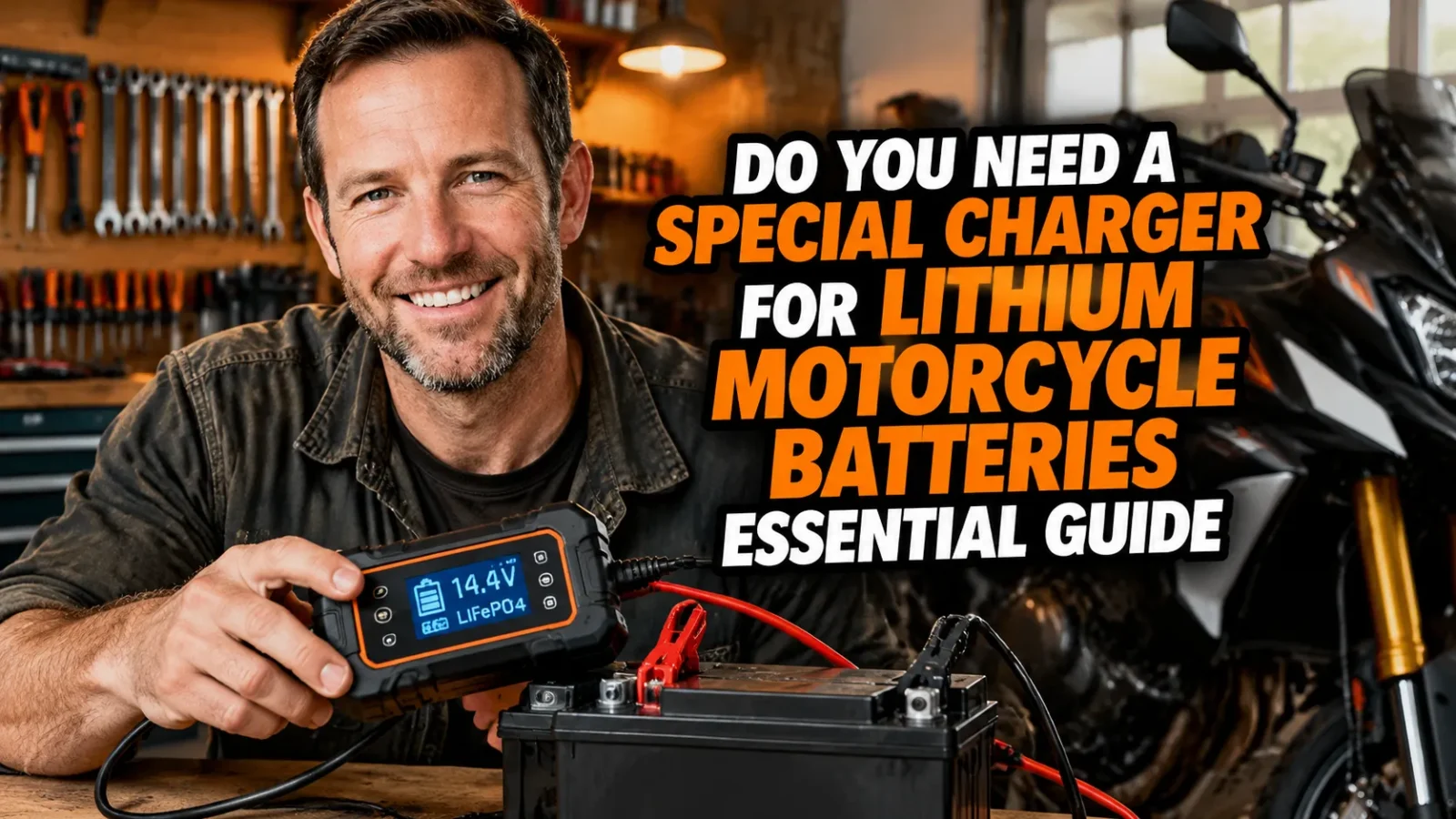
I’ll be straight with you: after switching to lithium batteries in three of my motorcycles over the past five years, I’ve learned that proper charging isn’t just important—it’s critical. The question of whether you need a special charger for lithium motorcycle batteries comes up constantly in riding groups, and I’m here to share what I’ve discovered through real-world experience and some expensive lessons.
The short answer is yes, you absolutely need a charger designed for lithium batteries. But there’s much more to understand about why this matters and how to protect your investment.
- Lithium motorcycle batteries require chargers with specific voltage profiles (14.4-14.6V) that differ from lead-acid chargers
- Using a lead-acid charger can damage lithium cells, void warranties, and create safety hazards
- Quality lithium chargers cost $40-150 but protect batteries worth $200-400 and extend their lifespan significantly
- Look for chargers with lithium-specific modes, automatic shutoff, and temperature compensation features
- Most modern Battery Management Systems (BMS) offer some protection, but they’re not foolproof with incompatible chargers
Why Lithium Batteries Are Different: What I’ve Learned
When I first made the switch to are lithium ion motorcycle batteries, I assumed all batteries charged the same way. I was wrong, and that assumption almost cost me a $300 battery.
Lithium iron phosphate (LiFePO4) batteries—the most common type in motorcycles—have fundamentally different charging requirements than traditional lead-acid batteries. The chemistry demands precise voltage control and different charging stages.
Lead-acid batteries charge at around 13.8-14.4 volts and can tolerate some overcharging. Lithium batteries, however, need exactly 14.4-14.6 volts for LiFePO4 chemistry, and overcharging even slightly can cause permanent damage or dangerous thermal events.
The Chemistry Behind the Difference
In my research and conversations with battery manufacturers, I’ve learned that lithium batteries don’t need the “desulfation” modes or equalization charges that lead-acid batteries require. These features, common on older chargers, can actually harm lithium cells.
Lithium batteries also charge much faster than lead-acid batteries. What takes 8-12 hours with a lead-acid battery might only take 1-3 hours with lithium. This speed difference means the charging algorithm needs to be more precise to avoid overshooting the target voltage.
What Happens When You Use the Wrong Charger
I’ve seen firsthand what happens when riders use incompatible chargers. My riding buddy ignored the warnings and used his old automotive charger on his new lithium battery. Within two months, the battery wouldn’t hold a charge and had swelled noticeably.
Here’s what can go wrong with the wrong charger:
Overcharging and Cell Damage
Overcharging is the most common issue. Lead-acid chargers often push voltage above 14.8V during bulk charging stages. For lithium cells, this is dangerous territory. I’ve watched voltage meters climb past 15V on traditional chargers—well into the damage zone for lithium.
The Battery Management System (BMS) built into most lithium batteries offers some protection. It can disconnect charging when voltage gets too high. However, I’ve found that not all BMS units are created equal, and some don’t respond fast enough to aggressive charging profiles.
Undercharging and Reduced Capacity
Some chargers designed for AGM or gel batteries terminate charging too early for lithium batteries. They might stop at 13.8V, leaving your lithium battery at only 60-70% capacity. Over time, I’ve noticed this can lead to reduced performance and perceived battery failure.
Thermal Issues and Safety Risks
This is where things get serious. Improper charging generates excess heat in lithium cells. In extreme cases, this can lead to thermal runaway—a chain reaction where heat generation accelerates uncontrollably.
I always stress this point: while rare with quality batteries and proper charging, thermal events are dangerous. It’s simply not worth risking your motorcycle or garage to save $50 on a proper charger.
What Makes a Lithium Charger Special
After testing numerous chargers over the years, I’ve identified the key features that separate lithium-specific chargers from traditional ones. When shopping for the best lithium battery charger for motorcycle applications, these are non-negotiable.
Precise Voltage Control
The best lithium chargers I’ve used maintain voltage within 0.1V of the target throughout the charging cycle. This precision prevents overcharging while ensuring complete charging. I always verify this with a multimeter when testing new chargers.
Quality units will charge at constant current until reaching 14.4-14.6V, then switch to constant voltage mode until current drops to a preset threshold. This two-stage approach is different from the three-stage (bulk, absorption, float) charging used for lead-acid batteries.
Temperature Compensation
Temperature significantly affects lithium battery charging. The chargers I recommend include temperature sensors that adjust charging voltage based on ambient temperature. In my cold garage during winter, I’ve seen this feature make a real difference in charging efficiency and safety.
Automatic Shutoff
Unlike lead-acid batteries that can accept a float charge indefinitely, lithium batteries should not be left on continuous charge. The lithium chargers I trust automatically shut off or switch to a very low maintenance mode once charging completes.
I’ve left batteries on proper lithium chargers for weeks without issue, but I wouldn’t do the same with a traditional charger.
Can You Ever Use a Lead-Acid Charger?
I get asked this constantly, and my answer is nuanced. Technically, some modern smart chargers have lithium modes that make them safe. However, older chargers or basic automotive chargers are absolutely not suitable.
If you’re looking at the best battery charger for a motorcycle that can handle both battery types, look for models explicitly labeled as compatible with both lead-acid and lithium batteries with selectable modes.
I own one such charger—a CTEK model with a dedicated lithium setting. It works perfectly, but I always double-check that I’ve selected the correct mode before connecting. One mistake could be costly.
The “Smart Charger” Myth
Not all “smart” chargers are lithium-compatible, despite marketing claims. I’ve tested chargers labeled as “universal” or “smart” that still use voltage profiles inappropriate for lithium batteries. Always verify that the charger specifically mentions LiFePO4 or lithium compatibility in the technical specifications, not just marketing materials.
What About Trickle Charging and Maintenance?
Traditional trickle charging—continuously feeding a small current to maintain charge—isn’t appropriate for lithium batteries. The chemistry doesn’t self-discharge significantly, so constant charging isn’t necessary and can actually reduce battery life.
When riders ask about the best trickle charger for motorcycle battery applications with lithium, I redirect them toward lithium-compatible maintenance chargers instead.
These devices monitor voltage and only charge when the battery drops below a threshold—typically around 13.0V for lithium. I use this type of charger on my bikes during winter storage, and my batteries emerge in spring at perfect voltage without any degradation.
My Charging Setup and Recommendations
Over the years, I’ve refined my charging setup based on trial, error, and research. Here’s what I actually use and recommend to fellow riders.
For Regular Charging
I keep a dedicated lithium charger in my garage—specifically an OptiMate Lithium model. It’s more expensive than basic chargers, but it’s paid for itself by keeping my batteries healthy for years beyond their expected lifespan.
The charger has saved me more money than it cost by preventing premature battery replacement. At $200-400 per lithium battery, protecting that investment with a $70 charger is a no-brainer.
For Winter Storage
During the off-season, I connect my bikes to lithium-compatible maintenance chargers. These monitor and maintain charge without overcharging. I’ve kept batteries on these chargers for four months straight without any issues.
One tip I’ve learned: even with a good maintenance charger, I disconnect and reconnect monthly just to verify everything’s working correctly. It’s probably overkill, but it gives me peace of mind.
For Travel and Emergency
I also carry a compact USB-powered lithium charger for emergencies. It’s not fast, but it’ll bring a dead battery back to life enough to start the bike. This has saved a trip once when I left my key on and drained the battery at a remote campsite.
Understanding Battery Management Systems (BMS)
Every quality lithium motorcycle battery includes a BMS—the electronic brain that protects the battery from damage. Understanding what it does (and doesn’t do) has helped me make better charging decisions.
What BMS Actually Protects Against
The BMS in my batteries monitors individual cell voltages, temperature, and current. It can disconnect the battery if voltage gets dangerously high or low, if temperature exceeds safe limits, or if current exceeds rated capacity.
This protection is excellent, but it’s a last resort. I’ve learned that repeatedly triggering BMS protection shortens battery life. The goal is proper charging that never activates these safety features.
BMS Limitations
Here’s what surprised me: BMS protection isn’t instant. There’s a small delay between detecting a problem and disconnecting. With an aggressive charger pushing high voltage, damage can occur in that window.
Additionally, some budget lithium batteries have minimal BMS capabilities. I learned this the hard way with a cheap battery that had almost no protection features. It failed after just six months of use with what should have been a compatible charger.
Cost-Benefit Analysis: Is It Worth It?
I understand the hesitation about buying yet another piece of equipment. Let me break down the economics based on my experience.
The Investment
A quality lithium-specific charger costs $40-150 depending on features. My primary charger cost $85. My maintenance chargers were $50 each, and I have two of them for my three bikes.
Total investment in charging equipment: approximately $185.
The Protection
My three lithium batteries cost $280, $320, and $250 respectively. Total: $850. Those batteries are now 3-5 years old and still performing like new.
Friends who used incompatible chargers replaced their batteries after 1-2 years. At $250-300 per replacement, my $185 investment in proper chargers has saved me at least $500 so far.
The Peace of Mind
Beyond dollars, there’s value in confidence. I know my batteries are charging correctly and safely. I don’t worry about garage fires or premature failure. That peace of mind is worth something, though I can’t quantify it exactly.
Common Mistakes I See Riders Make
Through online forums, riding groups, and casual conversations, I’ve noticed patterns in how riders mishandle lithium battery charging. Here are the mistakes I see most often.
Assuming Onboard Charging Systems Are Sufficient
Your motorcycle’s charging system isn’t designed specifically for lithium batteries in most cases. While it works for maintaining charge during riding, I’ve found that external charging is still necessary for full battery health.
Voltage regulators on older bikes especially might not provide optimal charging profiles for lithium. I always top off with a proper charger rather than relying solely on the bike’s alternator.
Buying the Cheapest Option
I’ll admit it—my first lithium charger was a $25 model from an unknown brand. It claimed lithium compatibility but used voltage settings that made me nervous. I upgraded after three months when I measured output voltage swinging between 13.8V and 15.2V—way too variable for my comfort.
Reputable brands like CTEK, OptiMate, Battery Tender (with lithium modes), and Noco offer proven reliability. The extra $30-50 is insurance.
Not Reading Specifications
Marketing copy often overstates capabilities. I always check the actual voltage specifications, not just compatibility claims. If a charger doesn’t list specific voltage ranges for lithium batteries, I assume it’s not truly lithium-compatible.
Special Considerations for Different Riding Styles
My charging recommendations vary slightly depending on how you use your motorcycle. Here’s what I’ve observed across different riding scenarios.
Daily Commuters
If you ride daily, your battery stays charged through normal use. However, I still recommend checking voltage monthly and topping off quarterly with a proper charger. This ensures cells remain balanced and the BMS functions optimally.
Weekend Warriors
This is my category for two of my bikes. They sit for 5-6 days at a time. I’ve found that connecting to a maintenance charger between rides keeps everything perfect. The battery’s always ready, and I never worry about voltage drop during the week.
Seasonal Riders
For bikes in winter storage, proper charging becomes critical. I charge fully with a standard lithium charger, then switch to a maintenance charger for the duration. Some resources, like where is the gas tank on a motorcycle a riders essential guide, cover other storage considerations, but battery maintenance is the most important electrical concern.
I check monthly and have never had a battery fail to start come spring.
Future-Proofing Your Charging Setup
Battery technology continues evolving, and I think about longevity when buying charging equipment. Here’s my approach to ensuring my chargers remain useful for years.
Buying Versatile Equipment
My main charger handles both lead-acid and lithium batteries. While I’ve fully converted to lithium, this versatility means I can help friends with older bikes or charge other power sports equipment.
Watching for New Technology
Newer lithium battery chemistries are emerging. Most chargers designed for LiFePO4 will work with these variants, but I stay informed about compatibility. Manufacturers usually update firmware or release new models as technology advances.
My Final Verdict on Lithium Battery Chargers
After five years of exclusive lithium battery use across three motorcycles, I’m completely convinced that dedicated charging equipment is essential, not optional. The cost is minimal compared to battery replacement, and the safety benefits are significant.
Every rider I know who’s had lithium battery problems either used the wrong charger or bought an extremely cheap battery with inadequate BMS protection. Those who invested in proper charging equipment report the same experience I have: years of reliable performance with zero issues.
If you’re switching to lithium or already running lithium batteries, budget for a proper charger immediately. It’s not an accessory—it’s a necessary component of the system. Your battery’s warranty probably requires it anyway, and your battery’s lifespan definitely depends on it.
I’ve saved money, avoided frustration, and enjoyed reliable starts in all conditions by charging correctly. That’s worth far more than the $85 I spent on my charger years ago. In fact, that charger is still going strong, charging multiple batteries across multiple bikes without any issues.
Don’t gamble with your battery investment. Get the right charger from the start, and you’ll be glad you did every time you press that starter button and hear your engine roar to life.
Frequently Asked Questions
Can I use my old lead-acid charger on a lithium motorcycle battery?
No, you should not. Lead-acid chargers often use charging profiles and voltages that can damage lithium batteries or reduce their lifespan. I always recommend using a lithium-specific charger to protect your investment.
What happens if I charge a lithium battery with the wrong charger?
Using the wrong charger can overcharge the battery, cause thermal runaway, void your warranty, or permanently damage the cells. In my experience, it’s simply not worth the risk.
How much does a lithium motorcycle battery charger cost?
Quality lithium chargers typically range from $40 to $150. While it’s an additional expense, I’ve found that proper charging extends battery life by years, making it a worthwhile investment.
Can I use a trickle charger on a lithium motorcycle battery?
Traditional trickle chargers are designed for lead-acid batteries and aren’t suitable for lithium. However, many modern lithium-compatible maintenance chargers offer similar functionality with the correct voltage parameters.

Related Articles

Scooters vs Motorcycles: My Honest, First-Hand Comparison After Riding Both for Years
After thousands of miles on both scooters and motorcycles, I break down cost, comfort, maintenance, and safety to help you…
Jake Miller
10 min read

7 Scooters That Look Like Motorcycles for Riders Who Want Style and Storage
Explore my top 7 scooters that look like motorcycles, from adventure crossovers like the Honda X-ADV to sporty maxis like…
Jake Miller
9 min read

How Long Do Honda Motorcycles Last? My 20-Year Owner’s Reality Check
Discover how long Honda motorcycles really last from an owner with 100k+ miles of experience. Learn maintenance secrets, high-mileage examples,…
Jake Miller
10 min read