
7 Best Spray Paints for Motorcycle Fairings: My Honest Garage-Tested Picks
 Jake Miller
8 min read
Jake Miller
8 min read
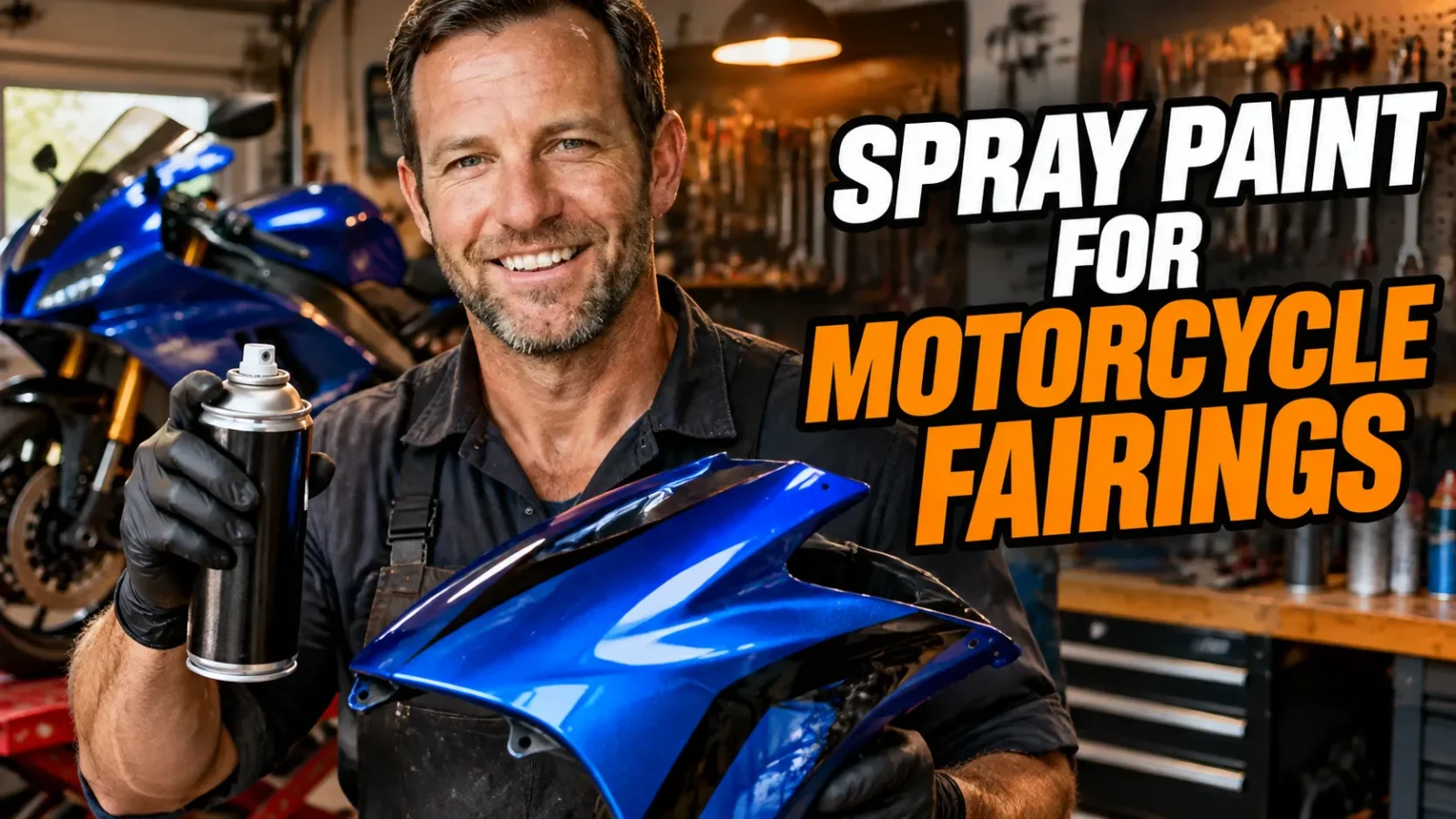
I’ve resprayed more fairings than I care to admit. A crashed Ninja 250 in my parents’ garage, a faded CBR600RR track bike, a scratched-up Ducati Monster tank cover, and a buddy’s SV650 that he swore he’d “just touch up” and ended up repainting entirely. Along the way, I learned that the paint matters, but the prep and the clear coat matter just as much.
If you’re here, you’re probably staring at scuffed ABS plastic and wondering whether a rattle can can actually do the job. Short answer: yes, if you pick the right product. Long answer: that’s what this list is for.
One quick note before we dive in — fairings get hot near the engine and exhaust, and if your project grows beyond plastic panels, I’ve covered related surfaces in my guides on the best spray paint for motorcycle engine and the best paint for motorcycle exhaust pipes. And if you’re doing a full teardown, don’t forget the electrical side — my what are the different types of motorcycle batteries ultimate guide is a good companion read while the panels are off.
- My overall pick for fairings is SprayMax 2K Clear Coat over a Dupli-Color Perfect Match base — the combo I trust most.
- Krylon Fusion All-In-One is the easiest no-primer option for ABS plastic if you’re a beginner.
- Always use a 2K or urethane clear coat — base color alone won’t survive fuel spills and UV.
- Prep is 80% of the result: sand, degrease, and use an adhesion promoter on bare plastic.
1. Dupli-Color Perfect Match — Best OEM Color Match for Fairings
If your goal is to make one panel look like it never happened, Dupli-Color Perfect Match is where I start. It’s an acrylic lacquer aerosol designed specifically to match factory automotive and motorcycle colors, and the color codes are printed right on the can.
I used their Honda and Yamaha matches on a friend’s R6 side fairing, and honestly, the match was close enough that you had to hunt for the blend line in direct sunlight. For a $10–15 can, that’s remarkable.
The catch is that Perfect Match is a base coat. It’s thin, it dries fast, and it has almost no UV or chemical resistance on its own. You must clear over it. I learned that the hard way when a fuel drip from a sloppy fill-up dulled a panel I’d sprayed three weeks earlier.
Also, because it’s lacquer-based, it can react badly with certain existing finishes. I always test on the inside of a fairing first.
2. SprayMax 2K Clear Coat — My Non-Negotiable Top Coat
This is the product that changed how I think about rattle can painting. SprayMax 2K Clear Coat is a true two-component urethane in an aerosol can — you press a button on the bottom to puncture an internal hardener capsule, shake for two minutes, and you have roughly 48 hours to use it.
The result is a finish that behaves like a professional shop clear: hard, glossy, fuel-resistant, and UV-stable. I sprayed it over Dupli-Color base on a track fairing set two seasons ago, and it’s still holding up against brake dust and sun.
Two things you need to know. First, it’s expensive — expect $25–35 per can, and you’ll want two or three for a full fairing set. Second, and more important: 2K products contain isocyanates. You need a proper organic vapor respirator, gloves, and long sleeves. No exceptions.
If you’re painting a bike you plan to keep, this is the clear I reach for every single time.
3. Krylon Fusion All-In-One — Best for Beginners on Bare ABS
Krylon Fusion All-In-One is the paint I recommend to people who have never sprayed a fairing before. It’s a modified acrylic that bonds directly to plastic without a separate primer, which removes a whole step and a whole category of mistakes.
I’ve used it on a cheap set of eBay fairings for a beater GS500, and the adhesion was genuinely good — no flaking at the mounting tabs after a full season of riding. The color range is solid, and the satin and matte finishes look surprisingly factory.
What it isn’t is a show-quality gloss. The finish is a little softer than a 2K system, and it scratches more easily. For a daily rider or a first project, though, it’s forgiving, cheap, and available at any hardware store.
Just remember: even though it says “no primer needed,” I still scuff the panel with 600-grit and wipe it with wax and grease remover. Prep beats product every time.
4. SEM Color Coat — Best for Flexible and Textured Fairings
Some fairings aren’t smooth, glossy plastic — they’re textured, flexible, or made of materials like TPO that normal paint slides right off. That’s where SEM Color Coat earns its place in my cabinet.
SEM is an elastomeric coating, meaning it stays flexible after curing. I used it on the textured inner panels of a V-Strom, and it held up beautifully through heat cycles and vibration. It’s also my go-to for plastic bumpers and lower cowls that flex when you remove them.
It’s not a color-match product for your main bodywork, so don’t expect a factory red. Think of it as the specialist for the awkward panels — the ones that crack, peel, or look like they were never meant to be painted.
You’ll want SEM’s dedicated plastic prep spray alongside it. Skipping that step on TPO plastic is basically donating your paint to the road.
5. Rust-Oleum Automotive Enamel — Best Budget Option That Still Works
Rust-Oleum’s Automotive Enamel is the paint I grab when someone says “I just want it to look decent and I don’t want to spend $80.” At around $8 a can, it’s the cheapest option on this list that I’d actually put on a motorcycle.
It’s a durable enamel with good gloss retention, and it lays down smoothly once you get the hang of light, overlapping coats. I resprayed a faded front fender with it and the result looked far better than the price suggested.
The trade-off is drying time. Enamel needs days, not hours, to fully harden, and it’s more prone to runs if you get impatient. I also found it slightly more sensitive to humidity than the acrylics above.
If you’re painting a cheap bike, a pit bike, or a set of spare track fairings, this is a perfectly reasonable choice. Just give it time to cure before you bolt anything back on.
6. Montana Cans Gold — Best for Custom Colors and Creative Builds
If you’re doing something different — a custom graphic, a two-tone fade, a matte military scheme — Montana Gold is the artist’s aerosol. It’s a low-pressure acrylic with an enormous color library and a soft, controllable spray pattern.
I’ve used Montana Gold for accent stripes and stencil work on fairings, and the control is genuinely excellent. The low pressure means less overspray and fewer drips, which matters a lot when you’re working on a curved side panel.
It’s not the toughest paint on its own, so I always top it with SprayMax 2K. But for laying down a creative design, nothing else on this list gives me that level of finesse.
One warning: Montana Gold is designed for art, not automotive durability. Treat the clear coat as mandatory, not optional.
7. Eastwood 2K AeroSpray — Best All-In-One 2K System
If you want the durability of a 2K system without mixing your own base and clear from separate products, Eastwood’s 2K AeroSpray line is worth the money. It’s the same two-component aerosol concept as SprayMax, but Eastwood offers both color and clear in the format.
I used their satin black 2K on a set of café racer side covers, and the finish was hard, even, and chemical-resistant straight out of the can. No separate base coat needed if you’re going with a solid color.
It’s the most expensive route per panel, and the 48-hour pot life means you need to plan your whole spray session in one go. But for a bike you care about, the convenience and durability are hard to beat.
If your project also involves engine work, I’d pair this with my guide on the best black engine paint for motorcycle so your panels and cases match. And if you’re refreshing cast aluminum parts while you’re at it, the best paint for aluminum motorcycle engine covers that surface properly. Radiator guards and grilles are another common companion job — see my picks for the best paint for motorcycle radiators.
How I Choose Between These Paints
My decision tree is simple. If I need a factory color match, I go Dupli-Color Perfect Match plus SprayMax 2K clear. If I’m painting bare ABS and want the easiest path, Krylon Fusion. If the panels flex or have texture, SEM Color Coat.
For budget builds and track spares, Rust-Oleum Enamel does the job. For custom designs, Montana Gold. And for a one-product, pro-grade finish, Eastwood 2K AeroSpray.
The paint brand matters, but I’ll say it one more time: surface prep and clear coat choice will influence your result more than the label on the can.
What I’d Buy First
If you’re buying one thing today and you already have a base color you like, get a can of SprayMax 2K Clear Coat. It’s the single biggest upgrade you can make to a rattle can fairing job, and it’s the product I recommend most often to riders who ask me this exact question at bike nights.
Start there, practice your technique on a scrap panel, and you’ll be surprised how close a garage spray job can get to a shop finish.
Frequently Asked Questions
Can I really spray paint motorcycle fairings at home without a booth?
Yes, but prep and ventilation matter more than the paint brand. I’ve gotten pro-level results in a garage with plastic sheeting, a box fan, a respirator, and careful wet-sanding between coats.
Do I need a clear coat over spray paint on fairings?
Almost always, yes. Base coats on ABS fairings are thin and UV-sensitive. A 2K or urethane clear adds chemical resistance, gloss, and protection from bugs and fuel spills.
How many cans of spray paint does a full fairing set need?
For a typical sportbike fairing set, I budget 3 to 4 cans of color and 2 to 3 cans of clear. Layering light coats uses more product than people expect.
Is 2K spray paint worth the extra cost and safety gear?
For a keeper bike, absolutely. 2K clears are far more durable and fuel-resistant than 1K rattle cans, but they contain isocyanates, so you need a proper respirator and skin coverage.

Related Articles

10 Best Paints for Motorcycle Fairings: My Real-World Picks After Years of Resprays
I've resprayed fairings on everything from track bikes to cruisers. Here are the 10 best paints for motorcycle fairings, with…
Jake Miller
10 min read

What to Know Before Installing Fairings on Your Motorcycle: A Rider’s Honest Guide
Thinking about new fairings? I share everything I learned about fitment, materials, cost, and hidden headaches before you drop cash…
Jake Miller
7 min read

9 Motorcycles Actually Built in India I’d Buy With My Own Money
I've ridden and researched bikes built in Indian factories from Royal Enfield to Hero. Here are 9 real models, their…
Jake Miller
9 min read