
What Does CC Stand For in Engine? A Rider’s Complete Guide to Engine Displacement
 Jake Miller
16 min read
Jake Miller
16 min read
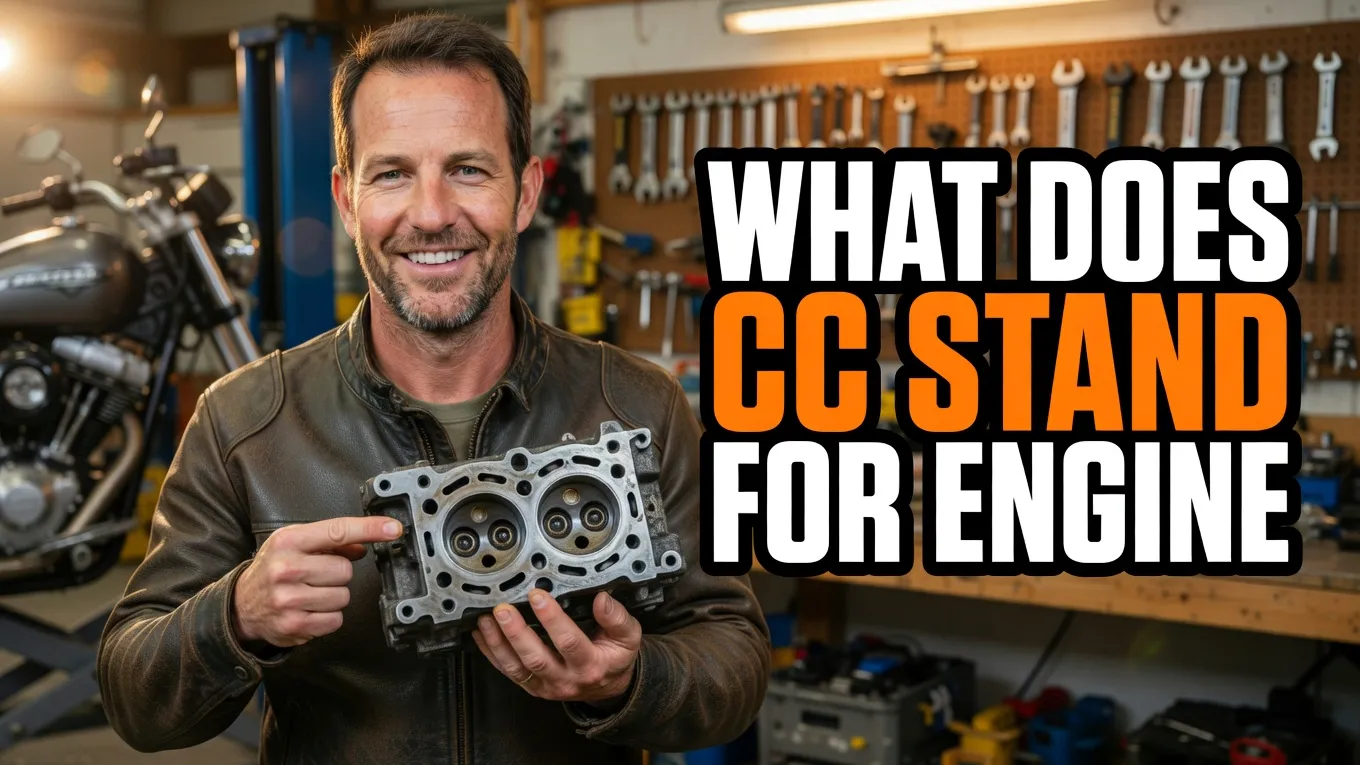
I’ll never forget the first time I walked into a dealership, eyes wide at the rows of motorcycles, and heard the salesman casually mention “600cc” and “1200cc” like I should know exactly what that meant. I nodded along, pretending to understand, but honestly had no clue what those numbers represented or why they mattered so much.
If you’ve found yourself in a similar situation, wondering what CC actually stands for when people talk about engines, you’re in the right place. Over my years of riding and wrenching on bikes, I’ve learned that understanding engine displacement isn’t just technical jargon—it’s fundamental to choosing the right ride and understanding what your machine is capable of.
Let me break down everything I’ve learned about CC in engines, from the basic definition to how it affects your riding experience on the road.
- CC stands for cubic centimeters and measures engine displacement—the volume swept by all pistons in one cycle
- Higher CC generally means more power and torque, but also increased weight and fuel consumption
- Engine displacement affects performance, riding experience, insurance costs, and licensing requirements
- Modern technology like fuel injection and variable valve timing can make smaller displacement engines surprisingly powerful
- The “best” CC depends entirely on your riding style, experience level, and intended use
The Simple Answer: What CC Actually Means
CC stands for cubic centimeters, and it measures engine displacement. In the simplest terms I can put it, displacement is the total volume of space that all the pistons in your engine sweep through as they move from top to bottom in their cylinders.
Think of it like this: imagine you have a syringe (which is basically a cylinder with a piston). When you pull the plunger back, it creates a certain volume of space inside. That volume, measured in cubic centimeters, is essentially what we’re talking about with engine displacement.
When someone says they ride a 750cc motorcycle, they’re telling you that all the pistons in that engine combined displace 750 cubic centimeters of air and fuel mixture during one complete engine cycle. That’s it. Nothing more complicated than that.
Why Engine Displacement Matters to Me as a Rider
I’ve ridden everything from a nimble 250cc beginner bike to a thundering 1800cc cruiser, and I can tell you firsthand that CC makes a massive difference in how a motorcycle feels and performs. It’s not just a number on a spec sheet—it fundamentally changes your entire riding experience.
Larger displacement engines can draw in and burn more fuel with each cycle, which typically translates to more power and torque. That 1200cc touring bike I rode cross-country? It could effortlessly cruise at highway speeds all day with luggage and a passenger without breaking a sweat.
Meanwhile, my old 300cc commuter bike was perfect for zipping through city traffic but struggled when I tried taking it on longer highway stretches. It wasn’t a bad bike—it just had less displacement, which meant less power available when I needed it.
The Relationship Between CC and Power
Here’s something that confused me early on: CC and horsepower aren’t the same thing, even though they’re related. I’ve seen 600cc sportbikes that produce more power than some 1000cc cruisers because of how the engines are designed and tuned.
Displacement gives you the potential for power, but the actual power output depends on numerous factors: compression ratio, valve timing, fuel delivery system, exhaust design, and how high the engine can rev. A high-revving 600cc sportbike might produce 120 horsepower, while a 1000cc cruiser tuned for low-end torque might only make 70 horsepower.
What larger displacement consistently gives you is torque—that gut-punching pull you feel when you twist the throttle. And for many riding situations, especially around town or two-up with a passenger, torque matters more than peak horsepower.
How Engine Displacement Is Actually Calculated
I’m not going to lie—when I first learned the formula for calculating engine displacement, my eyes glazed over. But once I understood it, I realized it’s actually pretty straightforward and helps explain why different engine configurations behave so differently.
The basic formula is: Displacement = π/4 × bore² × stroke × number of cylinders
The bore is the diameter of the cylinder, and the stroke is how far the piston travels up and down. Multiply the area of the cylinder by the stroke length, and you get the displacement for one cylinder. Multiply that by the number of cylinders, and you’ve got your total engine displacement.
Why Bore and Stroke Ratios Matter
Here’s where it gets interesting: two engines with the same displacement can feel completely different based on their bore and stroke dimensions. A “square” engine has equal bore and stroke measurements, a “short-stroke” or “oversquare” engine has a larger bore than stroke, and a “long-stroke” or “undersquare” engine has a longer stroke than bore.
In my experience, short-stroke engines (common in sportbikes) can rev higher and produce more top-end power. They feel aggressive and screamy—exactly what you want when carving canyons. Long-stroke engines (typical in cruisers and touring bikes) produce more low-end torque and feel punchier at lower RPMs, which is perfect for relaxed cruising.
This is why what does cc mean in motorcycles isn’t just about the number itself—it’s about how that displacement is configured and utilized.
Different Engine Sizes and What They’re Good For
After riding bikes across the displacement spectrum, I’ve developed some pretty strong opinions about what different CC ranges are best suited for. Your mileage may vary (literally), but here’s what I’ve found works well.
125cc to 250cc: The Learning Zone
I started on a 250cc bike, and I’m grateful I did. These smaller displacement engines are incredibly forgiving for new riders. You can make mistakes with the throttle or clutch without the bike launching you into the stratosphere.
They’re also lightweight, easy to maneuver at low speeds, and fantastic on fuel economy—I regularly got 70+ mpg on my old 250. Perfect for commuting, learning the basics, and building confidence before moving up.
300cc to 500cc: The Sweet Spot for Many Riders
This range surprised me with how versatile it is. Modern 300-500cc bikes have enough power for highway riding, can handle two-up situations reasonably well, and still maintain excellent fuel economy and manageable weight.
I rode a 400cc bike for three years and rarely felt like I needed more power for my daily riding. It was nimble in traffic, comfortable on weekend trips, and insurance was reasonable. For many riders, this is genuinely all the bike you’ll ever need.
600cc to 750cc: Sport and Sport-Touring Territory
This is where things get seriously fun. 600cc supersport bikes are absolute scalpels—razor-sharp handling with enough power to frighten yourself if you’re not careful. I’ve tracked a 600cc sportbike, and the acceleration from 6,000 to 14,000 RPM is intoxicating.
Meanwhile, 750cc sport-touring bikes offer a more practical take on performance—comfortable ergonomics with plenty of power for spirited riding and long-distance touring. They’re heavy enough to be stable at speed but not so big that they become unwieldy.
800cc to 1200cc: The Practical Big Bikes
I currently ride in this displacement range, and it’s where I’ve found my happy place for all-around riding. There’s enough torque to pass confidently on the highway, carry a passenger and luggage without struggling, and handle long days in the saddle comfortably.
Modern engines in this range, especially parallel twins and triples, offer impressive fuel economy considering their size. I average 45-50 mpg on my 900cc bike, which isn’t far off what smaller bikes achieve in real-world riding.
1300cc and Above: The Heavyweights
Big displacement cruisers and touring bikes fall into this category. I’ve ridden 1800cc cruisers that felt like rolling couches—effortless torque everywhere in the rev range, rock-solid stability at highway speeds, and enough presence to make car drivers actually notice you.
The tradeoff? Weight. Lots of weight. My friend’s 1600cc bagger weighs over 800 pounds fully loaded. It’s magnificent on the highway but requires serious respect and muscle in parking lots and at low speeds.
How CC Affects Maintenance and Operating Costs
Something I wish someone had explained to me earlier: displacement significantly impacts your ongoing costs. It’s not just about the purchase price—it’s about insurance, fuel, tires, and maintenance over the life of the bike.
Insurance companies love displacement figures. That 600cc sportbike I mentioned? Insurance cost me nearly three times what I paid for my 400cc bike, despite the 400 being newer. Bigger engines, especially in sport configurations, mean higher premiums.
Fuel Consumption Reality Check
Larger displacement engines burn more fuel per cycle—it’s basic physics. My 250cc bike sipped fuel so gently I could almost watch the gauge in slow motion. My 1200cc bike? It’s thirsty, especially when I’m enjoying that abundant torque.
That said, the relationship isn’t perfectly linear. A big, understressed engine running at low RPM can actually be more efficient than a small engine being wrung out to maintain highway speeds. I’ve gotten better highway fuel economy on my 900cc bike than I did on my old 300cc, simply because the bigger engine loafs along at 3,500 RPM while the smaller one screamed at 7,000 RPM.
Maintenance Considerations I’ve Learned
More displacement often means more cylinders, more valves, and more complexity. That means more to maintain and potentially more expensive services. My single-cylinder 250cc required valve checks every 15,000 miles—a job I could do in my garage in about two hours.
My four-cylinder 900cc? Valve checks every 12,000 miles, but it’s an all-day affair involving removing the gas tank, dozens of bolts, and carefully measuring 16 valves. I pay a shop to do it now, and it’s not cheap.
Oil capacity also scales with displacement. Keeping up with proper maintenance means using quality oil—and understanding what is the best engine oil for 4 stroke motorcycle engines need is crucial for longevity, especially in larger displacement motors that generate more heat and stress.
Modern Technology Is Changing the Displacement Game
Here’s something fascinating: the relationship between CC and performance is evolving rapidly. Modern fuel injection, variable valve timing, and advanced engine management systems are extracting more power from smaller displacements than ever before.
I’ve ridden 300cc bikes with fuel injection and sophisticated electronics that would absolutely embarrass the carbureted 500cc bikes from 20 years ago. They’re smoother, more powerful, more efficient, and more reliable. Technology is genuinely changing what different displacement ranges are capable of.
Forced Induction Changes Everything
Turbochargers and superchargers are becoming more common in motorcycles, and they completely rewrite the displacement rulebook. A turbocharged 1000cc bike can produce power levels that previously required 1400cc or more of naturally aspirated displacement.
I’ve ridden a supercharged bike, and the experience is wild—turbo lag followed by an explosive surge of power that feels nothing like a traditional naturally aspirated engine. It’s proof that CC alone doesn’t tell the whole performance story anymore.
How to Choose the Right Displacement for You
After all this talk about cubic centimeters, you might be wondering what size engine you should actually get. I’ve helped several friends make this decision, and my advice always starts with honest self-assessment.
Consider your experience level first. I don’t care how confident you are or how many YouTube videos you’ve watched—if you’re new to riding, starting on a big-displacement bike is asking for trouble. The power can overwhelm you before you’ve developed the muscle memory and instincts to handle it safely.
Think about your primary use case. Commuting in city traffic? You probably don’t need more than 500cc, and you’ll appreciate the lighter weight and better fuel economy. Planning regular long-distance tours? Look at 800-1200cc bikes that won’t leave you exhausted from vibration and wind buffeting.
The Highway Factor
One question I always ask: will you ride on highways regularly? If so, I generally recommend at least 400cc as a minimum. Smaller bikes can handle highway speeds, but they’re working hard to do it, and getting passed by semis while your engine screams at redline gets old quickly.
For comfortable, relaxed highway cruising with passing power in reserve, I personally wouldn’t go below 600cc. But that’s based on American highways—if you’re somewhere with lower speed limits or shorter highway distances, smaller displacement works fine.
Physical Size and Weight Matter
Here’s something often overlooked: larger displacement usually means larger, heavier bikes. I’m six feet tall and reasonably strong, but I’ve ridden big bikes that intimidated me with their sheer bulk. If you’re shorter or less confident handling weight, a smaller displacement bike might be the smarter choice regardless of power considerations.
I’ve watched riders drop bikes in parking lots because they chose displacement over manageability. Don’t let ego make that decision for you—pick a bike you can handle confidently at zero mph, because that’s when most drops happen.
Special Considerations for Different Riding Styles
Different types of riding demand different things from engine displacement. I’ve done everything from track days to multi-state tours, and each discipline has its own sweet spot.
Street Riding and Commuting
For pure street use, I’ve found that 300-700cc covers most riders’ needs perfectly. You get adequate power for all traffic situations without the weight, complexity, and cost of larger bikes. Fuel economy stays reasonable, and you’re not constantly worried about the consequences of a moment’s inattention with the throttle.
Proper maintenance becomes even more critical with frequent use. Whether you’re running a two-stroke or four-stroke engine, using the right lubricants matters—understanding what is the best 2 cycle oil for a motorcycle engine requires, or four-stroke oil requirements, directly impacts reliability and longevity.
Sport Riding and Track Days
For aggressive canyon carving or track days, I’ve found 600-750cc sportbikes hit the sweet spot between power and manageability. They have enough grunt to be exciting but aren’t so powerful that you’re constantly fighting the bike’s tendency to overwhelm the tires.
I’ve tracked 1000cc superbikes, and honestly, their power is largely unusable on most tracks unless you’re a genuinely skilled rider. The 600cc bikes are more fun for most of us because you can actually use the available power more of the time.
Track riding demands everything from your engine, making oil choice critical. If you’re serious about performance, learning what is the best engine oil for motorcycle racing applications need can mean the difference between consistent performance and mechanical failure under stress.
Adventure and Dual-Sport Riding
Adventure riding occupies an interesting middle ground. Off-road, lighter is better—which argues for smaller displacement. On-road, especially loaded with camping gear, more power helps. I’ve found 650-900cc to be the sweet spot for bikes that do both reasonably well.
Single-cylinder and parallel-twin engines in this displacement range offer good low-end torque for technical terrain while still having enough power for highway stretches between trails. They’re also simpler to maintain, which matters when you’re far from civilization.
Adventure bikes face unique demands—varying conditions, loads, and terrain. Choosing what is the best engine oil for a dual sport motorcycle requires balancing protection for both street and off-road use.
Touring and Long-Distance Riding
For serious touring, I lean toward 1000-1300cc engines. The extra displacement provides effortless torque for passing, handling two-up riding with full luggage, and maintaining comfortable highway speeds without constantly downshifting.
Larger touring engines also tend to be smoother with less vibration, which matters enormously over long days in the saddle. I’ve done 500-mile days on both 600cc and 1200cc bikes, and the bigger engine left me far less fatigued at day’s end.
Common Misconceptions About Engine Displacement
I’ve heard a lot of myths and misunderstandings about CC over the years. Let me address some of the most common ones I encounter.
“Bigger Is Always Better”
This is perhaps the most pervasive misconception. I’ve owned big bikes and small bikes, and I can tell you definitively: bigger is not always better. It’s about appropriate for your needs and skills.
A 250cc bike that you ride confidently and enjoy is infinitely better than a 1000cc bike that intimidates you or sits in the garage because it’s too much machine. I’ve had more fun on nimble 400cc bikes than on powerful liter bikes that demanded constant respect and attention.
“You’ll Outgrow a Small Bike Immediately”
People told me I’d outgrow my 400cc bike within months. Three years later, I was still riding it happily and only upgraded because I wanted to try something different, not because the 400 was inadequate.
Unless you’re specifically pursuing track racing or have very particular performance needs, most riders never “outgrow” a well-chosen first bike. You’ll develop your skills, not exceed your bike’s capabilities, for quite a while.
“CC Directly Equals Speed”
I’ve been passed by 600cc sportbikes while riding liter bikes. Displacement contributes to potential speed, but aerodynamics, rider weight, gearing, and engine tuning all play huge roles. A streamlined 600cc sportbike will outrun a upright 1000cc cruiser every time, despite the displacement disadvantage.
Environmental and Regulatory Considerations
Something I’ve become more aware of over the years: displacement affects more than just performance. It has real implications for emissions, regulations, and licensing in many regions.
Many countries have licensing tiers based on displacement or power output. In Europe, for example, the A2 license restricts riders to 47 horsepower, which typically means bikes around 500cc (though there are restricted versions of larger bikes). Understanding these regulations matters if you ride internationally or plan to.
Emissions regulations are also increasingly displacement-dependent. Larger engines face stricter standards in many markets, and manufacturers are responding by making smaller displacement engines more powerful and efficient rather than always going bigger.
My Final Thoughts on Engine Displacement
After thousands of miles across dozens of different bikes, here’s what I’ve concluded about CC: it matters, but it’s just one piece of the puzzle. The “right” displacement depends entirely on your unique situation—experience level, riding style, physical size, intended use, and budget.
I’ve loved bikes across the entire displacement spectrum for different reasons. My 250cc starter bike taught me to carry momentum through corners because I couldn’t power out of mistakes. My 600cc sportbike showed me what truly explosive acceleration feels like. My current 900cc all-rounder does everything well enough that I rarely wish for something different.
Don’t get caught up in displacement envy or feel pressured to ride a bigger bike than you need. The best motorcycle is the one you’ll actually ride, maintain properly, and enjoy. Sometimes that’s a 300cc single, sometimes it’s a 1200cc twin, and both answers are completely valid.
Understanding what CC stands for and what it means in practical terms helps you make informed decisions about your riding. But remember: the numbers on the side of the engine are just the beginning. How that displacement is packaged, tuned, and used makes all the difference between a bike you love and one that doesn’t quite fit your needs.
So now when you walk into a dealership or browse listings online and see those CC numbers, you’ll know exactly what they mean—and more importantly, how to think about whether that displacement matches what you need from your riding experience. That’s knowledge that’ll serve you well throughout your motorcycling journey.
Frequently Asked Questions
What does CC stand for in an engine?
CC stands for cubic centimeters, which measures engine displacement — the total volume of air and fuel an engine can draw into all its cylinders during one complete cycle.
Does higher CC mean more power?
Generally yes. Higher CC engines can burn more fuel per cycle, producing more power and torque. However, factors like engine design, fuel injection, and compression ratio also significantly impact performance.
What CC engine is best for beginners?
For beginner riders, I recommend starting with 250-500cc motorcycles. They offer enough power for highway riding while remaining manageable and forgiving for new riders learning throttle control.
How does CC affect fuel economy?
Larger CC engines typically consume more fuel because they burn more fuel per cycle. However, a bigger engine running at lower RPMs can sometimes be more efficient than a smaller engine working harder to maintain the same speed.

Related Articles
7 Best Batteries for Motorcycles I’ve Tested and Trust in 2026
I've tested dozens of motorcycle batteries to find the best performers. From AGM to lithium, here are my top picks…
Jake Miller
15 min read

The Perfect Battery for Your Harley Davidson Softail: A Rider’s Complete Guide
Discover the perfect battery for your Harley Davidson Softail. I've tested multiple options and share real-world performance data, maintenance tips,…
Jake Miller
14 min read

The Best Battery for Your Harley Davidson: My Complete Guide After Years of Testing
Discover which battery truly performs best for Harley Davidson motorcycles. Real rider experience with AGM, lithium, and OEM options to…
Jake Miller
12 min read