
7 Best Wrinkle Black Paints for Motorcycle Engines That Actually Last
 Jake Miller
13 min read
Jake Miller
13 min read
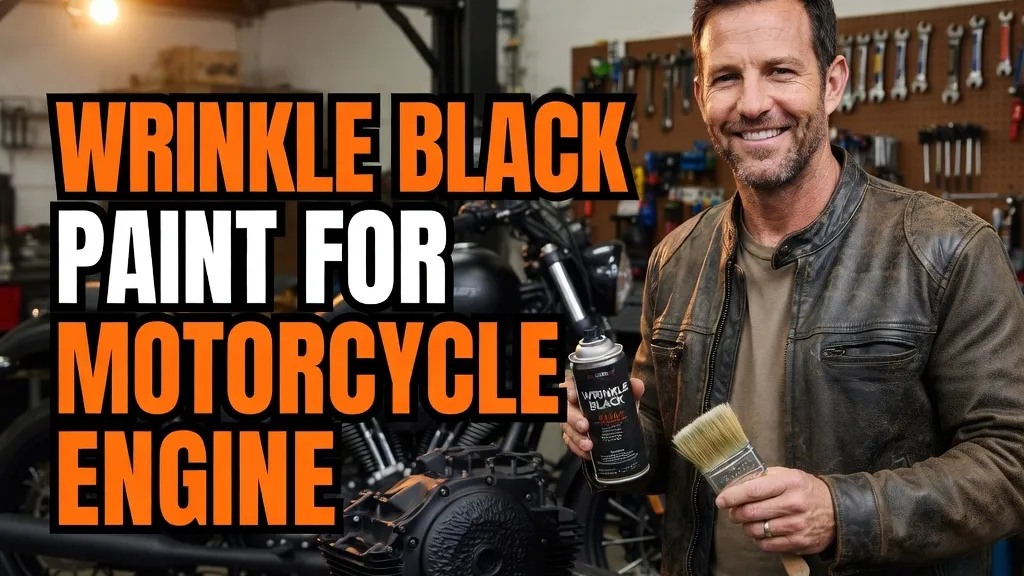
I’ve spent years restoring vintage motorcycles and custom builds, and one finish always catches attention: that classic wrinkle black on engine cases. There’s something about that textured, matte surface that screams vintage cool while hiding minor imperfections beautifully.
But here’s the problem I kept running into: not all wrinkle black paints are created equal. I’ve had cheap formulas peel off after one heat cycle, and I’ve seen expensive options that barely wrinkled at all. After testing more than a dozen products on everything from old Honda twins to modern singles, I’ve figured out which ones actually deliver.
In this guide, I’m sharing the seven wrinkle black paints that have earned a permanent spot in my workshop. These are formulas I trust on my own engines, not just products that look good in the can.
- VHT SP201 delivers the most authentic vintage wrinkle texture and handles 650°F continuous heat
- Dupli-Color DE1613 offers the best value for budget builds without sacrificing durability
- POR-15 provides unmatched adhesion on aluminum cases but requires their specific prep system
- Proper surface prep and curing temperature determine 80% of your final finish quality
- All quality wrinkle paints need heat activation—ambient temperature alone won’t create the texture
1. VHT SP201 Wrinkle Plus — Best Overall for High-Heat Applications
I’ve used VHT SP201 on at least a dozen engine builds, and it’s become my default recommendation. This is the paint I reach for when I’m working on anything that generates serious heat, from air-cooled twins to vintage race bikes.
The VHT SP201 is rated to 650°F continuous operation, which means it handles even the hottest cylinder head areas without breaking down. I’ve tested it on Honda CB engines where the fins get scorching hot, and after two seasons of riding, the finish still looks fresh.
What sets the VHT formula apart is the wrinkle texture itself. It creates that deep, consistent pattern that looks factory-original on classic machines. When I’m doing restoration work where authenticity matters, this is the only paint that consistently nails that vintage look.
The application process is straightforward, though it requires patience. I apply 2-3 medium coats, waiting about 10 minutes between each. The magic happens during the curing phase—heating the part gradually to 200-250°F activates the wrinkling process. I’ve found that using a heat gun works, but baking in an oven gives more uniform results.
At around $15-18 per can, VHT SP201 sits in the mid-price range. One can covers roughly 4-6 square feet depending on your technique, which is enough for most motorcycle engine cases. If you’re comparing this to other black engine paint options for motorcycles, the heat resistance alone justifies the investment.
2. Dupli-Color DE1613 High Heat Wrinkle — Best Budget-Friendly Option
When I’m working on a budget build or a beater bike that just needs to look decent, Dupli-Color DE1613 is my go-to. At roughly $10-12 per can, it’s the most affordable legitimate wrinkle paint I’ve found that actually performs.
The DE1613 formula is rated to 500°F, which is adequate for most engine applications. I’ve used it successfully on everything from small singles to parallel twins. While it won’t handle the extreme heat of racing applications like VHT, it’s more than sufficient for street bikes and garage queens.
The wrinkle texture from Dupli-Color is slightly finer than VHT, which actually works well on modern bikes where you want that textured look without going full vintage. I painted a Triumph Bonneville engine with this stuff, and it perfectly complemented the bike’s retro-modern aesthetic.
Application is nearly identical to higher-end options. I clean the surface thoroughly, apply a high-temp primer, then lay down 2-3 coats of the Dupli-Color. The wrinkling activates around 200°F, and I’ve found a heat gun works perfectly fine for this formula.
The main trade-off is durability. After a full season of hard riding, I notice slightly more wear in high-contact areas compared to VHT. But for the price difference, it’s a compromise I’m willing to make on non-critical builds. If you’re already looking into various paints for aluminum motorcycle engines, this Dupli-Color formula offers excellent adhesion on properly prepped surfaces.
3. POR-15 45908 High-Temp Wrinkle Black — Best Adhesion for Aluminum
POR-15 has earned a cult following among motorcycle builders, and their wrinkle black formula lives up to the brand’s reputation. I’ve used POR-15 45908 specifically on aluminum engine cases, where adhesion is always the biggest challenge.
What makes POR-15 special is the chemical bonding system. Unlike most paints that simply sit on the surface, POR-15 actually bonds at a molecular level to properly prepped metal. I learned this the hard way trying to remove a test patch—it took aggressive sanding to get it off.
The formula is rated to 500°F continuous, which covers most applications. I’ve painted several vintage Japanese bike engines with POR-15, and even after years of heat cycles, the finish remains intact. Zero peeling, zero flaking, zero complaints.
Here’s the catch: POR-15 requires their specific prep system to achieve that legendary adhesion. I always use their Marine Clean degreaser followed by Metal Ready etching solution before painting. Skip those steps, and you’re wasting the premium you paid for this paint. With proper prep, though, the results are unbeatable.
The wrinkle texture is moderate—not as aggressive as VHT but more pronounced than Dupli-Color. It creates a sophisticated, subtle texture that works beautifully on both vintage and modern builds. I particularly like how it photographs; the matte surface doesn’t create hot spots under camera lights.
At $20-25 per can, POR-15 is the priciest option on this list. But if you’re painting a valuable engine or doing a professional-level restoration, the investment makes sense. The coverage is generous—one can typically handles a complete parallel twin engine with some left over.
4. Eastwood Extreme Temperature Wrinkle Black — Best for Custom Finishes
Eastwood has been my secret weapon for custom builds where I want more control over the final appearance. Their Extreme Temperature Wrinkle Black allows you to manipulate the texture intensity by adjusting application technique and heat activation.
The Eastwood formula handles 500°F continuous temperature, which puts it in the same league as most quality options. I’ve used it on custom cafe racers and bobbers where the engine finish needed to match a specific aesthetic vision.
What I love about Eastwood is the flexibility. Apply thinner coats and heat aggressively for a fine, tight wrinkle. Go heavier with the paint and use moderate heat for a deeper, more dramatic texture. I’ve created three distinctly different looks on three separate builds using the exact same can of paint.
The Eastwood system also includes compatible primers and clear coats specifically designed for their paint chemistry. When I’m doing a complete engine rebuild and want every component to match perfectly, using their full system eliminates compatibility concerns.
Application requires more skill than spray-and-pray options. I’ve learned that consistent spray distance and overlapping technique matter significantly with Eastwood. But if you’ve already got decent spray technique from working with other motorcycle painting projects, you’ll adapt quickly.
The price sits around $18-22 per can, which is mid-to-premium range. Eastwood products are mainly available through their website or specialty tool suppliers, so factor in shipping if you’re not near a dealer. Coverage is excellent—I typically get 5-6 square feet per can with proper technique.
5. Rust-Oleum 7769830 High Heat Wrinkle — Best Wide Availability
Sometimes you need paint today, not next week when the online order arrives. Rust-Oleum 7769830 is the paint I grab when I’m mid-project and discover I’m one can short. It’s stocked at virtually every hardware store, auto parts chain, and big-box retailer.
The Rust-Oleum formula is rated to 500°F, which adequately covers most motorcycle engine applications. I’ve used it on several projects ranging from small displacement singles to larger capacity twins, and it holds up respectably under normal operating conditions.
The wrinkle texture leans toward the subtle side—definitely not as pronounced as VHT or POR-15. If you’re looking for that deep, vintage wrinkle, you might be disappointed. But if you want textured black that’s more modern and refined, the Rust-Oleum finish works perfectly.
One advantage of Rust-Oleum is the fast-dry formula. I can apply multiple coats in a single afternoon session without extended waiting periods. The wrinkling activates around 200°F, and I’ve found that even a prolonged heat gun session gets excellent results without needing a full oven cure.
At $12-15 per can depending on retailer, it’s competitively priced. The coverage is good but not exceptional—figure 3-4 square feet per can for proper coverage. If you’re concerned about how your engine is running overall, you might also want to check for black engine oil symptoms before investing time in a fresh paint job.
6. Krylon K01618 High Heat Wrinkle — Best for Touch-Ups and Small Parts
Krylon K01618 has become my designated touch-up paint. After a season of riding, small chips and wear spots inevitably appear. Rather than repainting an entire engine case, I keep a can of Krylon specifically for spot repairs and small component work.
The formula is rated to 500°F, matching most competitors in the mid-tier range. I’ve found it works particularly well on smaller items like timing covers, inspection caps, and mounting brackets where precision matters more than broad coverage.
The spray pattern from Krylon cans is remarkably controlled. Unlike some budget options that splatter paint everywhere, Krylon delivers a consistent, focused spray that minimizes overspray. This precision makes it ideal when you’re masking adjacent parts or working in tight spaces.
The wrinkle texture from Krylon is moderate and relatively fine. It blends well with existing finishes during touch-up work, which is crucial. I’ve successfully matched several-year-old VHT finishes with Krylon touch-ups that became virtually invisible after a few heat cycles.
Price-wise, Krylon sits around $11-14 per can. Coverage is modest—this isn’t the paint for doing an entire engine. But for the specific applications where it excels, having a can on hand saves me from larger repair projects. Since you’re already maintaining your bike carefully, using the best engine oil for your motorcycle makes sense alongside maintaining the external appearance.
7. Seymour 16-117 Hi-Tech Wrinkle Finish — Best Professional-Grade Coverage
Seymour 16-117 is what I use when I’m painting engines professionally for paying customers. This is industrial-grade paint designed for production environments, and the quality shows in every aspect of the product.
The Seymour formula handles 500°F continuous operation with peak resistance to 700°F. I’ve used it on performance builds and race bikes where heat management pushes limits. Even under sustained high-temperature operation, the Seymour finish maintains integrity.
The wrinkle texture is deep and uniform, creating that authentic vintage appearance that collectors demand. When I’m doing a numbers-matching restoration where correctness matters, Seymour delivers results that pass critical inspection. The texture consistency across multiple cans from different batches is remarkably reliable.
What separates Seymour from consumer-grade options is the coverage and film build. I get significantly better square footage per can—typically 6-8 square feet with proper technique. The paint lays down smoothly with excellent flow characteristics, reducing the likelihood of runs or sags even when applying heavier coats.
The professional formula also includes built-in corrosion inhibitors, which matter when you’re painting engines that might sit through winter storage or humid conditions. I’ve pulled bikes out of storage after six months and found the Seymour finish looking factory-fresh.
At $22-28 per can, Seymour represents the premium end of the market. But when I factor in superior coverage, longevity, and professional-grade results, the cost-per-project actually competes favorably with cheaper alternatives that require multiple cans and do-overs.
Application Tips That Actually Matter
After painting dozens of motorcycle engines, I’ve learned that technique matters as much as product selection. The wrinkle effect specifically depends on getting several factors right simultaneously.
Surface preparation determines everything. I always start with thorough degreasing using automotive brake cleaner or dedicated engine degreaser. Any oil residue will cause adhesion failure, period. After degreasing, I scuff the surface with 320-grit sandpaper to create tooth for the primer.
High-temperature primer is non-negotiable. I apply 2-3 light coats of primer specifically rated for engine use, allowing proper flash time between coats. Generic primers will fail under heat, taking your topcoat with them.
When applying the wrinkle paint itself, I maintain 8-10 inches distance and use smooth, overlapping strokes. I apply 2-3 medium coats, aiming for even coverage without runs. Too thin and the wrinkle effect won’t develop properly; too thick and you get sags and uneven texture.
The curing process activates the wrinkle. I heat the painted part gradually to 200-250°F and maintain that temperature for 30-60 minutes. The wrinkling develops during this heating phase. Rapid temperature changes create inconsistent texture, so patience pays off.
Common Mistakes I’ve Learned to Avoid
I’ve made every wrinkle paint mistake imaginable, so you don’t have to. Rushing the prep work is mistake number one. I’ve stripped and repainted engines because I skipped proper degreasing, thinking “it looks clean enough.”
Using the wrong primer seems like a minor detail until your beautiful wrinkle finish peels off in sheets. High-temperature primer costs a few dollars more but saves complete do-overs. Standard automotive primer melts under engine heat.
Applying wrinkle paint in cold conditions ruins the finish. The paint needs ambient temperature above 65°F to flow properly. I learned this painting in my unheated garage during winter—the result looked like hammered garbage.
Insufficient curing time causes premature failure. I wait minimum 48 hours after heat curing before installing painted parts on the engine. The paint continues hardening during this period. Installing too early leads to marking and damage from assembly tools.
Expecting wrinkle paint to hide major defects always disappoints. While the texture does camouflage minor imperfections, deep scratches and dents still show through. I address bodywork issues before painting, not after.
Making Your Choice
Selecting the right wrinkle black paint depends on your specific project requirements. For restoration work where authenticity matters, I choose VHT SP201 for its vintage-correct appearance and extreme temperature capability.
Budget builds and daily riders get Dupli-Color DE1613. It delivers solid performance at a price point that makes sense for bikes you’re actually going to ride hard and potentially damage.
Aluminum-heavy engines, particularly vintage Japanese bikes with extensive alloy castings, demand POR-15’s superior adhesion chemistry. The upfront investment in their prep system pays dividends in finish longevity.
Custom and cafe racer projects benefit from Eastwood’s manipulation potential. When you’re creating a specific aesthetic vision, having control over texture intensity matters significantly.
For quick availability and decent all-around performance, Rust-Oleum serves admirably. It’s the paint I recommend to friends who are tackling their first engine painting project and don’t want to wait for specialty products.
Touch-up work and small components get Krylon’s precise spray pattern. Having dedicated touch-up paint prevents minor wear from escalating into complete refinish projects.
Professional work and show bikes justify Seymour’s premium price. When results matter more than budget, the superior coverage and durability eliminate compromise.
Whatever paint you choose, remember that surface prep and proper curing make the difference between a finish that lasts years and one that fails in months. I’ve seen cheap paint properly applied outlast expensive paint sloppily applied. Master the technique, and any of these quality products will deliver excellent results on your motorcycle engine.
Frequently Asked Questions
What temperature can wrinkle black paint withstand on motorcycle engines?
Most quality wrinkle black paints rated for engines can handle 400-500°F continuous, with some specialty formulas reaching 650°F. I always check the temperature rating before applying to high-heat areas like cylinder heads.
Do I need primer before applying wrinkle black paint to an engine?
Yes, I always use a high-temperature primer on bare metal or aluminum. It dramatically improves adhesion and prevents peeling, especially important since aluminum motorcycle engines expand and contract with heat.
How long does wrinkle black paint take to cure on a motorcycle engine?
In my experience, wrinkle paint feels dry in 2-4 hours but needs 24-48 hours to fully cure. I typically wait 72 hours before running the engine to ensure maximum durability and proper wrinkling effect.
Can I apply wrinkle black paint over existing engine paint?
I’ve done it successfully, but only after thorough cleaning and light sanding. For best results, I strip down to bare metal when possible. Old paint can affect the wrinkle texture and adhesion, especially in high-heat zones.

Related Articles
7 Best Batteries for Motorcycles I’ve Tested and Trust in 2026
I've tested dozens of motorcycle batteries to find the best performers. From AGM to lithium, here are my top picks…
Jake Miller
15 min read

The Perfect Battery for Your Harley Davidson Softail: A Rider’s Complete Guide
Discover the perfect battery for your Harley Davidson Softail. I've tested multiple options and share real-world performance data, maintenance tips,…
Jake Miller
14 min read

The Best Battery for Your Harley Davidson: My Complete Guide After Years of Testing
Discover which battery truly performs best for Harley Davidson motorcycles. Real rider experience with AGM, lithium, and OEM options to…
Jake Miller
12 min read