
Michelin Commander III Tire Issues: What I’ve Found and How I Fix Them
 Jake Miller
9 min read
Jake Miller
9 min read
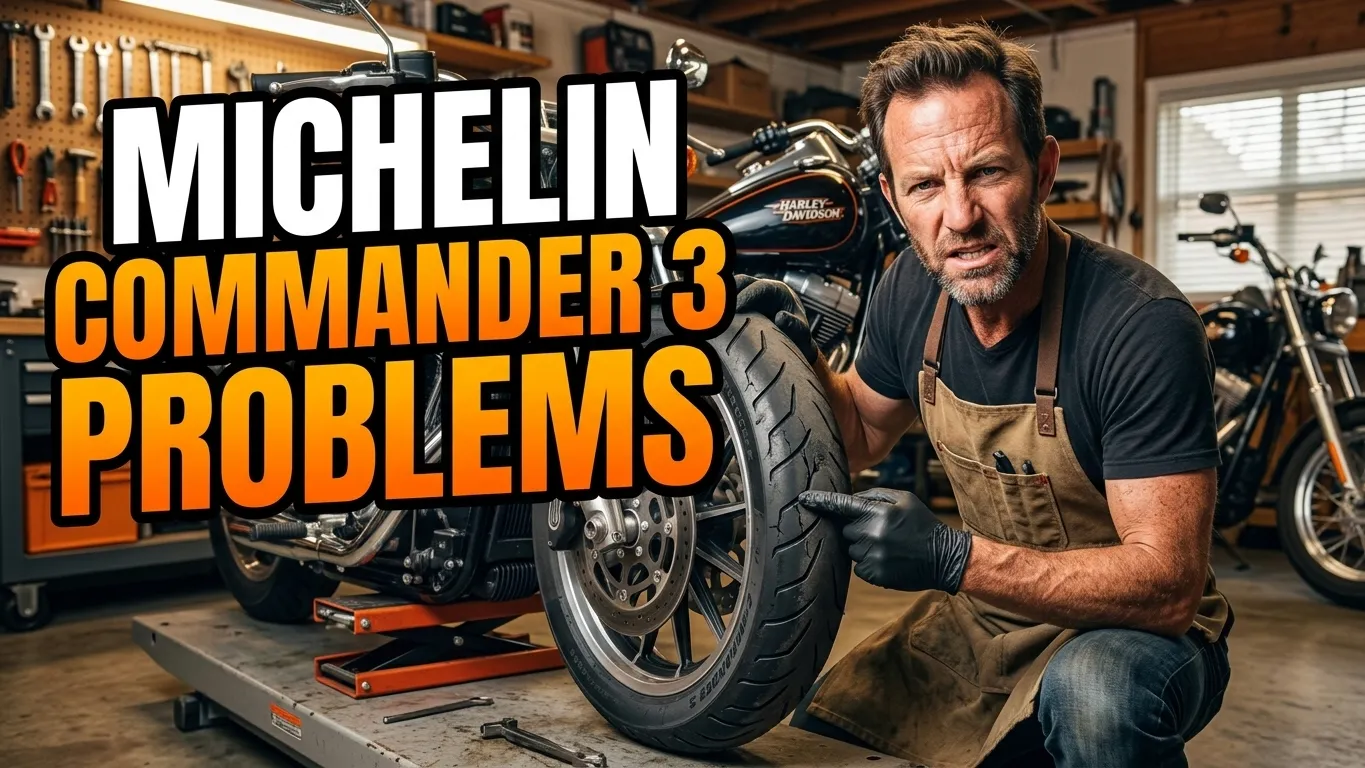
I’ve put plenty of miles on cruiser tires over the years, and the Michelin Commander III is one I keep coming back to for comparison. It has a loyal following, and for good reason. But no tire is perfect, and I’ve run into a handful of quirks that are worth knowing about before you hand over your money.
In this guide, I’ll share what I’ve experienced, what other riders commonly report, and what I do to get the most out of these tires. Whether you’re deciding on a purchase or chasing a strange feeling in the bars, I hope this saves you some frustration.
- The Commander III is a solid cruiser and touring tire, but complaints usually involve wear rate, cupping, and low-speed feel.
- Many “tire problems” turn out to be pressure, alignment, or wheel bearing issues in disguise.
- Check pressure weekly and rotate your riding habits to slow center-tread squaring.
- Pick the right variant (Cruiser vs. Touring) for your bike’s weight and riding style.
Why I Reach for This Tire in the First Place
Before I get into complaints, I want to be fair. The Commander III has a reputation for confident, predictable handling on heavy bikes, and I agree with that. It turns in smoothly, tracks straight on the highway, and feels planted in sweepers.
It’s also built for the kind of riding most cruiser owners do: long slabs, loaded saddlebags, and the occasional twisty detour. That versatility is the reason I’m picky about its flaws. When a tire does so much right, the few things that go wrong stand out.
Cruiser vs. Touring Versions
Michelin offers the Commander III in Cruiser and Touring flavors, and the choice matters. The touring version is aimed at heavier bikes and riders carrying luggage, with a construction that handles load better.
I’ve seen riders put the wrong variant on a bike and then blame the tire for a vague or heavy feel. Check your owner’s manual and your tire size before ordering. It’s a boring step, but it prevents a lot of grief.
The Most Common Complaints I Hear (and Have Felt)
Over the years I’ve talked with many riders at gas stations, rallies, and shop counters. The same themes come up again and again. None of them are dealbreakers, but all of them are worth understanding.
Faster-Than-Expected Rear Tire Wear
This is the big one. Riders on heavy cruisers often feel the rear tire wears quicker than the marketing might suggest. In my experience, a loaded bike with lots of highway time will square off the center of the rear tire sooner than a lighter bike used for mixed riding.
That’s not unique to this tire. Any tire with a rounded profile will flatten down the middle if you spend hundreds of miles upright and straight. Still, it’s the most common disappointment, so I’d set realistic expectations.
How I Slow the Wear
- Keep pressure at the manufacturer’s recommended setting, adjusted for load.
- Avoid hard launches and aggressive rear braking when you can.
- Mix in some twisty roads so the shoulders see use too.
- Inspect the tire monthly for flat spots and uneven wear.
Cupping and Scalloping
Cupping shows up as uneven, wavy wear around the tread, and you can feel it as a rhythmic hum or slight vibration. I’ve seen it on several bikes, and it’s rarely the tire alone.
Low pressure, worn suspension, or a wheel that’s out of balance are common triggers. If you notice a new vibration, run your hand carefully over the tread (with the tire cold). If it feels like a washboard, you have a clue.
Wobble or Vague Feel at Low Speed
Some riders describe a floaty, vague sensation in parking lots or at slow speeds. I’ve felt this too, and nine times out of ten the cause was pressure. A couple of PSI too low is enough to make a heavy cruiser feel strange.
Before you swap tires, rule out the basics. Check pressure cold, verify the wheel is balanced, and make sure nothing is loose in the steering head or swingarm.
When It Isn’t the Tire at All
Here’s a lesson that cost me money early on. I once replaced a tire because the bike pulled slightly to one side, only to find the new tire did the same thing. The culprit was my rear wheel setup.
If your tire wears unevenly or the bike drifts, read up on motorcycle alignment problems before blaming the rubber. A rear wheel that’s a few millimeters off can chew through the edge of a tire surprisingly fast.
Rear Wheel Alignment
If you suspect alignment is off, it’s worth learning how to adjust rear wheel alignment on a motorcycle so you can verify it yourself. It’s not hard, but it demands patience and careful measurement.
On belt- and chain-driven cruisers alike, I check alignment whenever I change a tire. It takes a few extra minutes and gives me peace of mind that the new tire will wear evenly.
Worn Wheel Bearings
Bad wheel bearings can mimic tire problems. You might feel a wobble, hear a growl, or notice play when you rock the wheel. I’ve chased “tire vibration” that turned out to be a tired bearing more than once.
If you’re curious how long do wheel bearings last on a motorcycle, the short answer is that it varies with mileage, riding conditions, and maintenance. Water, dirt, and heavy loads all shorten their life.
Bearing Service Intervals
Many riders wonder how often should you change wheel bearings on a motorcycle. I treat tire changes as the perfect moment to inspect them. With the wheel off, spin each bearing by hand and feel for roughness or notchiness.
If it feels gritty, replace it. Bearings are cheap compared to the damage a failure can cause, and a smooth set makes any tire feel better.
Wet Weather and Cold Weather Behavior
Wet grip is another area where opinions vary. In my experience, the Commander III handles rain acceptably for a cruiser tire, but I still ride smoother and brake earlier on painted lines and wet steel.
Cold mornings are a different story. Fresh tires, especially new ones with a mold-release sheen, can feel slick until they scrub in. I give any new set about a hundred easy miles before I push the pace.
Breaking In New Tires
Breaking in is not optional in my book. Ride gently, lean progressively, and avoid hard braking for the first stretch. Once the surface has some wear and heat cycles, grip improves noticeably.
I’ve seen riders complain about slippery new tires after pushing hard on day one. Patience pays off here.
Noise, Ride Comfort, and Stiffness
Some riders find the touring variant a bit stiff, particularly when pressure is set high. I tend to feel it most on expansion joints and rough pavement. A small pressure tweak, within the recommended range, often smooths things out.
Tire noise can also be a clue. A steady hum that changes with speed may point to wear patterns, while a rhythmic thump could mean a flat spot or internal issue. I never ignore new sounds.
Wheel Type and Tire Fitment Considerations
Fitment matters more than people realize. Rim width, wheel condition, and even spoke tension on laced wheels can influence how the tire sits and wears. If you’re running laced wheels, it helps to understand how many spokes on a motorcycle wheel your bike has and how they should be tensioned.
A wheel that’s out of true will make any tire feel bad. If you see runout while spinning the wheel on a stand, fix that before mounting a new set.
Mounting and Balancing
I always ask the shop to balance the wheel carefully and to line up the tire’s balance dot with the valve stem when appropriate. A sloppy mount can introduce vibrations that I’d otherwise blame on the tire.
If possible, watch the mounting process. A good tech will clean the bead seat, lubricate properly, and avoid scratching the rim.
My Pressure Routine
If I could give just one piece of advice, it would be to check pressure more often. Tires lose air slowly, and a few PSI can change handling, wear, and comfort dramatically.
I check mine cold, at least weekly during riding season, and before any long trip. I also adjust for passengers and luggage, always staying within the guidelines from the bike and tire makers.
A Simple Pre-Ride Checklist
- Cold pressure checked with a reliable gauge.
- Tread inspected for nails, cuts, and uneven wear.
- Sidewalls checked for cracks or bulges.
- Wheel spun to feel for roughness or wobble.
Is the Commander III Still Worth Buying?
Yes, with realistic expectations. For my kind of riding, it delivers stable, confident handling and respectable mileage. The “problems” I’ve seen are mostly the kind you can manage with good habits and proper maintenance.
If you ride a very heavy bike hard and expect endless mileage from a single rear tire, you may be disappointed. But if you value feel, stability, and predictable behavior, it’s a strong contender.
Who I’d Recommend It To
- Riders of mid-weight to heavy cruisers who want confident handling.
- Tourers who like a stable, planted feel with luggage on board.
- Owners willing to keep up with pressure checks and basic maintenance.
Who Might Want to Look Elsewhere
If your top priority is maximum rear tire life for daily highway commuting, you might want to compare a few alternatives. Every tire is a compromise, and what matters is whether the compromise fits how you ride.
Troubleshooting Quick Guide
When something feels off, I work through a simple order of operations. It keeps me from spending money on parts that aren’t the problem.
Step-by-Step Diagnosis
- Start with pressure: Set it cold to spec and ride again.
- Check balance: Look for vibration that changes with speed.
- Inspect bearings: Rock the wheel and spin it by hand.
- Verify alignment: Measure both sides of the swingarm.
- Examine the tread: Look for cupping, flat spots, or uneven wear.
Working through that list has solved the vast majority of “tire problems” I’ve encountered. Only after those checks do I consider the tire itself the culprit.
Final Thoughts From the Saddle
I like the Commander III, and I think much of the negative chatter comes from setup issues rather than the tire’s design. Treat it well, and it rewards you with a calm, predictable ride.
Keep an eye on pressure, alignment, and bearings, and don’t be afraid to dig into the details when something feels wrong. A little attention goes a long way, and your tires will thank you with more miles and better handling.
Ride safe, and check those gauges. Your future self will be glad you did.
Frequently Asked Questions
Is the Michelin Commander III a good tire for heavy cruisers?
Yes, for most riders. It offers strong mileage and stable handling on touring and cruiser bikes, but it needs correct pressure and regular inspection to avoid cupping or uneven wear.
How long does a Michelin Commander III last?
It depends on bike weight, riding style, and pressure. In my experience, rear tires on heavy bikes last noticeably less than fronts, and highway-heavy riding squares off the center tread sooner.
Why does my Commander III tire feel wobbly at low speed?
The most common causes are low or uneven tire pressure, worn wheel bearings, poor rear wheel alignment, or an unbalanced wheel. Check each of these before blaming the tire.
Can wheel alignment affect Commander III wear?
Absolutely. A misaligned rear wheel can cause uneven edge wear and pull to one side, so check chain or belt alignment whenever you notice odd wear patterns.

Related Articles

8 Best Cruiser Motorcycle Tires for Street Riding: My Real-World Picks
I rank the 8 best cruiser motorcycle tires for street riding, from Michelin to Pirelli, with real notes on grip,…
Jake Miller
9 min read

8 Best Michelin Motorcycle Tires for Every Riding Style (Tested Picks)
Looking for the best Michelin motorcycle tires? I break down my 8 favorite models for sport, touring, adventure, cruiser, and…
Jake Miller
9 min read

Yamaha Tire Pressure Guide: The Right PSI for Safer, Smoother Rides
Learn the right tire pressure for your Yamaha, from sportbikes to cruisers and dirt bikes. Check, adjust and maintain PSI…
Jake Miller
9 min read