
Front Wheel Wobble on a Motorcycle: 9 Common Causes and How I Fix Them
 Jake Miller
11 min read
Jake Miller
11 min read
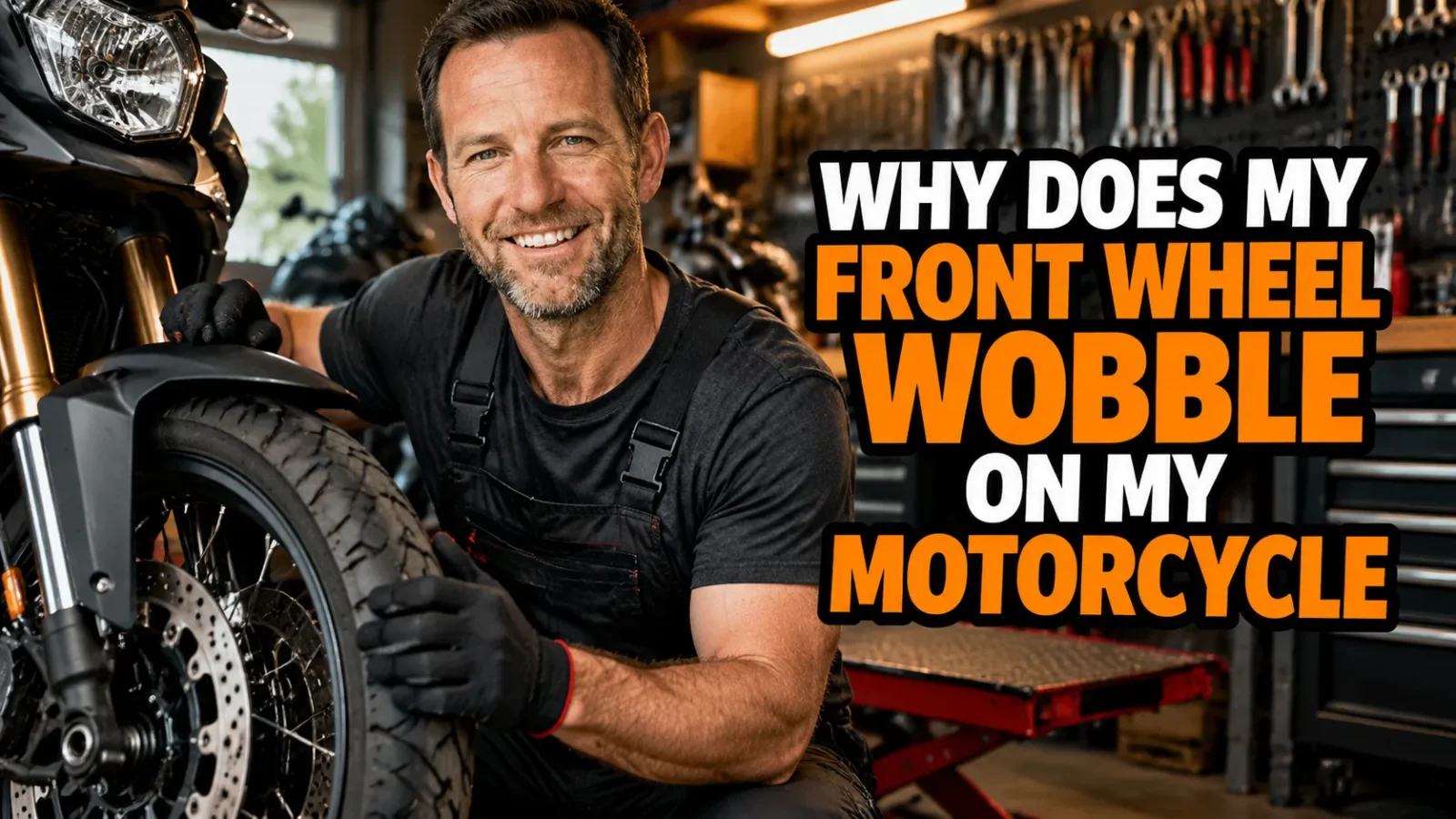
There’s a feeling every rider dreads. You’re cruising along, everything is fine, and then the bars start to shimmy in your hands. Your stomach drops, your grip tightens, and one question takes over: why is my bike doing this?
I’ve been there more than once, and I know how unsettling it is. Over the years I’ve chased down wobbles on everything from tired commuters to freshly serviced sport bikes. In this guide I’ll walk you through the causes I see most often, how I track each one down, and when I decide the bike stays in the garage.
- Most front-end wobbles come from tires, wheel balance, worn bearings, or loose steering components.
- Start with the cheap, easy checks (tire pressure, tire wear, axle torque) before pulling anything apart.
- Worn wheel bearings and steering head bearings are common culprits and should never be ignored.
- A sudden or violent wobble means stop riding and get the bike inspected.
First, Understand What Kind of Wobble You’re Feeling
Not every shake is the same, and the type of wobble tells you a lot. Before I reach for a wrench, I try to describe exactly what’s happening. That description usually narrows the list of suspects fast.
A Steady Vibration at Certain Speeds
If the bars buzz or shimmy only in a narrow speed window, say 50 to 60 mph, and then smooth out, I suspect balance or a resonance issue. This kind of wobble is annoying more than frightening. It tends to be consistent and repeatable.
A Low-Speed Wobble
A wobble that shows up when you’re slowing down or crawling through traffic often points to the steering head bearings, a flat-spotted tire, or a bent rim. Low-speed wobble is a red flag because the bike should feel most stable and predictable at those speeds.
A Sudden, Violent Headshake
This is the dreaded tank slapper, where the bars oscillate side to side with growing intensity. It often follows a bump, hard acceleration, or a sudden change in weight on the front end. If you’ve experienced this, treat it as serious and don’t ride until you’ve found the cause.
The Most Common Causes I’ve Run Into
1. Worn or Unevenly Worn Tires
Tires are the first place I look, every single time. A tire that’s worn into a squared-off profile, cupped, or flat-spotted from a lot of straight-line commuting can make a bike feel nervous and shaky.
Cupping, where the tread wears in scalloped patches, is especially sneaky. I run my bare hand slowly over the tread. If I feel waves or steps instead of a smooth surface, the tire is on borrowed time.
2. Incorrect Tire Pressure
This one is so simple that people skip it, and that’s a mistake. An underinflated front tire flexes too much and feels vague. An overinflated one has a smaller contact patch and can feel skittish.
I check pressure when the tires are cold, using the numbers in the owner’s manual or on the swingarm sticker. It takes two minutes and fixes more problems than you’d expect.
3. Poor Wheel Balance
A wheel with uneven weight distribution will shake as it spins, and the effect grows with speed. If you’ve recently had a tire changed and the wobble appeared right afterward, balance is my first suspicion.
I’ve seen shops rush this step or reuse old, poorly placed weights. A proper rebalance is inexpensive, and I’d rather pay for it than guess for weeks.
4. Worn Wheel Bearings
Wheel bearings let the wheel spin smoothly on the axle. When they wear out, the wheel can develop play, which feels like a wobble or a loose, floaty front end. You may also hear a faint rumble or growl that changes with speed.
To check, I lift the front wheel off the ground and grab it at the top and bottom. Any side-to-side movement that isn’t in the fork is suspect. If you want a deeper dive on timing, I’ve put together a guide on when to replace motorcycle wheel bearings that covers the warning signs in detail.
How Long Should Bearings Last?
It depends on riding conditions, how often you wash the bike, and the quality of the seals. Water, road salt, and pressure washers shorten their lives dramatically. If you’re curious about realistic mileage, read my breakdown of how long do wheel bearings last on a motorcycle.
5. Loose or Worn Steering Head Bearings
The steering head bearings sit at the top and bottom of the frame’s headstock, and they let the whole front end pivot. When they develop notchiness, wear, or looseness, the front end can feel like it’s wandering or shaking, especially under braking.
My test is simple. With the front wheel off the ground, I turn the bars slowly from lock to lock. If I feel a clicking or catching spot in the middle, or if the bars fall to one side with a notch, the bearings need attention. Then I grab the fork legs near the bottom and push and pull front to back. Any clunk means looseness.
6. A Bent Rim or Damaged Wheel
Potholes and curbs can quietly bend a rim without any obvious damage. The result is a wheel that isn’t round or true, which creates a rhythmic wobble you can feel through the bars.
I spin the wheel with the bike on a stand and watch the gap between the rim and a fixed point, like a zip tie on the fork. If the gap changes noticeably, the wheel is out of true. Spoked wheels can often be trued by a professional, while cast wheels with real bends usually need replacement.
A Quick Note on Spoked Wheels
Loose or uneven spoke tension can cause wobble too. If you ride a bike with wire wheels, it’s worth knowing the basics, including how many spokes on a motorcycle wheel are typical and why tension matters so much. A single loose spoke can throw off the whole wheel.
7. Fork Problems
Bent fork tubes, worn fork seals, low or uneven fork oil, and mismatched damping can all make the front end feel unsettled. Fork oil breaks down over time, and I’m always surprised how many bikes have never had it changed.
I look for oil residue on the fork tubes and check that both sides sit at the same height in the triple clamps. A fork that’s even a few millimeters off can change the handling.
8. Loose Axle, Pinch Bolts, or Triple Clamp Hardware
Sometimes the cause is as basic as a fastener. A front axle that isn’t torqued correctly or pinch bolts that have backed off can create play where there should be none.
I check these against the torque specs in the service manual. If you’ve had the wheel off recently, double-check that the axle was tightened in the right sequence. Never guess on torque for safety-critical parts.
9. Rear-End Issues That Feel Like Front-End Wobble
Here’s one that fooled me early on. Problems at the back of the bike can travel forward and feel like they’re coming from the bars. A misaligned rear wheel, a worn swingarm bearing, or a loose chain can all make the whole bike feel unstable.
If the front end checks out clean, I take a hard look at the rear. A crooked rear wheel makes the bike want to track slightly off-line, and the front end fights it. If you suspect that, my walkthrough on how to adjust rear wheel alignment on a motorcycle will help you set it straight.
How I Diagnose a Wobble Step by Step
When a bike comes into my garage with a wobble, I follow the same order every time. It saves money and keeps me from replacing parts that were never the problem.
Start With the Free Checks
- Check tire pressure cold and compare to spec.
- Inspect both tires for cupping, flat spots, bulges, or uneven wear.
- Look at the valve stem and rim for visible damage.
- Confirm the axle nut and pinch bolts are torqued correctly.
Move On to the Hands-On Tests
- Put the bike on a stand and lift the front wheel.
- Spin the wheel and watch for rim runout or hop.
- Rock the wheel side to side to feel for bearing play.
- Turn the bars lock to lock to feel for notchy steering bearings.
- Push and pull on the fork legs to check for headset looseness.
Then Bring in the Pros if Needed
If I find nothing obvious, I take the wheel to a shop for a proper balance and runout check. A good technician can measure things I can’t judge by eye. I’m happy to pay for that peace of mind, because a front-end problem isn’t something I want to gamble on.
The Role of Geometry and Wheel Design
Sometimes riders wonder whether their bike is simply built to feel twitchy. Geometry does matter. Rake, trail, wheelbase, and weight distribution all shape how stable the front end feels at speed.
The size relationship between the front and rear wheels also plays a part in handling character. If you’re curious about the reasoning, I’ve explained why is the front wheel bigger on motorcycle designs and how that choice affects steering and stability.
That said, a healthy, well-maintained bike should not wobble under normal conditions. Geometry might explain a quirky feel, but it doesn’t excuse a shake in the bars.
Other Things That Can Make the Front End Feel Off
Aftermarket Changes
Different tire brands, a swapped windscreen, heavy luggage, or a new fairing can alter how air and weight load the front. I’ve seen a loosely mounted top case cause a very real wobble at highway speed. If the shake started right after a modification, that’s your first clue.
Loading and Weight Distribution
Too much weight too far back lightens the front wheel. A light front end is more prone to shaking, particularly on acceleration. I try to keep heavy items low and close to the center of the bike.
Road Conditions and Wind
Grooved pavement, expansion joints, and strong crosswinds can all make the bars move around. If the wobble only happens on certain roads, it may be the surface and not the bike. I confirm by riding a smooth, familiar road before I blame the machine.
What to Do If You Get a Wobble While Riding
Knowing the right reaction is just as important as knowing the cause. Here’s what I do and what I recommend.
- Stay calm and keep a light grip. A death grip can make an oscillation worse.
- Ease off the throttle smoothly. Don’t chop it abruptly.
- Avoid grabbing the front brake hard. It can unsettle the front end further.
- Keep your weight low and centered. Grip the tank with your knees.
- Pull over safely and inspect the bike. Don’t just ride on and hope.
Once I’m stopped, I look for anything obviously loose, damaged, or out of place. If I can’t find and fix the cause on the spot, I don’t continue at speed.
Prevention: How I Keep Wobbles Away
The best fix is not having the problem in the first place. A little routine care goes a long way.
- Check tire pressure at least every couple of weeks.
- Replace tires before they’re worn into a squared-off shape.
- Have wheels balanced whenever new tires go on.
- Inspect wheel and steering head bearings at every major service.
- Change fork oil on the schedule in the manual.
- Re-check critical fasteners after any work on the front end.
I also try to avoid blasting a pressure washer directly at bearings and seals. Water forced past the seals is one of the fastest ways to kill a bearing.
When I’d Park the Bike and Call a Mechanic
I’m a big believer in doing my own wrenching, but I also know my limits. Some situations call for a professional, especially when safety is on the line.
I get help if the wobble is sudden or severe, if I find play in the steering head, or if I suspect frame or fork damage after a crash. I also call a shop if I’m not confident in my torque specs or don’t have the right tools. There’s no shame in it, and the cost is small compared to a crash.
Final Thoughts From My Garage
A wobbling front wheel is your motorcycle’s way of telling you something needs attention. In my experience, the cause is usually found in the basics: tires, balance, bearings, and fasteners. Work through them methodically and you’ll almost always find the answer.
Don’t ignore it and don’t normalize it. A bike that handles cleanly is a bike you can trust, and that trust is what makes riding so enjoyable. Take care of the front end, and it’ll take care of you.
Ride safe, check your torque, and enjoy a smooth, steady ride.
Frequently Asked Questions
Is a front wheel wobble on a motorcycle dangerous?
Yes, it can be. A mild wobble from an unbalanced tire is usually manageable, but a violent tank slapper can throw you off the bike. If the wobble is new or getting worse, stop riding and inspect the bike.
What is the most common cause of a front wheel wobble?
In my experience, worn or unevenly worn tires and poor wheel balance are the most common causes, followed by loose or worn steering head bearings and worn wheel bearings.
Can low tire pressure cause a wobble?
Absolutely. Underinflated or overinflated tires change the contact patch and the tire’s stiffness, which can cause vague, shaky handling. Always check pressure cold, using the figures in your owner’s manual.
Why does my bike wobble only at certain speeds?
Speed-specific wobble often points to a wheel balance issue or a resonance in the front end. Vibration that appears at a narrow speed range and then fades is a classic sign of an out-of-balance wheel.

Related Articles

8 Best Cruiser Motorcycle Tires for Street Riding: My Real-World Picks
I rank the 8 best cruiser motorcycle tires for street riding, from Michelin to Pirelli, with real notes on grip,…
Jake Miller
9 min read

8 Best Michelin Motorcycle Tires for Every Riding Style (Tested Picks)
Looking for the best Michelin motorcycle tires? I break down my 8 favorite models for sport, touring, adventure, cruiser, and…
Jake Miller
9 min read

Yamaha Tire Pressure Guide: The Right PSI for Safer, Smoother Rides
Learn the right tire pressure for your Yamaha, from sportbikes to cruisers and dirt bikes. Check, adjust and maintain PSI…
Jake Miller
9 min read