
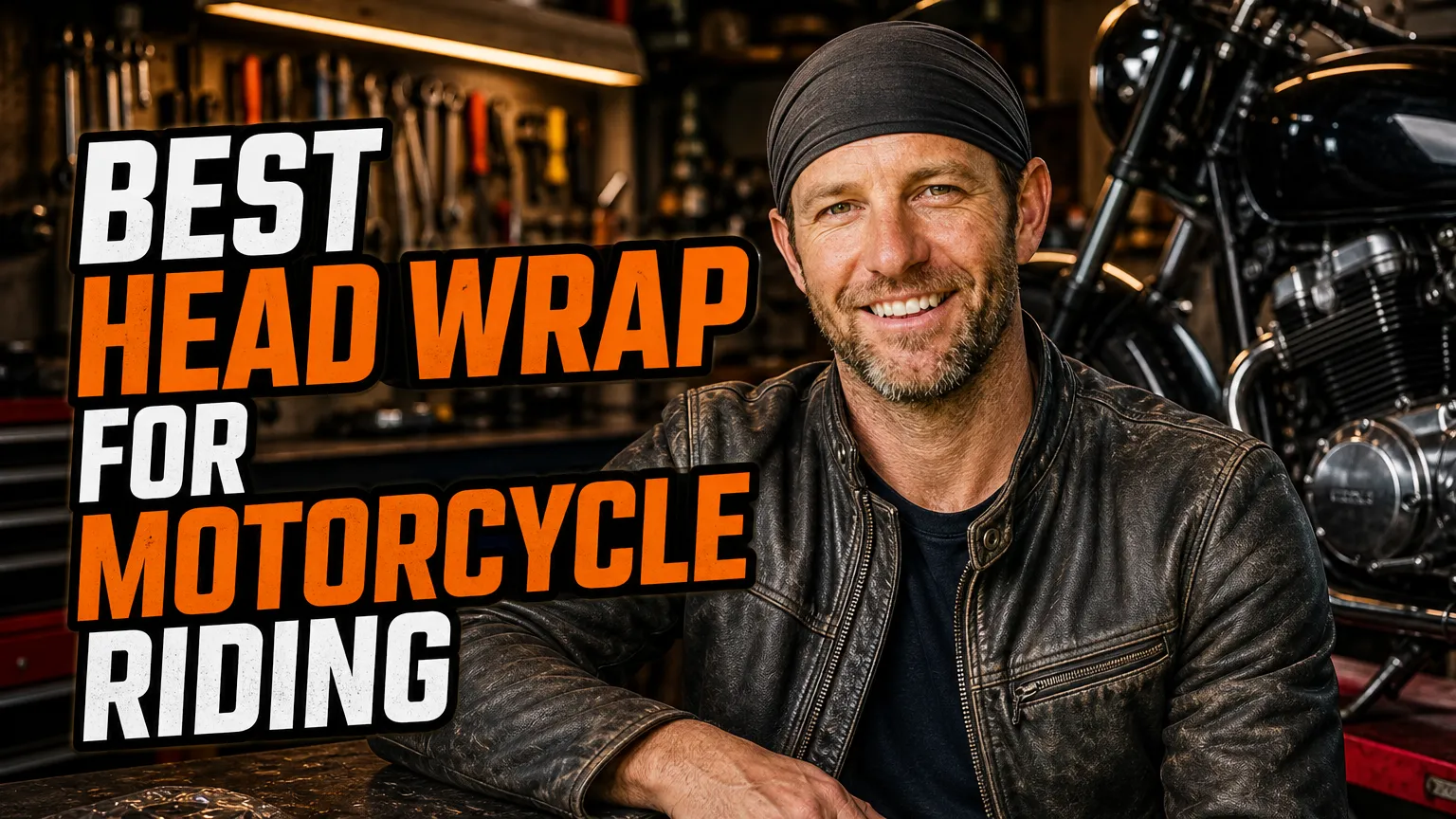
I like a good head wrap because it can make a ride more comfortable without taking up much space in my gear bag. The right one helps manage sweat, keeps hair out of my face, or adds a light layer beneath my helmet. The wrong one can bunch at the forehead, trap heat, or make an otherwise well-fitting helmet feel tight.
For this list, I’ve focused on recognizable, named products that work for different riding conditions and preferences. I compare their materials, coverage, and practical strengths, while keeping in mind that the most important test is whether the wrap lies smoothly under your own helmet.
- I’d start with the BUFF Original EcoStretch for a versatile, stretchy all-rounder.
- I prefer the BUFF CoolNet UV+ when I want a lightweight option for sunny, warm-weather rides.
- The ZANheadgear Flydanna gives me a classic tie-back bandana fit and broad head coverage.
- I choose a balaclava such as the Dainese Dry when I need more coverage than a simple wrap provides.
- I always check helmet fit with the wrap on; no fabric layer should compromise a secure fit.
How I Choose a Head Wrap for Riding
I begin with the fit inside my helmet. A wrap should sit flat, stay in place, and avoid thick knots or seams in pressure-sensitive areas. If adding it makes my helmet feel tight, changes how it sits, or creates a distracting lump, I leave that wrap out.
Next, I match the material to the ride. For summer, I want light, breathable fabric that moves sweat away from my skin. For cooler weather, I look for more coverage around my ears and neck, although I use a purpose-built cold-weather layer when temperatures call for it.
I also think about what I want the wrap to do. A tube-style headwear piece is easy to reposition, while a tie-back bandana can feel familiar and cover more of my scalp. For help choosing a full riding outfit, I also refer to this guide to best clothes for motorcycle riding.
1. BUFF Original EcoStretch — My Best All-Rounder
When I want one piece of headwear that can adapt to more than one ride, I look at the BUFF Original EcoStretch. It is a seamless, stretchy multifunctional tube made primarily from recycled polyester, with elastane for stretch. I can wear it as a headband, skullcap-style layer, neck covering, or face covering, depending on how I fold it.
That versatility is the main reason I like the BUFF Original EcoStretch for motorcycle use. I can pull it over my hair before putting on my helmet, then adjust it once I take the helmet off. It is lightweight enough for many warm-weather rides, though I would not treat it as a heavily insulated winter layer.
What I like and what I watch for
I appreciate that the tube design avoids the tied knot found on some bandanas. The fabric’s stretch also makes it easier to position around my head and neck. Depending on the version and retailer, I usually see it priced in the roughly $20–$30 range.
My main fit check is whether the fabric stays smooth across my forehead and crown. The Original EcoStretch can be worn in several ways, but more fabric does not automatically mean more comfort under a helmet. I fold it carefully and avoid doubling up thick sections where my helmet already presses.
2. BUFF CoolNet UV+ — My Warm-Weather Pick
For hot, bright rides, I consider the BUFF CoolNet UV+ a strong alternative to a standard fabric bandana. It is a lightweight multifunctional tube made for warm conditions, with moisture-managing fabric and a design intended to provide UV protection. BUFF’s exact fabric details can vary by product generation, so I check the current label and product listing before buying.
I like this style when I want a thin layer that can cover my scalp or neck without feeling like a heavy winter accessory. The tube can be repositioned in different configurations, which makes the BUFF CoolNet UV+ handy when the sun shifts or I move between riding and walking around.
My comfort notes
I would choose the CoolNet UV+ for breathability and sun-conscious coverage, not for warmth. A fabric head wrap is not a substitute for sunscreen on exposed skin, and its protection depends on how much skin it actually covers. I commonly find it in the approximate $25–$35 range, with colors and pricing varying by retailer.
As with any wrap, I check that the edge does not roll into a narrow ridge under my helmet. If I want a full face covering in cold conditions, I look beyond a lightweight summer tube and compare purpose-made options in this guide to the best winter face mask for motorcycle riding.
3. Hoo-rag Original — My Flexible, Multiway Option
The Hoo-rag Original is another multifunctional tube I would consider when I want one accessory to serve several purposes. It is made from stretchy performance fabric and can be worn in different configurations, including as a head wrap, neck gaiter, or face covering. I like the simple pull-on design because it is quick to adjust before or after a ride.
For me, its appeal is flexibility rather than specialized protection. The Hoo-rag Original can help keep hair contained and add a light barrier between my skin and helmet lining. I would still inspect the current product details for fabric composition and care instructions, since colorways and product listings may differ.
When I would choose it
I would pack the Hoo-rag Original for changing conditions or a ride that includes stops, when I might want to wear it in more than one way. It generally sits in the modest price range of about $15–$25, though availability and exact pricing vary. I make sure it is not folded so thickly that it creates a pressure point.
A head wrap can improve comfort, but it does not replace certified protective gear. When I’m reviewing the rest of my kit, I use this overview of best gear for motorcycle safety top protective clothing and accessories as a reminder to prioritize proper protective equipment first.
4. ZANheadgear Flydanna — My Classic Tie-Back Choice
If I want the familiar look and coverage of a traditional riding bandana, I consider the ZANheadgear Flydanna. This named model uses a triangular bandana shape with tie-back ends, rather than a seamless tube. That makes the fit more adjustable, and I can position it to cover more of my scalp than a narrow headband.
The Flydanna is commonly offered in cotton versions, with designs and materials differing across the wider ZANheadgear range. I like cotton’s familiar, soft feel, especially for casual rides, but I keep in mind that it can hold moisture longer than quick-drying synthetic fabric. I’d check the exact listing to confirm the fabric of the color or style I’m considering.
What matters beneath my helmet
The tie-back is both the useful feature and the detail I pay closest attention to. I position the knot where it will not press against the helmet, then check that the helmet still fits securely. If the tied ends create a lump at the back of my head, I switch to a tube-style wrap.
ZANheadgear Flydannas are often among the more affordable options, with many styles around $10–$20. I find them appealing for straightforward coverage and a classic bandana fit, rather than technical insulation or highly specialized moisture management.
5. Dainese Dry Balaclava — My Pick for More Coverage
When a simple head wrap does not cover enough, I look at the Dainese Dry Balaclava. It is a motorcycle-oriented under-helmet layer designed to cover more of the head and neck than a bandana or short tube. Dainese uses Dryarn fabric in its Dry range, a lightweight, moisture-managing material that is intended for use as a technical base layer.
I like the balaclava format when I want fabric to stay around my head and neck rather than shifting like a loosely positioned wrap. Its more complete coverage can be helpful in cooler weather or when I want a smoother layer between my skin and helmet interior. It is not, however, a replacement for a warm outer face mask in truly cold conditions.
My fit and layering check
Before riding, I pull the Dainese Dry Balaclava into place and check that the eye opening and neck section sit comfortably. I also put on my helmet and make sure the added layer has not made the fit too tight. Depending on the market and season, I’ve seen motorcycle balaclavas in this category priced around $25–$45.
For riders building a first kit, I’d pair a comfortable head layer with a properly fitting helmet and suitable protective clothing. I’d also compare this guide to the best motorcycle clothing for beginners before filling gaps in my setup.
6. KLIM Aggressor -1.0 Balaclava — My Cooler-Weather Layer
The KLIM Aggressor -1.0 Balaclava is the option I’d consider when I want an under-helmet layer from a brand known for motorcycle gear. It is designed as a lightweight balaclava rather than a thick, standalone winter hood. That distinction matters to me: I want a low-bulk layer beneath my helmet, with additional insulation coming from the rest of my cold-weather clothing when needed.
I like the balaclava shape because it covers the head and neck in one piece and is less likely to shift than a loose scarf. The Aggressor -1.0 is part of KLIM’s Aggressor base-layer family; I check the current listing for fabric composition, sizing, and care details because those specifics can change between product versions.
When it makes sense for my rides
I would choose this KLIM layer for cool rides when a thin wrap leaves my ears or neck exposed. I would not assume that a lightweight balaclava alone is enough for freezing temperatures or high-speed, prolonged exposure. I build warmth with suitable layers and take breaks when conditions demand it.
Pricing varies by retailer and season, but I’d expect a motorcycle-brand technical balaclava like the Aggressor -1.0 to cost more than a basic cotton bandana. For a broader layering plan, I’d read about the best gear for riding motorcycle in cold weather stay warm and protected.
How I Make a Head Wrap Work With My Helmet
I put the wrap on before fastening my helmet, then check the helmet fit the same way I normally would. It should sit level, feel secure, and not rock around. If the wrap changes that fit or creates painful pressure, I choose a thinner style or ride without it.
I also keep fabric away from my eyes and make sure it does not interfere with the helmet’s retention system. A wrap should not bunch around the chin strap, obscure my vision, or prevent me from closing the helmet properly. If I use a face-covering configuration, I make sure I can still breathe comfortably and that the material stays where I put it.
After a sweaty ride, I wash the wrap according to its care label and let it dry fully before storing it. I avoid assuming every fabric can go in a hot dryer; stretch materials and technical finishes may need gentler care. Clean, dry headwear is more pleasant to wear and less likely to develop persistent odor.
My Final Picks
For a versatile first choice, I’d start with the BUFF Original EcoStretch. Its tube format is adaptable, lightweight, and easy to reposition, making it a practical option for riders who want one piece for several uses. For hot, sunny outings, I’d look closely at the BUFF CoolNet UV+.
If I want a traditional tie-back fit, I’d choose the ZANheadgear Flydanna and carefully position its knot beneath my helmet. When I need more head-and-neck coverage, I’d consider the Dainese Dry Balaclava or KLIM Aggressor -1.0 Balaclava instead. Whichever I choose, I make comfort and helmet fit my final test, not the product’s label or style.
Frequently Asked Questions
What is the best material for a motorcycle head wrap?
I look for soft, breathable, quick-drying fabric with enough stretch to sit smoothly under my helmet. Cotton can feel comfortable but may stay damp with sweat.
Can I wear a head wrap under a motorcycle helmet?
Yes, if it fits smoothly and does not bunch, interfere with the helmet’s fit, or cover your eyes. I always check that my helmet still feels secure.
Is a head wrap the same as a motorcycle balaclava?
Not quite. A head wrap may cover only the head or neck, while a balaclava usually covers more of the head and face. I choose based on weather and coverage needs.
How often should I wash my riding head wrap?
I wash mine regularly, especially after sweaty rides, following the care label. Clean fabric helps reduce odor and keeps the layer comfortable against my skin.

Related Articles

5 Motorcycle Wrist Braces and Guards I’d Choose for Confident Riding
Compare five wrist braces and guards I’d consider for street and dirt riding, with fit, support, glove compatibility, and buying…
 Jake Miller
11 min read
Jake Miller
11 min read

7 Under Armour Base Layers I’d Choose for Comfortable Motorcycle Rides
Discover seven Under Armour base layers for hot and cold rides, plus my fit tips and safety advice for wearing…
Jake Miller
10 min read

8 Best Motorcycle Base Layers for Staying Warm on Cold Rides
Compare eight rider-ready thermal base layers, from merino to synthetic options, with fit, warmth, layering advice, and picks for cold-weather…
Jake Miller
11 min read