
Motorcycle Boots vs Work Boots: What I Learned Riding in Both (So You Don’t Have To Guess)
 Jake Miller
10 min read
Jake Miller
10 min read
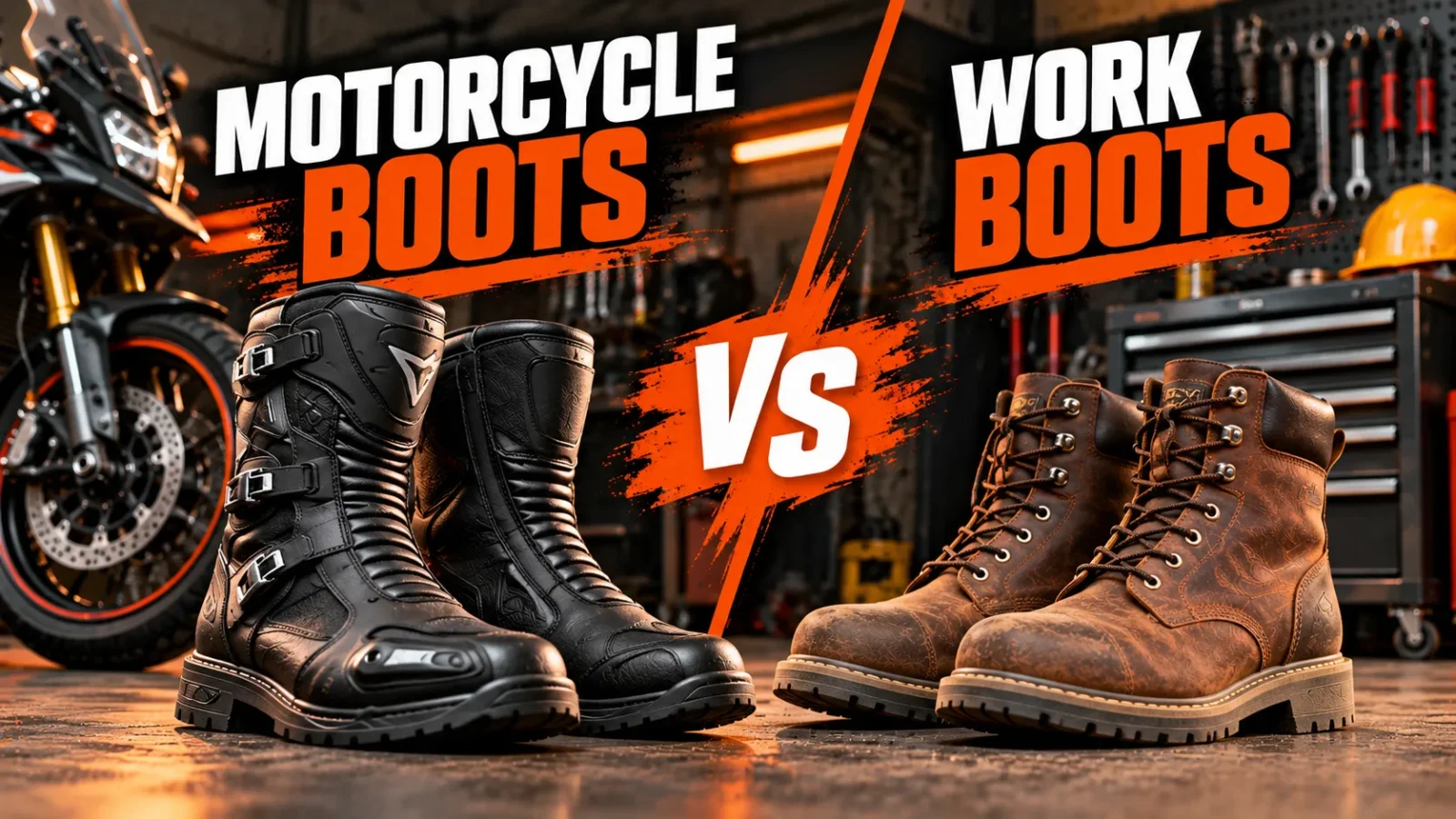
I still remember the day a buddy of mine showed up to a group ride wearing his steel-toe work boots. He figured “boots are boots,” right? Two corners later, he was walking funny because his ankle had zero support going into a tight turn.
That moment stuck with me. I’ve spent years riding in everything from cheap work boots to premium motorcycle-specific gear, and I’ve learned the hard way that not all boots are created equal when you’re on two wheels.
In this article, I’m breaking down motorcycle boots vs work boots based on my own riding experience, real crash-protection differences, comfort, and when (if ever) you can get away with using one for the other.
If you want the deep dive on motorcycle-specific footwear, I’ve also put together an Ultimate Guide to Motorcycle Boots that pairs nicely with this comparison.
- Motorcycle boots are built for impact, abrasion, and ankle protection during a crash; work boots are built for crushing, puncture, and slip resistance on the job.
- Steel toes in work boots can actually be more dangerous in a motorcycle crash because they can shatter or deform.
- Motorcycle boots have shifter pads, oil-resistant soles, and ankle armor that most work boots simply don’t offer.
- If you ride to a job site, I recommend riding in motorcycle boots and switching into work boots once you arrive.
- Your choice ultimately depends on your riding style, but I always prioritize crash protection over convenience.
Why This Comparison Actually Matters
I get asked this question a lot, usually from guys who work construction or in warehouses and ride their bike to and from the job. The logic makes sense on the surface: “I already own tough boots, why buy another pair?”
But here’s the thing I’ve learned after dropping a bike at low speed and sliding a few feet on pavement: boots designed for one job rarely excel at another. Work boots and motorcycle boots solve completely different problems.
Work boots are engineered around OSHA-style hazards. Think falling objects, nails, wet floors, and long hours standing on concrete. Motorcycle boots are engineered around crash dynamics. Think abrasion, twisting forces, and impact at speed.
My Own “Aha” Moment
I used to wear a solid pair of work boots on short rides because they felt sturdy. Then I lowsided my bike in a parking lot at maybe 15 mph. My ankle rolled hard against the pavement, and the work boot’s soft leather upper offered basically no resistance.
That’s when I finally invested in real motorcycle boots. The difference in ankle support alone was night and day.
What Motorcycle Boots Are Actually Built For
Motorcycle boots aren’t just “tough boots with a cool name.” They’re purpose-built for the unique forces your feet and ankles experience while riding and, worst case, crashing.
Ankle and Shin Protection
Most quality motorcycle boots include some form of ankle bracing, whether that’s a rigid plastic cup, adjustable straps, or reinforced panels. This matters because ankles are one of the most commonly injured areas in a bike crash.
I’ve worn boots with built-in ankle armor that literally kept my foot from twisting during a low-speed tip-over. A regular work boot just doesn’t have that kind of lateral support.
Abrasion-Resistant Materials
Motorcycle boots typically use full-grain leather or advanced textiles designed to resist sliding across asphalt. Some even include Kevlar or ballistic nylon panels in high-wear zones.
Work boots, on the other hand, are usually made from leather that’s treated for oil and water resistance, not high-speed abrasion. It’s a subtle but critical difference.
Shifter Comfort and Grip
This one surprised me the first time I switched. Motorcycle boots often have a reinforced, slightly shaped toe box that makes shifting smoother and reduces wear on the boot itself.
Try shifting repeatedly in a stiff, bulky work boot and you’ll notice your toes get fatigued faster, especially on longer rides with lots of gear changes.
Sole Design for Grip and Feel
Motorcycle boot soles are usually low-profile and grippy, giving you better feedback on the pegs. Work boot soles tend to be thicker and more rigid, which is great for standing on uneven job sites but not ideal for feeling the road through your footpegs.
What Work Boots Are Actually Built For
I don’t want to trash work boots here, because they’re genuinely excellent at what they’re designed to do. I wear mine constantly for yard work, hauling gear, and general labor.
Crush and Puncture Protection
Steel or composite toe caps are the star feature of most work boots. They’re rated to withstand significant compressive force, protecting your toes from dropped tools or heavy equipment.
This is fantastic for a warehouse or construction site. It’s less useful, and sometimes risky, in a motorcycle crash scenario, which I’ll get into shortly.
Slip Resistance on Wet or Oily Surfaces
Work boots often use specialized rubber compounds designed to grip slick, oily floors. That’s a huge deal if you’re working around machinery or spills all day.
Motorcycle boots can be slip-resistant too, but their soles are optimized more for foot-peg feel than for standing on greasy warehouse floors.
All-Day Standing Comfort
I’ll be honest, for standing on concrete for eight-plus hours, my work boots win. They have cushioned insoles and broader platforms built for that specific kind of fatigue.
Motorcycle boots are optimized for sitting, shifting, and occasional walking, not for standing in one spot all day long.
Motorcycle Boots vs Work Boots: Side-by-Side Breakdown
I like to think about this comparison across five categories that matter most to riders: protection, comfort, durability, versatility, and price.
Protection in a Crash
This one isn’t close in my experience. Motorcycle boots win, hands down, when it comes to crash protection.
They’re designed with sliding, twisting, and impact forces in mind, not just vertical crush protection like work boots.
Everyday Comfort Off the Bike
Work boots often feel more “broken in” faster and are more forgiving for long walks or standing. Motorcycle boots can feel stiff at first, especially race-style ones.
That said, touring and adventure-style motorcycle boots have closed this gap significantly in recent years.
Durability Over Time
Both categories can last years if you buy quality. I’ve had work boots outlast cheap motorcycle boots simply because of material thickness, but premium motorcycle boots can easily hold up for 5+ years of regular riding.
Versatility for Multiple Uses
Work boots are more versatile in daily life. You can wear them hiking, working, or doing yard chores without a second thought.
Motorcycle boots are more specialized, and honestly, that specialization is exactly why they perform better on a bike.
Price Point Comparison
Entry-level work boots and entry-level motorcycle boots are priced similarly, often in the $80 to $150 range. Premium options in both categories can climb toward $300 or more.
I always tell riders: don’t judge price by category, judge it by build quality and protection features.
The Steel Toe Debate: Why It’s Riskier Than You Think
This is probably the most misunderstood part of the motorcycle boots vs work boots debate, so let’s slow down here.
How Steel Toes Behave in a Crash
Steel toe caps are designed to resist crushing from heavy, slow-moving objects like a dropped beam or pallet. That’s a very different force profile than a motorcycle crash impact.
In some real-world testing and rider anecdotes I’ve come across, steel toes can deform under high-speed impact and actually cut into the foot rather than protect it.
Composite Toes Aren’t Much Better for Riding
Composite toe work boots avoid the sharp-edge deformation issue, but they still don’t offer the abrasion resistance or ankle bracing that motorcycle crashes demand.
I’ve talked to gear experts who specifically recommend against steel or composite toe boots for regular riding, reserving them strictly for job-site use.
When I’d Actually Recommend Wearing Work Boots on a Bike
I’m not going to pretend there’s zero overlap here, because there are a few scenarios where work boots on a bike make practical sense.
Very Short, Low-Speed Rides
If I’m moving my bike a few hundred feet in a driveway or lot, I’m not going to stress about swapping boots. Low speed means lower crash energy overall.
Off-Road or Farm Riding at Low Speeds
Some riders on farms or job sites use dirt bikes purely as utility vehicles at low speeds across soft terrain. In these specific, low-risk situations, work boots can be a reasonable trade-off.
My Personal Rule of Thumb
My rule is simple: if I’m hitting public roads or any speed above a slow crawl, I’m in motorcycle boots. No exceptions, no shortcuts.
How I Choose Boots Based on My Riding Style
Not every motorcycle boot is built the same way, so I match my boots to the type of riding I’m doing that day.
Commuting and Daily Riding
For commuting, I look for motorcycle boots that are comfortable enough to walk in at stops but still offer solid ankle protection. Touring-style boots usually nail this balance.
Sport and Track Riding
For faster, more aggressive riding, I go with race-style motorcycle boots that have rigid ankle cups and reinforced sliders. These are stiffer, but the protection trade-off is worth it.
Adventure and Off-Road Riding
For ADV rides, I want boots that blend motocross-style protection with some walkability, since I know I’ll be off the bike scouting terrain or dealing with obstacles.
If you’re unsure which category fits your riding, my Ultimate Guide to Motorcycle Boots breaks down each style in more detail.
Common Mistakes I See Riders Make
After years of riding and talking gear with other riders, I keep seeing the same handful of mistakes pop up.
Assuming “Sturdy” Automatically Means “Safe”
A boot can feel heavy and tough without offering any real motorcycle-specific protection. Weight and bulk aren’t the same thing as engineered crash protection.
Buying Based on Looks Alone
I’ve seen riders buy “moto-style” boots from fashion brands that have zero actual armor inside. Always check for ankle support, abrasion-resistant materials, and reinforced toe/heel boxes.
Ignoring Break-In Time
Motorcycle boots, especially leather ones, often need a break-in period. Don’t judge comfort after one short test ride around the block.
My Final Take on Motorcycle Boots vs Work Boots
If I had to sum up everything I’ve learned in one sentence: work boots protect your feet from your job, motorcycle boots protect your feet (and ankles) from your ride.
They’re both excellent tools, just for very different jobs. I keep both in my closet, and I’m intentional about which pair goes on before I head out the door.
My honest advice? Don’t cut corners on the boots you actually ride in. A crash happens in a split second, and that’s exactly when boot design matters most.
If you’re ready to invest in a proper pair, take a few extra minutes to check out my full Ultimate Guide to Motorcycle Boots. It’ll walk you through exactly what to look for based on your riding style, budget, and comfort needs.
Frequently Asked Questions
Can I ride a motorcycle in steel-toe work boots?
You can, but I don’t recommend it. Steel toes can shatter under impact and the boots often lack ankle support, shifter grip, and abrasion-resistant panels found in real motorcycle boots.
Are motorcycle boots comfortable enough to walk in all day?
Many are, especially touring and adventure styles designed for walking around at gas stops. They’re generally more comfortable for long walks than heavy work boots, though less than sneakers.
Do work boots protect your ankles in a motorcycle crash?
Not well. Most work boots are built for vertical drop protection, not the twisting, sliding impacts common in motorcycle crashes. For real protection, check out my Ultimate Guide to Motorcycle Boots.
Which is better for commuting to a job site on a motorcycle?
I personally pack a change of boots. I ride in motorcycle boots for safety, then switch to work boots once I clock in. It’s a small hassle that’s saved my ankles more than once.

Related Articles

9 Best Cowboy Boots for Motorcycle Riding You Can Actually Ride and Walk In
I break down the 9 best cowboy boots for motorcycle riding, covering heel height, shifter wear, ankle support, and comfort…
Jake Miller
11 min read

9 Best Motorcycle Boots for Hiking That Actually Work Off the Bike
I tested and researched the top hybrid motorcycle boots for hiking. Here are 9 real picks that protect on the…
Jake Miller
11 min read

9 Best Non-Motorcycle Boots for Cruisers That Still Ride Right
Not into moto-specific boots? I break down 9 real, non-motorcycle boots that hold up on cruisers—tough leather, good grip, and…
Jake Miller
13 min read