
8 Best Color Sunglasses for Motorcycle Riding (Tested by Lens Tint)
 Jake Miller
14 min read
Jake Miller
14 min read
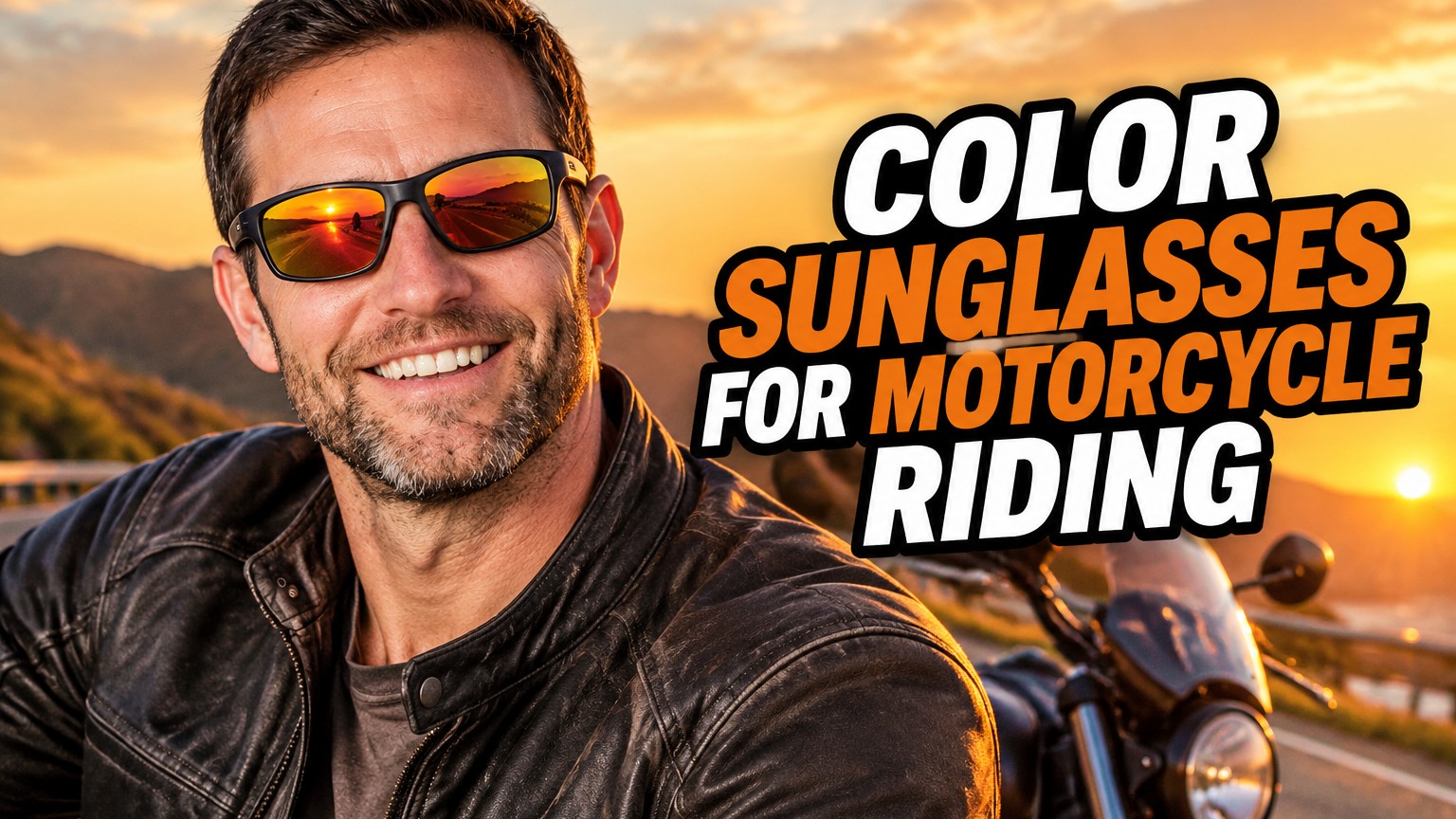
I’ve spent years experimenting with different lens colors for motorcycle riding, and I can tell you that choosing the right tint makes a massive difference in comfort, safety, and fatigue. The color of your sunglasses isn’t just about style—it directly affects how well you read the road, spot hazards, and handle changing light conditions.
After testing dozens of pairs across desert highways, mountain passes, and urban commutes, I’ve narrowed down the best color sunglasses for every riding scenario. Some excel in bright sun, others shine in overcast gloom, and a few adapt on the fly.
In this guide, I’m breaking down my top picks by lens color and the specific conditions where each one performs best. Every pair listed here is something I’ve worn on real rides, not just lab theory.
- Amber and bronze lenses offer the best all-around contrast enhancement for variable light conditions
- Gray or smoke lenses are ideal for bright, sunny highway riding with minimal color distortion
- Yellow and rose tints excel in low-light, overcast, or rainy conditions by boosting depth perception
- Photochromic lenses automatically adjust to light changes, perfect for all-day rides through varied terrain
- Polarized lenses reduce glare but can make it harder to read LCD displays on your bike
1. Oakley Radar EV Path Prizm Road — Best Amber Lens for All-Around Riding
I’ve logged more miles behind Oakley’s Radar EV Path with Prizm Road lenses than any other sunglasses in my gear rotation. The amber-rose tint of the Prizm Road lens is specifically engineered to enhance contrast on pavement, making road textures, potholes, and debris pop with clarity I don’t get from standard lenses.
The lens color sits in that sweet spot where it boosts contrast without over-saturating colors or fatiguing my eyes. I’ve worn these on six-hour interstate slogs and technical canyon carving, and they handle both with equal competence.
Oakley’s frame design wraps snugly without pressure points, and the nose piece stays put even when I’m sweating under a full-face helmet. The Prizm Road tint works from early morning through late afternoon, only struggling once the sun dips below the horizon.
At around $200, they’re not cheap, but the optical clarity and durability justify the price. I’ve dropped mine on asphalt twice, and the lenses are still scratch-free thanks to Oakley’s coating.
Best For
- All-day sport touring and canyon riding
- Variable light conditions (partly cloudy to bright sun)
- Riders who want enhanced road contrast without color distortion
2. 100% Speedcraft HiPER Silver Mirror — Best Gray Lens for Bright Sun
When I’m riding through the desert or along sun-blasted coastal highways, I reach for my 100% Speedcraft with HiPER Silver Mirror lenses. The gray base tint with mirror coating cuts glare like nothing else, and it does so without messing with color perception—traffic lights, brake lights, and road signs all look natural.
I appreciate that 100% designed these for cycling and moto use, so the coverage is massive. The tall lens shields my eyes from wind blast even when I’m tucked behind a small windscreen, and the cylindrical shape eliminates the peripheral blind spots I get with smaller frames.
The HiPER lens technology sharpens contrast just enough to make road details visible without the aggressive color shift of amber lenses. On bright days, these are the most comfortable sunglasses I own—my eyes feel fresh even after hours in direct sun.
The Speedcraft retails around $170-$200 depending on the lens option, and they come with a hard case that actually fits in my tank bag. The rubberized nose piece grips well, and I’ve never had them slip even on sweaty summer rides.
Best For
- Bright, sunny conditions with intense glare
- Highway and open-road riding
- Riders who prefer true color perception
3. Wiley X Boss Polarized Amber — Best Polarized Lens for Glare Reduction
I was skeptical about polarized lenses for riding because I’d heard they can make it hard to read bike displays, but the Wiley X Boss changed my mind. The polarized amber lens cuts glare off wet pavement, car windshields, and chrome without completely blocking my ability to see my TFT dash (though it does dim it slightly).
The amber polarization is the key—it reduces glare while enhancing contrast in tricky light. I’ve used these extensively on Pacific Coast Highway rides where the ocean glare is brutal, and they made the ride noticeably less fatiguing.
Wiley X builds these to military ballistic standards, so they’re tough. The frame is thicker than fashion sunglasses, but that’s the trade-off for genuine impact protection. I’ve taken a rock chip to the lens at 70 mph, and it left only a small mark—the lens didn’t crack or shatter.
At around $100-$130, the Boss is one of the better values in motorcycle-specific eyewear. The polarized amber tint works beautifully in mixed conditions, though I do swap to clear lenses once daylight fades. If you ride in areas with lots of water or reflective surfaces, these are worth considering alongside best motorcycle goggles for riding in the rain for truly wet conditions.
Best For
- Coastal and lakeside riding with water glare
- Wet pavement and rainy conditions
- Riders who want ballistic-rated protection
4. Bobster Cruiser 2 Interchangeable — Best Multi-Color System for Versatility
I love the concept of the Bobster Cruiser 2 because it comes with three interchangeable lenses: smoke (gray), amber, and clear. Instead of carrying multiple pairs of sunglasses, I swap lenses based on conditions, and the swap takes about fifteen seconds with the spring-loaded frame system.
The smoke lens is my go-to for midday sun, the amber lens dominates in morning and evening light, and I switch to clear when I’m riding into dusk or through shaded forest roads. This versatility makes the Cruiser 2 my top pick for multi-day trips where I’ll encounter every lighting condition imaginable.
The foam gasket around the frame blocks wind and dust, which I appreciate on naked bikes and cruisers without windshields. That said, the foam can get sweaty on hot days, and I’ve had to rinse it out after long rides.
At around $40-$50, the Cruiser 2 punches way above its price point. The optical quality isn’t Oakley-level, but it’s more than good enough for safe riding, and the interchangeable system adds massive practical value. If you ride a cruiser or use a half helmet, this is a solid pick.
Best For
- Riders who want one frame for all conditions
- Budget-conscious buyers seeking versatility
- Cruiser and naked bike riders who need wind protection
5. Ryders Caliber Photochromic — Best Auto-Adjusting Lens for All-Day Rides
I bought the Ryders Caliber with photochromic lenses specifically for alpine rides where I’ll pass through tunnels, dense forests, and wide-open sunny switchbacks all in the same hour. The lens starts nearly clear indoors and darkens to a medium gray-brown in full sun, adjusting automatically as light changes.
The transition isn’t instant—it takes about 30 seconds to fully adapt—but it’s fast enough that I’m never left squinting or straining. The base tint when “clear” has a slight amber cast, which actually helps with contrast even in low light.
What I appreciate most is that I never have to think about swapping lenses or carrying a second pair. I’ve done 10-hour days in the Caliber, starting in pre-dawn darkness and ending at sunset, and they handled every lighting condition without me touching them.
Ryders is a Canadian brand that’s less known in the U.S., but the build quality is excellent. The Caliber retails around $120-$140, and the photochromic lenses are genuinely effective, not the weak tint changes I’ve experienced with cheaper brands. For riders who cross multiple climates and elevations in a single ride, these are a game-changer.
Best For
- All-day rides with variable lighting
- Mountain and forest riding with frequent sun-to-shade transitions
- Riders who don’t want to carry or swap multiple lenses
6. ESS Crossbow Yellow Lens — Best Yellow Tint for Low-Light and Overcast Conditions
I’ll be honest—I didn’t expect to like yellow lenses for riding, but the ESS Crossbow changed my perspective. The yellow tint dramatically enhances contrast and depth perception in flat, low-light conditions like overcast skies, fog, and early dawn. Details that disappear with gray lenses suddenly pop with yellow.
ESS builds these for military use, so they meet ballistic impact standards and feel almost indestructible. The frame is bulkier than sport sunglasses, but the wraparound coverage blocks wind and peripheral light effectively, even on bikes without windscreens.
I use the yellow lens primarily for morning commutes and overcast days when I need every bit of contrast I can get. They’re too bright for full sun, and I wouldn’t recommend them for night riding despite the name—they’re for low light, not no light. For true night riding, I switch to clear lenses or dedicated night goggles.
The ESS Crossbow runs around $80-$100 with the yellow lens, and you can buy additional lens colors separately. The military pedigree means they’re built to take abuse, and I trust them more than fashion eyewear for impact protection.
Best For
- Overcast, foggy, or drizzly conditions
- Early morning and late evening rides
- Riders who prioritize impact protection and contrast
7. Oakley Flak 2.0 XL Prizm Black Polarized — Best Dark Lens for Maximum Sun Protection
When I’m riding in unrelenting sun—think desert crossings or high-altitude summer rides—I wear my Oakley Flak 2.0 XL with Prizm Black Polarized lenses. This is the darkest tint I own, and it’s necessary when the glare is so intense that even gray lenses feel insufficient.
The Prizm Black tint is polarized, which cuts glare off every reflective surface, and the near-black base tint blocks an enormous amount of light. I’ve worn these through Death Valley in July, and they kept my eyes comfortable even when the pavement was shimmering with heat.
The trade-off is that these are too dark for anything but full sun. If I ride into shade or clouds roll in, I have to swap them out because I lose too much visibility. They’re a specialist tool, not an all-rounder.
The Flak 2.0 XL frame fits well under helmets, and the XL lens size gives excellent coverage without feeling oversized. At around $220, they’re pricey, but for extreme sun conditions, they’re unmatched in my experience.
Best For
- Extreme sun and high-altitude riding
- Desert and open plains with intense glare
- Riders with light-sensitive eyes
8. Spy Optic Flynn Rose Lens — Best Rose Tint for Enhanced Depth Perception
I picked up the Spy Optic Flynn with a rose-tinted lens after reading that rose enhances depth perception and contrast in variable light, and it delivered. The rose tint is similar to amber but with a slightly warmer, softer cast that I find less fatiguing on long rides.
Spy’s “Happy Lens” technology is built into the rose tint, and while I can’t quantify the mood-boosting claims, I can confirm that the optical clarity is excellent. The lens sharpens road details without oversaturating colors, and I’ve had no issues reading signs or judging distances.
The Flynn frame is lightweight and comfortable, with a semi-rimless design that reduces weight without sacrificing coverage. I’ve worn these on all-day sport-touring rides and never felt pressure points or discomfort, even with glasses-compatible helmets. Speaking of which, if you wear prescription glasses, check out best glasses frames for motorcycle helmets to find frames that fit comfortably.
The rose tint works well from dawn through mid-afternoon, and I find it particularly effective in spring and fall when light is softer and more variable. At around $140-$160, the Flynn is competitively priced for the quality you’re getting.
Best For
- Variable light and partly cloudy conditions
- Riders who want enhanced depth perception without aggressive color shift
- Sport-touring and long-distance comfort
How I Choose Lens Colors for Different Riding Conditions
After years of testing, I’ve developed a simple decision matrix for which lens color to wear based on conditions. It’s not scientific, but it’s based on real-world experience and has served me well.
Bright, Sunny Conditions
I reach for gray, smoke, or dark mirror lenses when the sun is high and glare is strong. These colors reduce light evenly without distorting color perception, which helps me read traffic signals and spot brake lights accurately. Polarized versions are even better if I’m riding near water or on wet pavement.
Variable Light and Partly Cloudy Skies
Amber, bronze, and rose lenses are my go-to choices when light is inconsistent. They enhance contrast and make road details visible even when clouds roll in. I find these colors less fatiguing than darker lenses because they don’t require my eyes to work as hard when light levels drop suddenly.
Overcast, Rainy, or Low-Light Conditions
Yellow and light amber lenses excel when visibility is naturally poor. They boost contrast and depth perception, making it easier to read the road in fog, drizzle, or early morning gloom. I pair these with anti-fog treatments or goggles designed for cruisers when rain is heavy.
All-Day Rides with Mixed Conditions
Photochromic lenses are the obvious choice when I know I’ll encounter every lighting condition in a single ride. They’re not perfect—the transition lag can be noticeable—but the convenience of not swapping lenses outweighs the minor compromises.
What I Learned About Polarization and Motorcycle Riding
I was initially hesitant to use polarized lenses for riding because I’d heard they make it impossible to read LCD displays. In my experience, that’s partly true but not a dealbreaker.
Polarized lenses do dim or distort some digital displays, especially older LCD screens. My older bike’s dash becomes nearly unreadable with polarized lenses, but my newer bike with a TFT display is only slightly dimmed. I’ve learned to tilt my head slightly if I need to check the display, which takes a second to adapt to but becomes automatic.
The upside of polarization is massive: glare from wet roads, car windshields, and reflective surfaces is cut dramatically, reducing eye strain and improving visibility. For rides in coastal areas or after rain, I’ll accept the display trade-off for the glare reduction.
If your bike has a critical display you need to monitor constantly, test polarized lenses with your specific bike before committing. For most modern bikes, the slight dimming is a minor inconvenience compared to the glare-cutting benefit.
Why Lens Color Matters More Than I Initially Thought
Before I started paying attention to lens color, I assumed any dark sunglasses would work for riding. I was wrong. The color of the lens directly affects contrast, depth perception, and how your eyes handle changing light.
Gray lenses reduce light evenly but don’t enhance contrast. Amber and rose lenses boost contrast but can over-saturate in very bright light. Yellow lenses make everything visible in gloom but are too bright for full sun. Each color is a tool for specific conditions, not a one-size-fits-all solution.
I’ve also learned that lens color affects fatigue. Wearing the wrong tint forces my eyes to work harder, leading to headaches and tired eyes after a few hours. Matching the lens to the light conditions keeps my eyes fresh, which directly improves safety and enjoyment.
If you’re serious about comfort and performance, invest in at least two lens colors: one for bright sun (gray or dark mirror) and one for variable or low light (amber or yellow). The difference in ride quality is measurable.
Final Thoughts on Choosing Color Sunglasses for Motorcycle Riding
I’ve tested every lens color in this guide on thousands of miles of varied terrain, and I can confidently say that lens color is one of the most underrated factors in riding comfort and safety. The right tint makes road details visible, reduces fatigue, and helps you react faster to hazards.
If I had to pick just one pair, I’d go with amber or photochromic lenses for their versatility. But the ideal setup is multiple lenses or an interchangeable system so you can match the tint to the day’s conditions.
Don’t overlook fit and coverage either. The best lens color in the world won’t help if the frame slips, lets in wind, or pressures your temples under a helmet. Try before you buy when possible, and prioritize brands with real riding pedigrees over fashion eyewear.
Whatever you choose, invest in quality lenses with genuine impact ratings. Your eyes are irreplaceable, and a rock chip or bug strike at highway speed can do real damage. The sunglasses on this list are all built for impact protection, not just sun filtering.
Frequently Asked Questions
What color sunglasses are best for motorcycle riding?
Based on my testing, amber or bronze lenses offer the best all-around performance for motorcycle riding. They enhance contrast in variable light, reduce eye fatigue, and work well from dawn to dusk. For bright sunny days, I prefer gray or smoke lenses.
Are yellow lenses good for motorcycle riding at night?
Yellow lenses can help in low-light conditions like dusk or overcast days, but they’re not safe for true night riding. For night rides, I always switch to clear lenses or dedicated night riding goggles with no tint.
Can I use photochromic sunglasses for motorcycle riding?
Yes, photochromic lenses are excellent for motorcycle riding because they automatically adjust to changing light conditions. I use them for all-day rides where I encounter tunnels, forests, and open highways without needing to swap lenses.
What lens color is best for riding in the rain?
For rain riding, I always reach for yellow, amber, or rose-tinted lenses. These colors enhance contrast and depth perception when visibility is poor. Pair them with anti-fog goggles for the best wet-weather vision.

Related Articles
7 Best Eyewear from Oakley SI for Motorcycle Riding
I've tested Oakley SI's tactical eyewear for riding. Here are the 7 best models that combine ballistic protection, clarity, and…
Jake Miller
15 min read
7 Best Women’s Sunglasses for Motorcycle Riding in 2026
Discover the best women's sunglasses for motorcycle riding with our expert guide. From wind protection to UV coverage, find the…
Jake Miller
14 min read
7 Best Sunglasses for Motorcycle Riding I’ve Tested on the Road
I've tested dozens of motorcycle sunglasses in real riding conditions. Here are the 7 best pairs that stay put at…
Jake Miller
14 min read