
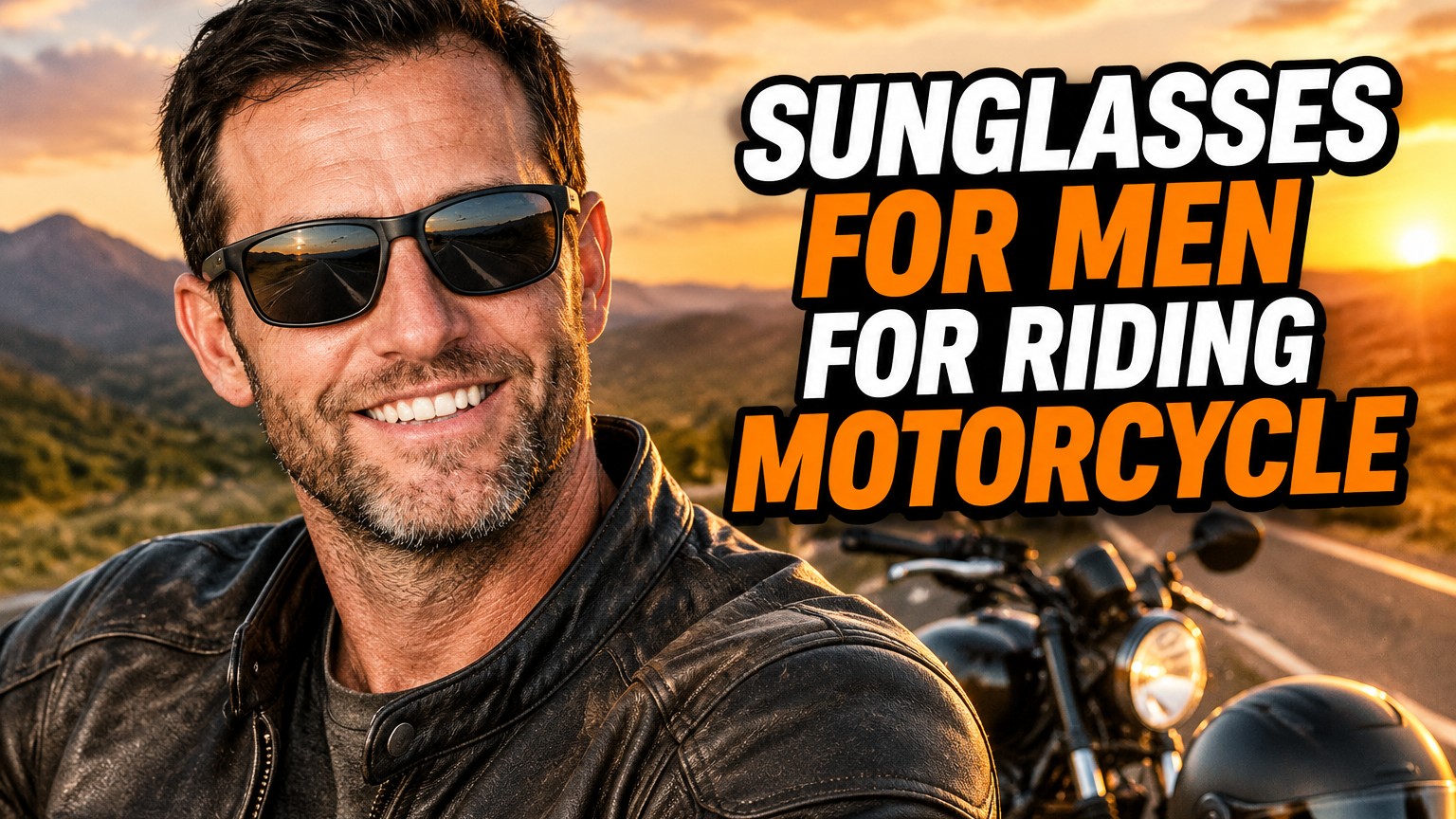
I’ve been riding motorcycles for over a decade, and I’ve learned the hard way that regular sunglasses just don’t cut it on a bike. Between wind blast drying out my eyes, bugs hitting my face, and glare from oncoming traffic, I needed something purpose-built for the road.
After testing dozens of pairs across thousands of miles—from canyon carving to long highway slogs—I’ve narrowed down the absolute best motorcycle sunglasses for men. These aren’t just stylish shades; they’re functional riding gear that protect your eyes and improve visibility in every condition.
Whether you ride a cruiser, sportbike, or adventure tourer, I’ve got options that’ll work with your helmet and riding style. Let me walk you through what I’ve found actually works on the road.
- Wiley X Gravity offers the best all-around protection with ANSI Z87.1 ballistic rating and foam gasket seal
- Bobster Fuel Photochromic adapts automatically to changing light—perfect for dawn/dusk riding
- All my top picks feature wrap-around design, shatter-resistant lenses, and secure temple grips that won’t slip at 80+ mph
- Expect to spend $50-150 for quality motorcycle sunglasses that’ll last multiple seasons
- Interchangeable lens systems give you the most versatility across different weather and lighting conditions
1. Wiley X Gravity — Best Overall Motorcycle Sunglasses
The Wiley X Gravity has been my go-to pair for the past two years, and they’ve earned that spot through countless rides. These sunglasses meet ANSI Z87.1 high-velocity impact standards, which means they’re rated to withstand ballistic impacts—way more protection than you’ll ever need from road debris, but it gives me serious peace of mind.
What sets the Gravity apart is the removable foam gasket that creates a seal around your eyes. I can’t overstate how much of a difference this makes at highway speeds. Wind doesn’t dry out my eyes anymore, and I’m not constantly tearing up on cold morning rides.
The Gravity comes with interchangeable lenses (smoke, clear, and light rust), so I can swap them based on conditions. The smoke lenses are my default for sunny days, while the clear lenses work perfectly for night riding—though if you frequently ride after dark, you might also want to check out the best motorcycle goggles for night riding for maximum visibility.
The rubberized temple tips grip securely inside my helmet without creating pressure points. I’ve worn these under full-face, modular, and half helmets with zero issues. The wrap-around design provides excellent peripheral vision—crucial when checking blind spots.
At around $90-110, the Wiley X Gravity isn’t cheap, but I consider them an investment. They’re still in perfect condition after two years of regular use, with no scratches or loose hinges. The protective case they come with has saved them from getting crushed in my tank bag more times than I can count.
2. Bobster Fuel Photochromic — Best for Variable Light Conditions
I picked up the Bobster Fuel Photochromic specifically for rides where I’d be out from dawn through midday, and they’ve become my favorite for any ride where lighting conditions change. The photochromic lenses automatically darken in bright sunlight and lighten in shade or at dusk—no need to stop and swap lenses.
The transition happens surprisingly fast. I’ve ridden through tree-lined roads where I’m going from full sun to deep shade every few seconds, and the Fuel lenses adjust smoothly. They go from about 88% light transmission (nearly clear) down to 24% (dark smoke) depending on UV intensity.
Bobster included a foam gasket on these that’s slightly thinner than the Wiley X, but it still does an excellent job blocking wind. The frame is a bit lighter too, which I appreciate on all-day rides. My only minor complaint is that the temples are a touch longer, so they can press slightly if you have a particularly tight-fitting helmet.
The Fuel sits in the $60-80 range, making it excellent value for photochromic technology. I’ve used them for over a year now, and the photochromic function hasn’t degraded at all—some cheaper adaptive lenses start to lose their reactivity after heavy UV exposure, but these are holding strong.
One thing to note: photochromic lenses don’t darken behind a windscreen that blocks UV rays. So if you ride a full-dresser touring bike with a big windshield, you might not get the full benefit. They work perfectly on my naked bike and adventure bike though.
3. 7eye Airshield Panhead — Best Wind Protection
If wind protection is your absolute top priority, the 7eye Airshield Panhead is unmatched. The AirShield technology uses a soft foam chamber that creates a complete seal around your orbital bone. I’m talking zero wind penetration—it’s like having goggles that look like sunglasses.
I initially bought these for high-speed touring rides, and they’ve exceeded my expectations. At 80+ mph, regular sunglasses let in enough wind to make my eyes water. The Panhead keeps my eyes comfortable even at triple-digit speeds (on the track, obviously).
The frames are a bit bulkier than typical sunglasses, but they still fit comfortably under all my helmets. The foam is moisture-wicking and removable for cleaning, which I appreciate because it does get sweaty on hot days. I wash mine every few weeks and let them air dry overnight.
7eye offers multiple lens options—I went with their copper contrast lenses, which enhance definition in overcast conditions. They also make these with polarized lenses if glare is a major issue for you. The clarity is outstanding; these use high-quality optical-grade polycarbonate that rivals some premium eyewear brands.
At $130-150, the Panhead is the priciest option on my list. But if you ride frequently in windy conditions or at high speeds, they’re worth every penny. My eyes feel fresh even after 300-mile days, which was never the case before.
4. Pyramex Isotope — Best Budget Pick
Not everyone wants to drop $100+ on motorcycle sunglasses, and that’s where the Pyramex Isotope comes in. At around $25-35, these punch way above their weight class. I keep a pair in my saddlebag as a backup, and I’ve been genuinely impressed with their performance.
The Isotope meets ANSI Z87+ safety standards, so you’re getting legitimate impact protection. The polycarbonate lenses are scratch-resistant and offer 99.9% UV protection. They’re not as optically perfect as the premium options—you might notice slight distortion at the edges—but for the price, they’re excellent.
Pyramex included a foam gasket (they call it a “facial cavity seal”), though it’s firmer and less comfortable than what you get on higher-end models. It still blocks wind effectively, which is the main point. On long rides, I do notice more pressure points compared to my Wiley X, but for rides under two hours, they’re perfectly comfortable.
The temples have rubberized grips that work well under my helmet. The wrap-around design provides good coverage, though the frame sits slightly further from my face than I’d prefer—there’s more gap above and below the lenses. This lets in a bit more wind, but nothing deal-breaking.
I’ve had my backup pair for about 18 months, and they’re holding up surprisingly well. The foam is compressing slightly, and there’s some minor wear on the coating, but they’re still totally functional. For anyone just getting into motorcycling or on a tight budget, these are the pair I recommend without hesitation.
5. Bertoni Motorcycle Sunglasses AF149 — Best for Prescription Wearers
As someone who wears prescription glasses daily, finding motorcycle eyewear was always a challenge. The Bertoni AF149 solved this problem for me with its prescription insert system. I can pop in my prescription lenses behind the main tinted lenses and have perfect vision with sun protection.
The AF149 uses a clever clip-in system for prescription lenses. I took mine to my local optometrist, and they cut prescription lenses to fit the insert for about $80. Now I have motorcycle sunglasses that correct my vision without the hassle of wearing contacts or fumbling with prescription sunglasses under my helmet.
The main lenses are interchangeable—I got mine with smoke, yellow, and clear lenses included. The yellow lenses have become my favorite for dawn and dusk rides; they enhance contrast and make it easier to spot road hazards in low light. Speaking of low-light conditions, if you prefer goggles, the best motorcycle goggles for riding in the rain offer similar insert options with even better weather protection.
The foam gasket is adjustable—you can position it closer or further from your face depending on preference. I run mine slightly further out to accommodate the prescription insert, and it still seals well enough to block most wind. There’s a vent channel built into the foam that helps prevent fogging, which was a major concern of mine.
The Bertoni AF149 runs about $70-90 for the complete kit with multiple lenses. Add another $60-100 for prescription inserts depending on your prescription complexity. It sounds expensive, but it’s actually cheaper than buying separate prescription sunglasses and motorcycle goggles.
My only criticism is that the frames are a bit wider, so they don’t fit as well under tighter sport helmets. They work great with my modular and half helmets, though. If you primarily wear a half helmet, check out motorcycle goggles designed for half helmets as an alternative—some of those also accept prescription inserts.
6. Bobster Shield II — Best Coverage and Style for Cruisers
I ride a Harley Street Bob, and the Bobster Shield II fits the cruiser aesthetic perfectly while delivering serious functionality. These have a larger, more shield-like lens that wraps aggressively around your face—maximum coverage for that classic bagger/cruiser look.
The Shield II uses a single continuous lens rather than two separate lenses, which eliminates the center frame piece that can block vision. I notice this most when doing shoulder checks; my peripheral vision is completely unobstructed. The lens extends further up and down too, so I get better protection from sun coming from above.
Bobster equipped these with a substantial foam gasket that seals out wind and debris. The foam is deeper than most, creating more space between the lens and your face—great for airflow and preventing fogging. I’ve ridden these in 95°F heat with high humidity, and they stayed surprisingly fog-free.
The frames have that classic glossy black finish that looks right at home on a cruiser. The temples are straight rather than curved, which I’ve found works better with the round shape of many cruiser helmets. If you’re running a half helmet or skid lid, these complement that style perfectly. For more cruiser-specific options, you might also want to explore motorcycle goggles designed specifically for cruisers.
At $40-55, the Shield II is reasonably priced for what you get. The lenses are polarized, which really helps with glare off chrome and wet pavement—something I deal with constantly on group rides. The only downside is they don’t come with extra lenses, so you’re stuck with the tint you choose at purchase.
I’ve put about 4,000 miles on mine over one riding season, and they’re still in great shape. The foam is compressing slightly, but the frames are solid and the lenses have held up without scratches despite being stored loose in my saddlebag sometimes.
7. Oakley Gascan — Best Premium Option for Style and Performance
Look, I know Oakley gets name-dropped constantly, but the Gascan genuinely deserves its reputation for motorcycle riding. I resisted buying these for years because of the price ($180-220), but after finally pulling the trigger, I understand why serious riders swear by them.
The optical clarity is on another level. Oakley’s High Definition Optics (HDO) technology means zero distortion across the entire lens. I notice fine details in the road surface and traffic that I miss with cheaper sunglasses. The Plutonite lenses block 100% of UVA, UVB, and UVC rays plus harmful blue light.
The Gascan doesn’t have a foam gasket—it’s designed as premium sunglasses that happen to work excellently for riding rather than dedicated motorcycle eyewear. The wrap and fit are tight enough that wind isn’t a major issue at normal speeds, though they’re not as sealed as the Wiley X or 7eye options. I wear these mostly for shorter rides and when I want to look good off the bike too.
The frame geometry is specifically designed to fit comfortably under helmets. The temples are thin and straight, causing zero pressure points even after hours of wear. The Unobtainium earsocks and nose pads actually grip better when you sweat, which is a surprisingly practical feature on hot days.
Oakley offers the Gascan in dozens of frame and lens combinations. I went with Prizm lenses, which enhance color and contrast—they make reds and greens pop, helping me spot brake lights and traffic signals faster. I also appreciate that Oakley has a massive aftermarket for replacement lenses if I want to switch things up.
Are they worth twice the price of the Wiley X Gravity? That depends on your priorities. For pure motorcycle functionality, probably not. But if you want sunglasses that perform excellently on and off the bike and will last for years, the Gascan delivers. Mine are going on three years with heavy use, and they look nearly new.
What About Regular Eyeglasses Under Your Helmet?
I should mention that some riders prefer wearing their regular prescription glasses under their helmet rather than dedicated motorcycle sunglasses. If that’s your preference, frame selection matters enormously—the wrong frames will create painful pressure points or get pushed out of position.
I’ve written extensively about choosing frames that work with helmets. If you’re struggling to find comfortable eyeglasses for riding, check out my guide on Best Glasses Frames for Motorcycle Helmets where I break down exactly what frame styles work best and which ones to avoid.
How I Choose Motorcycle Sunglasses
After years of testing different eyewear, I’ve developed a pretty clear set of criteria for what makes sunglasses work for motorcycle riding. These aren’t just nice-to-haves—they’re features that directly impact safety and comfort on the road.
Wrap-Around Design Is Non-Negotiable
Flat or slightly curved fashion sunglasses let wind blast around the sides and dry out your eyes. I need at least 8-base curve (the lens curvature measurement) to get adequate wrap. Most motorcycle-specific sunglasses use 8-base or 9-base curves that seal closely to your face.
The wrap also extends your peripheral vision protection. When I’m checking my blind spot, I need sun protection there too—flat lenses leave your peripheral vision exposed to glare and UV rays.
Impact-Rated Lenses Save Your Vision
I won’t wear anything on a motorcycle that doesn’t meet at least ANSI Z87.1 basic impact standards. Ideally, I want Z87.1+ or Z87.1 high velocity rated lenses—these are tested to withstand impacts that would shatter regular sunglasses.
Road debris, bugs, and rocks kicked up by vehicles are real hazards. I’ve had a pebble hit my Wiley X Gravity hard enough to make me flinch, but the lens didn’t even scratch. Regular sunglasses would have shattered into my eye.
Secure Fit Prevents Dangerous Distractions
Sunglasses that slip down your nose or shift around are more than annoying—they’re dangerous. I’m looking for rubberized temple grips and nose pads that hold position even when I’m sweating or moving my head aggressively.
The test I do: put them on, look straight down, then shake my head side to side. If they move at all, they’ll be a problem at 70 mph on a bumpy road. Good motorcycle sunglasses stay absolutely planted.
Foam Gaskets Block Wind and Debris
This is the single biggest difference between regular sunglasses and motorcycle eyewear. A foam gasket (sometimes called a facial cavity seal) creates a barrier that keeps wind, dust, and bugs from getting to your eyes.
The foam should be dense enough to seal but soft enough not to create pressure points. I prefer removable foam so I can clean it—it will get gross with sweat and sunscreen if you ride regularly.
Lens Options for Different Conditions
I ride in everything from bright desert sun to overcast Pacific Northwest drizzle. Having multiple lens options means I’m not compromising visibility in any condition.
At minimum, I want smoke/dark lenses for bright sun and clear lenses for night or dark conditions. Ideally, I also want something in between—yellow, copper, or light smoke—for dawn, dusk, and overcast days. Photochromic lenses solve this problem if you don’t want to swap lenses, though they cost more upfront.
Final Thoughts on Choosing Your Riding Sunglasses
I’ve thrown a lot of information at you, so let me break down my recommendations based on different riding situations and priorities. Your best choice depends on how you ride, what you ride, and what matters most to you.
For most riders, I’d point you toward the Wiley X Gravity. They hit the sweet spot of protection, comfort, versatility, and value. The interchangeable lenses and solid build quality mean they’ll serve you well in nearly any riding situation.
If you frequently ride during changing light conditions—early morning commutes, all-day tours, or dawn/dusk rides—the Bobster Fuel Photochromic will save you the hassle of swapping lenses. I genuinely reach for these more than any other pair because they just work in 90% of situations.
Riders who regularly cruise at highway speeds or ride in particularly windy areas should seriously consider the 7eye Airshield Panhead. Yes, they’re expensive, but chronic dry eyes and fatigue from wind blast are miserable. These solved that problem completely for me on long highway slogs.
If you’re just getting started with motorcycling or want a backup pair, grab the Pyramex Isotope. For $30, you’re getting legitimate safety-rated eyewear that’ll protect your eyes adequately while you figure out exactly what features matter most to you.
No matter which pair you choose, remember that motorcycle sunglasses are safety equipment, not just accessories. I’ve seen riders cheap out on eye protection and regret it after one nasty bug strike or one ride with wind blasting their eyes for hours. Your vision is worth investing in proper gear.
Ride safe out there, and keep your eyes protected. The road is a lot more enjoyable when you can actually see it clearly and comfortably.
Frequently Asked Questions
What makes sunglasses suitable for motorcycle riding?
Motorcycle sunglasses need wrap-around design to block wind, shatter-resistant polycarbonate lenses, secure fit that won’t slip at speed, and UV400 protection. I always look for foam gaskets to seal out debris and interchangeable lenses for different light conditions.
Can I wear regular sunglasses while riding a motorcycle?
I don’t recommend it. Regular sunglasses lack wind protection and can fly off at highway speeds. They also don’t seal against your face, letting wind dry out your eyes. Motorcycle-specific sunglasses have secure temple grips and wrap-around frames that stay put.
Are polarized lenses good for motorcycle riding?
Polarized lenses reduce glare from wet roads and car windshields, which I find helpful. However, they can make it harder to read LCD dashboards on some bikes. I prefer photochromic lenses that adjust to light conditions automatically.
How do I prevent sunglasses from fogging up inside my helmet?
I look for sunglasses with anti-fog coating and proper ventilation channels. Keeping a small gap between the lenses and foam gasket helps airflow. Some riders use anti-fog sprays, but I’ve found the right eyewear design prevents most fogging issues.

Related Articles
7 Best Eyewear from Oakley SI for Motorcycle Riding
I've tested Oakley SI's tactical eyewear for riding. Here are the 7 best models that combine ballistic protection, clarity, and…
 Jake Miller
15 min read
Jake Miller
15 min read
7 Best Women’s Sunglasses for Motorcycle Riding in 2026
Discover the best women's sunglasses for motorcycle riding with our expert guide. From wind protection to UV coverage, find the…
Jake Miller
14 min read
7 Best Sunglasses for Motorcycle Riding I’ve Tested on the Road
I've tested dozens of motorcycle sunglasses in real riding conditions. Here are the 7 best pairs that stay put at…
Jake Miller
14 min read