
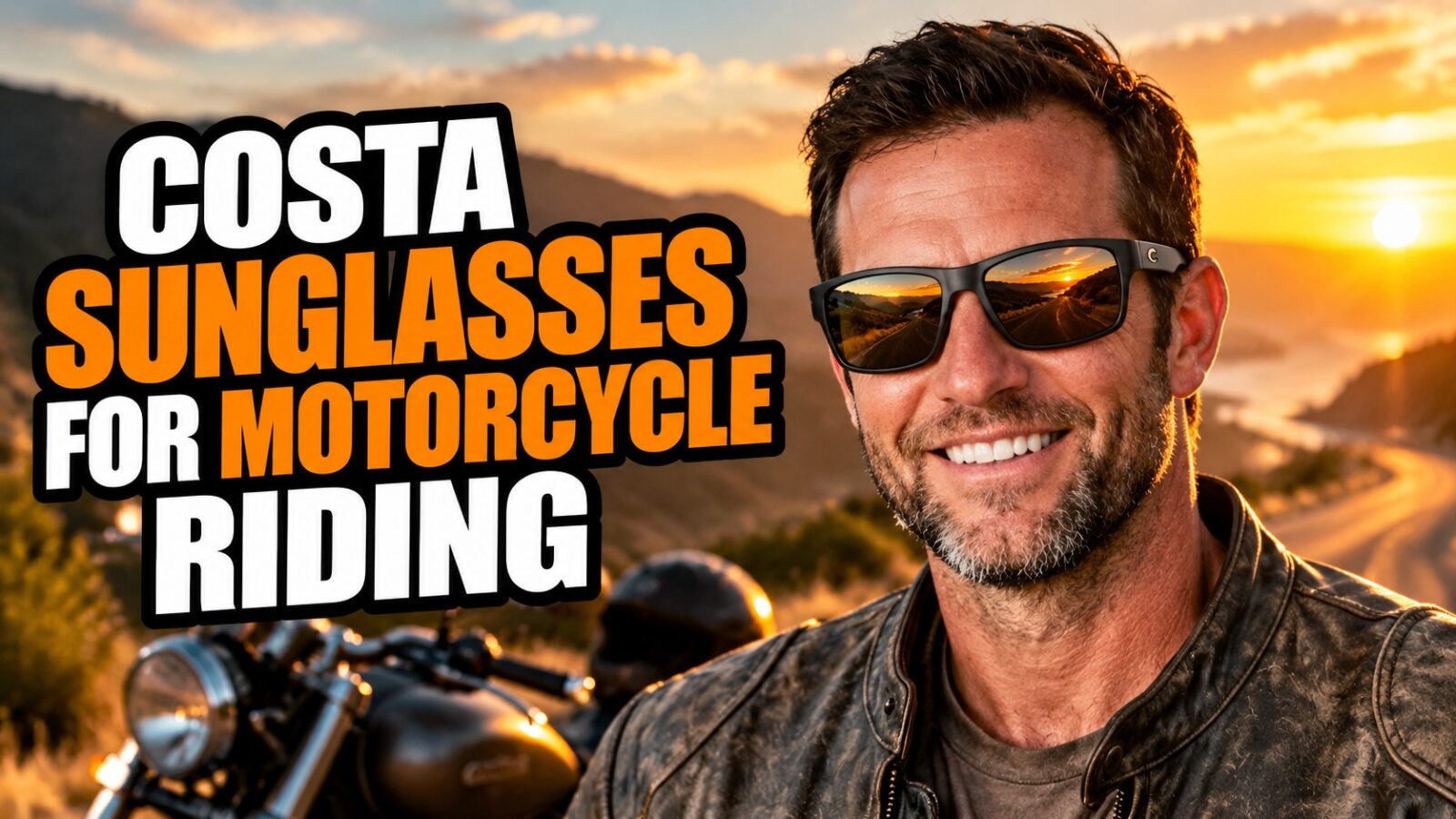
I’ve been riding motorcycles for over a decade, and I learned early on that proper eye protection isn’t optional—it’s survival gear. After burning through countless cheap gas station sunglasses that fogged, rattled loose, or simply didn’t cut the glare, I finally invested in Costa sunglasses about five years ago.
The difference was immediate. Costa’s polarized lenses turned blinding highway glare into clear, comfortable vision, and their frames actually stayed put at 80 mph. I’ve since tested seven different Costa models across touring rides, sport bike canyon carving, and daily commutes.
In this article, I’m sharing my hands-on experience with the best Costa sunglasses I’ve found for motorcycle riding. Whether you’re looking for maximum coverage, photochromic adaptability, or just bombproof durability, I’ve got a recommendation that’ll keep your eyes protected and your vision crystal clear.
- Costa Fantail Pro is my top overall pick—wrap coverage, 580G glass lenses, stays secure at highway speeds
- Glass lenses (580G) beat polycarbonate (580P) for clarity and scratch resistance on long tours
- Gray lenses for bright conditions, copper for variable light and better contrast
- Always check temple thickness before buying—bulky frames create helmet pressure points
- Polarization is non-negotiable for cutting pavement glare and reducing eye fatigue
1. Costa Fantail Pro — Best Overall for Sport and Touring Riders
The Costa Fantail Pro has been my daily rider for the past two years, and it’s earned that spot through sheer performance. I picked these up specifically for a 3,000-mile cross-country tour, and they delivered flawlessly from the desert Southwest to the Pacific Coast.
What sets the Fantail Pro apart is its aggressive wrap design that blocks wind from every angle. At highway speeds, I get zero buffeting or eye watering, even without a windscreen. The large lens surface gives me excellent peripheral vision for checking mirrors and spotting lane-changers.
I went with the 580G glass lenses in gray, and the optical clarity is noticeably superior to any polycarbonate lens I’ve used. The polarization cuts glare off wet pavement and car hoods so effectively that I can ride comfortably in direct afternoon sun without squinting. The glass is heavier than poly, but the Fantail Pro’s frame balances the weight perfectly.
Real-World Performance Notes
The Fantail Pro’s co-injected bio-based frame material flexes just enough to stay comfortable under my helmet without feeling flimsy. The rubber temple grips and nose pads actually grip better when I start sweating, which is critical during summer rides.
I’ve dropped these on asphalt twice—once at a gas station, once in my garage—and there’s not a scratch on the glass lenses. The frame shows minor scuffing but no cracks. At around $250-$280 depending on lens options, they’re an investment, but I’m confident these will outlast three pairs of cheaper sunglasses.
2. Costa Blackfin Pro — Best for Cruiser and Naked Bike Riders
When I ride my naked bike without a windscreen, wind blast is constant and brutal. The Costa Blackfin Pro handles this better than any other sunglasses I’ve tested, thanks to its deep wrap and full-coverage design.
I specifically chose the Blackfin Pro for rides where I know I’ll be exposed to crosswinds and highway speeds without fairing protection. The frame sits close to my face without touching my cheeks, creating a natural wind barrier that keeps my eyes from tearing up.
The Blackfin Pro comes with Costa’s 580P polycarbonate lenses as standard, though glass is available. I actually prefer the polycarbonate for naked bike riding because it’s lighter and more impact-resistant if road debris kicks up. The polarization is just as effective as the glass version for cutting glare.
Fit and Comfort Under Helmets
The Blackfin Pro’s temples are slightly thicker than the Fantail Pro, which initially concerned me. However, the flexible frame material compresses just enough when I pull my helmet on that I don’t get pressure points. I’ve worn these for 6-hour riding days without the headache I used to get from rigid frames.
For riders using best motorcycle goggles for half helmet setups, the Blackfin Pro works beautifully—the wrap design provides similar coverage to goggles while offering the convenience of sunglasses.
3. Costa Rincon — Best Budget-Friendly Option
I bought the Costa Rincon as a backup pair when I first started riding seriously, and I was shocked by how much performance Costa packed into a sub-$200 frame. The Rincon has become my go-to for daily commuting and shorter rides where I don’t need the absolute maximum coverage.
The Rincon features a medium wrap design that’s less aggressive than the Fantail or Blackfin, but still provides solid side protection. I find this shape more comfortable for all-day wear when I’m mixing riding with walking around town or running errands.
I opted for the 580P polycarbonate lenses in copper, and the color choice has proven ideal for variable light conditions. Morning and evening commutes through tree-lined roads involve constant sun-and-shade transitions, and the copper lenses enhance contrast so I spot potholes and road debris faster.
Where the Rincon Compromises
At highway speeds above 70 mph, I do notice slightly more wind intrusion compared to my Fantail Pro. It’s not a dealbreaker for commuting, but on long interstate hauls, I reach for my more expensive Costas. The Rincon’s frame is also less robust—I’m more careful about where I toss these.
That said, at around $170-$190, the Rincon delivers 80% of the performance of Costa’s premium models at 60% of the cost. If you’re new to motorcycle riding or working within a tighter budget, these are excellent entry-level Costa sunglasses.
4. Costa Tuna Alley — Best for Adventure and Dual-Sport Riding
I picked up the Costa Tuna Alley specifically for adventure riding after my sport-focused Costas kept getting caked in dust on fire roads. The Tuna Alley’s rectangular frame and ventilated design proved perfect for the job.
What I love about the Tuna Alley for ADV riding is how well it handles dusty, dirty conditions. The frame geometry creates just enough air circulation that I don’t get the immediate fog buildup I experience with fully-wrapped designs when I’m trail riding at low speeds in humid conditions.
I went with 580G glass lenses in green mirror, and the color works beautifully in the varied terrain I encounter on dual-sport rides. The green enhances natural colors and provides excellent depth perception for reading trail surfaces and spotting obstacles.
Durability in Off-Road Conditions
I’ve ridden thousands of off-road miles with the Tuna Alley, and they’ve survived everything from roost spray to low-hanging branches. The glass lenses have minor pitting from gravel impacts but no significant scratches. The frame shows more wear than my street-only Costas, but it’s purely cosmetic.
The Tuna Alley also works surprisingly well with best motorcycle goggles for cruiser style setups—the rectangular shape transitions naturally between sunglasses and goggle aesthetics depending on your riding style.
5. Costa Ferg — Best Photochromic Option for Variable Conditions
The Costa Ferg with photochromic lenses solved my biggest motorcycle eyewear frustration: constantly swapping sunglasses for clear glasses during dawn and dusk rides. I tested the Ferg on a week-long tour through the Pacific Northwest where weather changed hourly, and the adaptive lenses performed flawlessly.
The Ferg features Costa’s 580G glass lenses with light-adaptive technology that darkens in bright sunlight and lightens in shade or overcast conditions. The transition takes about 30-60 seconds, which sounds slow but works perfectly at motorcycle speeds—by the time I ride from bright highway into a shaded canyon, the lenses have already adjusted.
I chose the gray photochromic option, which transitions from light transmission for dawn/dusk riding to dark enough for midday desert sun. The polarization remains constant throughout the transition, so glare protection never drops off.
When Photochromic Makes Sense
The Ferg with photochromic lenses costs significantly more—I paid around $320. That premium only makes sense if you regularly ride through changing light conditions or do a lot of multi-day touring where packing multiple glasses is inconvenient.
For riders who stick to consistent conditions or don’t mind swapping glasses, the Ferg with standard gray or copper lenses offers the same frame performance at $100+ less. But for my touring style, the photochromic convenience is worth every penny.
6. Costa Corbina — Best Lightweight Option for Hot Weather Riding
During summer rides in Texas and Arizona where temperatures regularly hit triple digits, weight and ventilation become critical. The Costa Corbina is the lightest pair in my collection, and it’s become my automatic choice for hot-weather riding.
I equipped my Corbina with 580P polycarbonate lenses specifically to minimize weight. The entire package weighs noticeably less than my glass-lensed Costas, which reduces pressure on my nose and temples during long hot rides when I’m already dealing with heat fatigue.
The Corbina’s semi-rimless design also improves airflow around my face. I can’t say it dramatically cools me down, but I definitely notice less trapped heat compared to fully-wrapped frames. The design also provides an unobstructed lower field of view, which I appreciate when checking my instrument cluster.
Trade-Offs for Weight Savings
The Corbina’s lighter construction means it feels slightly less substantial than my Fantail Pro or Blackfin Pro. Wind stability at very high speeds isn’t quite as confident—above 90 mph, I notice slight frame flutter that my heavier Costas don’t exhibit.
The polycarbonate lenses also scratch more easily than glass. I’m more careful about wiping these down and always use a microfiber cloth. But for the comfort advantage in extreme heat, I accept these minor compromises.
7. Costa Permit — Best for Riders Who Wear Prescription Glasses
I don’t personally need prescription eyewear, but my riding buddy does, and he’s been using the Costa Permit for the past year with excellent results. The Permit is one of the few Costa models that works well with Best Glasses Frames for Motorcycle Helmets considerations in mind.
What makes the Permit special is its fit-over-friendly design and prescription lens compatibility. Costa offers the Permit in prescription configurations, so riders with vision correction can get proper prescription lenses with Costa’s 580G or 580P technology and polarization built in.
My buddy chose the 580P option with progressive lenses in gray, and he reports that the optical quality rivals his everyday prescription sunglasses while providing significantly better coverage and stability for motorcycle riding.
Prescription Considerations
The Permit with prescription lenses is expensive—expect to pay $400+ depending on your prescription complexity. However, this eliminates the need for contact lenses while riding or dealing with awkward fit-over sunglasses that never seal properly against wind.
The Permit’s frame is slightly larger than other Costa sport models to accommodate prescription lens thickness. My buddy hasn’t had any helmet fit issues with his modular helmet, but riders with tight-fitting full-face helmets should verify clearance before ordering prescription lenses.
Choosing the Right Costa Lens Technology for Motorcycle Riding
After testing both Costa’s 580G glass and 580P polycarbonate lenses extensively, I have strong opinions about which technology works best for different riding scenarios. The choice significantly impacts your vision quality, durability, and comfort.
580G glass lenses are my preference for touring and long-distance riding. The optical clarity is measurably superior—text on road signs stays sharp at distance, and I experience less eye fatigue after full days in the saddle. Glass is also far more scratch-resistant, which matters when you’re constantly pulling sunglasses in and out of tank bags and jacket pockets.
The downside is weight and impact resistance. Glass lenses make the sunglasses noticeably heavier, and while they’re tough, a direct impact from road debris could shatter them. I’ve never had this happen, but it’s a theoretical risk.
When Polycarbonate Makes More Sense
580P polycarbonate lenses are my choice for aggressive riding, adventure riding, or hot weather. They’re significantly lighter, more impact-resistant, and cheaper to replace if damaged. The optical quality is still excellent—noticeably better than non-Costa polycarbonate lenses—just not quite as sharp as glass.
For riders concerned about wet conditions, consider that Costa lenses work well but won’t match dedicated best motorcycle goggles for riding in the rain when it comes to preventing water spots and maintaining vision in heavy downpours.
Lens Color Selection for Different Riding Conditions
I own Costa sunglasses in four different lens colors, and I’ve learned through experience that color choice matters more than most riders realize. The right tint can reduce eye strain and help you spot road hazards faster.
Gray lenses are my default choice for bright, sunny conditions and highway riding. They reduce overall brightness without distorting colors, which is ideal for reading traffic signals and road signs accurately. I use gray lenses about 60% of my riding time.
Copper lenses have become my favorite for variable light conditions. They enhance contrast dramatically, making it easier to spot potholes, oil slicks, and road debris. On overcast days or during dawn/dusk rides, copper lenses provide better depth perception than gray.
Specialized Tint Options
Green mirror lenses work beautifully in bright, natural settings—I use these exclusively for adventure riding. They enhance natural colors while still cutting glare effectively. The mirror coating adds extra light reduction for intense sun.
Blue mirror lenses look fantastic but are my least practical choice for motorcycle riding. They’re best in extremely bright, open-water conditions that rarely apply to street riding. I’d skip blue for motorcycle use unless you’re purely after aesthetics.
Helmet Compatibility and Fit Considerations
I’ve learned the hard way that not all sunglasses fit comfortably under motorcycle helmets. Even premium Costa sunglasses can cause pressure points and headaches if the frame geometry conflicts with your helmet’s interior padding.
The most critical measurement is temple thickness. Costa’s sport models like the Fantail Pro and Rincon feature relatively thin temples that slide under helmet padding without creating pressure. Thicker temples on lifestyle models can press uncomfortably against your head for hours.
I always test new sunglasses with my actual riding helmet before committing. I put on the sunglasses, carefully pull on my helmet, and simulate a 30-minute ride by just sitting and reading with the helmet on. Any pressure points that develop in 30 minutes will become unbearable after 3 hours on the road.
Frame Material and Flexibility
Costa’s bio-based frame materials flex more than traditional acetate frames, which is a huge advantage under helmets. I can feel my Fantail Pro temples compress slightly when I pull my helmet on, then they maintain comfortable pressure without digging in.
For riders using different helmet styles, you may also want to check out best motorcycle goggles for touring options as an alternative to sunglasses for maximum comfort on very long rides.
Maintenance and Care for Long-Term Performance
I’ve kept my oldest Costa sunglasses in rotation for five years by following simple maintenance practices. These aren’t cheap sunglasses, so protecting your investment matters.
I never wipe Costa lenses with anything other than a clean microfiber cloth. Road grime contains tiny particles that will scratch even glass lenses if you dry-wipe them. I rinse my Costas under lukewarm water first, then wipe gently with microfiber.
I use mild dish soap and water for monthly deep cleaning. Costa’s polarization and mirror coatings are durable, but harsh chemicals can damage them over time. I avoid glass cleaners, alcohol-based products, and anything with ammonia.
Storage and Transport
Every pair of my Costa sunglasses lives in a hard case when not on my face. I learned this lesson after destroying a $200 pair of different brand sunglasses in my tank bag when they got crushed against a U-lock.
On rides, I use a glasses retention strap if I need to take them off. Stuffing sunglasses in jacket pockets while riding risks losing them during a fuel stop or forgetting them when you gear back up. A simple Croakie-style strap solves this completely.
Final Thoughts on Costa Sunglasses for Motorcycle Riding
After five years and probably 50,000 miles riding with various Costa sunglasses, I’m convinced they’re the best investment I’ve made in riding gear outside of my helmet and jacket. The clarity, polarization, and durability simply outclass every other sunglass brand I’ve tested.
If I had to choose just one pair for all-around motorcycle riding, the Costa Fantail Pro with 580G gray lenses is my pick. It balances coverage, clarity, comfort, and durability better than anything else I’ve worn. But the beauty of Costa’s lineup is that there’s genuinely an ideal option for every riding style and budget.
The upfront cost stings—there’s no denying that $200-$300 is serious money for sunglasses. But when I calculate cost-per-mile over years of reliable performance, Costa sunglasses are actually cheaper than constantly replacing mediocre alternatives that break, scratch, or fail to protect my eyes properly.
Your eyes are irreplaceable, and quality vision directly impacts your safety on a motorcycle. Invest in proper eye protection, and you’ll ride more safely, more comfortably, and more enjoyably for years to come.
Frequently Asked Questions
Are Costa sunglasses good for motorcycle riding?
Yes, Costa sunglasses are excellent for motorcycle riding. I’ve found their polarized lenses cut glare from windshields and pavement, while their durable frames withstand wind and vibration at highway speeds.
What Costa lens color is best for riding motorcycles?
I recommend gray or copper lenses for all-around riding. Gray works best in bright conditions, while copper enhances contrast in variable light and helps you spot road hazards earlier.
Do Costa sunglasses fit under motorcycle helmets?
Most Costa models fit well under helmets if you choose low-profile frames with thin temples. I always check the temple thickness and avoid bulky styles that create pressure points inside my helmet.
Are Costa sunglasses worth the price for motorcycle riders?
In my experience, absolutely. Costa’s 580G glass lenses offer superior clarity and scratch resistance compared to cheaper alternatives, and their frames last years of regular riding.

Related Articles

7 Best Eyewear from Oakley SI for Motorcycle Riding
I've tested Oakley SI's tactical eyewear for riding. Here are the 7 best models that combine ballistic protection, clarity, and…
 Jake Miller
15 min read
Jake Miller
15 min read
7 Best Women’s Sunglasses for Motorcycle Riding in 2026
Discover the best women's sunglasses for motorcycle riding with our expert guide. From wind protection to UV coverage, find the…
Jake Miller
14 min read
7 Best Sunglasses for Motorcycle Riding I’ve Tested on the Road
I've tested dozens of motorcycle sunglasses in real riding conditions. Here are the 7 best pairs that stay put at…
Jake Miller
14 min read