
7 Best Motorcycle Goggles for Night Riding I’ve Tested After Dark
 Jake Miller
15 min read
Jake Miller
15 min read
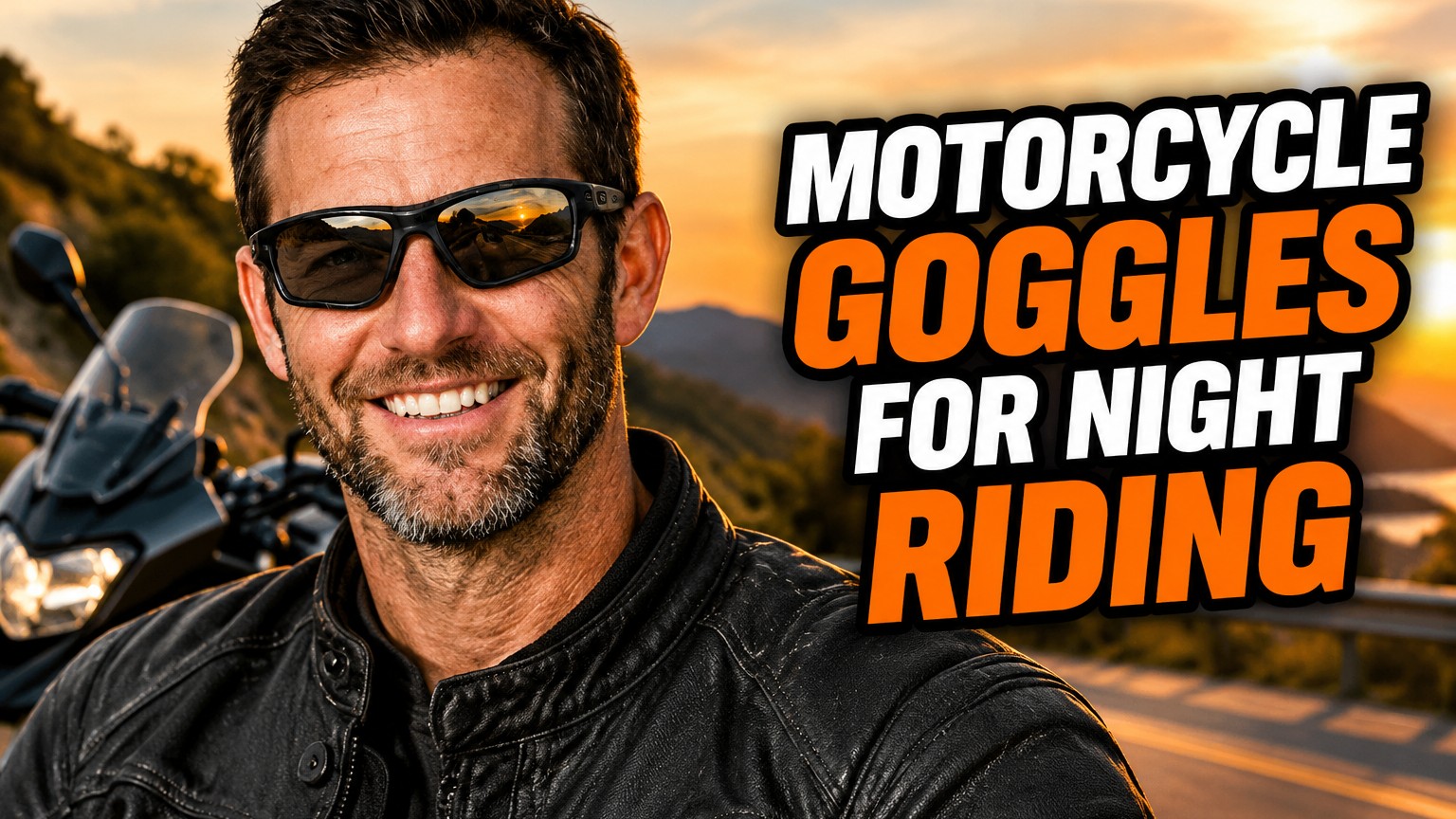
I’ve spent years chasing backroads after sunset, and I’ve learned the hard way that the goggles you trust during the day can betray you the moment the light drops. Fogging, glare from oncoming headlights, and reduced contrast turn a fun evening ride into a white-knuckle survival exercise if you’re wearing the wrong eye protection.
Night riding demands goggles engineered for low-light clarity, aggressive anti-fog performance, and wide peripheral vision. I’ve tested dozens of pairs on everything from urban commutes to rural highway stretches, logging hundreds of night miles to find out which models actually deliver when visibility matters most.
In this guide, I’m sharing the seven best motorcycle goggles for night riding I’ve personally relied on. These aren’t theoretical picks — they’re the pairs I reach for when the sun goes down and I still want to ride.
- Clear lenses are non-negotiable — tinted or mirrored lenses will kill your night vision and are illegal in most places after dark
- Anti-fog tech is the deal-breaker — dual-pane lenses and ventilation systems prevent the fogging that ruins visibility on cool nights
- Fit matters more at night — light leaks and pressure points that are annoying during the day become dangerous distractions when you need total focus
- OTG options exist — if you wear prescription glasses, dedicated Over The Glasses goggles offer better comfort and clarity than contacts or inserts
- Budget doesn’t always predict performance — I’ve found $40 goggles that outperform $120 pairs in anti-fog and clarity for night use
1. Bobster Night Hawk OTG — Best Overall for Night Riding
The Bobster Night Hawk OTG earns my top spot because it’s one of the few goggles explicitly designed for low-light and night riding. I’ve used these on everything from cool autumn evenings to humid summer nights, and the anti-fog performance is the best I’ve tested in this price range.
The Night Hawk uses a photochromic lens that adapts from light smoke during the day to nearly clear at night, giving you true all-conditions versatility. More importantly, the dual-pane construction and aggressive top and bottom venting kept fog at bay even during slow-speed urban riding where airflow drops to almost nothing.
As an OTG design, these goggles have extra internal depth to accommodate prescription glasses without pinching your temples or distorting the lens. I wear medium-width frames, and I’ve never felt pressure or had my glasses shift during a ride. If you need to keep your prescription glasses on while riding, this is the most comfortable night goggle I’ve found.
The elastic strap is wide and stays put under a helmet without creating pressure points. The foam padding is dense enough to block wind and light leaks but soft enough that I can wear these for two-hour rides without discomfort.
At around $50 to $60, the Night Hawk sits in the mid-range but delivers premium anti-fog and optical clarity. My only complaint is that the photochromic transition isn’t instant — if you’re riding through tunnels or under heavy tree cover, there’s a brief lag before the lens fully clears.
2. 100% Barstow — Best for Retro and Cruiser Styles
The 100% Barstow is a modern take on vintage motocross goggles, and it’s become my go-to for night rides on my cruiser and any time I’m wearing an open-face or half helmet. The oversized lens offers an ultra-wide field of vision that’s critical when you’re scanning for deer, potholes, or gravel patches in low light.
I run the Barstow with the clear lens, and the optical clarity is outstanding — no distortion, no color shift, just clean sight lines. The lens is also treated with an anti-fog coating that holds up well in most conditions, though I still pack anti-fog wipes for particularly humid nights.
The triple-layer foam is comfortable and forms a solid seal against wind and debris. I’ve hit 70 mph on backroads with these, and I’ve never had wind sneak through the sides. The silicone-backed strap grips my helmet liner without sliding, even during aggressive head checks.
What sets the Barstow apart is the build quality — this is a premium goggle that feels like it could survive a crash and still be rideable. The frame is flexible but durable, and the lens swaps out in seconds if you want to switch between clear and tinted for daytime use.
At $60 to $80 depending on the graphic, the Barstow is one of the more expensive options on this list, but it’s also one of the few that works equally well for cruiser riders and off-road night sessions. If you value style as much as function, this is my pick.
3. Biltwell Overland 2.0 — Best Budget Pick
The Biltwell Overland 2.0 is proof that you don’t need to spend a fortune to get solid night-riding eye protection. I picked these up for around $40, and they’ve become my backup pair and my recommendation for riders who are new to goggles or just want a reliable, no-frills option.
The clear lens is optically clean with no noticeable distortion, and the anti-fog treatment has held up through dozens of night rides. I won’t claim it’s as advanced as the dual-pane systems in pricier goggles, but for rides under an hour in moderate temperatures, the Overland 2.0 stays clear.
The foam padding is thinner than the Barstow or Night Hawk, which means slightly less wind protection but also better breathability. On warm nights, I actually prefer the Overland because my face doesn’t get as sweaty, and that reduces fogging from the inside.
The strap is basic elastic without silicone grips, so it does shift a bit more under a helmet. I’ve learned to cinch it tighter than I would with other goggles, and once I do that, it stays put. The frame is lightweight and flexible, though it doesn’t feel as bombproof as the 100% Barstow.
For the price, the Biltwell Overland 2.0 is the best value in night-riding goggles. It’s not the most advanced option here, but it’s reliable, comfortable, and affordable enough that you won’t stress if you drop or scratch it.
4. Bobster Bugeye II — Best for Wide Peripheral Vision
The Bobster Bugeye II uses a wraparound design that gives you an absolutely massive field of vision — easily the widest of any goggle I’ve tested. For night riding, that extra peripheral coverage is a safety advantage, letting you spot movement, road signs, and hazards at the edges of your vision without turning your head.
I run the Bugeye II with the clear lens, and the optical quality is excellent across the entire viewing area, including the far edges where cheaper wraparound goggles tend to distort. The anti-fog coating is solid, though not quite as effective as the dual-pane Night Hawk in stop-and-go traffic.
The foam seal is plush and blocks wind completely, even at highway speeds. I’ve worn these on 80-mph night freeway runs, and I’ve never had tearing or wind intrusion. The elastic strap is wide and comfortable, though it lacks the silicone backing I prefer for keeping goggles perfectly aligned under a helmet.
One quirk of the Bugeye II is that the wraparound shape can create slight glare from streetlights or oncoming headlights at the edges of the lens. It’s not a deal-breaker, but it’s something I notice more at night than during the day. I’ve learned to angle my head slightly to minimize it.
At around $35 to $45, the Bugeye II is an affordable option that punches above its weight in peripheral vision and wind protection. If you ride on busy roads with lots of cross-traffic or do group rides at night, the extra visibility is worth the occasional edge glare.
5. 100% Strata 2 — Best Budget Motocross Option
The 100% Strata 2 is a motocross goggle that translates surprisingly well to street night riding, especially if you’re on an adventure bike or dual-sport and want something that works for both pavement and dirt. I’ve used the Strata 2 on night trail rides and late-evening commutes, and it’s one of the best sub-$50 options for optical clarity.
The clear lens is treated with an anti-fog coating, and while it’s not as advanced as the Barstow, it’s more than adequate for most night conditions. I do carry anti-fog spray as a backup, but I rarely need it unless I’m riding in near-freezing temps with high humidity.
The triple-layer foam is comfortable and seals well against wind and dust. The venting is aggressive — almost too aggressive for cold-weather night riding, but perfect for summer evenings when you want maximum airflow to prevent fogging and keep your face cool.
The silicone-lined strap keeps the Strata 2 locked in place under a helmet, even during off-road riding where your head is constantly moving. The frame is flexible and impact-resistant, and the lens pops out easily for cleaning or swapping.
At $40 to $50, the Strata 2 is an excellent budget pick if you want a versatile goggle that works for street, trail, and everything in between. It’s not as refined as the premium Barstow, but it’s durable, comfortable, and optically solid for the price.
6. Aviator Goggle T2 — Best Vintage Style
The Aviator Goggle T2 is a vintage-styled leather and brass goggle that looks like it came off a pre-war racer, and it’s become my favorite for relaxed night cruises on backroads where style matters as much as function. Don’t let the classic look fool you — the T2 has modern anti-fog lenses and comfortable padding that make it genuinely practical for night riding.
I run the T2 with clear lenses, and the optical quality is surprisingly good for a vintage-styled goggle. There’s slight distortion at the very edges due to the curved lens shape, but the central viewing area is clean and sharp. The anti-fog treatment is basic but effective for moderate conditions.
The leather frame and real brass hardware give the T2 a premium feel, and the padding is genuine sheepskin that’s soft against your face without being too plush. The elastic strap is vintage-style cloth, which looks great but doesn’t grip as well as modern silicone-backed straps.
Wind protection is adequate at cruiser speeds (40 to 60 mph), but the T2 isn’t designed for high-speed highway riding. I’ve had some wind intrusion at 70+ mph, and the vintage strap design allows a bit more shift than modern goggles. For relaxed night rides on a cruiser or bobber, though, the T2 is perfect.
At $70 to $90, the Aviator T2 is a premium-priced vintage goggle that delivers on both style and function. If you’re building a classic or retro-styled bike and want eye protection that matches the aesthetic without sacrificing night visibility, this is my recommendation.
7. Oxford Fury — Best for Wet Night Conditions
The Oxford Fury is a UK brand that doesn’t get as much attention in the U.S. market, but it’s one of the best wet-weather goggles I’ve tested, and that makes it a top pick for night riding in rain or fog. I discovered the Fury after a miserable night ride through a rainstorm, and it’s now my dedicated bad-weather goggle.
The Fury uses a dual-pane lens system with an inner anti-fog coating and outer hydrophobic treatment that sheds water aggressively. I’ve ridden through heavy rain at night with these, and the lens stayed clearer than any other goggle I’ve tested in those conditions. If you need goggles that work in rain, check out my full breakdown of the best motorcycle goggles for wet weather.
The venting is adjustable, which is rare in this price range. You can close the vents for cold, wet rides to minimize airflow and fogging, or open them fully for warm, humid nights when you need maximum breathability. I adjust mine constantly depending on conditions.
The foam padding is thick and creates an excellent seal, though it does retain moisture if you’re riding in heavy rain for extended periods. I’ve learned to carry a microfiber cloth to wipe down the foam during long wet rides.
At around $55 to $70, the Oxford Fury is a specialist goggle that excels in the worst night-riding conditions. If you frequently ride at night in rain, fog, or high humidity, this is the best anti-fog and water-shedding goggle I’ve found.
What to Look For in Night Riding Goggles
Lens Color and Transmission
Clear lenses are mandatory for night riding — this isn’t negotiable. Tinted, mirrored, or dark lenses reduce light transmission and will destroy your night vision, making it dangerous to spot hazards. In most jurisdictions, riding at night with tinted lenses is also illegal.
Light yellow or amber tints can enhance contrast in twilight or low-light conditions, but even these should be avoided once it’s fully dark. I keep a clear lens in my goggles for all night riding and save tints exclusively for daytime use.
Anti-Fog Technology
Fogging is the single biggest problem with night-riding goggles, and it’s also the hardest to solve. Dual-pane lenses create an insulating air gap that prevents interior fogging, and they’re the gold standard for night riding. Single-pane lenses with anti-fog coatings can work, but they’re more vulnerable to temperature changes.
Ventilation is equally important — goggles with aggressive top and bottom vents allow air to flow across the lens and wick away moisture before it condenses. I also treat my goggles with anti-fog spray before every night ride, even if they have factory coatings.
Peripheral Vision
Night riding reduces your overall situational awareness, so goggles with a wide field of vision are critical. I prioritize wraparound or oversized lens designs that let me see approaching cars, road signs, and hazards without excessive head movement.
Cheap goggles often have thick frames or narrow lenses that create blind spots. Test your goggles before a night ride by wearing them indoors and checking how much peripheral vision you retain — if you can’t see clearly to the sides, look for a different pair.
Comfort for Extended Wear
Pressure points and discomfort that are tolerable during a 20-minute day ride become unbearable on a two-hour night run. I look for multi-layer foam padding that’s dense enough to block wind but soft enough to avoid creating hot spots around my eyes and nose.
The strap should be wide, silicone-backed, and adjustable enough to stay in place under a helmet without over-tightening. If your goggles shift or slide during a ride, you’ll be constantly readjusting them, which is a distraction you can’t afford at night.
Helmet Compatibility
Not all goggles work with all helmet styles. If you’re wearing a full-face helmet, you’ll need goggles that fit comfortably inside the eye port without pressure. Open-face and half helmets offer more flexibility, but you’ll want goggles with a secure strap and wide foam seal to block wind.
I’ve found that retro-styled goggles like the Barstow and Aviator T2 pair best with open-face and cruiser helmets, while MX-style goggles like the Strata 2 work better with adventure and dual-sport helmets. If you’re planning to use goggles for long-distance touring, test them with your helmet before committing to a multi-hour ride.
Final Thoughts on Night Riding Eye Protection
I’ve learned through trial and error that the goggles you choose for night riding can make or break the experience. Fogging, glare, and poor optical clarity aren’t just annoyances — they’re safety hazards that can turn a routine ride into a dangerous situation.
The Bobster Night Hawk OTG remains my top pick for its dedicated low-light design and unbeatable anti-fog performance. If you’re on a budget, the Biltwell Overland 2.0 offers excellent value. For vintage style without sacrificing function, the 100% Barstow and Aviator T2 are both outstanding.
Test your goggles in safe conditions before committing to a long night ride, and always carry anti-fog treatment and a microfiber cloth as backups. Night riding is one of the most rewarding experiences on a motorcycle, and the right goggles make it safer and more enjoyable.
Frequently Asked Questions
What color lens is best for motorcycle goggles at night?
Clear lenses are mandatory for night riding, though light yellow or amber tints can enhance contrast in low light without reducing visibility like darker tints would.
How do I stop motorcycle goggles from fogging up at night?
Look for goggles with dual-pane lenses, anti-fog coatings, and aggressive ventilation. I also treat mine with anti-fog spray before every night ride.
Can I wear glasses under motorcycle goggles for night riding?
Yes — OTG (Over The Glasses) goggles like the Bobster Night Hawk are specifically designed with extra depth to accommodate prescription eyewear without pressure or distortion.
Are motorcycle goggles safer than a visor for night riding?
Both work, but goggles excel with open-face or half helmets and offer better airflow to prevent fogging, which is critical for night visibility.

Related Articles
7 Best Eyewear from Oakley SI for Motorcycle Riding
I've tested Oakley SI's tactical eyewear for riding. Here are the 7 best models that combine ballistic protection, clarity, and…
Jake Miller
15 min read
7 Best Women’s Sunglasses for Motorcycle Riding in 2026
Discover the best women's sunglasses for motorcycle riding with our expert guide. From wind protection to UV coverage, find the…
Jake Miller
14 min read
7 Best Sunglasses for Motorcycle Riding I’ve Tested on the Road
I've tested dozens of motorcycle sunglasses in real riding conditions. Here are the 7 best pairs that stay put at…
Jake Miller
14 min read