
7 Best Oakley Sunglasses for Motorcycle Riding I’ve Actually Tested on the Road
 Jake Miller
14 min read
Jake Miller
14 min read
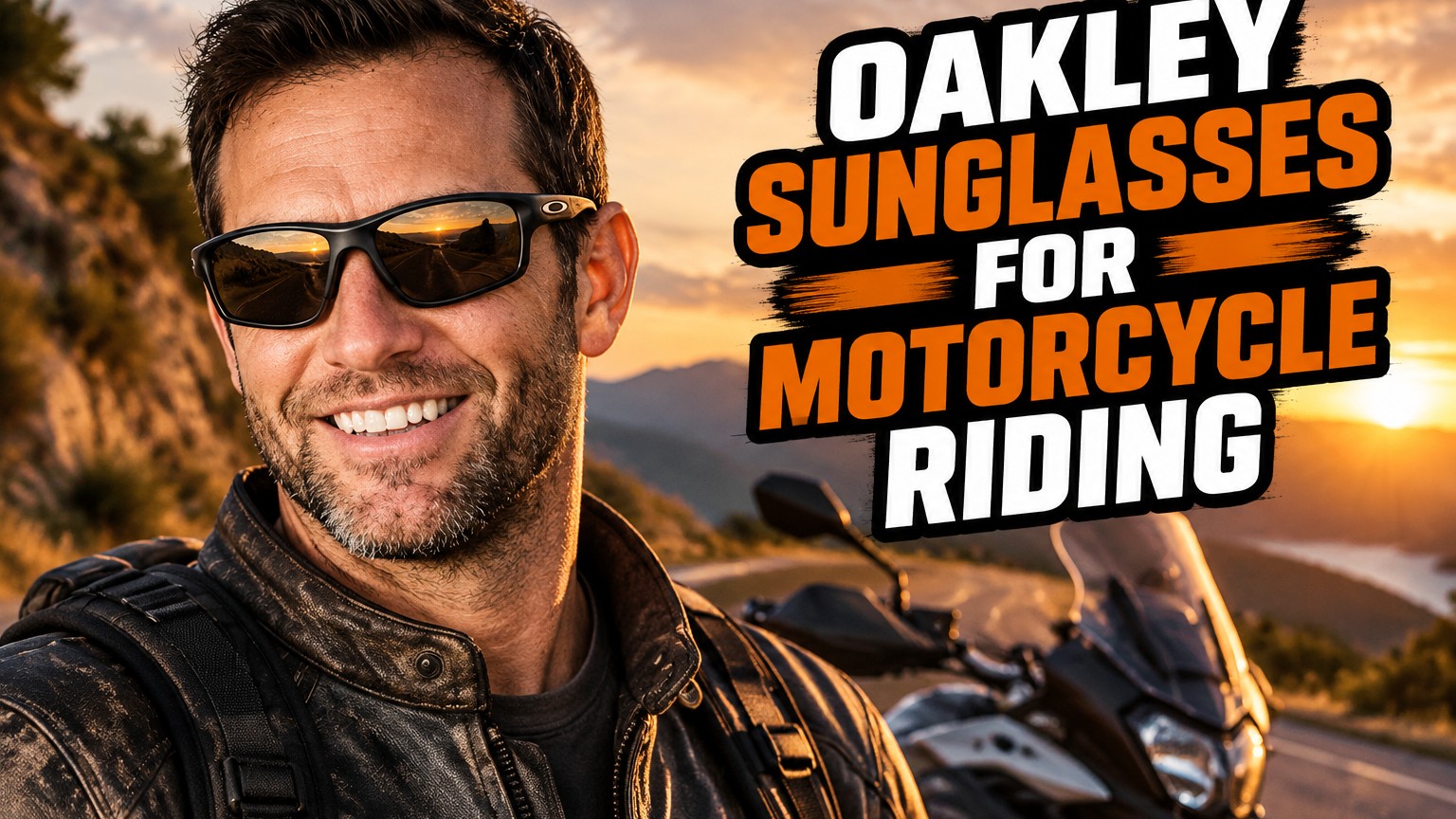
I’ve been riding motorcycles for over fifteen years, and I’ve gone through more sunglasses than I care to admit. Most brands promise the world but fall apart after a few months of highway winds, bug strikes, and the occasional drop on asphalt.
- Oakley Radar EV Path is my top pick for aggressive sport riding with unbeatable wind protection and peripheral coverage
- Flak 2.0 XL offers the best balance of comfort, fit under helmets, and all-day wearability for touring riders
- All models feature impact-resistant Plutonite lenses that meet ANSI Z87.1 standards for high-velocity impact protection
- Prizm lens technology significantly improves contrast and depth perception compared to standard tinted lenses
- Proper temple fit is crucial for helmet compatibility—thin, flexible arms prevent pressure points during long rides
Oakley changed that equation for me. Their sunglasses actually survive the abuse I put them through on my daily commute and weekend canyon runs. I’m not saying they’re indestructible, but they’re the only brand I trust when I’m carving through mountain roads at 80 mph.
After testing nearly every Oakley model over the past few years across sport bikes, adventure bikes, and cruisers, I’ve narrowed down the seven absolute best options for motorcycle riding. These aren’t just sunglasses that look good on a bike—they perform where it matters.
1. Oakley Radar EV Path — Best Overall for Sport Riding
The Radar EV Path has been my go-to for sport riding for three years now, and I genuinely don’t see myself switching. These sunglasses were designed with cycling in mind, but that translates perfectly to motorcycle use—especially if you ride anything with an aggressive seating position.
The extended vertical lens design gives me unmatched peripheral vision when I’m tucked behind the windscreen. I can see everything from my mirrors to the road ahead without moving my head, which matters when you’re threading through traffic or setting up for a corner.
What really sets the Radar EV Path apart is the wind protection. The wraparound shield design creates a seal that blocks side winds almost entirely. I’ve had these on at 120+ mph with zero buffeting or tearing up, which is more than I can say for most sunglasses.
Lens Technology and Clarity
I run mine with Prizm Road lenses, and the difference in contrast is immediately noticeable. Road surfaces, oil patches, and debris stand out clearly, which has legitimately helped me avoid hazards I might have missed with standard grey lenses.
The optical clarity is razor-sharp across the entire lens. Even at the extreme edges of my peripheral vision, there’s zero distortion. That’s critical when you’re making split-second decisions in traffic.
Helmet Compatibility
The temples are thin and flexible enough to work under any helmet I own—Shoei, Arai, AGV, you name it. They don’t create pressure points even on 4-hour rides, which was a problem with bulkier frames I’ve tried.
The nose pads are adjustable, so I can get the perfect fit that keeps them stable without sliding down when I sweat. That adjustability also helps if you wear best glasses frames for motorcycle helmets and need to dial in the exact positioning.
2. Oakley Flak 2.0 XL — Best All-Around for Touring and Daily Riding
If I could only own one pair of riding sunglasses, it would be the Flak 2.0 XL. They’re not as specialized as the Radar EV Path, but they’re more versatile and comfortable for the 90% of riding that isn’t balls-out sport riding.
I wear these on my adventure bike and cruiser because they strike the perfect balance between coverage, comfort, and that classic sunglass look. They don’t scream “athlete” like some Oakley models, so I can walk into a gas station without looking like I just finished a triathlon.
The XL designation means extended lens coverage compared to the standard Flak 2.0. That extra real estate makes a meaningful difference in blocking sun from odd angles, especially during sunrise and sunset rides when the sun is low on the horizon.
All-Day Comfort
These are the most comfortable Oakleys I own, period. The frame weight is barely noticeable, and the O Matter frame material has just enough flex to conform to my face without feeling flimsy.
I’ve done 8-hour days in the saddle wearing these, and I forget they’re on my face. No hotspots, no pressure buildup, no temple pain—just solid, consistent comfort mile after mile.
Interchangeable Lens System
The Flak 2.0 XL uses Oakley’s Switchlock lens system, which lets me swap lenses in about 10 seconds. I keep Prizm Road lenses for bright conditions and clear lenses for night riding or overcast days.
That flexibility is clutch when weather changes mid-ride or when I’m heading out before sunrise. If you’re looking for similar versatility in goggle form, check out the best motorcycle goggles for night riding for dedicated low-light options.
3. Oakley Gascan — Best for Cruiser Riders and Classic Style
The Gascan is old-school Oakley at its finest. They’ve been making this model for years, and it’s still my first choice when I’m on my cruiser. The rectangular lens shape just looks right on a Harley or Indian in a way that sporty shields don’t.
Don’t mistake classic styling for outdated performance, though. The Gascan delivers the same impact protection and optical quality as Oakley’s modern models, just in a more traditional package.
I appreciate the full coverage without the wrap that comes with sport-oriented designs. They sit closer to my face than aviators but don’t have that aggressive curve that makes you look like you’re about to hop on a road bike.
Durability and Build Quality
My Gascans have survived more drops than any other sunglasses I own. The beefy O Matter frame absorbs impact like a champ, and the Plutonite lenses are genuinely tough—I’ve had rocks ping off them at highway speeds without leaving a mark.
The hinges are still tight after three years of daily abuse. No wobble, no looseness, just solid construction that inspires confidence when you’re investing $150+ in eyewear.
Fit with Half Helmets and Open-Face Helmets
If you run a half helmet or 3/4 helmet, the Gascan’s temple design works perfectly. They slide on and off easily without catching on the helmet edge, which matters when you’re making quick stops.
For riders who prefer goggles with half helmets, I’d suggest looking at best motorcycle goggles for half helmet options, but honestly, I find the Gascan more practical for everyday riding where you’re on and off the bike frequently.
4. Oakley Holbrook — Best Budget Option Without Sacrificing Quality
The Holbrook consistently sells for $50-70 less than premium Oakley models, making it my top recommendation for riders who want genuine Oakley quality without dropping $200. I bought these as a “backup pair” and ended up wearing them more than I expected.
The classic square lens shape is timeless and works with pretty much any bike style. I’ve worn these on everything from sport bikes to adventure rigs without feeling like they clash with the bike’s aesthetic.
Performance-wise, you’re getting the same Plutonite lens material and UV protection as expensive models. The frames are slightly heavier than premium O Matter frames, but not enough to matter on a typical ride.
Value Proposition
For around $130, you’re getting sunglasses that match 90% of what premium Oakleys deliver. The main compromise is style options and weight—the actual optical performance and protection are virtually identical.
I keep these in my tank bag as my spare pair. If I forget my main sunglasses or if weather changes unexpectedly, I’ve always got the Holbrooks ready to go.
Polarized vs. Non-Polarized
The Holbrook comes in both polarized and non-polarized versions. I run non-polarized because I’ve found polarization can sometimes make LCD instrument displays harder to read at certain angles.
If your bike has analog gauges, polarized lenses are fantastic for cutting glare off wet roads and windshields. Just test them with your specific instrument cluster before committing.
5. Oakley Half Jacket 2.0 XL — Best Low-Profile Option for Full-Face Helmets
The Half Jacket 2.0 XL has the thinnest temples of any Oakley I’ve tested, which makes them my automatic choice when I’m wearing a tight-fitting full-face helmet. Some helmets create painful pressure points with standard sunglasses—the Half Jacket eliminates that problem entirely.
Despite the minimalist design, these don’t feel fragile. The frame is surprisingly rigid, and the lens stays locked in place even when I’m bouncing down rough roads on my adventure bike.
The semi-rimless design reduces weight without sacrificing coverage. I get excellent protection from sun and wind without the bulk that comes with fully-wrapped frames.
Ventilation and Anti-Fog Performance
The open bottom design allows more airflow than fully enclosed frames. I rarely experience fogging with these, even on cold morning rides when condensation is an issue with other sunglasses.
That said, no sunglasses are completely fog-proof in extreme conditions. If you’re dealing with heavy rain or very cold weather, best motorcycle goggles for riding in the rain with proper ventilation and anti-fog coatings are usually a better call.
Lens Options
I run Prizm Grey lenses in my Half Jacket 2.0 XL because they offer neutral color rendering with excellent brightness reduction. They work well in everything from overcast conditions to blazing sun without making me feel like I need to swap lenses mid-ride.
The Switchlock lens system makes swapping quick and tool-free. I appreciate having that option even though I rarely use it—it’s nice knowing I can adapt to changing conditions without packing multiple pairs of sunglasses.
6. Oakley Targetline — Best Retro Style with Modern Performance
The Targetline combines vintage aesthetics with current Oakley technology in a way that actually works. I bought these specifically for my retro-styled Triumph, and they complement the bike’s classic look perfectly while delivering modern performance.
The round lens shape is a departure from Oakley’s typical sporty designs, but it fits the heritage motorcycle scene. These look at home on café racers, scramblers, and classic cruisers without the costume-y vibe some retro gear gives off.
What surprises people is how well these perform despite the classic styling. The optical quality matches any modern Oakley, and the wind protection is better than you’d expect from a less-wrapped design.
Build and Materials
The Targetline uses Oakley’s standard O Matter frame with metal accents that give it a premium feel. The build quality is excellent—mine have held up to two years of regular riding without any looseness or degradation.
The nose pads are adjustable metal, which I prefer over molded plastic for fine-tuning fit. I can dial in the exact position to prevent sliding without creating pressure points.
Versatility Beyond Riding
These are the Oakleys I wear most often when I’m not riding. The style works with casual clothes in a way that sport-specific designs don’t. I get full Oakley protection and quality in a package that doesn’t advertise “ATHLETE” to everyone I meet.
For cruiser riders specifically, these and the Gascan are my top two style recommendations. Also consider checking out best motorcycle goggles for cruiser if you want that classic goggle look instead.
7. Oakley Turbine — Best for Large Faces and Maximum Coverage
The Turbine is Oakley’s answer to riders like me who have larger heads and faces. Standard sunglasses often leave gaps at the temples or don’t wrap far enough to block peripheral light—the Turbine solves both problems.
These are noticeably bigger than other Oakleys, but not in a cartoonish way. The proportions work if you’ve got the face size to match them. On smaller faces, they can look oversized, so definitely try before you buy if possible.
The coverage is exceptional. I get complete wind and sun protection from all angles, which matters when I’m riding into low sun or dealing with crosswinds on open highways.
Impact Protection
The Turbine’s thick frames and large lenses provide outstanding impact protection. I’ve had these take direct bug hits at 90 mph without even flexing. The lens surface area is substantial, so there’s more protection for your eyes and surrounding areas.
Like all Oakley Plutonite lenses, these meet ANSI Z87.1 standards for high-velocity impact protection. That’s the same rating as industrial safety glasses, which gives me serious confidence when debris is flying.
Weight Considerations
The Turbine is heavier than smaller Oakley models—that’s just physics with the larger frame and lens. However, the weight is well-distributed, so I don’t notice it during normal riding.
On 6+ hour days, I sometimes feel a bit more fatigue than with lighter frames like the Flak 2.0 XL. It’s not a dealbreaker, but it’s worth considering if you’re sensitive to weight or do a lot of all-day touring.
What Makes Oakley Sunglasses Ideal for Motorcycle Riding
After years of testing different brands, I keep coming back to Oakley for specific reasons that matter when you’re on a bike. It’s not just marketing—there are tangible performance differences that become obvious once you’re dealing with highway speeds and road debris.
Impact Resistance That Actually Works
Oakley’s Plutonite lens material is legitimately tough. I’ve had rocks, bugs, and even a small branch hit my lenses at speed without damage. Regular plastic lenses would have cracked or scratched, but my Oakleys just needed a wipe-down.
The ANSI Z87.1 certification isn’t just a number—it means these lenses can handle high-velocity impacts. That matters when you’re riding at 70 mph and a pebble kicks up from the car ahead.
Optical Quality That Reduces Fatigue
Cheap sunglasses cause eye strain because the optical quality is poor. Oakley’s High Definition Optics (HDO) technology eliminates distortion across the entire lens surface, so my eyes don’t have to work harder to compensate for imperfections.
On long rides, that difference is massive. I arrive less fatigued and more alert when I’m wearing Oakleys versus cheaper alternatives. It’s subtle initially, but it compounds over hours in the saddle.
UV Protection That’s Actually Complete
Every Oakley lens blocks 100% of UVA, UVB, and UVC rays plus harmful blue light up to 400nm. That’s critical for motorcycle riding because you’re exposed to direct sun for extended periods.
I’ve experienced the difference firsthand—before I switched to quality sunglasses, I’d get headaches and eye strain on bright days. Proper UV protection eliminated those issues almost entirely.
Secure Fit at Speed
Oakley’s frame designs are engineered to stay put. I’ve never had a pair fly off at speed, even on naked bikes with zero wind protection. The combination of proper weight distribution, temple grip, and nose pad design keeps them locked in place.
That security matters for safety. The last thing you want is sunglasses bouncing around inside your helmet or flying off into traffic at 80 mph.
Choosing the Right Lens Color for Riding
Lens color matters more for motorcycle riding than most people realize. Different tints enhance contrast in specific conditions, and choosing wrong can actually reduce visibility rather than improve it.
Prizm Road (My General Recommendation)
Prizm Road lenses are engineered to enhance road details—pavement texture, oil spots, debris, and lane markings. They work in bright to moderately overcast conditions, which covers about 80% of my riding.
The contrast enhancement is noticeable without distorting colors unnaturally. Traffic lights, brake lights, and turn signals still read correctly, which is critical for safety.
Prizm Grey for Neutral Color
If you want maximum brightness reduction without color enhancement, Prizm Grey is the move. These provide neutral color rendering while cutting glare and brightness in very sunny conditions.
I use grey lenses when I’m riding in areas with heavy traffic where I need to read signals and signs accurately without any color shift that might cause confusion.
Prizm Low Light for Dawn/Dusk
Prizm Low Light lenses are fantastic for early morning or evening rides when light levels are dropping but it’s not dark enough for clear lenses. They enhance contrast in flat light conditions.
I keep a pair of these specifically for my commute rides during winter when I’m leaving before sunrise and returning after sunset.
Final Thoughts on Oakley Sunglasses for Riding
After testing dozens of models across thousands of miles, my everyday carry depends on the bike and ride type. For aggressive sport riding, I grab the Radar EV Path every time. For touring and commuting, the Flak 2.0 XL lives in my jacket pocket. On my cruiser, it’s either the Gascan or Targetline depending on my mood.
The common thread is that all these Oakleys deliver where it counts—impact protection, optical clarity, secure fit, and durability. They’re expensive compared to gas station sunglasses, but they’re also the only sunglasses I’ve found that genuinely last and perform at motorcycle speeds.
If you’re serious about riding, invest in proper eye protection. Your eyes are irreplaceable, and quality sunglasses are cheap insurance compared to the alternatives. Any of the seven models I’ve covered will serve you well—just match the style and features to your specific riding needs and bike type.
Frequently Asked Questions
Are Oakley sunglasses good for motorcycle riding?
Yes, Oakley sunglasses are excellent for motorcycle riding. I’ve found their high-impact Plutonite lenses offer 100% UV protection and superior optical clarity, while their secure frame designs stay put at highway speeds.
What Oakley lens color is best for riding motorcycles?
For all-around motorcycle riding, I recommend Prizm Road or Prizm Grey lenses. They enhance contrast without color distortion and work well in variable light conditions I encounter on long rides.
Do Oakley sunglasses fog up while riding?
In my experience, proper-fitting Oakley sunglasses with adequate ventilation rarely fog up. Models like the Flak 2.0 XL and Radar EV Path have enough airflow to prevent fogging, even under a helmet.
Can you wear Oakley sunglasses under a motorcycle helmet?
Absolutely. I wear Oakley sunglasses under my helmet on every ride. Look for low-profile models with thin, flexible temples like the Half Jacket 2.0 XL that won’t create pressure points against your head.

Related Articles
7 Best Eyewear from Oakley SI for Motorcycle Riding
I've tested Oakley SI's tactical eyewear for riding. Here are the 7 best models that combine ballistic protection, clarity, and…
Jake Miller
15 min read
7 Best Women’s Sunglasses for Motorcycle Riding in 2026
Discover the best women's sunglasses for motorcycle riding with our expert guide. From wind protection to UV coverage, find the…
Jake Miller
14 min read
7 Best Sunglasses for Motorcycle Riding I’ve Tested on the Road
I've tested dozens of motorcycle sunglasses in real riding conditions. Here are the 7 best pairs that stay put at…
Jake Miller
14 min read