
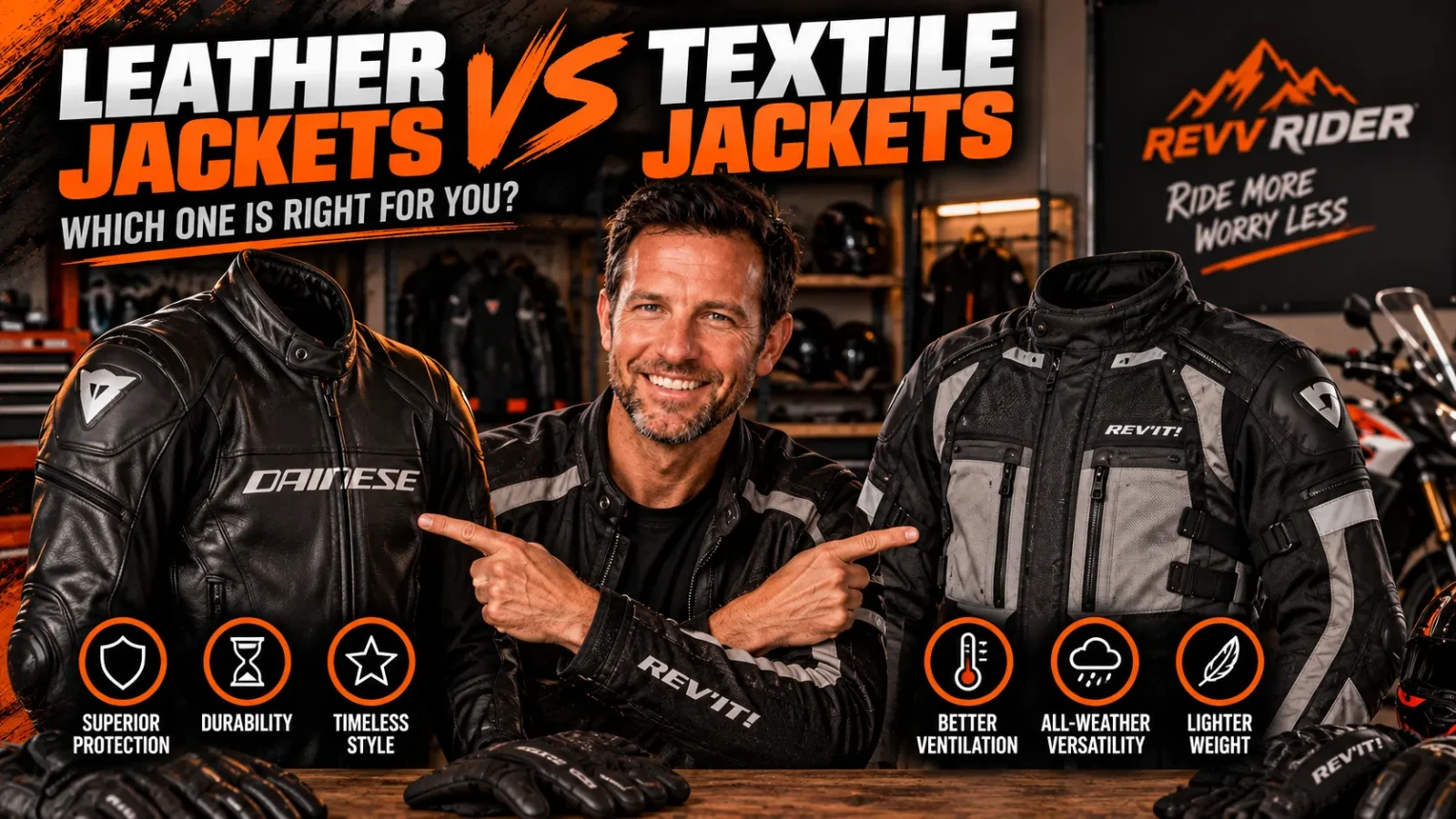
Standing in front of a wall of motorcycle jackets can feel a lot like standing at a fork in the road. On one side, you’ve got the timeless, rugged appeal of leather. On the other, the versatile, weather-ready world of textile.
Both promise to keep you protected and looking sharp, but they get there in very different ways. If you haven’t already, it’s worth starting with our Ultimate Guide to Motorcycle Jackets for a broader overview of gear essentials before diving into this specific showdown.
This isn’t a case of one being universally “better” than the other — it’s about matching the jacket to your riding style, climate, budget, and personal taste. Let’s break it all down so you can make a confident, informed choice.
The Case for Leather: Timeless Protection with an Edge
Leather has been the go-to material for motorcyclists since the early 20th century, and there’s a good reason it hasn’t gone anywhere. It’s tough, abrasion-resistant, and only gets better looking with age.
Why Riders Love Leather
- Superior abrasion resistance: High-quality full-grain leather can withstand sliding on pavement far longer than most synthetic fabrics, buying you crucial milliseconds in a slide.
- Classic style: Whether you ride a cruiser, cafe racer, or vintage bike, nothing matches the rugged, timeless aesthetic of leather. Check out these best looking jackets for a vintage motorcycle if style is a top priority.
- Durability: A well-maintained leather jacket can last decades. It molds to your body over time, becoming almost a second skin.
The Trade-Offs of Leather
Leather isn’t perfect. It’s heavier, doesn’t breathe as well in hot weather, and requires a genuine break-in period before it feels comfortable. Fortunately, our guide on how to break in a new leather motorcycle jacket can help speed up that process. Leather also demands more upkeep — you’ll want to bookmark our tips on how to clean a leather jacket to keep it supple and crack-free for years to come.
If you’re drawn to that classic biker look but want something a bit more budget-friendly or animal-free, faux leather is a great alternative — check out these faux leather biker jackets for women or browse best red leather motorcycle jackets for a bold statement piece.
The Case for Textile: Versatility Meets Modern Tech
Textile jackets, typically made from materials like Cordura, nylon, or polyester blends, have exploded in popularity thanks to advances in fabric technology. They’re no longer the “budget option” — many high-end touring and adventure jackets are textile-only, and for good reason.
Why Textile Is Winning Riders Over
- All-weather adaptability: Many textile jackets feature removable liners, allowing you to adjust for temperature swings. Look into the best motorcycle jackets for all weather if you ride year-round.
- Waterproofing: Many textile jackets come with built-in waterproof membranes — something leather simply can’t match without heavy treatment. See our picks for the best waterproof jackets for motorcycle riders.
- Lightweight comfort: Textile is generally lighter and more breathable, especially mesh variants designed for hot climates.
- Lower maintenance: No conditioning or special cleaning products required — most textile jackets are machine washable or wipe-clean.
Where Textile Falls Short
While modern textiles have closed the gap significantly, they generally don’t offer quite the same raw abrasion resistance as premium leather in a low-speed slide, unless reinforced with advanced fibers like Kevlar or Cordura. They also tend to lack the same “worn-in” character that leather develops over the years.
Safety First: How Do They Really Compare?
This is where a lot of riders get nervous, and rightfully so — safety should never be an afterthought. Both leather and quality textile jackets can offer excellent protection if they’re built and rated correctly.
Understanding Certifications
Regardless of material, always check the armor and certification level. Our breakdown of CE rating explained covers exactly what those little tags on your jacket mean, and our deep dive into motorcycle jacket safety ratings explained will help you understand impact protection zones, back protectors, and abrasion testing standards.
Bottom line: a CE-rated textile jacket with quality armor can outperform a cheap, unrated leather jacket any day. Material alone doesn’t guarantee safety — construction and certification matter just as much.
Getting the Right Fit
No matter which material you choose, fit is everything. A jacket that’s too loose won’t keep armor in place during a fall, and one that’s too tight will restrict movement and circulation. Before you buy, run through our motorcycle jacket fitting guide to nail down your ideal size.
Fit Considerations by Body Type
Not everyone fits the “standard” mold, and that’s okay — there’s gear designed for you. If you’re tall, check out options built for the best motorcycle jackets for tall riders or the best motorcycle jacket for tall skinny riders.
Riders with a bigger build should explore the best motorcycle jacket for fat guys or the best motorcycle jacket for big guys. And for women needing a proper chest fit, don’t miss our guide to the best motorcycle jacket for large boobs.
Matching Your Jacket to Your Riding Style and Climate
Here’s where the leather-vs-textile decision often gets settled once and for all: where and how you ride. Our comprehensive guide on how to choose the right motorcycle jacket for your riding style is a fantastic starting point.
Hot and Humid Climates
If you’re riding somewhere sweltering, textile mesh is usually the smarter pick. Explore the best mesh motorcycle jackets for men, or if you’re really battling triple-digit heat, our list of the best motorcycle jacket for 100 degrees has you covered.
Riders in the Sunshine State should also check the best motorcycle jacket for Florida and those in the Lone Star State will appreciate our picks for the best motorcycle jacket for Texas.
Cool, Wet, or Unpredictable Weather
Leather can actually shine here, offering solid wind resistance, but many riders prefer the adjustability of textile. If you’re dealing with drizzle and chill, look into the best motorcycle jacket for cool weather, or if you live somewhere notoriously damp, our guide to the best jackets for Seattle motorcycle riders is essential reading.
Californians juggling coastal fog and inland heat should browse the best motorcycle jacket for California, and for those transitional autumn rides, check the best motorcycle jacket for fall.
Touring and Adventure Riding
For long-haul comfort, textile dominates thanks to its versatility and weatherproofing. Take a look at the best motorcycle jacket for touring 2026, the best motorcycle touring jackets for 2026, or premium options like the best Klim jacket for motorcycle touring.
Adventure riders should also explore the best value adventure jacket for motorcycle riders and the best adventure motorcycle jacket for the money, plus dual-sport-specific picks like the best dual sport motorcycle jacket for the money.
Cafe Racers, Naked Bikes, and Classic Rides
If style is your priority and you’re rocking a naked bike or cafe racer, leather often just feels right. Browse the best motorcycle jacket for naked bike, the best cafe motorcycle jacket for the money, or the best motorcycle jackets for cafe racer. Bomber-style fans should also check the best bomber jackets for motorcycle riders.
Budget and Value: What Will It Cost You?
Generally speaking, entry-level textile jackets tend to be more affordable than comparable leather ones, though premium leather and premium textile can both get pricey fast.
Shopping on a Budget
If you’re watching your wallet, there’s plenty of great gear out there. Check the best motorcycle jackets under $500, or if you’re just starting out, the best motorcycle jacket for under $200. Mesh shoppers can even find gear in the best mesh motorcycle jacket for $100 and best mesh motorcycle jacket for $50 ranges.
For overall value hunters, our best bang for buck motorcycle jacket roundup and best place for used motorcycle jackets guide are worth a look, along with our thoughts on the best online store for motorcycle jackets.
Special Considerations Worth Noting
New Riders
If you’re just getting into motorcycling, don’t overthink it — focus on protection and fit first. Our list of the best motorcycle jackets for beginners covers both leather and textile options, and if you’re shopping for a younger rider, check the best motorcycle jacket for teenager or best motorcycle jacket for kids.
Layering and Extra Protection
Whichever material you land on, layering can extend its usability across seasons. Look into the best windproof under layers for perforated motorcycle jacket, the best windproof hoody for motorcycle jacket, or add real cold-weather insurance with the best heated jacket for motorcycle riders.
For maximum impact protection regardless of shell material, some riders even add an airbag system — see the best air bag jacket for motorcycle.
Niche Use Cases
Commuters and visibility-conscious riders should check the best hi viz motorcycle jacket for touring, cruiser riders may prefer the best mesh motorcycle jacket for cruisers, and those wanting something dual-purpose might look at the best Barbour jacket for motorcycle or a rugged best construction jacket for motorcycle.
Thrill-seekers doing tricks should check the best jacket for stunt motorcycle, while classic bike lovers should browse best brands for classic motorcycle jacket. If breathability is your top concern, don’t skip the best perforated jacket for motorcycle or the classic best wind jacket for motorcycle.
Making Your Final Decision
So, leather or textile? Here’s the honest truth: there’s no wrong answer, only the right one for your riding life. If you crave that rugged, classic look and ride mostly in moderate climates on shorter trips, leather is hard to beat.
If you’re commuting daily, touring long distances, or riding through unpredictable weather, textile’s versatility and weather resistance will likely serve you better.
Many seasoned riders actually own both — leather for weekend cruises and textile for all-weather commuting or touring. Whatever you choose, prioritize proper certification, a snug and correct fit, and quality armor above all else. Material is important, but it’s just one piece of a much bigger safety puzzle.
FAQs
Is leather safer than textile for motorcycle riding?
Not necessarily. While premium leather offers excellent natural abrasion resistance, modern textile jackets with reinforced fibers and proper CE-rated armor can offer comparable or even superior protection. Safety depends more on certification and construction than material alone.
Which lasts longer, a leather or textile jacket?
With proper care, leather jackets typically last significantly longer than textile jackets, often for decades. Textile jackets are durable but tend to wear out faster, especially at seams and zippers, and may need waterproofing treatments renewed over time.
Can I wear a textile jacket in cold weather as well as leather?
Yes, many textile jackets are actually better suited for cold and wet weather thanks to removable thermal liners and waterproof membranes. Leather provides good wind resistance but generally requires additional base layers for true cold-weather comfort.
Do I need to break in a textile jacket like a leather one?
No, textile jackets are generally comfortable right out of the box since the fabric is already flexible. Leather jackets, on the other hand, often require a break-in period before they mold comfortably to your body and movements.

Related Articles

8 Best Motorcycle Jacket Materials (And the Real Jackets That Use Them Best)
I break down the best motorcycle riding materials for jackets—leather, textile, mesh, and laminate—with real jacket picks I've tested for…
 Jake Miller
11 min read
Jake Miller
11 min read

9 Best Paints for Nylon Motorcycle Riding Jackets That Actually Hold Up on the Road
I tested 9 paints for nylon motorcycle jackets so you don't have to guess. Here's what actually sticks, flexes, and…
Jake Miller
12 min read

9 Best Female Motorcycle Jackets That Actually Fit Right in 2026
I've tested dozens of women's motorcycle jackets over the years. Here are my 9 favorites for fit, protection, and style—from…
Jake Miller
11 min read