
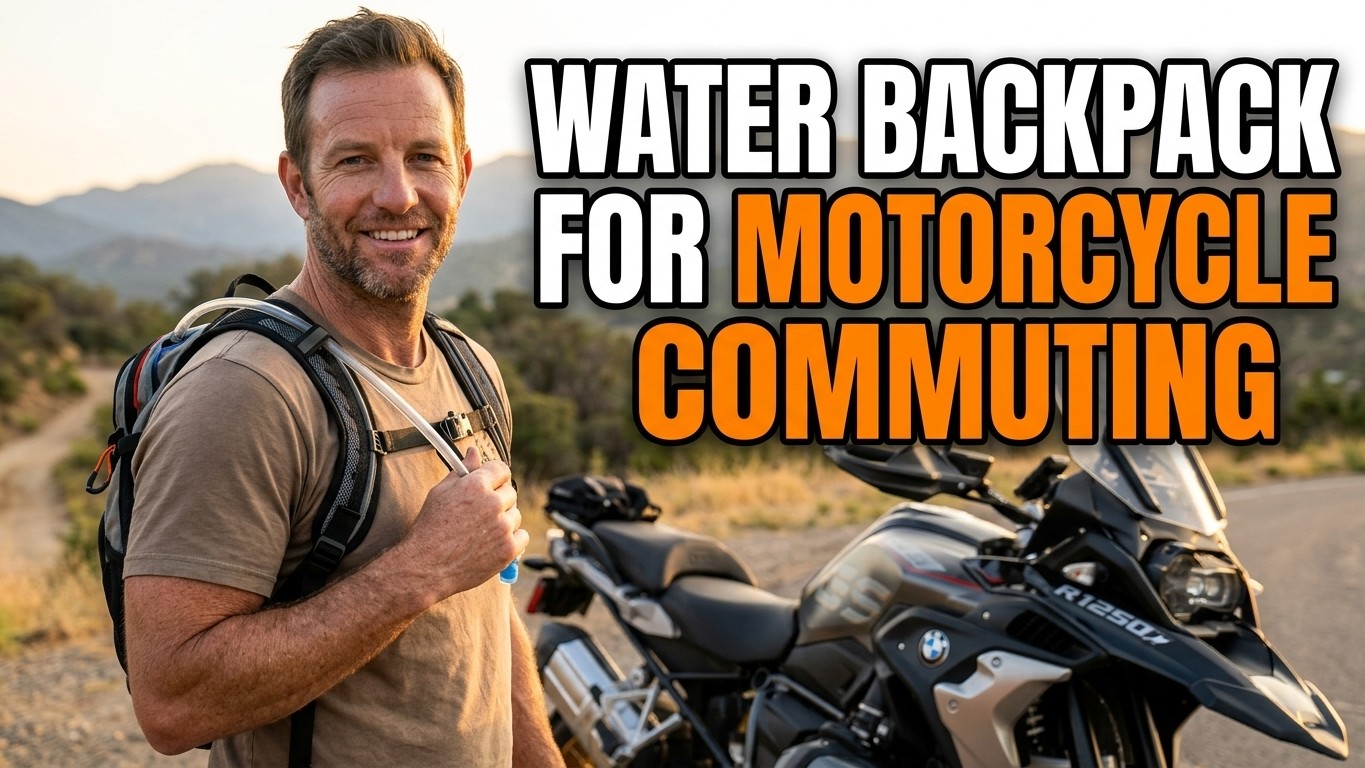
I’ve been commuting by motorcycle for over six years, and staying hydrated used to mean awkward water bottle stops or arriving at work parched. That changed when I discovered hydration backpacks designed specifically for riding.
After testing dozens of water backpacks during my daily 45-minute commute through varying weather and traffic conditions, I’ve identified the models that actually work for motorcycle riders. These aren’t just hiking packs—they’re designed to stay secure at highway speeds, fit comfortably under or over riding jackets, and keep water accessible without taking your hands off the bars.
- The Kriega Hydro-3 offers the best motorcycle-specific design with a 3L bladder and rock-solid stability at speed
- For budget commuters, the CamelBak Rogue delivers reliable hydration for under $60
- Slim packs (2L or less) fit under jackets; larger packs work better worn over gear
- Chest and waist straps are non-negotiable for preventing pack shift during aggressive riding
- All tested packs accommodate additional gear like laptops or tools for multi-purpose commuting
1. Kriega Hydro-3 — Best Overall Water Backpack for Motorcycle Commuting
The Kriega Hydro-3 is purpose-built for motorcyclists, and it shows in every detail. I’ve used mine for 18 months of daily commuting, and it’s the only hydration pack I’ve tested that truly disappears once you’re riding.
Kriega’s Quadloc harness system distributes weight across your chest and waist, eliminating the bounce and sway that plague standard hydration packs at highway speeds. The 3-liter reservoir provides enough water for my entire workday without refilling, even during summer heat when I’m sweating inside my mesh jacket.
The pack sits high on your back and remains stable even when you’re tucked into a sport position or filtering through traffic. The magnetic bite valve connection is genius—it snaps securely to your chest strap but releases instantly when you need to drink, then stays put instead of flapping around like traditional hose clips.
Key Features I Value
The Hydro-3 uses waterproof 420D nylon that’s survived countless rain commutes without leaking. Internal organization includes a dedicated pocket that perfectly fits my work credentials and phone, keeping them separate from the bladder compartment.
At around $140, it’s expensive compared to hiking packs, but the motorcycle-specific engineering justifies the cost. If you’re serious about commuting and want a pack that handles like part of your gear rather than cargo strapped to your back, this is my top recommendation.
2. CamelBak Rogue — Best Budget Water Backpack
The CamelBak Rogue proves you don’t need to spend $150 for solid hydration on your commute. I tested this pack for three months alongside the Kriega, and while it lacks motorcycle-specific features, it performs admirably for riders on a budget.
With a 2.5-liter reservoir and minimal profile, the Rogue fits comfortably under most motorcycle jackets. This makes it ideal for riders who prefer the aerodynamics and security of wearing their pack beneath their outer layer.
The compression straps keep the pack tight against your body, reducing movement at speed. I noticed some slight bounce during aggressive cornering compared to the Kriega, but for straight highway commuting or relaxed city riding, the Rogue stays put.
Real-World Performance
CamelBak’s Big Bite valve delivers excellent flow rate—important when you’re stopped at a light and want a quick drink before the green. The pack includes a small stash pocket that holds my wallet, keys, and a basic tool kit.
At $55-65 depending on sales, the Rogue offers exceptional value. The build quality isn’t as bomber as Kriega’s waterproof construction, but it’s held up fine through normal commuting conditions. Just avoid expecting it to survive a serious crash or extreme weather without some wear.
3. Osprey Raptor 10 — Best for Multi-Purpose Commuting
When your commute doubles as your daily carry solution, the Osprey Raptor 10 delivers hydration plus serious cargo capacity. I use this pack when I need to transport more than just water—it’s my go-to when carrying my laptop for motorcycle adventures that extend beyond the office.
The 10-liter main compartment swallows a 15-inch laptop, change of clothes, lunch, and tools while the 2.5L reservoir keeps me hydrated. Osprey’s AirScape backpanel provides impressive ventilation, reducing the sweat-soaked back syndrome common with larger packs.
The magnetic sternum strap keeps the drink hose exactly where you need it, and the pack’s contoured shape conforms to your back better than most rectangular hydration packs. At speed, the Raptor 10 stays remarkably stable thanks to its load-lifter straps and hip belt.
Storage That Actually Works
Internal organization includes a dedicated tool roll, scratch-free media pocket, and helmet carry system (useful if you need to lock your helmet to your bike). The external attachment points accommodate a spare layer or rain jacket using compression straps.
I appreciate the pass-through cable port for running headphone or communication system wires cleanly. The Raptor 10 costs around $100-120, positioning it between budget and premium options while delivering features from both categories.
4. USWE Ranger 3 — Best for Sport Bike Commuters
Sport bike riders need hydration packs that work in aggressive riding positions, and the USWE Ranger 3 excels here. USWE’s No Dancing Monkey harness system locks the pack to your torso so effectively that I genuinely forget I’m wearing it during spirited rides.
The pack’s slim 3-liter profile sits high between your shoulder blades—perfect for riders who tuck regularly. Unlike bulkier packs that force you upright or create awkward pressure points when leaned forward, the Ranger 3 contours naturally to your back in any position.
USWE’s proprietary suspension system distributes weight through a four-point harness that prevents vertical bounce. This matters tremendously when you’re hard on the brakes or accelerating aggressively through traffic—the pack moves with you rather than against you.
Race-Proven Design
USWE originally designed this system for motocross and enduro racing, which explains its exceptional stability. The bounce-free design works brilliantly for street riding, especially if your commute includes aggressive canyon carving or track day preparation.
The Elite bladder features a wide opening for easy filling and cleaning, plus anti-bacterial treatment that keeps water fresh longer than basic reservoirs. At $165-180, the Ranger 3 sits at the premium end, but sport bike commuters will appreciate the race-derived engineering.
5. Gregory Nano 18 H2O — Best for Adventure Bike Commuters
Adventure bike commuters often carry more gear than sportbike riders, and the Gregory Nano 18 H2O balances hydration with impressive cargo capacity. I tested this pack during a month of commuting on my V-Strom, often carrying items for longer motorcycle trips beyond just my daily office run.
The 18-liter main compartment provides space for rain gear, tools, a first-aid kit, and lunch, while the 3-liter reservoir handles hydration. Gregory’s VaporSpan suspension creates a breathable channel down your spine, reducing the greenhouse effect that larger packs typically create.
The pack’s vertical design works particularly well with adventure bike ergonomics—the upright riding position naturally supports a taller pack profile. Compression straps cinch down the load when you’re not carrying maximum cargo, preventing empty space from creating instability.
Versatility for Mixed-Use Riders
I appreciate the helmet carry system that doubles as a general-purpose cargo net. The integrated rain cover deploys in seconds when weather turns, and it’s survived multiple downpours without allowing water intrusion.
For riders who sometimes need capacity for additional bags or tank bags on longer adventures, the Gregory Nano 18 provides flexibility without compromising hydration access. It runs $85-100, offering excellent value for multi-purpose commuter needs.
6. Source Tactical Razor 3L — Best for Weatherproof Commuting
My commute includes year-round riding through Pacific Northwest rain, and the Source Tactical Razor 3L handles wet conditions better than any other pack I’ve tested. The military-grade construction uses 1000D Cordura that shrugs off abrasion and weather alike.
Source’s Storm valve system prevents water contamination during heavy rain—a feature that sounds minor until you’ve tasted highway spray-contaminated water from a pack with inferior sealing. The valve’s one-way design ensures drinking water stays clean regardless of external conditions.
The low-profile 3-liter design creates minimal wind resistance, and the pack’s stiff construction prevents the sagging that occurs with softer packs when partially empty. This maintains consistent aerodynamics throughout your commute as you drink down the reservoir.
Built for Harsh Conditions
The tactical styling might not appeal to everyone, but the functional benefits are undeniable. YKK waterproof zippers keep your cargo dry, and the internal organization accommodates electronics in a padded sleeve that’s saved my phone during unexpected rainstorms.
Source’s Widepac reservoir features a 65mm opening—the largest I’ve tested—making ice additions and cleaning remarkably easy. At $130-145, the Razor 3L costs more than basic commuter packs but delivers unmatched durability for riders facing challenging weather conditions.
7. CamelBak M.U.L.E. — Best for Urban Commuters with Storage Needs
Urban commuters juggling groceries, gym clothes, and daily essentials need more than just hydration, and the CamelBak M.U.L.E. delivers practical storage alongside its 3-liter reservoir. I’ve used this pack for combined commute-errand runs where I’m stopping for groceries or hitting the gym after work.
The 9-liter cargo capacity strikes a sweet spot—enough room for a change of clothes and groceries without the bulk that makes lane-splitting difficult. External bungee cords secure overflow items like a jacket or helmet when you’re off the bike.
CamelBak’s Crux reservoir provides 20% more water per sip than earlier designs, meaning fewer interruptions to your ride. The magnetic tube trap keeps the bite valve accessible but secured against your chest strap, preventing the annoying tube flop that occurs with basic clip systems.
Urban-Focused Features
The M.U.L.E. includes a dedicated safety light attachment loop and reflective accents—valuable features for commuters riding during dawn or dusk hours. Internal organization features multiple pockets that keep small items from becoming a jumbled mess at the bottom of the main compartment.
I’ve found the pack particularly useful when my commute requires carrying items that don’t fit in standard motorcycle luggage. The ventilated back panel reduces sweat buildup during slow urban traffic, and the pack’s moderate $95-110 price point delivers strong value for riders needing versatile cargo capacity.
Choosing the Right Water Backpack for Your Commute
After testing these seven packs across different commuting scenarios, I’ve learned that the “best” choice depends heavily on your specific riding style and needs. Sport bike riders benefit from low-profile, bounce-free designs like the USWE Ranger 3, while adventure riders often prefer the extra cargo capacity of packs like the Gregory Nano 18.
Consider your typical commute distance when selecting reservoir size. My 45-minute ride requires 2-3 liters depending on season, but shorter commutes work fine with 1.5-2L capacity. Larger reservoirs add weight and bulk, so don’t oversize unnecessarily.
Fit and Stability Matter Most
The single most important factor I’ve identified is stability at speed. Packs that shift or bounce not only feel uncomfortable but create genuine safety concerns by affecting your balance and concentration. Prioritize models with chest straps, waist belts, and load stabilizers—these features distinguish motorcycle-appropriate packs from basic hiking bladders.
Test your pack’s fit before committing to daily use. The ideal fit keeps the pack high on your back, doesn’t interfere with helmet movement when looking over your shoulder, and remains stable when you move aggressively between upright and tucked positions.
Maintenance for Longevity
I’ve extended my packs’ lifespans significantly through proper maintenance. Rinse reservoirs after every few rides, and perform deep cleaning monthly with specialized bladder cleaning tablets. Store reservoirs partially inflated in the freezer between uses to prevent mold growth—this tip alone has kept my CamelBak Rogue fresh for three years.
Inspect bite valves and hose connections regularly for wear. These components fail first and are inexpensive to replace, preventing the need to buy an entirely new pack when a $10 part would solve the issue.
Final Thoughts on Hydration While Commuting
Integrating a water backpack into my daily commute routine has genuinely improved my riding experience. I arrive at work properly hydrated instead of parched, and I’ve eliminated the distraction of thirst during my ride.
The packs I’ve recommended represent the best balance of hydration capacity, stability, and additional features for motorcycle commuters. Whether you choose the premium Kriega Hydro-3 for its motorcycle-specific engineering or the budget-friendly CamelBak Rogue for basic hydration needs, any of these options will serve you well.
Remember that staying hydrated isn’t just about comfort—dehydration affects your reaction time and decision-making ability on the bike. A quality water backpack is a safety investment as much as a convenience upgrade for your commute.
Frequently Asked Questions
Can you wear a hydration pack under a motorcycle jacket?
Yes, slim hydration packs like the CamelBak Rogue fit comfortably under most motorcycle jackets. I recommend packs with 2L bladders or less for under-jacket use, as larger reservoirs create bulk.
How much water do I need for motorcycle commuting?
For commutes under 30 minutes, 1.5-2L is plenty. I carry 2.5-3L for longer commutes or summer rides when dehydration happens faster in full gear.
Are hydration backpacks safe for motorcycle riding?
Yes, when properly fitted. Choose packs with chest and waist straps to prevent shifting at speed. I always ensure my pack sits high on my back and doesn’t interfere with my helmet in a tuck position.
Do water backpacks work with e-pass tags on motorcycles?
Most hydration packs won’t block RFID signals if your tag is mounted properly on the bike. For details on tag placement with bags, check out our guide on whether an e-zpass tag can be read in a bag on a motorcycle.

Related Articles

7 Best Hydration Backpacks for Motorcycle Riding in 2026
Discover the best hydration backpacks for motorcycle riding. I've tested top models to help you stay hydrated on long rides…
 Jake Miller
15 min read
Jake Miller
15 min read

7 Best Motorcycle Tires for a New Bagger in 2026
Discover the top motorcycle tires for your new bagger in 2025. I've tested these models for grip, longevity, and touring…
Jake Miller
11 min read

7 Best Bagger Motorcycles for Beginners in 2026
Discover the best bagger motorcycles for beginners. I've tested and reviewed 7 top models that blend comfort, manageability, and touring…
Jake Miller
15 min read