
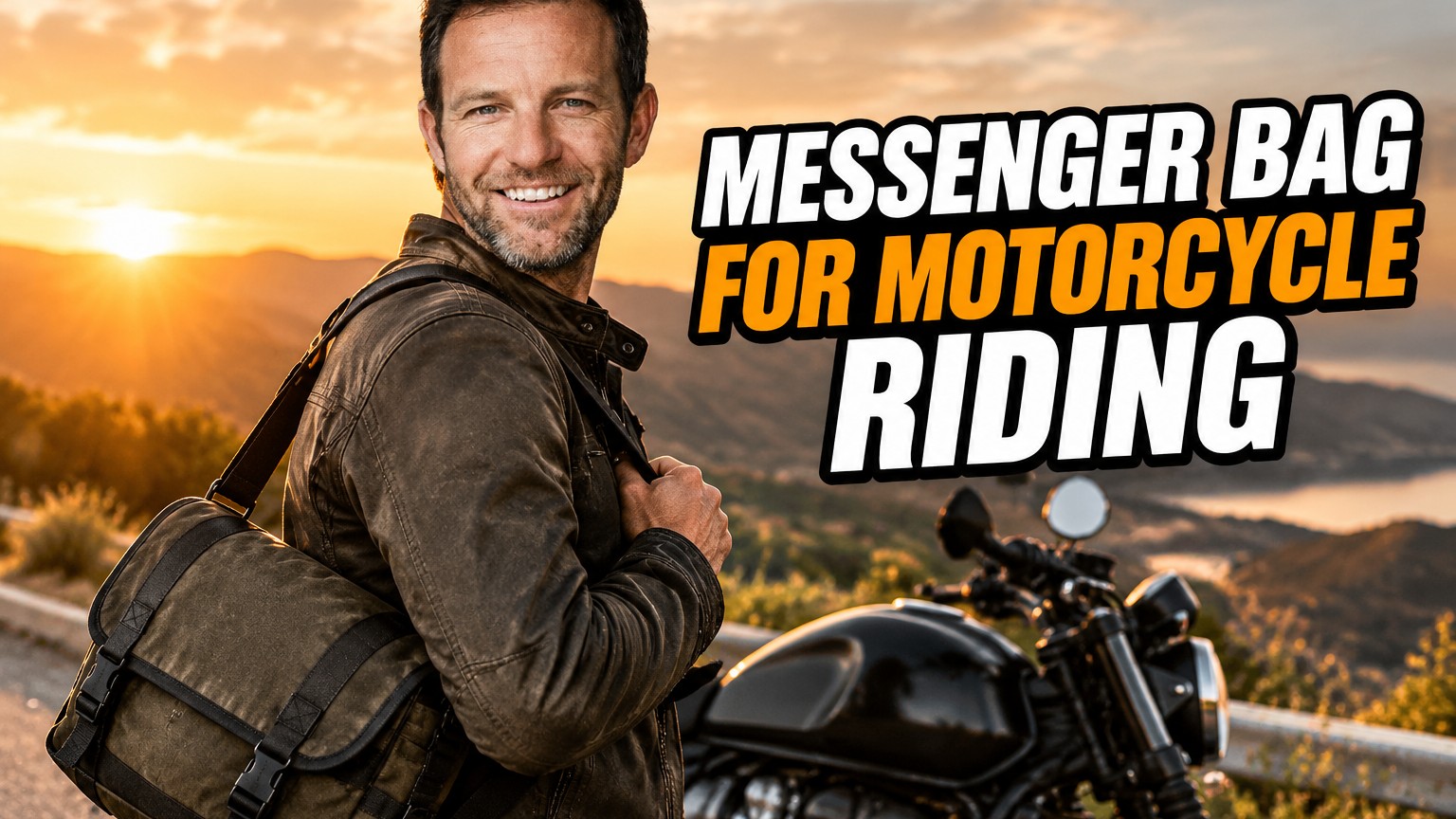
I’ve been commuting by motorcycle for over eight years, and finding the right messenger bag transformed my daily rides. Unlike backpacks that can feel bulky or tank bags that limit your movement, a good messenger bag gives you that perfect balance of accessibility and comfort.
The challenge? Most messenger bags aren’t built for the unique demands of motorcycle riding. I’ve watched cheap bags disintegrate after a few months of vibration and weather exposure. I’ve had straps come loose at 70 mph. I’ve arrived at meetings with soaked laptops because I trusted the wrong “water-resistant” claim.
After testing more than 20 different messenger bags over the years—from budget options to premium models—I’ve identified the seven that actually deliver for riders. These bags have survived everything from torrential downpours to scorching summer heat, and they’ve kept my gear secure through thousands of miles.
- Weatherproofing is non-negotiable—look for welded seams or roll-top closures, not just “water-resistant” coatings
- Stabilization straps are crucial to prevent the bag from shifting at highway speeds
- I prioritize 15-20L capacity for commuting—enough for a laptop and essentials without excessive bulk
- Reflective elements and bright colors significantly improve visibility in traffic
- Quick-access pockets save time at toll booths (and yes, your E-ZPass can work through most bags if positioned correctly)
1. Chrome Industries Barrage Cargo — Best Overall for Durability
The Chrome Barrage Cargo is my go-to bag for serious commuting, and I’ve put nearly 15,000 miles on mine without a single failure. Chrome built this thing with 1050d nylon that laughs at abrasion, and the fully welded construction means I’ve ridden through absolute deluges without a drop getting inside.
What sets the Barrage Cargo apart is its military-grade seatbelt buckle system. Unlike magnetic or quick-release buckles that can pop open unexpectedly, this buckle stays locked even when you’re leaning hard into corners. The bag sits at 22 liters, which is slightly larger than I’d normally recommend, but the compression straps let you cinch it down when you’re carrying less.
I particularly appreciate the external bungee system for locking down a U-lock or wet jacket. The bag retails around $165, which isn’t cheap, but mine has outlasted three cheaper alternatives combined. If you’re a daily commuter who rides year-round, this is the investment that pays off.
Key Features That Matter
The Barrage Cargo includes a suspended laptop compartment that protects your electronics from road vibration—something I didn’t realize I needed until I used it. The stabilization strap is adjustable and actually stays in place, unlike the flimsy elastic straps on budget bags.
Chrome also offers a lifetime warranty, which they’ve honored for me once when a buckle wore out after four years of daily use. The reflective elements are subtle but effective, catching headlights from multiple angles.
2. Mission Workshop The Rhake — Best for Style and Function
If you want a messenger bag that doesn’t scream “motorcycle gear” when you walk into the office, the Mission Workshop Rhake delivers. I bought mine specifically because I needed something that worked equally well in client meetings and on my bike, and it’s exceeded expectations on both fronts.
The Rhake uses a weatherproof roll-top closure with Arkiv rails, which is Mission Workshop’s modular system. At first, I thought the rails were gimmicky, but being able to swap accessories—camera inserts, organizational panels, or extra pockets—makes this bag incredibly versatile. The 18-liter capacity hits the sweet spot for daily commuting.
What impressed me most is the VX21 fabric construction. This material is both lighter and tougher than traditional cordura, and it’s held up flawlessly through two years of regular use. The bag costs around $265, making it the priciest option on my list, but the build quality justifies every dollar.
Why I Choose This for Professional Settings
The Rhake’s clean aesthetic and premium materials mean I can go straight from my bike to a meeting without looking like I just stepped off the set of Mad Max. The internal organization is thoughtful, with a padded laptop sleeve that fits up to 15 inches and enough smaller pockets to keep cables from turning into a tangled mess.
The stabilizer strap is removable, which I appreciate when I’m using the bag off the bike. Mission Workshop’s customer service is exceptional—they’ve answered my questions about cleaning and maintenance with genuine expertise.
3. Timbuk2 Classic Messenger — Best Budget Option
Not everyone wants to drop $200+ on a messenger bag, and that’s where the Timbuk2 Classic Messenger shines. I recommend this to newer riders all the time because it delivers solid performance at around $89-109 depending on size. I used one for my first two years of motorcycle commuting before upgrading.
The Classic Messenger uses Timbuk2’s three-panel construction with a waterproof liner and storm flap. It’s not as bombproof as Chrome’s welded construction, but it handles normal rain just fine. I’ve been caught in unexpected showers with this bag, and my laptop stayed dry every time as long as I’d properly closed the flap.
Where this bag falls short is in long-term durability. The buckle system is functional but not as robust as premium options, and I noticed some fraying on the shoulder strap after about 18 months. For the price point, though, I can’t complain. At medium size (15L), it’s perfect for riders who just need something reliable without breaking the bank.
What Makes It Work for Commuters
The Classic Messenger includes Timbuk2’s signature adjustability system, letting you customize the fit while riding. The internal organization is basic—one main compartment with a laptop sleeve and a couple of small pockets—but that simplicity means less to go wrong.
I particularly like that Timbuk2 offers multiple color options, including some with reflective accents. Visibility matters on a motorcycle, and having reflective elements built into your bag’s design is smarter than relying solely on your bike’s lights.
4. Ortlieb Messenger Bag — Best Waterproof Protection
When I plan long motorcycle trips where weather is unpredictable, the Ortlieb Messenger Bag is my automatic choice. This German-made bag uses PVC-coated polyester with fully welded seams—the same construction Ortlieb uses for their renowned panniers.
I’ve tested this bag in conditions that would destroy most messenger bags. During a Pacific Northwest tour, I rode through six straight hours of rain, and everything inside stayed bone-dry. The roll-top closure with quick-release buckles is absolutely waterproof when properly sealed. At 39 liters, it’s larger than most messenger bags, but I appreciate the extra capacity for touring gear.
The Ortlieb costs around $190 and weighs more than fabric alternatives, but that’s the tradeoff for true waterproof construction. This isn’t the bag I’d choose for daily commuting—it’s a bit bulky for that—but for adventure riding or unpredictable weather, nothing else compares.
Technical Advantages for Serious Riders
The Ortlieb includes internal organization pockets and a padded laptop compartment rated for 15-inch devices. The shoulder pad is exceptionally comfortable even with heavy loads, distributing weight effectively across your shoulder and back.
What I appreciate most is the simplicity of the design. There are no fancy features to fail, just bombproof construction that works. The reflective logo and optional reflective trim increase visibility, which matters when you’re loaded down with gear.
5. Chrome Industries Mini Metro — Best Compact Urban Option
For riders who need something smaller and more nimble than a full-size messenger bag, I love the Chrome Mini Metro. At 12 liters, it’s perfectly sized for essential commuting gear—wallet, phone, small tablet, and maybe a lightweight jacket. I use this bag when I’m running quick errands around the city.
The Mini Metro shares the Barrage Cargo’s excellent build quality with the same welded construction and seatbelt buckle, just in a more compact package. It costs around $115, making it a middle-ground option between the budget Timbuk2 and premium Mission Workshop bags. For urban riding where you’re constantly on and off the bike, the smaller size is actually an advantage.
I find this bag works best for riders who don’t need laptop capacity or who carry a smaller device. It easily fits an iPad or similar tablet, plus all your daily essentials. The compact size means less wind resistance at highway speeds, and it’s light enough that you barely notice it during longer rides.
Why Size Matters for City Riding
In dense urban traffic, a smaller bag gives you better mobility and awareness. I can check my blind spots more easily without a bulky bag pulling on my shoulder. The Mini Metro’s stabilizer strap is particularly important here—it keeps the bag locked in place when you’re weaving through traffic or making quick stops.
The external pocket provides quick access for things like toll passes, and yes, I’ve successfully used my E-ZPass through this pocket without issues. Chrome’s build quality means this smaller bag will last just as long as their larger models.
6. Patagonia Black Hole Mini Messenger — Best Lightweight All-Rounder
I wasn’t initially sold on the Patagonia Black Hole Mini Messenger for motorcycle use—it looks more like a casual everyday bag than serious riding gear. But after a friend convinced me to try it, I’ve been genuinely impressed by how well it performs on the bike.
The Black Hole series uses Patagonia’s highly weather-resistant ripstop fabric with a DWR finish. It’s not as waterproof as Ortlieb’s welded construction, but it handles rain surprisingly well for a bag that costs around $69. At 12 liters, it’s in the same size category as the Chrome Mini Metro but weighs noticeably less.
What won me over is the comfort factor. The padded shoulder strap is exceptionally well-designed, and the bag sits naturally on your body without needing constant adjustment. For riders who prioritize comfort over maximum durability, this is my top recommendation. It’s also environmentally conscious—Patagonia uses recycled materials and offers repairs through their Worn Wear program.
Practical Features for Everyday Riding
The Black Hole includes internal organization that’s thoughtful without being overcomplicated. There’s a padded sleeve for tablets or small laptops (up to 13 inches), plus zippered pockets that keep smaller items from disappearing into the main compartment.
I appreciate that the bag converts easily—you can wear it messenger-style or remove the shoulder pad and use it as a tote. The versatility means I can use it for more than just motorcycle commuting. If you’re looking for a laptop bag for motorcycle adventures on a budget, this delivers excellent value.
7. Kriega Urban EDC 18L — Best Purpose-Built Motorcycle Messenger
While most bags on this list are adapted for motorcycle use, the Kriega Urban EDC was designed from the ground up for riders. I added this to my rotation specifically for technical riding days when I need gear that integrates perfectly with my motorcycle setup.
The Urban EDC uses Kriega’s proprietary harness system with a removable chest strap and waist strap. This distributes weight across multiple points, making it more comfortable than a traditional single-strap messenger bag on longer rides. The 18-liter capacity is well-balanced for commuting, and the weatherproof construction has handled everything I’ve thrown at it.
At around $189, the Kriega isn’t cheap, but it delivers features that matter specifically to motorcyclists. The bag includes a built-in backboard that provides structure and prevents the contents from shifting around. I’ve carried fragile camera equipment in this bag with complete confidence.
Motorcycle-Specific Design Elements
The Urban EDC integrates with Kriega’s OS-Base mounting system if you want to occasionally use it as a tank bag or tail bag—versatility I haven’t found in any other messenger bag. The harness system might look complicated at first, but once you’ve adjusted it to your body, it’s incredibly quick to put on and take off.
Kriega includes built-in mounting points for lights and reflective elements, showing they understand what riders actually need. The bag is available in black or high-visibility orange, and I strongly recommend the orange for safety reasons. Unlike some specialized motorcycle bags, this one looks professional enough for office use.
What to Consider When Choosing Your Messenger Bag
After years of testing bags and talking to other riders, I’ve identified the key factors that separate excellent motorcycle messenger bags from mediocre ones. Don’t just grab the first bag that looks good—think about how you’ll actually use it.
Weatherproofing Is Non-Negotiable
I learned this lesson the hard way when I destroyed a $1,200 laptop with a supposedly “water-resistant” bag. For motorcycle use, you need either welded seams (Chrome, Ortlieb) or roll-top closures with waterproof materials. DWR coatings and rain flaps work for light drizzle, but they’ll fail in sustained rain at speed.
Test this before you trust it. Put paper towels inside your new bag, spray it with a hose for 30 seconds, and see what happens. If the paper towels get damp, that bag isn’t truly waterproof enough for motorcycle use.
Stabilization Straps Prevent Dangerous Shifting
A messenger bag that swings around while you’re riding is more than annoying—it’s genuinely dangerous. The movement affects your balance and can catch on controls in emergency situations. Every bag on my list includes some form of stabilization strap that prevents this.
The strap should be adjustable and made from durable material, not cheap elastic. I’ve had elastic straps break or stretch out within months, rendering them useless. Proper stabilization makes a massive difference in how confident you feel, especially at highway speeds.
Size and Weight Distribution Matter
Bigger isn’t always better. I see new riders buy oversized bags thinking they need the capacity, then struggle with the bulk on actual rides. For daily commuting, 15-20 liters is the sweet spot. You can fit a laptop, change of clothes, lunch, and daily essentials without excess weight pulling on one shoulder.
Pay attention to how the bag distributes weight when loaded. Some bags have poorly designed shoulder straps that dig into your shoulder or put all the pressure on one point. The best bags spread the load across a wider area for better comfort.
Quick-Access Features Save Time
External pockets for frequently accessed items make your rides smoother. I use mine for my phone, wallet, and toll pass. Having to dig through your main compartment every time you need something gets old fast, especially when you’re wearing gloves.
Some bags, like the Chrome models, include external bungee systems for securing items like U-locks or wet rain gear. These small features make a real difference in daily use. If you’re planning touring routes, consider bags with multiple access points—similar to how I approach selecting tank bags for extended trips.
My Final Thoughts on Choosing the Right Bag
After testing all these messenger bags extensively, I still rotate between three depending on my specific needs: the Chrome Barrage Cargo for serious commuting, the Mission Workshop Rhake for professional settings, and the Chrome Mini Metro for quick urban rides. Each excels in its intended role.
If I had to recommend just one bag for a new motorcycle commuter, I’d point them toward the Timbuk2 Classic Messenger to start. It’s affordable enough that you won’t feel devastated if you decide messenger bags aren’t for you, but it’s quality enough to last several years of regular use. Once you understand what features matter most to your specific riding style, you can upgrade to something more specialized.
The most important thing is matching the bag to your actual needs, not buying the most expensive option or the one that looks coolest. Think honestly about your typical riding conditions, what you need to carry, and how often you’ll use it. A $300 bag that sits in your closet because it’s overkill for your needs is a waste, while a $100 bag you use daily for years is an excellent investment.
Whatever bag you choose, take time to adjust it properly before hitting the road. A well-fitted messenger bag should feel like a natural extension of your riding gear, not something you’re constantly fighting with. Test it on short rides first, make adjustments, and don’t hesitate to return it if it doesn’t work for you. Your comfort and safety are worth getting this right.
Frequently Asked Questions
Can you wear a messenger bag while riding a motorcycle?
Yes, but choose one designed for riding with cross-body stabilization straps, weatherproof materials, and reflective elements. I always position mine so it sits securely on my back without interfering with controls.
What size messenger bag is best for motorcycle commuting?
I recommend 15-20 liter capacity for daily commutes. This fits a 15-inch laptop, documents, and small items without being bulky. Larger bags shift around too much at highway speeds.
Are messenger bags safer than backpacks for motorcycle riding?
Messenger bags offer quicker access when you stop, but backpacks distribute weight better for long rides. I use messenger bags for short urban commutes and switch to backpacks for anything over 30 minutes.
Do messenger bags need to be waterproof for motorcycle use?
Absolutely. I’ve learned this the hard way. Look for welded seams, roll-top closures, or waterproof zippers. Even light rain at 60 mph will soak through regular fabric in minutes.

Related Articles

7 Best Hydration Backpacks for Motorcycle Riding in 2026
Discover the best hydration backpacks for motorcycle riding. I've tested top models to help you stay hydrated on long rides…
 Jake Miller
15 min read
Jake Miller
15 min read

7 Best Motorcycle Tires for a New Bagger in 2026
Discover the top motorcycle tires for your new bagger in 2025. I've tested these models for grip, longevity, and touring…
Jake Miller
11 min read

7 Best Bagger Motorcycles for Beginners in 2026
Discover the best bagger motorcycles for beginners. I've tested and reviewed 7 top models that blend comfort, manageability, and touring…
Jake Miller
15 min read