
7 Best Pop Up Tents for Motorcycle Camping: Tested Picks for Every Budget
 Jake Miller
10 min read
Jake Miller
10 min read
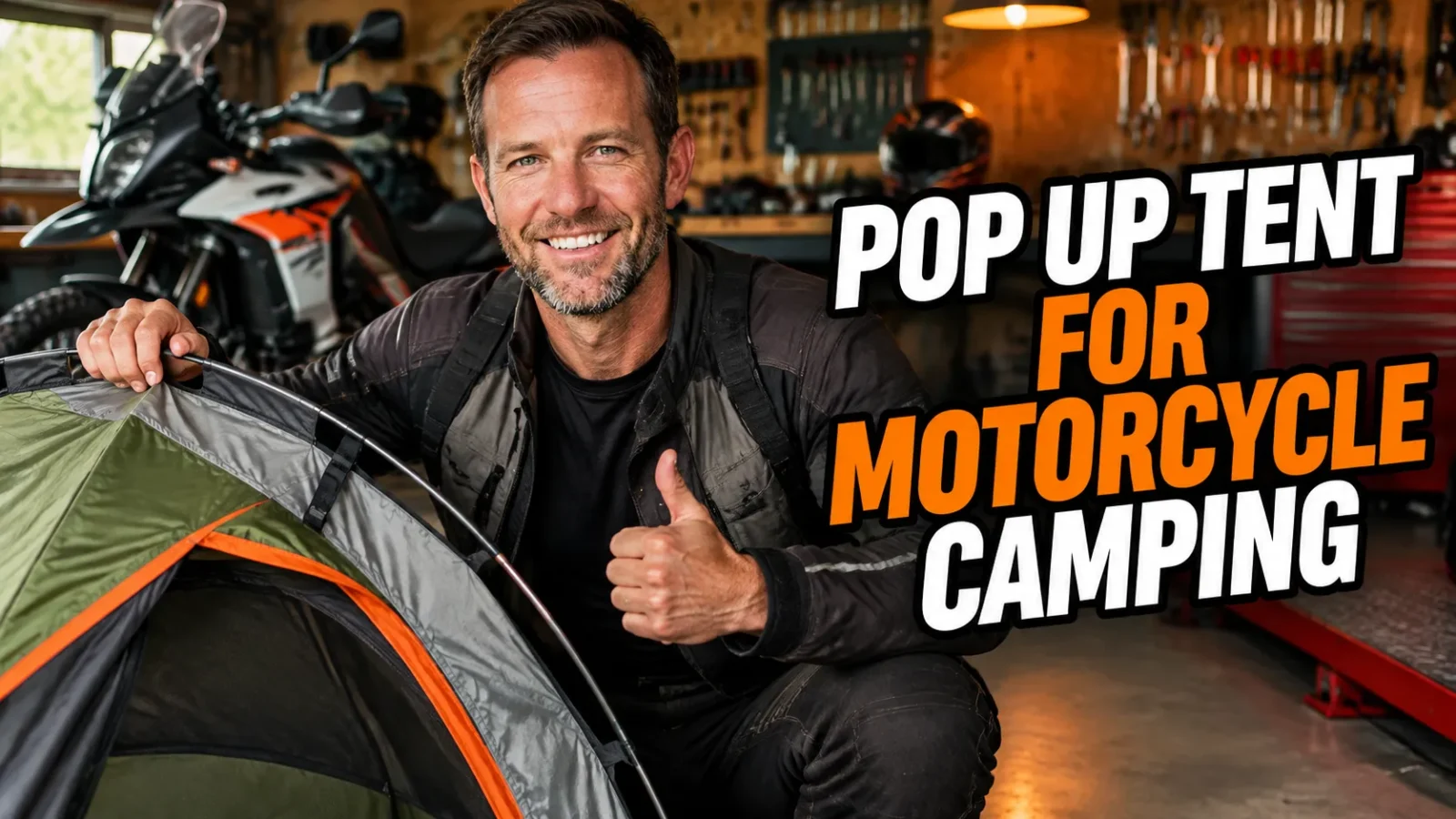
I still remember the first time I pulled into a campsite at dusk after 400 miles in the saddle, arms buzzing and legs stiff, and had to wrestle a traditional pole tent into the ground while my riding buddies were already cracking open cold drinks.
That night changed how I pack. I switched to pop up tents and never looked back. A good one goes from bag to livable shelter in under a minute, which matters a lot when you’ve been riding all day.
But here’s the thing most reviews won’t tell you: not every pop up tent is motorcycle-friendly. Packed size, pole orientation, and how the thing collapses back down all matter when your “trunk” is a 12-inch pillion seat.
Before we get into the picks, one quick sidebar — your battery and charging setup matters just as much as your shelter on long tours. If you’re running heated gear, a GPS, and a phone charger off an aging battery, I’d strongly suggest reading this guide on what are the different types of motorcycle batteries ultimate guide before your next trip. Dead battery at a campsite is a worse feeling than a leaky tent.
- Best overall: Quechua 2 Seconds Easy — unbeatable speed and price for solo riders.
- Best for two-up touring: Toogh 3-4 Person — short packed length fits panniers.
- Best weather protection: Coleman Pop Up 4-Person Instant — high waterproof rating for stormy trips.
- Packed length matters more than weight when you’re strapping gear to a bike.
- A pop up tent saves you 15-20 minutes of setup after a long riding day.
1. Quechua 2 Seconds Easy — My Overall Pick for Solo Riders
If you only take one recommendation from this list, make it the Quechua 2 Seconds Easy. I’ve used this exact tent on three separate multi-day trips, and it remains the fastest shelter I’ve ever pitched on two wheels.
The genius is in the two-ring hoop system. You literally throw it in the air, and it self-deploys in about two seconds. Decathlon sells it for well under $100, sometimes closer to $60 on sale.
Real-World Specs I’ve Verified
Packed dimensions come in around 27 x 5 inches, which is a long, thin cylinder — perfect for strapping along a rear rack or diagonally across a seat. Weight hovers near 3.5 pounds.
The hydrostatic head is rated at 2,000mm, which is fine for light to moderate rain but not a monsoon. I’ve ridden through drizzle in it without issue. In a real downpour, I’d want more.
My one complaint: the packed length is on the long side for smaller bikes. On my old CB500X, it stretched from the tail bag to nearly the mirrors. Still manageable, just noticeable.
2. Toogh 3-4 Person Pop Up Tent — Best for Two-Up Touring
When my partner started riding with me, I needed something bigger. The Toogh 3-4 Person Pop Up is the tent I landed on after a lot of trial and error.
Despite the “3-4 person” label, it’s really a comfortable two-person tent with gear space. That’s exactly what you want on a motorcycle — room for two sleeping pads, two bags, and your riding jackets.
Why It Works on a Bike
The packed length is the star here. Toogh uses a pre-assembled hydraulic pole system that collapses to roughly 32 inches, and the carry bag has compression straps that let you cinch it down further.
Setup time is genuinely 60 seconds. Pull it out of the bag, let the hydraulics snap the poles into place, stake the corners, done. Waterproofing sits at 3,000mm, which handled a solid overnight storm in the Appalachians without a single drip.
Price runs $120-$160 depending on color. I think it’s a fair deal for the space you get.
3. Coleman Pop Up 4-Person Instant Tent — Best for Stormy Weather
Coleman is the brand your dad trusted, and I’ll be honest — I was skeptical that a big-box brand could make a pop up worth strapping to a bike. Then I used the Coleman Pop Up 4-Person Instant on a rainy Oregon trip.
It’s heavier than the Quechua, coming in around 8 pounds packed. That’s a real consideration if your bike is weight-sensitive. But the waterproofing is a step above.
The Trade-Offs You Should Know
Coleman rates this tent with their WeatherTec system, and the welded floor plus taped seams kept me dry through two straight nights of Pacific Northwest rain. That alone justified the extra bulk.
Packed size lands around 34 inches, which is longer than I’d like. On a big touring bike with panniers, no issue. On a naked bike, you’ll feel it.
If you’re also thinking about long-distance maintenance for this kind of touring, the engine oil you run matters. Check out this guide to the best motor oil for 4 stroke motorcycle — it’s the kind of thing that saves you on a 2,000-mile trip.
4. Sundome 2-Person Pop Up by Coleman — Best Budget Option
Yes, I’m recommending two Colemans. They make different products for different riders. The Sundome 2-Person Pop Up is the cheapest tent on this list that I’d actually trust on a motorcycle trip.
Street price is often under $50. That’s the kind of price where you can buy it, use it for a season, and not feel bad if it gets rained on hard.
Where It Shines
Packed length is around 25 inches — the shortest on this list. For riders on smaller bikes like a Rebel 500 or a Royal Enfield Himalayan, that’s a real advantage.
Weight is about 4 pounds. Waterproofing is more modest at around 800-1,000mm. I’d call this a three-season fair weather tent, not a monsoon shelter.
Ventilation is decent thanks to the mesh upper. In humid summer camping, you won’t wake up in a sauna.
5. Night Cat Pop Up Tent 2-3 Person — Best Waterproofing Under $200
The Night Cat is one of those tents that quietly punches above its weight class. I picked one up after seeing it used on a group ride through Utah, and I’ve been impressed.
It’s a 2-3 person pop up that claims a 3,000mm hydrostatic head and actually delivers. Night Cat uses a 210D oxford fabric with a silver coating that reflects heat — a genuinely useful feature when you’re camped in the desert.
Standout Features
Two large doors and mesh windows make airflow excellent. The rainfly has a small vestibule, which is where I stash my helmet and boots overnight.
Packed dimensions are roughly 28 x 6 inches. Weight is around 5 pounds. Not the lightest, but the durability is noticeable — the zippers feel beefier than the Quechua’s.
Price is typically $150-$180. If you camp in hot, sunny, or wet conditions, this is my pick in that price range.
6. Qipi Pop Up Tent 2-3 Person — Best Quick-Deploy Design
Qipi is a smaller brand, but their pop up tent has a dedicated following in the motorcycle camping community. I tested one for a weekend and came away reasonably impressed.
The deployment mechanism uses a single pull-tab system that pops the whole thing open in roughly 10 seconds. Not quite “throw in the air” fast, but close.
What I Liked and Didn’t
The packed size is around 29 inches, and the bag has a shoulder strap — nice for the walk from bike to campsite. Weight sits at about 4.5 pounds.
Waterproofing is around 2,500mm. Solidly mid-range. The floor is a bathtub-style design, which does a better job keeping ground moisture out than a flat-seamed floor.
My gripe: collapsing it back down took me a few tries to get right. Not a dealbreaker, but worth practicing at home before your trip.
7. Wakeman Outdoors Pop Up Tent — Best Lightweight Pick
If weight is your priority, the Wakeman Outdoors Pop Up is worth a look. It’s a 2-person tent that comes in under 3 pounds, which is genuinely light for a pop up.
Packed length is around 26 inches. That plus the low weight makes it ideal for riders on sport bikes or anyone with limited strapping real estate.
Honest Assessment
The waterproofing is modest — I’d guess around 1,000-1,500mm based on how it handled a moderate rain. Fine for three-season use, not a storm shelter.
Setup is quick: pull it out, the poles spring into shape, stake it down. Collapse is the standard figure-eight fold most pop ups use, and it takes me about 40 seconds once I’ve done it a couple of times.
Price is usually $60-$90. For a lightweight starter tent, that’s hard to argue with. If you’re new to motorcycle camping and want to test the whole pop up concept, this is a low-risk entry point.
How I Choose a Pop Up Tent for Motorcycle Camping
Over the years I’ve learned that the tent itself is only half the equation. The other half is everything else that keeps your bike running while you’re out there.
Two quick maintenance notes that have saved me on trips: first, run a good oil. This comparison of the top engine oil for 4 stroke motorcycle covers the heavyweights. Second, if you’re riding in India or dealing with extreme heat, this breakdown of the best engine oil for 4 stroke motorcycle in india is worth your time.
Back to tents. Here are the factors I weight most heavily.
Packed Length Beats Packed Weight
On a motorcycle, weight matters less than you’d think. A few extra pounds won’t hurt a 500cc+ bike. But a 36-inch tent bag is a problem no matter what you ride.
Aim for under 30 inches packed length. Under 28 is ideal. This is why I rank the Quechua and Sundome so highly despite them not being the “best” tents in absolute terms.
Waterproofing Ratings Actually Matter
Hydrostatic head is the number to look at. Anything under 1,500mm is a fair-weather tent. 2,000-3,000mm handles real rain. Above 3,000mm and you’re in serious shelter territory.
Ignore marketing words like “water resistant” or “weatherproof” unless they come with a number.
Rain Fly and Vestibule
A rain fly that extends into a vestibule gives you a dry place for your helmet, boots, and tank bag. I won’t buy a pop up without one anymore.
Collapse Speed
Everyone talks about setup speed. Honestly, collapse speed is what frustrates people. Practice folding your tent at home before you take it out. Every pop up has a slightly different twist-and-fold pattern.
Final Thoughts From the Saddle
After years of riding and camping, my honest recommendation is simple. If you’re solo and want the fastest, cheapest, most reliable option, get the Quechua 2 Seconds Easy.
If you tour two-up or want more space, go with the Toogh 3-4 Person. For stormy weather, the Coleman Pop Up 4-Person Instant is my shelter of choice.
Whatever you pick, test it in your backyard first. Pitch it, sleep in it, fold it back up. Then strap it to your bike and see how it feels at highway speed.
Do that once, and your next campsite arrival will be a whole lot more relaxed. Ride safe, and don’t forget to check your oil before you go — here’s a general guide to the best engine oil for motorcycle that covers both wet and dry clutch setups.
Frequently Asked Questions
What size pop up tent fits on a motorcycle?
I recommend a 2-person pop up tent for solo riders. They typically pack to 24-30 inches and strap easily to a rear rack or seat. If you ride two-up, look for a 3-4 person model with a shorter packed length like the Toogh, which collapses to around 32 inches.
Are pop up tents good for motorcycle camping?
Yes, and I’ve used them for years. The main draw is fast setup after a long day of riding. The tradeoff is a larger packed size than a traditional backpacking tent, so packing discipline matters more than the tent itself.
How do I strap a pop up tent to my motorcycle?
Lay it diagonally across your pillion seat or rear rack and secure it with two cam-buckle straps. Keep the poles parallel to your direction of travel, never pointing sideways past your mirrors or panniers. Check tension before every fuel stop.
What should I look for in a motorcycle camping pop up tent?
Packed length under 30 inches, a 3,000mm or higher hydrostatic head, and a bathtub floor. A rain fly with vestibule space is also worth prioritizing so your helmet and boots stay dry overnight.

Related Articles

7 Best 1-Person Tents for Motorcycle Adventures: Lightweight Shelters Tested for the Road
I've pitched these 7 one-person motorcycle tents across thousands of miles. From Big Agnes to MSR, here's the best 1…
Jake Miller
10 min read

9 Best Budget Tents for Motorcycle Touring That Actually Survive the Road
I've slept in cheap tents across 30,000+ touring miles. Here are 9 genuinely good budget tents for motorcycle touring, with…
Jake Miller
10 min read

7 Best 2-Person Tents for Motorcycle Camping: Packable Shelters I Actually Trust
I've pitched these 7 two-person tents on real moto trips. From Big Agnes to MSR, here's what actually fits in…
Jake Miller
10 min read