
7 Best Anti-Vibration Motorcycle Phone Mounts for Naked Bikes
 Jake Miller
12 min read
Jake Miller
12 min read
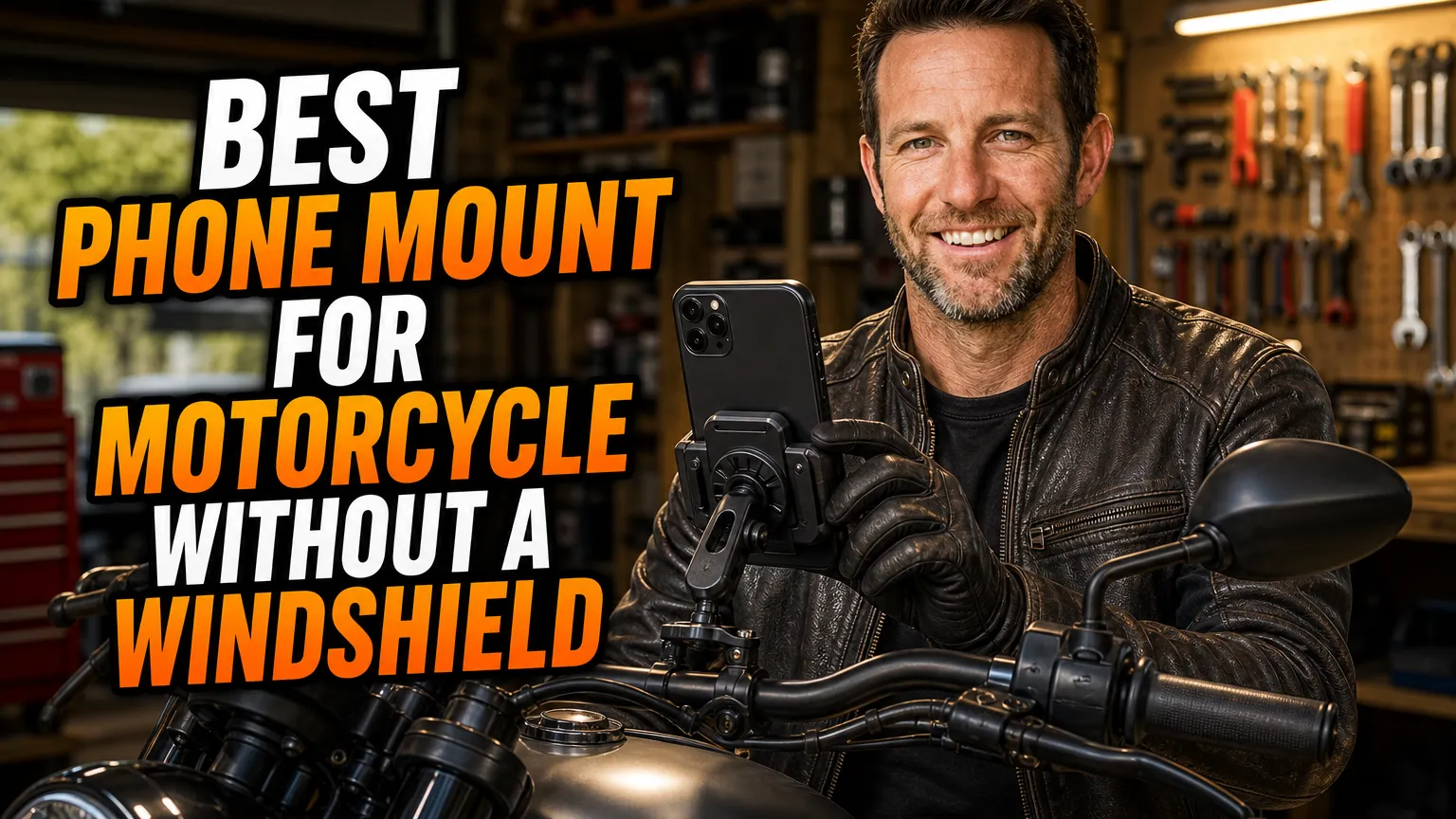
Finding a secure phone mount can be trickier on a motorcycle without a windshield. There is no windscreen crossbar to clamp onto, so I focus on sturdy handlebar, mirror-stem, or steering-stem mounting points—and on a design that helps limit vibration before it reaches my phone.
In this guide, I compare real mounts I’d consider for naked bikes, standards, and other motorcycles with exposed handlebars. I look at how each system holds the phone, what extra parts may be required, and where its anti-vibration features fit into the setup. Fit varies by bike and phone, so I always check the manufacturer’s compatibility information before ordering.
- I’d start with a dedicated vibration dampener, particularly for a phone with optical image stabilization.
- Quad Lock, SP Connect, and Peak Design offer purpose-built phone mounting systems; RAM, Hondo Garage, Rokform, and Tackform have other strong options.
- Without a windshield, I’d check handlebar, mirror-stem, and steering-stem locations for fit and control clearance.
- A dampener reduces vibration but cannot promise that a phone camera will never be affected.
1. Quad Lock Motorcycle Handlebar Mount with Vibration Dampener — Best for a Simple Twist-Lock Setup
The Quad Lock Motorcycle Handlebar Mount paired with the Quad Lock Vibration Dampener is my straightforward pick when I want a secure, quick-to-remove phone setup on an exposed bar. The system uses a proprietary twist-lock interface: I attach a compatible Quad Lock case or universal adapter, then turn the phone into the mount until it locks.
Why I’d choose it
The separate dampener fits between the mount and its mounting arm to help isolate the phone from high-frequency motorcycle vibration. For a naked bike, that compact arrangement is useful because it does not depend on a windshield or a broad mounting panel. Quad Lock offers handlebar mounting hardware and spacers for common bar configurations, but I’d verify my bike’s diameter and available space first.
The main trade-off is the ecosystem. I need a compatible Quad Lock case or adapter, and the vibration dampener adds to the cost and stack height. I’d also inspect the phone’s position at full steering lock to make sure it does not touch the tank, controls, or cables.
My take
I’d pick this system for everyday commuting and touring when quick, repeatable phone attachment matters. It is a considered choice for reducing vibration, not a guarantee against camera damage; I’d still follow the phone maker’s guidance for motorcycle use.
2. SP Connect Moto Mount Pro with Anti Vibration Module — Best for a Low-Profile System
The SP Connect Moto Mount Pro with the SP Connect Anti Vibration Module is another purpose-built option I’d look at for a motorcycle without a windshield. The Moto Mount Pro has an adjustable mounting arrangement, while SP Connect’s phone interface relies on a compatible phone case or its Universal Interface, depending on the setup.
What stands out to me
The Anti Vibration Module is a dedicated add-on designed to sit between the phone holder and the motorcycle mount. I like that the vibration-control part is an explicit component of the system rather than something I have to improvise with soft padding. SP Connect also offers different Moto Mount Pro configurations, so I’d choose the one that matches my intended bar or mirror-stem mounting point.
As with other proprietary systems, I need to account for the cost of the mount, module, and phone attachment. I’d also check that the phone case is compatible and that the final orientation leaves the screen visible without blocking the instrument panel.
My take
I’d consider the SP Connect setup when I want a neat, integrated mount and I’m happy to use its case-and-interface system. It is particularly important to confirm the exact mount version and mounting location before buying, because “fits a motorcycle” does not automatically mean “fits every handlebar.”
3. Peak Design Motorcycle Bar Mount with Vibration Isolator — Best for a Refined, Compact Attachment
Peak Design’s Motorcycle Bar Mount is built around its slim phone-mounting system, and its vibration isolator is designed to reduce transmitted vibration. I like the idea of a compact bar-mounted assembly on an uncluttered cockpit, especially when I do not have a windshield bracket or a large area to work with.
Fit and phone compatibility
The mount works with Peak Design’s compatible Everyday Cases and related phone accessories. That means I’d check the current phone-case fit list before choosing it; a familiar-looking case is not necessarily part of the mounting system. I’d also confirm that the bar clamp suits my handlebar and that the mount can be positioned clear of the brake and clutch controls.
The isolator is a helpful design feature, but I would not treat it as a promise that every phone is safe on every motorcycle. Engine type, road surface, mounting position, and phone-camera design all affect the vibration a device experiences.
My take
I’d shortlist the Peak Design Motorcycle Bar Mount if a clean, quick attachment is high on my list and I’m willing to use its case ecosystem. Before a long trip, I’d check the fasteners and test screen visibility in daylight, with gloves on and the bike parked.
4. RAM X-Grip with RAM Vibe-Safe — Best for Adjustable, Modular Mounting
RAM Mounts’ X-Grip phone holder paired with the RAM Vibe-Safe vibration dampener gives me a more modular route. The X-Grip uses spring-loaded arms to grip a range of phone sizes, and RAM’s ball-and-socket components let me adjust the viewing angle. For a motorcycle without a windshield, I can build around an appropriate handlebar base rather than needing a screen-mounted bracket.
What I’d check before buying
This is a component-based setup, not necessarily one all-in-one package. I’d confirm that my order includes a compatible RAM base, arm, X-Grip, and Vibe-Safe part, and that the chosen pieces use compatible ball sizes. I’d also follow RAM’s instructions for any retention tether and make sure the phone’s buttons are not being pressed by the grip arms.
The advantage is adjustability and the ability to change individual parts. The trade-off is that I have more compatibility details to verify than with a single-brand case-and-mount bundle. A larger, more adjustable assembly can also take up extra space around a crowded cockpit.
My take
I’d lean toward the RAM X-Grip and Vibe-Safe combination if I value adjustability, a broad range of mounting components, or the option to move a device between vehicles. I’d use the dampener as intended and secure the phone according to the holder’s instructions, especially on rough roads.
5. Hondo Garage Perfect Squeeze with Buzz-Kill — Best for a Clamping Holder and Dedicated Isolator
The Hondo Garage Perfect Squeeze is a spring-loaded phone holder designed to clamp a phone securely, while the Buzz-Kill is Hondo Garage’s vibration-isolating component. I’d consider this combination if I prefer a mechanical side-clamping holder over a proprietary twist-lock case system.
Why it suits some riders
The Perfect Squeeze can accommodate phones across a range of sizes, but I’d check its current specifications against my phone dimensions, including any case. The Buzz-Kill is intended to reduce vibration reaching the phone, and pairing the two gives me a purpose-designed holder-and-isolator setup rather than a basic clamp alone.
As with any adjustable holder, I’d position the phone carefully so the arms hold it securely without leaning on side buttons. I’d check bar clearance, mirror placement, and control movement before riding. The system may cost more than a simple generic clamp, and I’d verify the correct mounting hardware for my bike.
My take
I’d choose the Hondo Garage Perfect Squeeze with Buzz-Kill when I want a firm mechanical grip and a dedicated vibration-control component. It is a practical direction for riders who swap phones or cases, as long as the holder’s size range suits their device.
6. Rokform Motorcycle Handlebar Mount with Vibration Dampener — Best for Riders Using Rokform Cases
Rokform’s Motorcycle Handlebar Mount and matching vibration dampener form a system I’d consider if I already use a Rokform phone case. The case-and-mount connection is built around Rokform’s mounting interface, and the dedicated dampener is intended to sit in the motorcycle mounting assembly to help reduce vibration transfer.
Case system and installation
I would check the current compatibility chart for my exact phone model and case before choosing this setup. The mount needs a suitable place on the bar, and I’d make sure the phone clears the fuel tank and controls when the handlebar turns from side to side. A different bar shape or crowded accessory layout may call for another mounting position.
The ecosystem is the biggest consideration: the mount makes most sense if I am comfortable using a compatible Rokform case. I’d also review which parts are included, since the mount and vibration dampener may be separate purchases depending on the package.
My take
I’d put Rokform on my shortlist if I value a case-based attachment and want a specific anti-vibration accessory in the system. I would not skip the fit check or assume that the dampener eliminates all camera risk, particularly on a high-vibration bike.
7. Tackform Enduro Series Phone Mount with Vibration Dampener — Best for a Rugged, Adjustable Clamp
Tackform’s Enduro Series motorcycle phone mounts are built around a mechanical clamping design, with a compatible vibration dampener available for riders who want added isolation. I’d consider the Enduro approach when I want an adjustable holder and do not want my phone attachment to depend on a dedicated case interface.
What I like about the approach
A clamp-style holder can be convenient if I change phones, but I would measure the device with its case and check Tackform’s listed size range. I’d also make sure the clamp does not press on side buttons or cover a camera lens. The dampener and the correct bar-mount hardware should be matched to the specific Enduro configuration I plan to use.
Like other multi-part setups, the final result depends on choosing compatible pieces and tightening them according to the manufacturer’s directions. I’d periodically inspect the joints and fasteners, and I would not mount the phone where it could interfere with steering or essential controls.
My take
I’d choose the Tackform Enduro system if I want a robust, adjustable clamp and the flexibility to use different phones. I’d add its compatible vibration dampener for a motorcycle application rather than relying on the holder’s grip alone to address engine and road vibration.
How I Choose a Mount When There Is No Windshield
Start with the mounting point
On a bike without a windshield, I first inspect the handlebar for a clear, stable section. If the bar is crowded, I check whether a compatible mirror-stem or steering-stem mounting solution is available for that motorcycle. I avoid mounting a phone where it blocks the dash, limits steering movement, or sits close enough to contact the tank.
I also check the mount maker’s fit guide rather than guessing from photos. Bar diameter, clamp design, cable routing, and available space can vary even between motorcycles that look similar.
Think about vibration and camera sensitivity
A vibration dampener is a sensible extra layer, especially if my phone has optical image stabilization. It is not a complete shield, though: no mount can promise that every phone camera will be unaffected by every engine, road, or mounting position.
If I regularly ride rough terrain or travel long distances, I may prefer a dedicated motorcycle navigation unit instead of keeping my phone mounted all day. I’ve also found it useful to compare choices in guides to the best gps for adventure motorcycle touring and the tomtom rider 550 best gps for adventure motorcycle riding.
Check power, weather, and security needs
I treat charging as a separate part of the setup. If I want a cable or wireless charging accessory, I check its compatibility with the case and mount, then route the lead so it cannot snag or interfere with steering. Weather resistance also matters: a phone case or mount should not be mistaken for a guarantee that the phone itself is waterproof.
For longer trips, I consider whether a dedicated navigator is a better fit. I might compare options in a guide to the best gps for round the world on motorcycle, or look at bike-specific choices in the best motorcycle gps for bmw r1200gsa guide. A phone mount also does not secure a parked motorcycle; for that separate job, I’d look at a best anti theft gps tracker for motorcycle comparison.
My Final Picks
For a simple twist-lock system with a dedicated dampener, I’d start with the Quad Lock Motorcycle Handlebar Mount and Vibration Dampener. I’d choose SP Connect or Peak Design if their case systems suit my phone, and I’d look at RAM, Hondo Garage, Rokform, or Tackform when their particular clamp, adjustability, or mounting ecosystem better matches my needs.
Whichever option I choose, I’d confirm that the mount fits the bike and phone, install the vibration-control component as directed, and check steering clearance before riding. A carefully fitted mount can make navigation easier on a motorcycle without a windshield, but I always set the route before moving and keep my attention on the road.
Frequently Asked Questions
Do I need a vibration dampener on a motorcycle phone mount?
I recommend one, especially if your phone has optical image stabilization. A dampener can reduce vibration reaching the phone, though it cannot eliminate every risk.
Where can I mount a phone on a motorcycle without a windshield?
I look first at the handlebar, a suitable mirror-stem clamp, or a compatible steering-stem mount. I check clearance and the mount maker’s fit guide before buying.
Which anti-vibration motorcycle phone mount is easiest to use?
I like the Quad Lock system for its simple twist-lock attachment, provided you are comfortable using a compatible case or universal adapter and add its vibration dampener.
Will a vibration dampener protect every smartphone camera?
No mount can guarantee protection. I use a dedicated dampener, follow the phone and mount makers’ guidance, and consider a separate motorcycle GPS for frequent rough-road riding.

Related Articles

6 Best Motorcycle Phone Mounts That Keep Your Phone Charged on the Road
Compare six dependable motorcycle phone mounts with wireless or USB charging, including fit, power wiring, vibration protection, weather resistance, and…
Jake Miller
10 min read

5 Best Motorcycle Phone Mounts for Naked Bikes and Open-Cockpit Riding
I compare secure, vibration-conscious phone mounts for naked and touring bikes, with fit notes, real trade-offs, and setup tips for…
Jake Miller
11 min read

7 Best Phone Mounts for Sport Bikes: Secure, Vibration-Smart Picks
Compare secure phone mounts for sport bikes, including clip-on fit, vibration control, case systems, prices, and my practical picks for…
Jake Miller
12 min read