
10 Best Handlebars for Long Distance Motorcycle Riding and Touring
 Jake Miller
12 min read
Jake Miller
12 min read
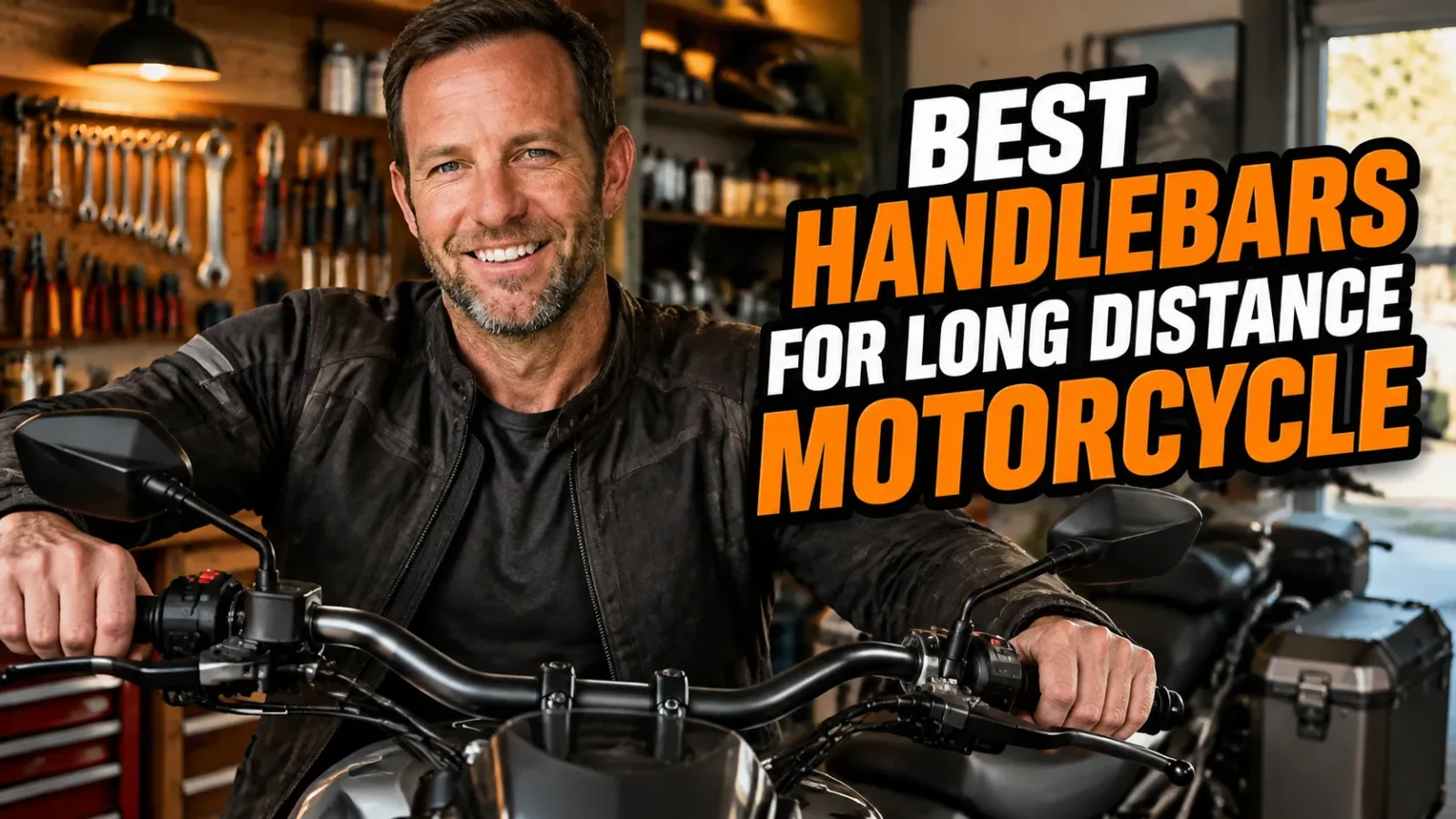
I still remember the exact moment it clicked for me. Six hours into a run down to the Smoky Mountains, my shoulders were on fire and my wrists felt like they had been through a wood chipper. The bike was fine. The Best Motorcycle Seat I had upgraded to was genuinely excellent. The problem was the two feet of aluminum bolted to my triple clamp.
Handlebars are the most underrated comfort upgrade on any touring motorcycle. Everyone talks about seats, windscreens, cruise control and heated grips, but your bars quietly decide how your shoulders, wrists and neck feel after hour four.
Get them right and a 600-mile day feels like a lazy Sunday cruise. Get them wrong and no seat on earth can save you.
Over the years I have run everything from $60 budget alloy bars to $600 CNC-machined adjustable systems on cruisers, adventure bikes and sport-tourers. Below are the handlebars and bar systems I would genuinely spend my own money on again for long-distance riding, ranked by how well they solved real problems for me.
- Adjustable systems (HeliBars Horizon, ConvertiBars) beat fixed bars for touring because you can dial in rise, sweep and pullback without guessing.
- On adventure and dual-sport bikes, pivoting risers like Rox Speed FX Elite fix wrist angle for about $150.
- Renthal Fatbar 827 and ProTaper Contour are the best value fixed bars I have used, but they need 28.6mm clamps.
- Harley riders should look at KST Kustoms and the genuine Harley-Davidson Reduced Reach bar before buying anything else.
- Whatever you fit, budget for longer cables and brake lines once you add more than about 2 inches of rise.
1. HeliBars Horizon Multi-Axis Adjustable Handlebar — Best Overall for Sport-Tourers
If I had to pick one bar system for serious mileage, this is it. HeliBars, made by Heli Modified Inc. up in Maine, has been the gold standard for sport-touring ergonomics for decades, and the Horizon is their flagship.
The Horizon is a CNC-machined billet aluminum bar that replaces your stock handlebar and lets you adjust on multiple axes. I can raise it, pull it back, change the sweep and rotate the grips independently. That is a huge deal, because wrist angle is the thing most riders never fix.
Why it works for long days
The critical part is that the Horizon is designed to reuse your stock cables, brake lines and controls on most fitments. On my FJR1300 I bolted it on in an afternoon with hand tools and no bleeding of brakes. That alone makes it worth the money.
Fitments include the Kawasaki Concours 14, Yamaha FJR1300, Honda ST1300, BMW K1600GT and GTL, Triumph Trophy, Kawasaki Versys 1000 and Ninja 1000. Expect to pay somewhere between $400 and $650 depending on the model.
It is not cheap, and it is not a 15-minute job. But after 12 hours in the saddle with the Horizon, my shoulders felt noticeably fresher than with any fixed bar I have tried.
2. ConvertiBars Multi-Adjustable Handlebar System — Best for Sport Bikes and Sport-Tourers
ConvertiBars is a small American company, and their system is the one I recommend to riders who tour on a sportbike. It is a two-piece adjustable riser and clamp assembly that replaces your stock clip-ons or bar mounts.
You can adjust the bars up and down, forward and back, and rotation, which means you can go from a track crouch to a surprisingly upright touring position in minutes. It is fully reversible, so you are not permanently modifying the bike.
On a CBR or a Ninja, this transformed how I felt after 300 miles. My wrists stopped taking the weight and my neck stopped craning. Pricing typically lands between $350 and $500, and it keeps your factory switchgear and master cylinders.
One caveat: because it uses multiple pivoting joints, you need to torque everything properly and check it after the first few rides. Do that and it is rock solid.
3. Rox Speed FX Elite Pivoting Risers — Best Riser Upgrade for Adventure Bikes
Strictly speaking these are risers rather than handlebars, but on an adventure or dual-sport bike they do more for long-distance comfort than almost any bar swap. I have run Rox Speed FX Elite Pivoting Risers on a KLR650 and a V-Strom 650, and both became dramatically nicer on long days.
They are machined from 6061-T6 billet aluminum and pivot on two axes, so you can bring the grips up and back toward you, which fixes the hunched-over wrist angle that stock ADV bars create. You can get them in roughly 2-inch, 3.5-inch, 4-inch and 5-inch rise versions.
Fitment and pricing
They come in both 7/8-inch and 1 1/8-inch bar clamp versions, with a range of mounting stud sizes to suit most Japanese and European adventure bikes. Expect to pay around $110 to $200.
If you are tall and already fighting the cockpit, this is the cheapest meaningful fix you can make. It is also a great first step before you commit to a full bar swap, and it pairs beautifully with a Best Motorcycle Seat for Tall Riders if you are building out the whole ergonomic package.
4. Renthal Fatbar 827 — Best Lightweight Alloy Bar for Naked and ADV Bikes
Renthal is a British brand with a serious motorsport pedigree, and the Fatbar 827 is their road and touring-oriented bend. It is a 1 1/8-inch (28.6mm) clamp-diameter bar made from 7010 T6 aluminum, shot-peened and anodized for durability.
What I like about the 827 is that the bend is genuinely comfortable for long rides. It is not as flat and aggressive as a motocross bend, and it is not as swept back as a cruiser bar. It sits in a nice middle ground for naked bikes and adventure bikes.
Weight is around 800 grams, which is light, and Renthal’s flex characteristics mean it absorbs a bit of buzz rather than transmitting every engine vibration into your palms. Pricing is typically $110 to $130.
The catch is that you need 28.6mm bar clamps or adapters if your bike came with a 7/8-inch bar. Factor that into the budget, because the clamps can cost nearly as much as the bar itself.
5. ProTaper Contour Handlebar — Best Value Fat Bar
ProTaper’s Contour bar is what I recommend when someone wants a solid 1 1/8-inch bar without spending Renthal money. It is made from 2014-T6 aluminum and comes in a wide range of bends, including the popular Carmichael, Henry and Woods High profiles.
At around $85 to $110, it is genuinely good value. I have used a Contour on a DR650 and it held up fine through gravel, potholes and a couple of tip-overs that would have bent a cheaper bar.
For touring, the Woods High bend is the one I would choose if you want a slightly taller, more relaxed position. It is a subtle change, but over a 500-mile day, subtle changes add up.
The one thing to know is that ProTaper bars are drilled for specific applications and often need a small amount of work to accept bar-end weights or hand guards. Nothing dramatic, just budget an hour.
6. Wunderlich ERGO Handlebar — Best for BMW GS Adventure Touring
Wunderlich is the German BMW specialist, and their ERGO handlebar is what I would fit to a GS if I wanted a factory-quality improvement rather than an aftermarket experiment.
The ERGO bar moves the grips up and back slightly compared to the stock GS bar, which opens up your chest and takes pressure off your wrists. On long days on a 1200 or 1250 GS, that difference is real, especially if you are over six feet tall.
Because Wunderlich designs specifically for BMW models, fitment is clean and the bar works with stock lines on most applications. Pricing sits around $300 to $400, which is a lot for a bar, but it is a properly engineered solution rather than a generic one.
If you are shorter and find the GS cockpit a stretch, Wunderlich also sells riser kits and reduced-reach options. Pair the change with a Best Motorcycle Seat for Short Riders and you can completely rework a bike that felt too big.
7. KST Kustoms Mayhem Bagger Bar — Best for Harley Baggers
For Harley baggers, KST Kustoms is one of the names that consistently comes up, and the Mayhem is their big, aggressive touring bar. It is a 1.5-inch diameter mandrel-bent steel bar available in chrome or gloss black, typically in 12-inch through 16-inch heights.
What makes these bars good for distance is not just the height. It is the pullback and wrist angle. On a Street Glide or Road Glide, a properly chosen Mayhem bar puts your hands in a neutral position instead of forcing you to reach forward and down.
Expect to pay $400 to $650 depending on finish and height. You will also need extended cables, brake lines and wiring on most installations, which adds a few hundred dollars. It is a project, not an afternoon bolt-on.
If you are redoing a Harley cockpit, do the whole thing at once. I would sort out the best motorcycle seat for Harley touring and the bars in the same session, because the two interact far more than people expect.
8. Harley-Davidson Reduced Reach Handlebar — Best OEM Option for Harley Touring
Sometimes the smartest move is staying with the factory. Harley-Davidson’s Reduced Reach Handlebar is a genuine accessory designed to pull the grips back toward the rider without changing the character of the bike.
It keeps your stock switch housings, controls and mirrors, and it is dealer-installable. For riders with shorter arms who feel like they are stretching forward on a Road King or Street Glide, this is the cleanest fix available.
Pricing is usually $170 to $300 depending on the model and finish, which undercuts most aftermarket alternatives once you factor in the cables and labor. Fitment is model-specific, so check the Harley accessory catalog for your exact year.
It is not a dramatic change like a 14-inch aped hanger, but for long-distance comfort, subtle and correct beats dramatic and wrong almost every time. If you ride a Sportster and want the same logic applied, look at the Best Seat for Harley Sportster as your starting point instead, since the bar options there are narrower.
9. LSL Touring Handlebar — Best for European Naked Bikes
LSL is a German brand best known for high-quality rearsets and bars, and their Touring handlebar is a genuinely good option for naked bikes like the Triumph Street Triple, Yamaha MT range and various Ducatis.
It is a 28.6mm aluminum bar with a slightly narrower width and less sweep than a typical street bend, which keeps your wrists straighter on long rides. It is TUV-approved in Germany, which tells you something about the manufacturing standards.
Pricing is around $150 to $200. If your naked bike has a slightly aggressive riding position and you want to soften it without going full upright conversion, this is an elegant answer.
10. Tusk Chub Big Bar — Best Budget Pick
Not everyone wants to spend $500 on bars, and that is completely fair. The Tusk Chub Big Bar from Rocky Mountain ATV/MC is a 1 1/8-inch aluminum bar that costs roughly $65.
It is not as refined as a Renthal or a ProTaper, and the finish is basic. But for someone who wants to experiment with a taller or flatter bend before committing to a premium bar, it is perfect.
I have used one as a test mule on a dual-sport build, and it did everything I asked without drama. If the position works, you can upgrade later and keep the same clamps.
How I Actually Choose Bars for a Long Ride
Rise and pullback matter more than anything else. I want my hands just below shoulder height with a slight bend at the elbow, and I want the grips angled so my wrists are neutral rather than cocked.
Width matters too. Wider bars give more leverage and open your chest, but past a point they catch wind and tire your shoulders. On a faired tourer, I usually stay close to stock width.
Material and flex are the last piece. Aluminum bars transmit more vibration than steel, but they are lighter and less likely to bend permanently. On a buzzy twin, I will happily trade a little weight for a softer-feeling bar.
And if you are chasing comfort across the whole bike, do not ignore the saddle. A best seat cushion for long motorcycle touring is a cheap experiment that tells you whether your seat is the problem or your bars are.
Fitment Notes That Bite People
First, fat bars need fat clamps. If your bike came with a 7/8-inch bar and you buy a 1 1/8-inch Renthal or ProTaper, you need adapters. That is another $60 to $150.
Second, cable and line length. Anything more than about 2 inches of added rise or pullback usually means longer brake lines, clutch cables and wiring. On Harleys this is routine, on sport-tourers it is the reason adjustable systems exist.
Third, internal wiring. Some bars are drilled for internal wiring and some are not. Check before you buy, because drilling a bar yourself voids warranties and can weaken it if you get it wrong.
Final Thoughts
If I could only give one piece of advice, it would be this: fix your wrist angle before you spend money anywhere else. A $150 set of pivoting risers on an adventure bike can do more for your comfort than a $700 seat.
For sport-tourers, the HeliBars Horizon remains my top pick because it is adjustable, engineered for specific bikes and reuses your stock lines. For sport bikes, ConvertiBars. For ADV bikes, Rox Speed FX risers. For Harleys, either KST Kustoms or the factory Reduced Reach bar.
Everything else on this list is a strong, honest option depending on your budget and your bike. Pick the one that matches your riding position first, and your finish second. Your shoulders will thank you around mile 400.
Frequently Asked Questions
What handlebars are best for long distance motorcycle touring?
Adjustable systems like the HeliBars Horizon and ConvertiBars are my top picks because you can dial in rise, sweep and pullback without swapping cables. For a fixed bar, the Renthal Fatbar 827 and ProTaper Contour are excellent value.
Do I need longer cables when I fit touring handlebars?
Usually yes if you add more than about 2 inches of rise or pullback. Brake lines, clutch cables and wiring often need extending. Adjustable designs such as HeliBars and ConvertiBars are engineered to reuse your stock lines.
Are 1 1/8 inch fat bars better than 7/8 inch bars for touring?
Fat bars flex less and resist bending, which is nice on rough pavement and gravel, but they need 28.6mm clamps or adapters. On a cruiser or classic tourer a quality 7/8 inch bar is still perfectly comfortable.
How high should my handlebars be for a long ride?
Aim for your hands to sit just below shoulder height with a slight elbow bend. Too high and you lose steering feel and add wind fatigue, too low and you load your wrists, neck and upper back.

Related Articles

Rusty Bolt Rescue: How I Remove Rust from Motorcycle Bolts Without Snapping Them
Rusty motorcycle bolts? Here's how I remove rust from motorcycle bolts safely, from penetrating oil soaks to vinegar baths, plus…
Jake Miller
11 min read

How to Properly Tie Down a Motorcycle: A Rider’s Field Guide to Straps, Anchors, and Zero Regrets
Learn how to properly tie down a motorcycle from a rider who has done it hundreds of times. Straps, anchor…
Jake Miller
10 min read

Basic Motorcycle Maintenance: My Honest Daily, Weekly, and Monthly Routine
I've spent years wrenching in my own garage. Here's my honest, no-nonsense guide to basic motorcycle maintenance, from daily checks…
Jake Miller
8 min read