
Best Rolling Seat for Cleaning and Working on a Motorcycle: What I Look For in a Mechanic’s Stool
 Jake Miller
13 min read
Jake Miller
13 min read
Half the aches I used to blame on riding actually came from crouching beside the bike for an hour with a chain brush. A good rolling seat fixes that, and it’s one of the cheapest upgrades in the garage.
This post is part of my seat series, which is mostly about the seat you ride on. This one is about the seat you sit on while looking after the bike. For the riding seat itself, start with my complete guide to the best motorcycle seat.
- A rolling seat saves your back and knees on jobs like washing wheels, cleaning chains, bleeding brakes and changing oil.
- Pick for seat height range, weight capacity, caster quality and stability. Adjustable height is more useful than a fixed seat on a motorcycle.
- Casters matter most. Soft or rubber wheels roll better on rough concrete, while hard wheels can stick or skid. Lockable casters add safety.
- Wet and oily floors are slippery. Use a stool rated for your weight, keep the floor clean and never stand on it.
- I haven’t tested every stool, so I explain how to judge them rather than naming a winner. Check the specs and reviews for the model you’re considering.
- The stool pairs with tasks in my guide to washing your motorcycle and my chain cleaning guide.
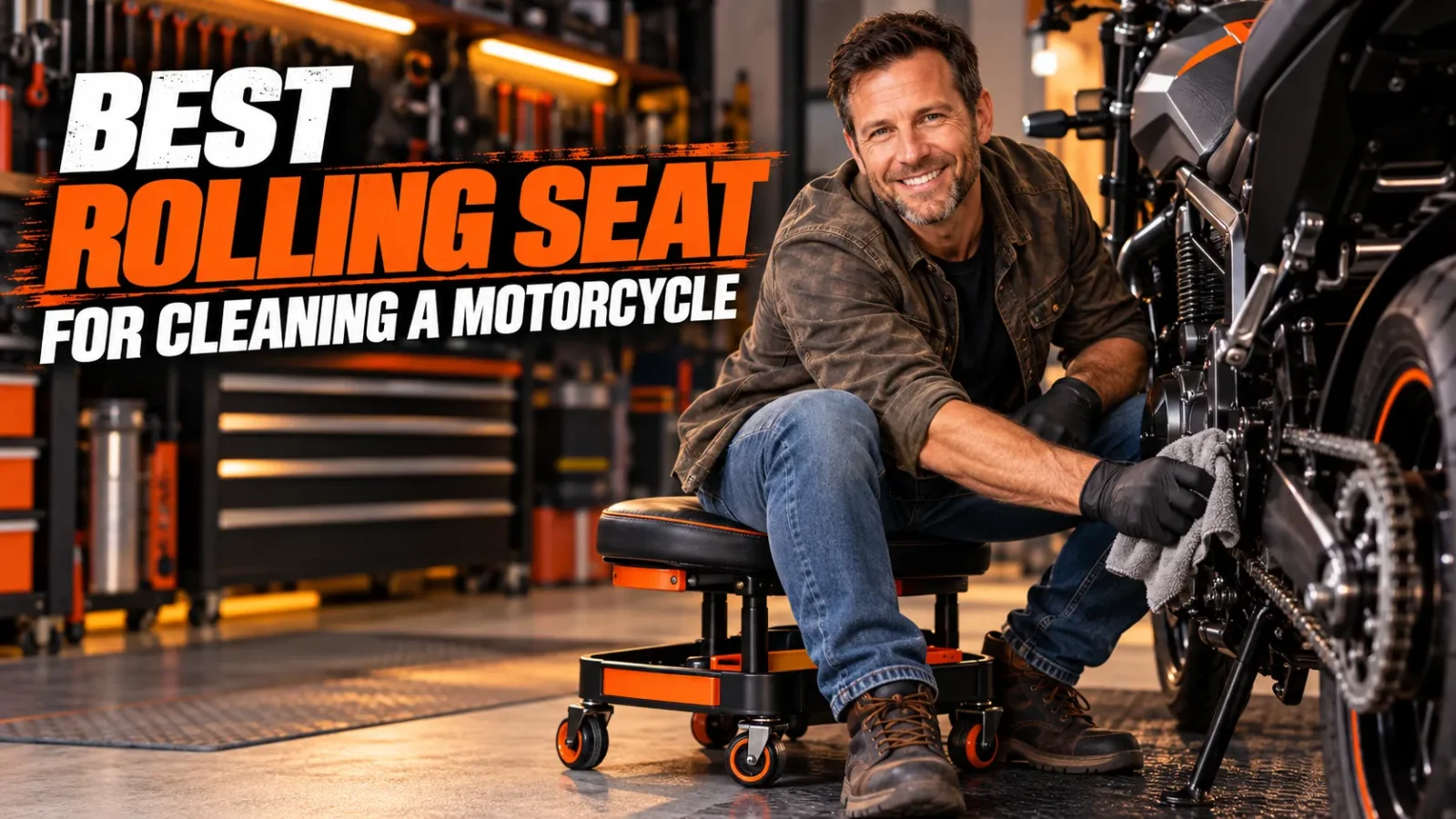
[IMAGE PLACEHOLDER 1: Featured image] Alt text: Rider seated on a rolling mechanic’s stool cleaning a motorcycle wheel in a garage AI image prompt: Photorealistic image of a rider in work gloves seated on a low black rolling mechanic’s stool beside a motorcycle in a tidy garage, wiping the front wheel with a microfiber cloth, cleaning supplies on a nearby shelf, warm overhead lighting, no visible brand logos, 16:9.
The Back Pain That Isn’t From Riding
I used to think my aching back after a Saturday in the garage was just part of owning a bike. Crouch to scrub the wheel. Kneel to check the chain. Bend to reach the bottom of the engine. Stand up with a groan.
Then a friend who worked on bikes for a living handed me a rolling stool and said, “Try this for a weekend.” I was sceptical. It looked like something from a dentist’s office. But by the end of the day I’d noticed that I could reach almost everything without bending, and I hadn’t needed a single “ow” when standing up.
It sounds trivial, but a good rolling seat changes how long you’re willing to spend on maintenance. And when maintenance is comfortable, you do more of it. That’s good for your bike and good for you.
I haven’t tried every rolling stool on the market, so I won’t pretend to rank them. This post is about how to think about the choice so you can pick one that fits your garage and your body.
What Jobs a Rolling Seat Helps With
Almost every low-level job on a motorcycle benefits.
- Washing wheels and lower bodywork. My guide on how to wash your motorcycle includes plenty of low-down work.
- Cleaning and lubing the chain. See my chain cleaning guide.
- Changing oil. My oil change guide covers the process, and a stool keeps you comfortable while the oil drains.
- Brake work. Checking or replacing pads is easier at eye level. See my guide on when to replace motorcycle brake pads.
- Tyre checks. Inspecting tyre wear is easier when you’re close. See my tyre wear pattern guide.
- Detailing and polishing. Hours of low work go faster and cause less strain.
- General inspections. My T-CLOCS pre-ride inspection guide is easier when you can roll around the bike.
If you work on bikes regularly, a rolling seat quickly stops feeling like a luxury.
Types of Rolling Seats
1. Low Rolling Stools
A simple round or square seat on casters, usually around knee height or a little higher. Often fixed height.
Good for: wheel work, chain care and general low jobs. Watch out for: fixed height may not suit you or your bike.
2. Adjustable-Height Stools
These use a gas lift or a manual mechanism to raise or lower the seat. This is the style I’d choose for most motorcycle work.
Good for: switching between low and mid-height jobs. Watch out for: weaker gas lifts can sink over time, and cheap mechanisms feel wobbly.
3. Stools With Storage or Trays
Some have a tray, a drawer or a magnetic area for tools and parts.
Good for: keeping tools in reach and parts from rolling away. Watch out for: extra weight and bulk, and storage can be flimsy.
4. Creeper-Style Seats
Low, flat seats that also let you lie down, usually used for under-vehicle work.
Good for: jobs low under the bike. Watch out for: less comfortable for long sitting, and tougher to get up from.
5. Foldable or Compact Stools
Designed to be stored easily.
Good for: small garages and occasional use. Watch out for: stability and weight capacity, which can be lower.
[IMAGE PLACEHOLDER 2: Types of rolling seats] Alt text: Four types of rolling garage seats: low stool, adjustable stool, tray stool and creeper seat AI image prompt: Studio product-style photo of four unbranded rolling garage seats side by side on a concrete floor: a low round stool, an adjustable-height stool, a stool with a tool tray and a low creeper-style seat, neutral grey background, even lighting, no logos, 16:9.
What I Look For
Here’s the checklist I use.
1. Height Range
Motorcycles are generally lower than cars, so the stool needs to suit your bike. Think about:
- Wheel height. For wheel and brake work, you want the seat low enough to reach comfortably.
- Mid-height tasks. Engine and chain work often suits a mid-height seat.
- Your own proportions. Taller riders may want a taller range, shorter riders a lower one.
An adjustable seat covers the most jobs, so I generally recommend it. Check the minimum and maximum heights in the spec, not just the marketing.
2. Weight Capacity
Check the rated capacity and choose a stool comfortably above your weight, not right at the limit. A stool at its limit can feel flexy and fail sooner. If you’re a heavier rider, look for a heavier-duty frame and a wide base.
3. Casters (The Most Important Part)
Casters decide whether a stool glides or fights you.
- Soft rubber or polyurethane wheels generally roll better on rough or uneven concrete and are quieter.
- Hard plastic wheels can get stuck on cracks, debris or oil, and can scratch some floors.
- Wheel size. Larger wheels roll over small obstacles more easily.
- Lockable casters. Locks help keep the stool in place when you’re leaning or reaching.
- Number of casters. Five-caster bases are generally more stable than four.
Most complaints I hear about rolling stools are about casters, so spend time here.
4. Stability and Base Width
A wider base resists tipping. Test the stool by sitting, leaning and reaching. If it wobbles or feels tippy, move on.
5. Seat Comfort
You may sit for an hour or more. Look for a padded seat with a shape that supports you. Seat covering matters too, because oil, cleaners and water will find their way onto it. Wipeable vinyl is usually easier to maintain than fabric.
6. Build Quality
Check welds, the lift mechanism and how the seat attaches. Look for solid construction and no sharp edges.
7. Cleaning and Chemical Resistance
Brake cleaner, degreaser and chain lube can damage some plastics and padding. A stool with a chemical-resistant seat and frame lasts longer.
8. Storage and Size
Think about where it will live. A bulky stool is annoying in a small garage.
9. Extras
Trays, magnetic bowls and drawers are nice, but not essential. Don’t pay for features you won’t use.
Matching the Stool to Your Garage
Smooth, Sealed Concrete
Most casters work well. Soft wheels are quiet and gentle on the floor.
Rough or Cracked Concrete
Choose large, soft casters that roll over imperfections.
Epoxy or Painted Floors
Check that casters won’t scratch or mark the floor. Soft wheels are usually kinder.
Slippery or Oily Floors
Be careful. Oil and cleaner make everything slick. Clean up spills, and consider locking casters or non-slip mats.
Small Garages
Consider a compact or foldable stool, and think about storage.
Outdoor Driveways
Rough surfaces and gravel are hard on small casters. A larger-wheeled stool or a different approach may work better.
Safety: Don’t Skip This Section
A rolling stool is a handy tool, but it can also cause accidents if misused.
- Never stand on it. It’s a seat, not a step ladder.
- Lock the casters when you’re pushing, pulling or applying force.
- Keep the floor clear. Dropped tools, cords and hoses can catch wheels.
- Clean up spills. A wet or oily floor makes wheels and your feet slide.
- Don’t overload it. Stay within the weight rating.
- Check it regularly. Look for loose bolts, cracked parts and a sinking lift.
- Stabilise the bike. Use a proper stand and secure it. A stool doesn’t hold up a motorcycle.
- Be careful with flammables. Brake cleaner, solvents and fuel mean keeping ignition sources away.
If you ever feel unsafe on a job, stop and rethink it.
Features Compared
| Feature | Why it matters | What I’d choose |
|---|---|---|
| Adjustable height | Works for many jobs | Gas lift or sturdy manual adjust |
| Casters | Roll quality and floor protection | Soft, larger wheels, lockable |
| Weight rating | Safety and durability | Well above your weight |
| Base | Stability | Wide, five-point if possible |
| Seat | Comfort and cleaning | Padded, wipeable |
| Storage | Convenience | Optional, only if you’ll use it |
Do You Need One? Honest Alternatives
A rolling stool isn’t the only way to sit comfortably while working.
- A sturdy low bench or crate. Cheap and stable, though it doesn’t roll.
- A kneeling pad or mat. Helps knees but not your back.
- A creeper. Good for lying down, less good for long sitting.
- A paddock stand and bike stand. Raising the bike can bring work closer to you.
- Doing less, more often. Short, regular jobs strain less than one marathon session.
A rolling stool is the most flexible, but you don’t need a fancy one to start.
Setting Up Your Garage Around the Stool
A stool works best when the space around it works too. A few small changes can make maintenance smoother.
- Keep a clear rolling zone. Leave enough space around the bike to roll without bumping into walls, benches and tool chests.
- Light the low areas. Wheels, brakes and the underside of the bike are dark. A clip-on or portable work light makes low jobs easier and safer.
- Keep tools within reach. A small tray, a magnetic bowl or a nearby cart means you’re not constantly standing up and sitting down.
- Use a mat if the floor is hard or cold. Anti-fatigue mats help your feet and legs when you’re off the stool.
- Manage spills quickly. Keep absorbent material and a cleaning cloth handy so spills never sit on the floor.
- Use a proper bike stand. A stable stand holds the bike where you need it, so you’re not fighting the bike while on a stool.
Looking After Your Stool
- Wipe it down after use to remove oil and chemicals.
- Check the casters for debris and hair wrapped around the axle.
- Tighten bolts occasionally.
- Lubricate moving parts if the manufacturer suggests it.
- Store it off wet floors where possible.
And while you’re in the garage, don’t forget the riding seat. My guide on how to clean, protect and waterproof a motorcycle seat fits well into a maintenance session. My overview of maintenance on a motorcycle shows how all these tasks fit together.
Common Mistakes
- Choosing by looks. Casters, height and stability matter more.
- Ignoring weight capacity. A stool near its limit is risky.
- Buying one that’s too tall. It may not get low enough for wheel work.
- Using it on a slick floor. Wheels slide.
- Standing on it. Don’t.
- Forgetting the locks. An unlocked stool rolls away just when you push.
- Paying for features you won’t use. Basic and stable beats fancy and flimsy.
Methodology: How I Approached This Guide
- I focused on how to evaluate rolling seats because I haven’t tested every model, and I don’t want to imply a ranking I can’t support.
- I haven’t named a “top” stool, since availability, specs and prices change. Check current reviews and specs for any model you consider.
- I’ve avoided prices, because they vary.
- I included safety guidance because rolling seats and garage work can go wrong.
- My advice comes from my own garage experience, from mechanics and riders I know and from common practice.
If you’ve found a stool that works well for motorcycle work, I’d love to hear the type, the floor you use it on and how it’s held up.
Frequently Asked Questions
What is the best rolling seat for cleaning a motorcycle?
An adjustable-height stool with soft, lockable casters, a wide stable base and a weight rating well above your weight. The best one suits your height, garage floor and the jobs you do.
Is an adjustable-height stool better than a fixed one?
For motorcycles, usually yes. You can lower it for wheel work and raise it for chain and engine jobs.
What casters are best for a garage stool?
Larger, soft rubber or polyurethane wheels roll well on rough concrete and are gentler on floors. Lockable casters add safety.
Can I use a rolling stool on a rough driveway?
It’s harder. Small hard casters struggle on rough or gravelly surfaces. Large soft wheels help, but a smooth surface is better.
Is a creeper better than a stool?
A creeper is great for lying under a vehicle, but less comfortable for sitting. For cleaning and general maintenance, a stool is usually more convenient.
How do I stop my stool rolling away?
Use lockable casters, keep the floor clean and dry and consider a non-slip mat.
Can I stand on a mechanic’s stool?
No. It’s designed for sitting, and standing on one is a fall risk.
How do I clean oil off a stool?
Wipe with a suitable cleaner that won’t damage the seat material. Check the maker’s care instructions.
Do I really need a rolling stool?
No, but it can make maintenance more comfortable and so you’re more likely to do it. A sturdy low stool or crate is a fine starting point.
Final Thoughts
A rolling seat won’t change how your bike rides, but it can change how often you look after it. Choose adjustable height, good casters and a stable base, and use it safely.
Comfortable maintenance gets done. And a well-maintained bike is a safer, more enjoyable one.
Keep Reading in the Seat Series

Related Articles
Best Motorcycle Seats for Tailbone and Back Pain Relief: What Helps and What Doesn’t
Riding hurts? Here's what I look for in a motorcycle seat for tailbone pain, a bad back and pressure problems,…
Jake Miller
13 min read
Best Motorcycle Seat for Tall Riders: Room to Stretch, Support That Lasts
Tall, big or riding two-up? Here's how I choose a motorcycle seat with enough reach, support and room, from seat…
Jake Miller
13 min read
Best Motorcycle Seat for Short Riders: How I Get Both Feet Down Without Giving Up Comfort
Short rider and tired of tiptoeing at red lights? Here's how I choose a lower, narrower motorcycle seat, including solo…
Jake Miller
17 min read