
Burnt Clutch Plates on a Motorcycle: How I Diagnose, Fix, and Prevent Them
 Jake Miller
9 min read
Jake Miller
9 min read
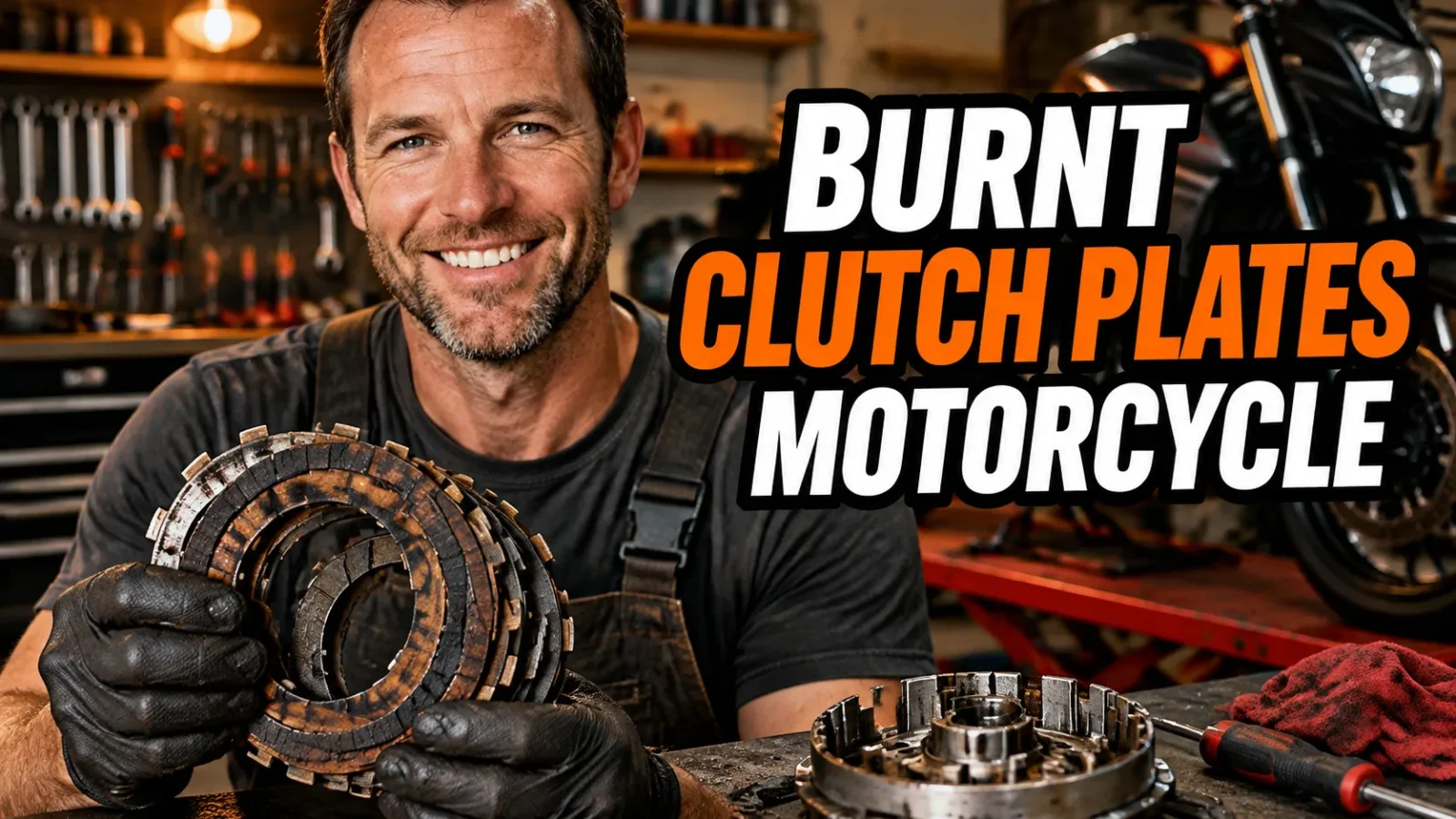
I still remember the exact moment I knew my clutch was done. I was merging onto a highway, rolled on the throttle, and watched the tach climb to seven thousand while the bike barely gained five miles per hour. Then came the smell. That sharp, acrid, almost electrical stink that hangs in your helmet for the rest of the ride.
Burnt clutch plates on a motorcycle are one of those problems that sneaks up on you. There’s rarely a warning light. There’s rarely a bang. Just a slow, creeping loss of drive that you explain away for weeks until the bike finally tells you the truth.
I’ve cooked a clutch twice in twenty years of riding, once on a big twin in stop-and-go traffic and once on a dirt bike that spent too much time being feathered on hill climbs. Both times I learned something. This is everything I wish someone had told me before I spent the money.
- Burnt clutch plates announce themselves with a sharp acrid smell, rising RPMs without matching speed, and a vague or grabby lever.
- The usual culprits are riding the clutch in traffic, incorrect free play, hard launches, and the wrong engine oil.
- Once friction plates are glazed and steels are blued, no adjustment saves them. They need to come out.
- Fixing free play and your traffic habits is far cheaper than a clutch job, so check the simple stuff first.
- Always inspect the basket, hub, and springs while you’re in there. Plates alone often aren’t the whole story.
What Actually Happens Inside a Burnt Clutch
A motorcycle clutch is a stack of alternating friction plates and steel plates, squeezed together by springs. When you release the lever, that stack locks up and sends engine torque to the transmission. When you pull the lever, the stack separates and drive is cut.
Heat is the enemy. Every time the plates slip against each other, friction converts torque into thermal energy. A little slip is normal and necessary. Too much slip, for too long, and the friction material starts to glaze, the resin binders cook, and the steel plates turn that telltale straw-to-blue color.
Once a friction plate glazes, it’s like a brake pad that’s been overheated. The surface hardens, the coefficient of friction drops, and it slips even more easily the next time. It’s a downward spiral, and it accelerates fast.
Wet Clutches and Dry Clutches Burn Differently
Most modern street bikes run a wet clutch, bathed in the same oil as the engine and transmission. If you want the full mechanics, this breakdown of how does a wet clutch work is worth ten minutes of your time, because the oil matters enormously.
A wet clutch sheds heat into the oil, which is why it tolerates abuse better than a dry setup. But that same oil is a liability. Friction material from burnt plates contaminates the whole engine, and the wrong oil additive package can make a healthy clutch slip from day one.
Dry clutches, common on older twins and a lot of European bikes, run hotter and burn faster. They also smell worse and make more noise, so at least you get an early warning.
The Symptoms I’ve Learned to Trust
Diagnosis starts with your nose. That burnt smell is unmistakable once you’ve smelled it, and it lingers in the oil and the clutch housing even after the bike cools.
Then come the riding symptoms. Here’s the checklist I run through in my head whenever I suspect a clutch problem.
Slipping Under Load
This is the classic. You roll on throttle in a tall gear and the engine spins up faster than the bike accelerates. It’s worst in the upper gears, because that’s where engine torque puts the most load on the clutch pack.
A quick test I use: get rolling at about 30 mph in third or fourth, then snap the throttle wide open. If the revs flare and then settle back down, or if the speed doesn’t climb in proportion, the plates are slipping.
A Lever That Feels Wrong
Sometimes the lever goes vague and mushy. Sometimes it grabs right at the bar. Sometimes the friction zone moves around on you between rides. All of these point to a stack that’s changed thickness, which is exactly what happens when plates wear or warp.
Hard Shifting and False Neutrals
A dragging clutch that won’t fully disengage makes the transmission fight you. You get clunky shifts, false neutrals, and a bike that creeps forward at a stop with the lever pulled in. If your machine is a V-twin, some of this overlaps with harley davidson transmission problems, which I’ve chased before and can confirm is worth ruling out separately.
Contaminated Oil
Drain the oil and look at it. Friction material shows up as a dark, slightly metallic sludge. If the oil smells burnt, the clutch has been cooking for a while.
What Actually Burns a Clutch
Almost every burnt clutch I’ve seen traces back to one of a handful of causes. Rarely is it a defective part.
Riding the Clutch in Traffic
This is the number one killer. Sitting in a slow crawl and holding the lever half in so you can creep forward keeps the plates slipping constantly, with no airflow and no rest. Do that for twenty minutes in summer heat and you’re cooking dinner.
The fix is simple. Let the bike fully engage, move up, then pull the lever all the way in and coast to a stop. Don’t feather it for hundreds of yards at a time.
Incorrect Free Play
If there’s no free play at the lever, the clutch never fully engages. The plates slip microscopically all the time, and that adds up to a burn. Too much free play and it never fully disengages, which drags and overheats the pack from the other direction.
Adjustment is genuinely a five-minute job, and if you ride a big twin, learning clutch adjustment on harley davidson properly will save you a set of plates. I check mine every few thousand miles now, and I’ve never burnt another clutch on that bike.
Hard Launches and Clutch-Up Wheelies
Every hard launch dumps a huge amount of energy into the plates in a fraction of a second. A few are fine. A summer of them is not. The same goes for holding the clutch at the friction point on a steep hill climb.
The Wrong Oil
Wet clutches need oil without friction modifiers. Energy-conserving automotive oils with moly additives will make a perfectly good clutch slip. If your clutch started slipping right after an oil change, that’s your answer, and it’s the cheapest fix on this list.
Weak Springs and a Notched Basket
Springs lose tension with age and heat. When they do, the pack can’t clamp hard enough and slips under load. A notched clutch basket, where the plate tangs have hammered grooves into the fingers, stops the plates from moving freely and causes drag and chatter.
How I Confirm the Diagnosis
Before I buy anything, I do three things. First, I check and set free play to spec. Second, I check the oil level and condition. Third, I take the bike out and do the roll-on test in a tall gear.
If free play is correct, the oil is right, and it still slips, the clutch is coming apart. There’s no magic additive that restores glazed friction plates, no matter what the bottle claims.
When I pull the pack, I look for specific things. Friction plates that are dark, shiny, and hard instead of matte and slightly porous are glazed. Steel plates with blue or purple discoloration have been overheated. Warped steels will rock on a flat surface.
I also measure the friction plate thickness against the service limit and check the springs against their free length spec. Anything close to the limit gets replaced, because doing the job twice costs more than doing it once.
Repair or Replace?
If the plates are burnt, replacement is the only real option. A full friction and steel kit is usually the most economical route, and springs should be replaced at the same time as a matter of course.
While the cover is off, inspect the basket fingers for notching. Light notching can be carefully dressed with a file, but deep grooves mean a new basket. Check the hub and pressure plate for wear too, and check the release mechanism and cable or hydraulic line for smooth operation.
Then, and this matters, clean out the clutch housing and change the oil and filter. All that burnt friction material has to go somewhere, and you don’t want it circulating through your bearings.
After reassembly, set free play correctly, take it easy for the first hundred miles, and change the oil again. That second change flushes out the break-in debris from the new plates.
How I Keep It From Happening Again
Prevention comes down to a few habits I’ve built over the years.
I set free play to spec and recheck it every few thousand miles. I let the clutch fully engage in traffic instead of feathering it. I use the right oil, and I keep a note of the spec on my phone so I don’t grab the wrong jug at the parts counter.
I also listen to the bike. A clutch that’s starting to go gives you weeks of subtle warnings before it fails completely. A slightly vague lever, a small flare in the revs on a hard roll-on, a faint smell after a hot day in traffic. Those are the moments to act, not the moment you’re stranded on the shoulder.
And honestly, the clutch is one of the most forgiving systems on a motorcycle. Treat it reasonably and it will outlast the bike. Abuse it, and it will remind you with that smell you’ll never forget.
If you take one thing from my expensive education, let it be this. Burnt clutch plates almost always come from a habit, not a part. Fix the habit, set the free play, and you’ll never have to write that check twice.
Frequently Asked Questions
How do I know if my motorcycle clutch plates are burnt?
The biggest giveaway is a sharp, acrid smell like burning brakes, combined with slipping under acceleration, a mushy or vague lever feel, and RPMs climbing without matching speed. If the bike lurches or refuses to creep forward in gear, the friction plates are usually glazed or worn past their limit.
Can I ride a motorcycle with a burnt clutch?
You can limp short distances, but every mile makes it worse. A burnt clutch slips more, generates more heat, and can contaminate the oil with friction material. Ride it straight home or to a shop and keep the revs low and the load light.
How much does it cost to replace burnt clutch plates?
A typical friction and steel plate kit runs $80 to $200, and springs add $20 to $50. If you do the labor yourself, that is the whole bill. Shop labor usually adds two to four hours, and a damaged basket or hub can push the total much higher.
Does clutchless shifting burn clutch plates?
Not really. Clutchless upshifts with a quick throttle blip do not wear the friction plates much. What kills clutches is holding the lever half engaged, slipping it for long periods in traffic, and launching hard from a stop over and over.

Related Articles

Motorcycle Chain Keeps Getting Loose? Why It Happens and How I Finally Fixed It
Motorcycle chain keeps getting loose no matter how often you adjust it? I break down the causes, from worn sprockets…
Jake Miller
10 min read

Loose Motorcycle Chain Symptoms: 9 Warning Signs I Learned the Hard Way
Loose motorcycle chain? I walk through the symptoms I've felt and heard, how to measure slack in 5 minutes, and…
Jake Miller
11 min read

Motorcycle Clutch Problems Symptoms: 9 Warning Signs I Wish I’d Caught Sooner
Slipping, dragging, or a mushy lever? I break down the real motorcycle clutch problems symptoms I've found on my own…
Jake Miller
10 min read