
Push Starting a Motorcycle Without the Key: What Works and What Doesn’t
 Jake Miller
11 min read
Jake Miller
11 min read
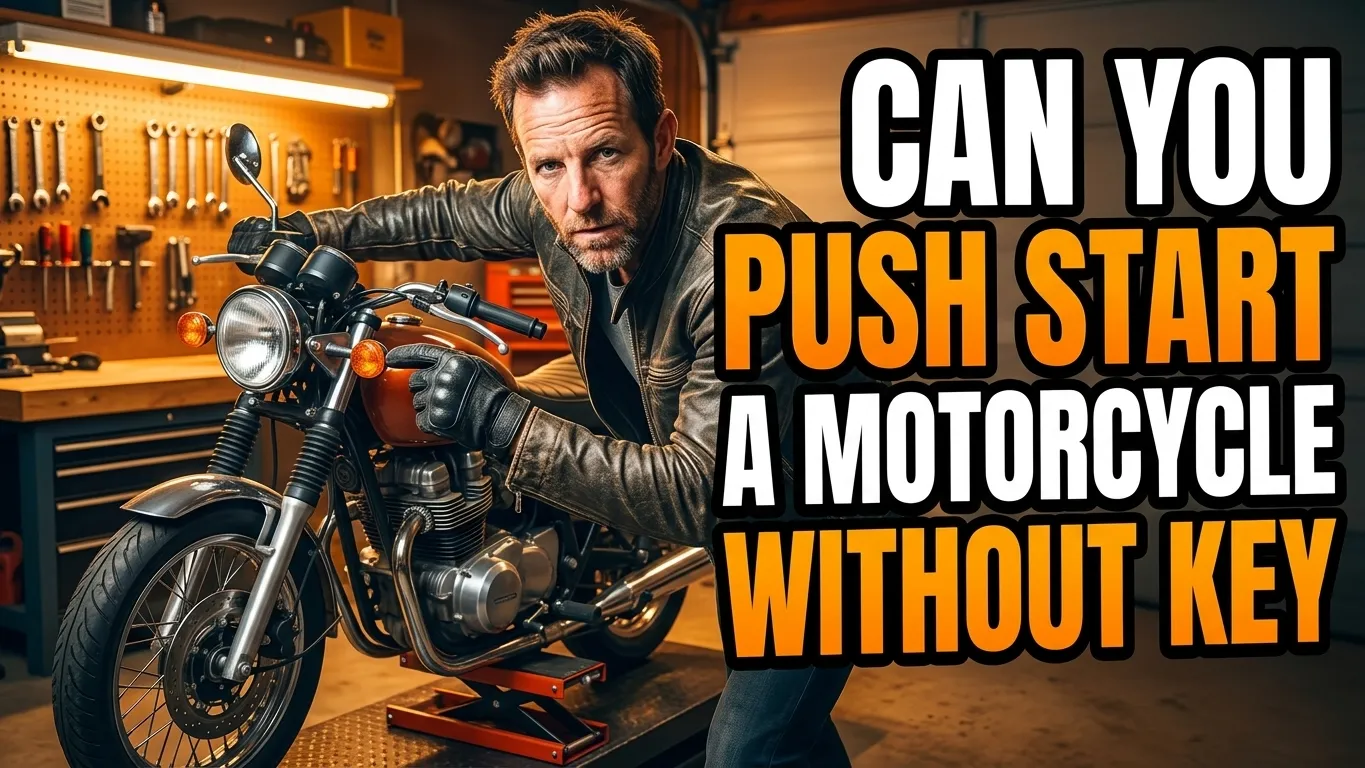
I get this question more than you’d think, usually from a rider standing next to a bike in a parking lot, patting every pocket. The idea is simple: if you can roll a bike downhill and pop the clutch to wake it up, surely the key doesn’t matter. I wish it were that easy, but the reality is more nuanced.
In this guide I’ll walk you through how push starting actually works, why the key is still part of the equation, and what I’d do if I lost mine. Since a lot of push-start trouble begins with a weak battery, it also helps to understand your power source, so I recommend my what are the different types of motorcycle batteries ultimate guide as a companion read.
- Push starting turns the engine over, but it does not replace the ignition. Without the key, the bike generally has no spark, fuel, or computer power.
- Push starting is a fix for a dead battery, not for a missing key.
- If you lost your key, a dealer or qualified locksmith with proof of ownership is the right path.
- Push starting works best on manual, carbureted bikes and is risky or impossible on many modern machines.
The Short Answer I Give Every Rider
No, you can’t push start a motorcycle without the key in any meaningful, practical way. The push gets the crankshaft spinning, but that’s only one of the things an engine needs to run. The rest of the system still has to be switched on.
On nearly every bike, the key switch is what energizes the ignition coil, the fuel pump or fuel system, the ECU, and the gauges. No key turned to “on” means none of that comes alive. You’d be running down the street pushing a very heavy bicycle.
I’ll also be straightforward about one thing. I’m not going to cover bypassing an ignition on a bike you don’t own, because that’s theft. Everything here is written for owners dealing with a lost, broken, or stuck key situation.
How Push Starting Actually Works
It helps to picture what you’re doing. When you roll the bike and release the clutch in gear, the rear wheel forces the engine to turn, doing the job of the starter motor. If the ignition and fuel are live, the engine fires and keeps going.
Notice that the starter motor is the only thing being replaced. Everything else still has to be working, and most of it depends on the key being on.
What the Engine Needs to Run
Every combustion engine needs the same basics, and I like to think of them as a checklist:
- Air: Drawn in through the intake as the engine turns.
- Fuel: Delivered by a petcock and carburetor, or by an electric fuel pump and injectors.
- Spark: Created by the coil and delivered to the plugs at the right moment.
- Compression: Produced by the moving pistons, which is what the push provides.
A push only helps with that last item. Spark and, on injected bikes, fuel delivery both depend on electrical power that the ignition switch controls.
Where the Key Fits In
On a typical motorcycle, the ignition switch is a gatekeeper for the main electrical circuit. When it’s off, the coil, injectors, and ECU receive nothing. Even a perfectly executed push won’t create a spark if that circuit is open.
Modern bikes add another layer with immobilizers and transponder chips. If the bike doesn’t detect a recognized key, it may refuse to fire at all, even with the ignition circuit otherwise intact. That’s the whole point of the system.
Why Riders Get Confused About This
The confusion usually comes from mixing up two different problems. One is a dead battery, where push starting is a classic fix. The other is a missing key, where it isn’t.
When the battery is dead but you have the key, you can turn the ignition on and use a push to spin the engine. Often the engine runs fine once it fires, because the stator and regulator-rectifier generate power while it’s running.
The Dead Battery Scenario
I’ve done this myself on older carbureted bikes, and it works well. Key on, kill switch on, second gear, clutch in, roll to a decent speed, then release the clutch smoothly. With a little luck, the engine catches.
If you’re curious how far the bike can go on its own power, I dug into that in can motorcycle run without battery. The short version is that it depends heavily on the bike’s design, and many modern bikes don’t like it.
The Missing Key Scenario
Here the problem is different. There’s no way to turn the ignition on, so the electrical system stays asleep. No amount of running and clutch popping will change that.
I know it’s tempting to search for tricks, but the honest answer is that a key problem needs a key solution. The sections below cover those.
When Push Starting Works, and When It Doesn’t
Even with a key in hand, push starting isn’t universal. I’ve seen riders injure themselves or damage a bike by trying it on the wrong machine. Knowing your bike matters.
Bikes That Tend to Cooperate
In my experience, these are the best candidates:
- Older carbureted bikes with manual gearboxes.
- Lightweight singles and twins that are easy to roll.
- Bikes whose ignition systems can run on minimal battery power.
These machines are forgiving. Weight and compression are manageable, and the electrical demands are low, so a quick push often does the job.
Bikes That Usually Don’t
- Scooters and automatics with CVT transmissions or automatic clutches.
- Fuel-injected bikes that need battery voltage to run the pump and ECU.
- Heavy touring bikes that are tough to push to speed.
- Machines with immobilizers that need a recognized key.
Check your owner’s manual first. Some manufacturers specifically advise against push starting, and I’d take that seriously.
A Quick Safety Note
Pushing a heavy motorcycle while jumping on is risky. Wear your helmet, gloves, and boots, pick a clear, flat or gently sloping stretch, and have a helper if you can. *Never* attempt it in traffic.
What I’d Do If I Lost My Key
This is the part most people actually need. If your key is gone, take a deep breath, because it’s a solvable problem. The steps below are what I’d follow, in order.
Step One: Look Before You Panic
Retrace your steps and check jacket pockets, tank bags, and the spot where you last parked. It sounds obvious, but a surprising number of “lost” keys are sitting in a riding jacket. Also check whether you have a spare at home.
Step Two: Contact the Dealer
Your dealer can usually cut and, if needed, program a new key using your VIN and proof of ownership. Bring your registration and photo ID. For bikes with transponder chips, this is often the only reliable route.
Expect some cost and a bit of waiting, especially if a key blank has to be ordered. It’s worth it for a key that works properly with your bike’s systems.
Step Three: Try a Motorcycle-Savvy Locksmith
An automotive or motorcycle locksmith can often make a key from the lock itself or from a key code. Make sure they verify ownership, which is a good sign that they’re legitimate. Ask upfront whether they can handle transponder keys for your model.
Step Four: Check Your Insurance
Some policies cover key replacement or lost-key incidents. It’s a quick call and could save you money. While you’re at it, ask whether roadside assistance can tow the bike to a shop.
When the Key Is Fine but the Bike Still Won’t Start
Sometimes riders blame the key when the real culprit is the battery. If the dash lights are dim or the bike just clicks, you’re likely dealing with a power problem rather than a key problem.
Check the Battery First
A weak battery is the most common reason a bike won’t turn over. Before anything else, test the voltage with a multimeter. A healthy, rested battery should sit around 12.6 volts.
If it’s way below that, you may be able to revive it. I covered the details in if a motorcycle battery dies can it be recharged, including when recharging makes sense and when replacement is smarter.
Jump Starting as an Alternative
If push starting isn’t an option, a jump start is the next best thing. You can use a portable jump pack or another battery. Be careful, though, because mismatched systems can cause trouble.
If you’re thinking of using a car for the job, read can a car battery jump start a motorcycle essential guide first. The key rule I follow is to keep the car engine off while connected.
Thinking About a Backup Setup
Some riders on long trips like having extra power available. If that interests you, I explored the pros and cons in can you run 2 batteries on a motorcycle expert insights and tips. It’s not for everyone, but it’s interesting to understand.
Kickstart or Electric Start: Does It Change Anything?
This is where bike design gets interesting. A kickstart bike has a mechanical way to spin the engine, which makes it less dependent on the battery. Still, the ignition circuit needs to be live to produce spark on most models.
If you’re deciding between systems or just curious about the trade-offs, my breakdown of kickstart vs electric start covers reliability, convenience, and maintenance in detail. I have a soft spot for kickstarters on older bikes.
Why the Key Still Matters on Kickstart Bikes
Even on a bike with a kickstarter, I still need to turn the key for the ignition to work on most models. A few very old or magneto-based machines can run with minimal electrics, but they’re the exception rather than the rule.
For nearly everything on the road today, the key remains the gateway. That’s a good thing, because it’s also a basic theft deterrent.
Prevention: How I Avoid Key Trouble
After a few close calls over the years, I’ve built some habits that save me from this situation. None of them are complicated, but they work.
- Keep a spare key somewhere safe at home, not on the bike.
- Photograph your key code if your bike has one stamped on the key or lock.
- Use a key leash or tether clipped inside a jacket pocket.
- Maintain the battery with a smart charger during off-season storage.
- Store your VIN and registration digitally so you can prove ownership quickly.
That last one is the habit I wish more riders had. When a dealer asks for paperwork, having it on your phone can turn a miserable day into a manageable one.
Common Mistakes I See
Assuming a Push Will Fix Everything
A push is a technique for one specific problem, and treating it as a cure-all wastes energy. If the bike doesn’t fire after a few tries, stop. Repeated attempts can flood the engine or stress the drivetrain.
Ignoring the Kill Switch
It sounds silly, but I’ve seen riders struggle for twenty minutes with the kill switch in the “off” position. Always check it, along with the fuel level and the side stand sensor.
Forcing a Stuck Ignition
If the key is in your hand but won’t turn, don’t force it. A worn key or damaged lock cylinder can snap, making things far worse. A little lubricant designed for locks and a gentle wiggle often helps, and a shop can handle the rest.
My Final Take
So, can you push start a motorcycle without the key? In real-world terms, no. The push solves a cranking problem, while a missing key creates an electrical access problem, and those are two very different things.
If your battery is dead and you have the key, push starting can be a lifesaver on the right bike. If your key is gone, skip the workarounds and go the proper route through your dealer, a reputable locksmith, or your insurer.
Ride safe, keep a spare key at home, and treat your battery with a little respect. It’ll return the favor on the mornings when it matters most.
Frequently Asked Questions
Can you push start a motorcycle without the key?
No, not in any practical way. Push starting only turns the engine over. The ignition, fuel pump, and ECU still need power, and that power usually comes through the key switch. If the key is missing, the fix is a replacement key, not a push.
Does push starting work on every motorcycle?
No. It works best on carbureted bikes with a manual gearbox and a working ignition circuit. Many automatics, scooters with CVT transmissions, and some fuel-injected bikes with weak batteries won’t start this way.
What should I do if I lost my motorcycle key?
Contact your dealer or a motorcycle-experienced locksmith with proof of ownership and your VIN. They can cut or program a replacement. Check your insurance policy too, since some plans cover key replacement.
Can a dead battery be fixed by push starting?
Often, yes, as long as you have the key and the bike is compatible. Push starting is a temporary workaround, though. You should still test and recharge or replace the battery soon after.

Related Articles

How to Fix a Short Circuit on a Motorcycle: A Rider’s Step-by-Step Guide
Learn how to find and repair a motorcycle short circuit step by step, from blown fuses to chafed wires, with…
Jake Miller
11 min read

What Does a CDI Unit Do on a Motorcycle? Purpose, Symptoms and Fixes
Wondering what a CDI does on your bike? I explain how the capacitor discharge ignition works, signs of failure, testing…
Jake Miller
10 min read

How to Test a 6 Volt Motorcycle Battery and Charging System (Step-by-Step)
Learn how to test a 6 volt motorcycle battery and charging system step by step, with multimeter readings, load tests,…
Jake Miller
10 min read