
8 Best Tires for Riding a Motorcycle in Snow and Ice (Rider-Picked)
 Jake Miller
9 min read
Jake Miller
9 min read
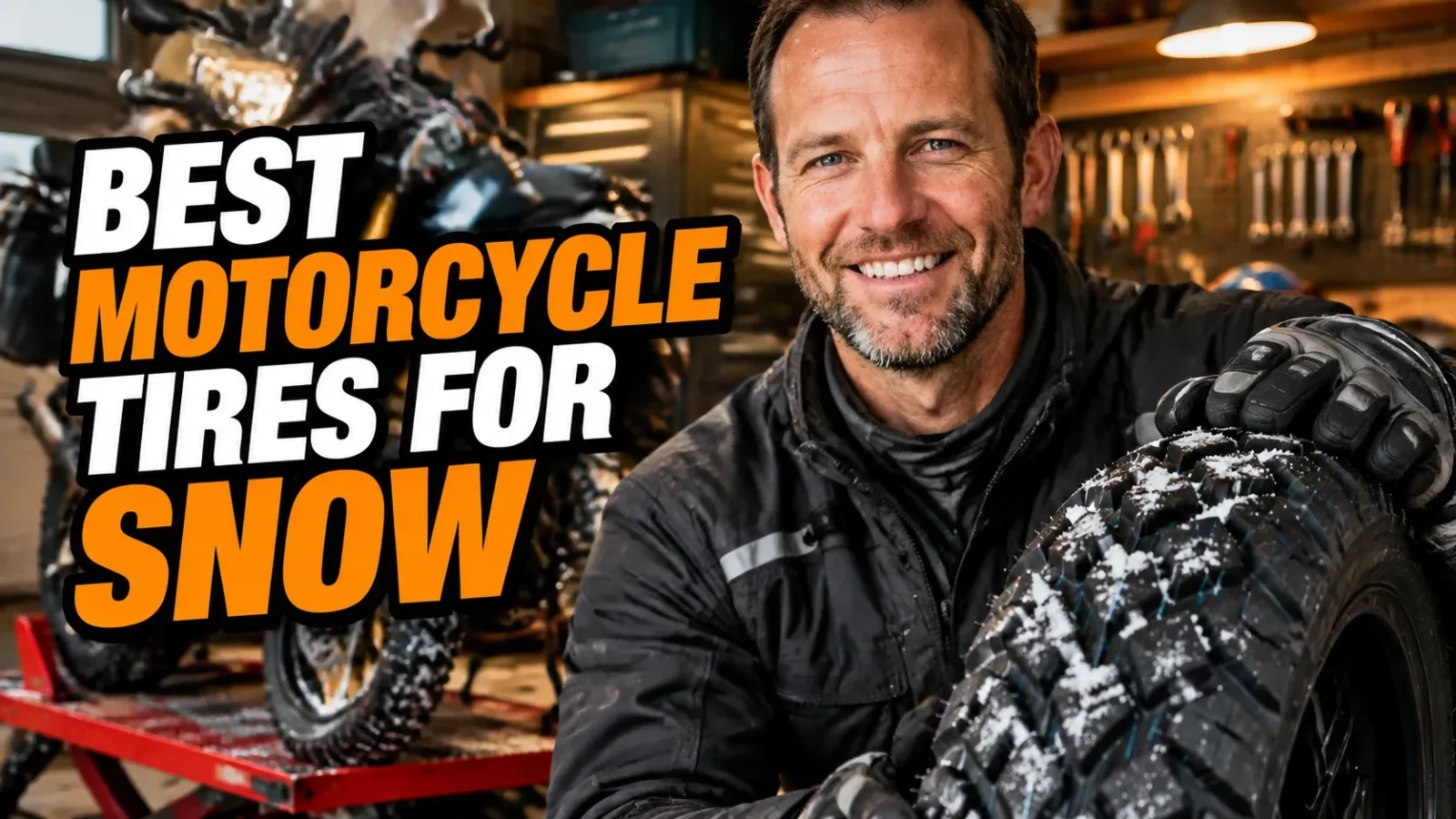
I’ll be upfront: I love riding when the temperature drops, but I’m also realistic about it. There is no such thing as a perfect snow tire for a motorcycle, and anyone who tells you otherwise is selling something. What does exist is a handful of dual-sport and adventure tires that give you a fighting chance on cold, slushy, and packed-snow roads.
Over the years I’ve ridden through icy mornings, slushy commutes, and snow-dusted forest roads. I’ve learned which tread patterns hold up and which turn into slippery slicks the moment the mercury dips. This list is my honest take on the eight tires I’d trust most when the white stuff shows up.
One note before we dive in: every tire here is a compromise. Pick the one that best matches your bike, your roads, and your tolerance for risk, and always ride well within your limits.
- No motorcycle tire is truly “snow rated,” so aim for aggressive, open-tread dual-sport or adventure knobbies.
- My top pick for winter road use is the Heidenau K60 Scout, with the Continental TKC 80 as the pick for deep or packed snow.
- Budget riders should look at the Shinko 705 or the Dunlop Trailmax Mission.
- Pressure, speed, and smooth inputs matter as much as the tire itself.
What I Look for in a Winter Motorcycle Tire
Before the list, here is the checklist I use. It helps explain why street-oriented sport rubber doesn’t make the cut, even though a great tire like those covered in my guide to the best Michelin sport tire for motorcycle shines on dry summer tarmac.
Tread Pattern and Void Ratio
Snow grip comes from tread blocks that can dig in and shed packed snow. I want widely spaced lugs and a high void ratio, because tightly packed tread fills with slush and turns into a slick drum.
Rubber Compound
Cold hardens rubber, and hard rubber doesn’t grip. Softer or more flexible compounds hold up better below freezing, though no motorcycle compound behaves like a dedicated car winter tire.
Tire Size and Contact Patch
A narrower tire can slice through loose snow to find traction below. Wider tires float more but can skate on ice. This is also why the front wheel sizing on bikes matters, which I touched on when looking at why the front wheel is bigger on a motorcycle. A larger front wheel rolls over ruts and slush more calmly.
1. Heidenau K60 Scout: Best Overall for Snowy Roads
If I could only pick one tire for winter commuting and touring, the Heidenau K60 Scout would be it. It is a German-made dual-sport tire famous for its deep, widely spaced block tread and tough carcass. It has a loyal following among riders who tackle bad weather year-round.
What I like about the K60 Scout is how predictable it feels when things get slippery. It builds up slush less than most road-biased tires, and the sidewall is stiff enough to resist squirming on heavier bikes. Expect to pay roughly $150 to $250 per tire depending on size.
Why It Works in Snow
The chunky tread blocks bite into packed snow and shed slush quickly. On plowed roads with icy patches, the K60 Scout felt reassuring in my experience, though it is never a miracle on bare ice.
Drawbacks
It is heavy, and it wears faster on dry pavement than a road-focused tire. Still, for a rider who truly wants one tire for winter, the Heidenau K60 Scout earns its spot.
2. Continental TKC 80: Best for Deep and Packed Snow
The Continental TKC 80 Twinduro is a legendary knobby with a reputation for serious off-road bite. The tread is aggressive enough that it feels like riding on cleats when you hit snow-covered gravel or hard-packed trails.
On the right bike, usually a big adventure machine or a lighter dual-sport, the TKC 80 gives you tons of confidence in loose white stuff. It typically costs around $130 to $230 per tire, depending on size.
Where It Shines
Deep snow and unplowed backroads are where this tire earns its keep. The big blocks claw forward and keep the bike moving.
Where It Struggles
On plowed asphalt, the TKC 80 gets vague and noisy, and it wears quickly. I’d choose it only if a good share of your winter riding is genuinely off the pavement.
3. Mitas E-07+: Best Balanced 50/50 Option
The Mitas E-07+ is a dual-sport tire I recommend to riders who can’t commit fully to knobbies. It is a 50/50 design, meaning it aims to handle both pavement and dirt without being terrible at either.
In winter, the E-07+ gives you decent bite in loose snow and slush while staying civilized on cold, wet roads. Prices usually land around $100 to $180 per tire, which makes it a great value pick.
My Take
I find the E-07+ especially good on mid-weight adventure bikes. It does not match a full knobby in deep snow, but it feels less sketchy on plowed roads, which is where most winter riders spend their time.
4. Michelin Anakee Wild: Best for Adventure Bikes on Mixed Surfaces
The Michelin Anakee Wild is built for large adventure bikes that spend time on both highways and rough tracks. It uses a robust carcass and a knobby, open tread that holds up under heavy loads.
For snowy trails and cold gravel, the Anakee Wild feels planted. Expect to pay about $160 to $270 per tire. Michelin quality comes at a price, but the longevity is good if you also ride on the street.
Cold-Weather Behavior
Michelin’s compounds tend to stay workable in cold temperatures. If you have ever looked into Michelin Commander 3 problems, you know no tire is perfect, but the Anakee Wild has a solid reputation for off-road durability.
5. Metzeler Karoo 3: Best for Lighter Dual-Sports
The Metzeler Karoo 3 is a favorite of mine for lighter dual-sport and mid-size adventure bikes. Its tread pattern is aggressive, but it is also built to be road legal and reasonably quiet.
On snow-covered fire roads and packed trails, the Karoo 3 pulls well and gives good feedback at the bars. I usually see it priced around $120 to $220 per tire.
Why I Like It
It strikes a nice balance between off-road bite and highway manners. If you want a winter tire that doesn’t make every paved mile feel like a chore, the Karoo 3 deserves a look.
6. Pirelli Scorpion Rally STR: Best for Mixed Road and Trail Winters
The Pirelli Scorpion Rally STR is a street-biased adventure tire with a dual-compound design and an open tread. It is aimed at riders who spend most of their time on pavement but need real off-road ability.
In cold, slushy conditions, the Scorpion Rally STR is composed and predictable. It typically runs about $130 to $230 per tire. I’d choose it for commuting through wet, chilly weather where the road is usually plowed.
Limits
It is not the tire for deep snow. Think of it as an upgrade for cold-weather street riding, with a bonus when the road turns to gravel.
7. Shinko 705: Best Budget Pick
The Shinko 705 is a classic budget dual-sport tire. It is affordable, widely available in many sizes, and has a decent knobby pattern that works in loose snow and mud.
Prices commonly sit around $60 to $120 per tire, which is hard to beat. In my experience, the Shinko 705 will not match the premium options for longevity or wet grip, but it gets you moving in the snow without emptying your wallet.
Who It Is For
It suits riders with smaller or lighter bikes who want occasional winter traction. If you ride hard or carry heavy loads, I’d step up to one of the tires above.
8. Dunlop Trailmax Mission: Best Value for Adventure Riding
The Dunlop Trailmax Mission is an adventure tire designed for riders who want off-road ability without sacrificing too much on-road behavior. It has a chunky tread that digs into loose surfaces and a reasonably stable carcass.
Pricing tends to fall around $110 to $200 per tire. For snowy gravel and packed backroads, the Trailmax Mission is a capable and good-value option that I’d happily recommend to newer adventure riders.
Notes on Longevity
It wears reasonably well for its category. As with every knobby, expect more road noise and less grip on cold, wet asphalt than a street tire provides.
Wheel Type and Winter Riding
Your wheels matter too. Many adventure bikes use spoked rims, and riders often ask whether spoked motorcycle wheels are dangerous. In my experience they are not, and they handle rough winter roads well because they flex under impact. Just check spoke tension regularly, since salt and moisture can cause corrosion.
Tips I Rely On for Riding in the Snow
Lower the Pressure Slightly
A small pressure drop can widen your contact patch and improve grip on loose snow. I never go far below the manufacturer’s range, because pinch flats and rim damage are real risks.
Be Smooth With Everything
Brake gently, roll on the throttle softly, and avoid sudden steering inputs. If the front end starts to feel strange, don’t ignore it. Check out why your front wheel wobbles on your motorcycle, because a wobble on ice can turn bad fast.
Consider Studs for Ice
Some riders add sheet-metal screws or purpose-made studs to their knobbies for ice. It can help a lot, but check your local laws first, and remember that studded tires behave poorly on bare pavement.
Know When to Park It
I’ve learned the hard way that sometimes the smartest move is leaving the bike in the garage. Black ice, deep unplowed snow, and heavy freezing rain are conditions where even the best tire won’t save you.
Final Thoughts
If you are serious about riding in winter, my strongest recommendation is the Heidenau K60 Scout for road-focused snow riding and the Continental TKC 80 for deep or packed snow. For budget-minded riders, the Shinko 705 and Dunlop Trailmax Mission offer plenty of value.
Whichever tire you choose, remember that the rider matters more than the rubber. Stay smooth, stay realistic, and enjoy the quiet beauty of a snowy ride when conditions allow.
Frequently Asked Questions
Are there true snow tires for motorcycles?
Not in the way cars have them. Most riders use aggressive dual-sport or adventure knobby tires, and many add studs or sheet-metal screws for ice. No tire makes a motorcycle safe on unplowed, icy roads.
Can I use regular street tires in the snow?
I strongly advise against it. Street tires harden in the cold and pack with slush, which means almost no grip on snow. A knobby dual-sport tire is a far better choice.
Should I lower my tire pressure for snow?
A modest drop can widen the contact patch and improve grip on loose snow, but going too low risks pinch flats and rim damage. Stay within the manufacturer’s recommended range and adjust gradually.
Do studded motorcycle tires work on ice?
Yes, studs bite into ice far better than rubber alone. Check your local laws first, since studded tires are restricted in some regions, and expect noisy, rough performance on bare pavement.

Related Articles

8 Best Cruiser Motorcycle Tires for Street Riding: My Real-World Picks
I rank the 8 best cruiser motorcycle tires for street riding, from Michelin to Pirelli, with real notes on grip,…
Jake Miller
9 min read

8 Best Michelin Motorcycle Tires for Every Riding Style (Tested Picks)
Looking for the best Michelin motorcycle tires? I break down my 8 favorite models for sport, touring, adventure, cruiser, and…
Jake Miller
9 min read

Yamaha Tire Pressure Guide: The Right PSI for Safer, Smoother Rides
Learn the right tire pressure for your Yamaha, from sportbikes to cruisers and dirt bikes. Check, adjust and maintain PSI…
Jake Miller
9 min read