
7 Best Motorcycle Tires for Winter Riding on Snow and Ice (Tested Picks)
 Jake Miller
8 min read
Jake Miller
8 min read
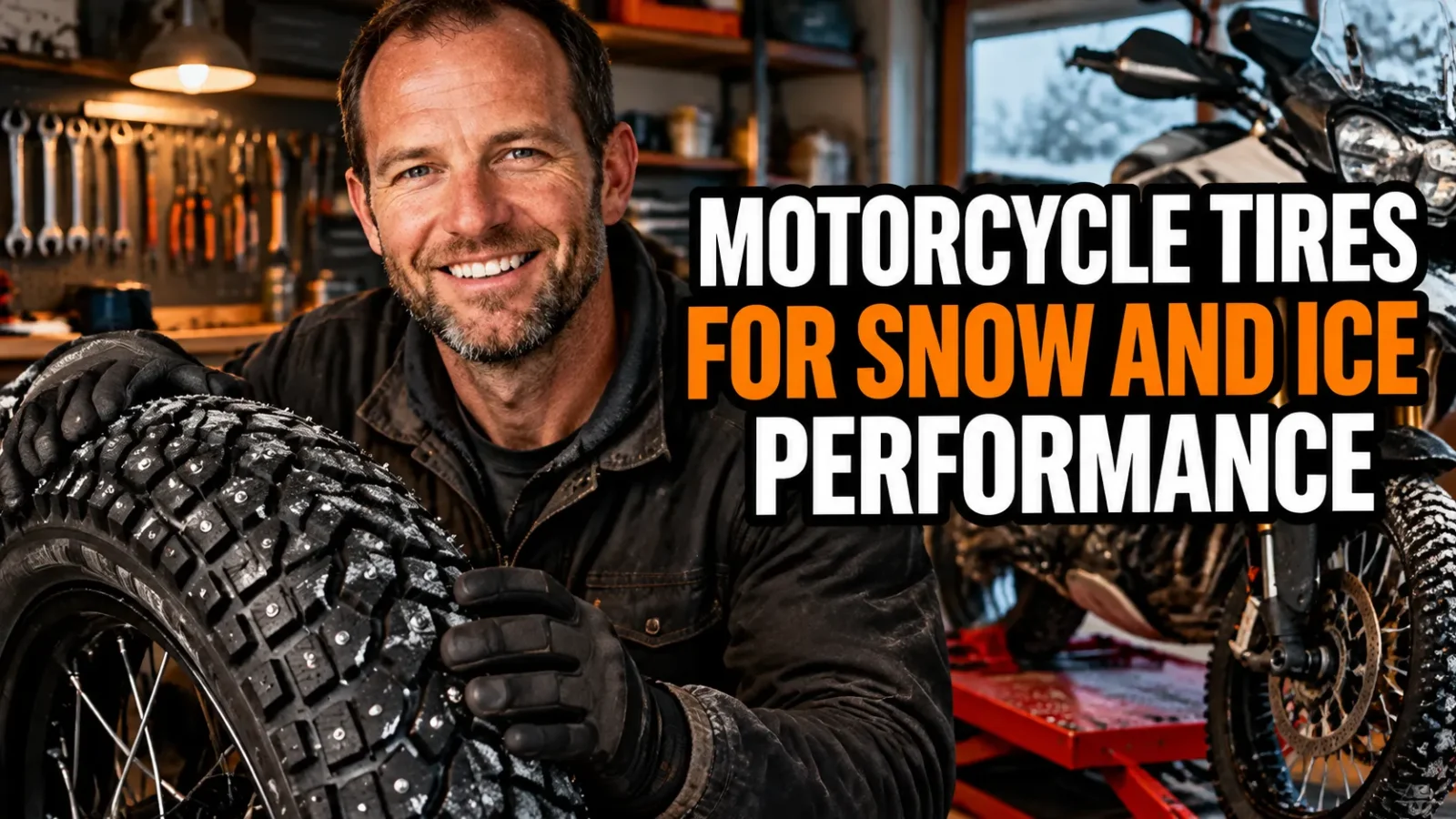
I’ve spent a few winters riding when most of my neighbors had parked their bikes. I learned quickly that tires make or break a cold-weather ride. The right rubber and tread won’t turn a motorcycle into a snowmobile, but they can turn a terrifying commute into a manageable one.
Here I share the seven tires I’d actually consider for snow, slush, and frozen ground. Every one is a real, available model, and I’ve explained why it earns its spot. I’ve also included the setup habits that matter as much as the tire itself.
- No motorcycle tire is a true ice tire; aggressive knobby dual-sport tires are the best realistic starting point.
- The Continental TKC 80 Twinduro and Heidenau K60 Scout are my top picks for deep snow and mixed winter conditions.
- For real ice, studs are the only meaningful upgrade, and they are best added to deep-lug tires.
- Pressure, speed, and smooth inputs matter as much as which tire you buy.
Before You Buy: What Actually Works on Snow and Ice
Let me set expectations first. Motorcycles have two small contact patches, so there’s very little margin on slick surfaces. Even the best tire on this list will only help you, not make you invincible.
Why Knobby Tires Win in Snow
Deep, widely spaced lugs bite into loose snow and shed slush instead of packing with it. Street tires with fine sipes and hard-wearing compounds simply skate. That’s why almost every tire below is a dual-sport or adventure pattern.
The Ice Problem
Ice is different. Lugs can’t bite into a hard, glazed surface, so rubber compound and studs do the work. I treat ice as a “ride very gently or don’t ride” condition, even with studs.
If you want a broader look at the category, my guide to the best motorcycle tires for snow goes deeper on tread patterns and compounds.
1. Continental TKC 80 Twinduro — Best Overall for Deep Snow
The Continental TKC 80 Twinduro is the tire I reach for first when snow is truly deep. Its tall, widely spaced blocks dig through powder and chew into packed trails. In my experience, the TKC 80 Twinduro clears snow from its tread better than most competitors.
It’s an aggressive 90/10-style off-road-biased tire, so expect noise and a vague feel on dry pavement. The TKC 80 Twinduro also wears quickly if you spend winters commuting on cleared roads. Pricing typically lands in the premium range for dual-sport rubber.
Who It Suits
Riders on adventure bikes like a BMW R 1250 GS or a KTM 790 Adventure will get the most from the TKC 80 Twinduro. Its deep blocks are also a great base for studding, which I cover later.
2. Heidenau K60 Scout — Best for Mixed Snow, Slush, and Pavement
The Heidenau K60 Scout is a tire I trust when winter roads are unpredictable. It’s a German-built, heavy-duty adventure tire with a rugged carcass and a tread that blends block depth with enough road manners for plowed highways. Many winter touring riders swear by the K60 Scout, and I understand why.
What stands out to me is its stable, planted feel when the road flips between slush and bare asphalt. The Heidenau K60 Scout also tends to last longer than softer off-road tires. It’s a sensible compromise if you ride daily through the cold months.
Trade-Offs
The K60 Scout is heavy, which affects handling on lighter bikes. It also isn’t a dedicated ice tire. Treat it as a very good all-around winter option rather than a miracle worker.
3. Mitas E-07+ — Best Value Dual-Sport Pick
The Mitas E-07+ delivers excellent bite for the money. It has a proper 50/50-style dual-sport pattern with deep lugs, so it handles snow, mud, and wet roads without the premium price. For budget-conscious winter riders, the E-07+ is the one I recommend most often.
On snowy gravel and packed trails, the Mitas E-07+ gave me confident traction. On cold, dry pavement it feels firmer than I’d like, but that’s the nature of a knobby. Pair it with sensible speeds and you’ll be happy.
Why I Like It for Studding
The E-07+ has sturdy blocks that hold up well to winter modifications. If you’re curious about adding grip for ice, it’s an affordable tire to experiment on.
4. Michelin Anakee Wild — Best for Adventure Bikes in Mixed Winter Terrain
The Michelin Anakee Wild is built for riders who spend as much time off pavement as on it. Its large, open tread blocks clear snow and mud nicely, and Michelin’s carcass construction gives stable handling at highway speeds. I find the Anakee Wild a refined choice for heavier adventure machines.
On wet and snow-dusted roads, the Anakee Wild feels more composed than many rugged rivals. It isn’t cheap, but the build quality shows. If you’re already a Michelin fan, check out my picks for the best micheline sport tire for motorcycle to see how the brand’s road offerings compare.
5. Metzeler Karoo 3 — Best for Technical Snowy Trails
The Metzeler Karoo 3 is a serious off-road-focused dual-sport tire with deep, self-cleaning lugs. When I ride snowy fire roads and frozen mud, the Karoo 3 digs in with real authority. It’s one of the more capable choices if your winter riding is genuinely off-pavement.
The trade-off is road behavior. The Karoo 3 has a lively, sometimes nervous feel on hard surfaces, and it wears faster than a Heidenau. For trail-focused winter riders, though, the Metzeler Karoo 3 is hard to beat.
A Note on Wheel Choice
Many bikes that suit the Karoo 3 come with spoked wheels. I get asked often about are spoked motorcycle wheels dangerous, and my answer is no, though they do need regular checks in winter. Salt and moisture can corrode spokes and nipples, so rinse and inspect them.
6. Dunlop D606 — Best Lightweight Option for Small Dual-Sports
The Dunlop D606 is a classic DOT-approved knobby that has served small dual-sport bikes for years. It’s a narrower, lighter tire, and that works to your advantage in snow because it cuts through to firmer ground beneath. On a bike like a Honda XR650L or Suzuki DR-Z400S, the D606 feels at home.
It’s an old-school design, so don’t expect the highway refinement of newer tires. Still, the D606’s open tread bites well in light to moderate snow. It’s also easy to find and fairly priced.
Narrow Versus Wide in Snow
Narrower tires tend to slice through loose snow rather than float on top. It’s a bit like asking why is the front wheel bigger on motorcycle designs: a larger-diameter front helps roll over obstacles and ruts, which is just what you need when snow hides uneven ground.
7. Pirelli Scorpion Rally STR — Best for Road-Biased Adventure Riders
The Pirelli Scorpion Rally STR suits adventure riders who spend winter mostly on plowed roads with occasional snowy detours. It has a blocky tread, but with enough contact area to feel stable on tarmac. I think of the Scorpion Rally STR as a moderate winter option rather than a snow specialist.
On cold, wet pavement, the Pirelli Scorpion Rally STR gave me predictable behavior. In deep snow it can’t match a TKC 80 Twinduro, but it handles slush and rain nicely. If you want one tire for the whole year, this is a logical compromise.
A Caution About Cruiser Tires
If you ride a cruiser, your stock rubber isn’t designed for any of this. Reading about michelin commander 3 problems reminds me that touring and cruiser tires are tuned for dry and wet pavement, not snow. Leave the cruiser parked when roads freeze.
How I Get More Grip Out of Any Winter Tire
The tire is only half the equation. A few habits made the biggest difference in my own winter riding.
Studding for Ice
For genuine ice, studs are the only real answer. Many riders screw short, sheet-metal screws or purpose-made studs into deep-lug tires like the TKC 80 Twinduro or Mitas E-07+. I’d check local regulations and tire-maker guidance first, since studs can damage carcasses and are restricted in some places.
Pressure and Speed
Dropping pressure slightly can widen the contact patch on loose snow. I keep the change modest and recheck often, because cold air already lowers pressure. Just as important, I ride slower, brake gently with both brakes, and keep my inputs smooth.
Rider Gear and Bike Prep
- Wear insulated, waterproof gear so your hands and feet stay responsive.
- Keep your chain lubed and your battery healthy in the cold.
- Rinse off road salt after every ride to protect brakes, spokes, and fasteners.
My Final Take
If I had to choose one tire for serious snow, I’d choose the Continental TKC 80 Twinduro. For a mix of slush, plowed roads, and trails, my pick is the Heidenau K60 Scout. The Mitas E-07+ is my budget favorite.
Whatever you choose, remember that no tire makes ice safe. Pair a deep-lug knobby with studs if you must ride on frozen surfaces, keep your speed low, and know when to leave the bike in the garage. Stay warm, and ride smart out there.
Frequently Asked Questions
Are there true winter tires for motorcycles?
Not in the way cars have them. Most riders use knobby dual-sport or adventure tires and add studs for ice. No mainstream street tire is designed for packed ice.
Can I stud my own motorcycle tires?
Many winter riders do, using short sheet-metal screws or purpose-made studs in knobby tires. It works best on thick, deep-lugged tires. Check the tire maker’s guidance and local laws first, and expect a shorter tire life.
Should I lower tire pressure for snow?
A modest reduction can enlarge the contact patch and improve grip on loose snow. Stay within a safe range for your load and tire, and recheck it often because cold air lowers pressure on its own.
Is it safe to ride a motorcycle on ice?
Ice is the hardest surface a motorcycle can handle, even on studded tires. Riding slowly, avoiding hard braking, and skipping glazed roads is the safest approach.

Related Articles

8 Best Cruiser Motorcycle Tires for Street Riding: My Real-World Picks
I rank the 8 best cruiser motorcycle tires for street riding, from Michelin to Pirelli, with real notes on grip,…
Jake Miller
9 min read

8 Best Michelin Motorcycle Tires for Every Riding Style (Tested Picks)
Looking for the best Michelin motorcycle tires? I break down my 8 favorite models for sport, touring, adventure, cruiser, and…
Jake Miller
9 min read

Yamaha Tire Pressure Guide: The Right PSI for Safer, Smoother Rides
Learn the right tire pressure for your Yamaha, from sportbikes to cruisers and dirt bikes. Check, adjust and maintain PSI…
Jake Miller
9 min read