
11 Best Motorcycle Touring Gear for Comfort, Safety, and Long Miles
 Jake Miller
13 min read
Jake Miller
13 min read
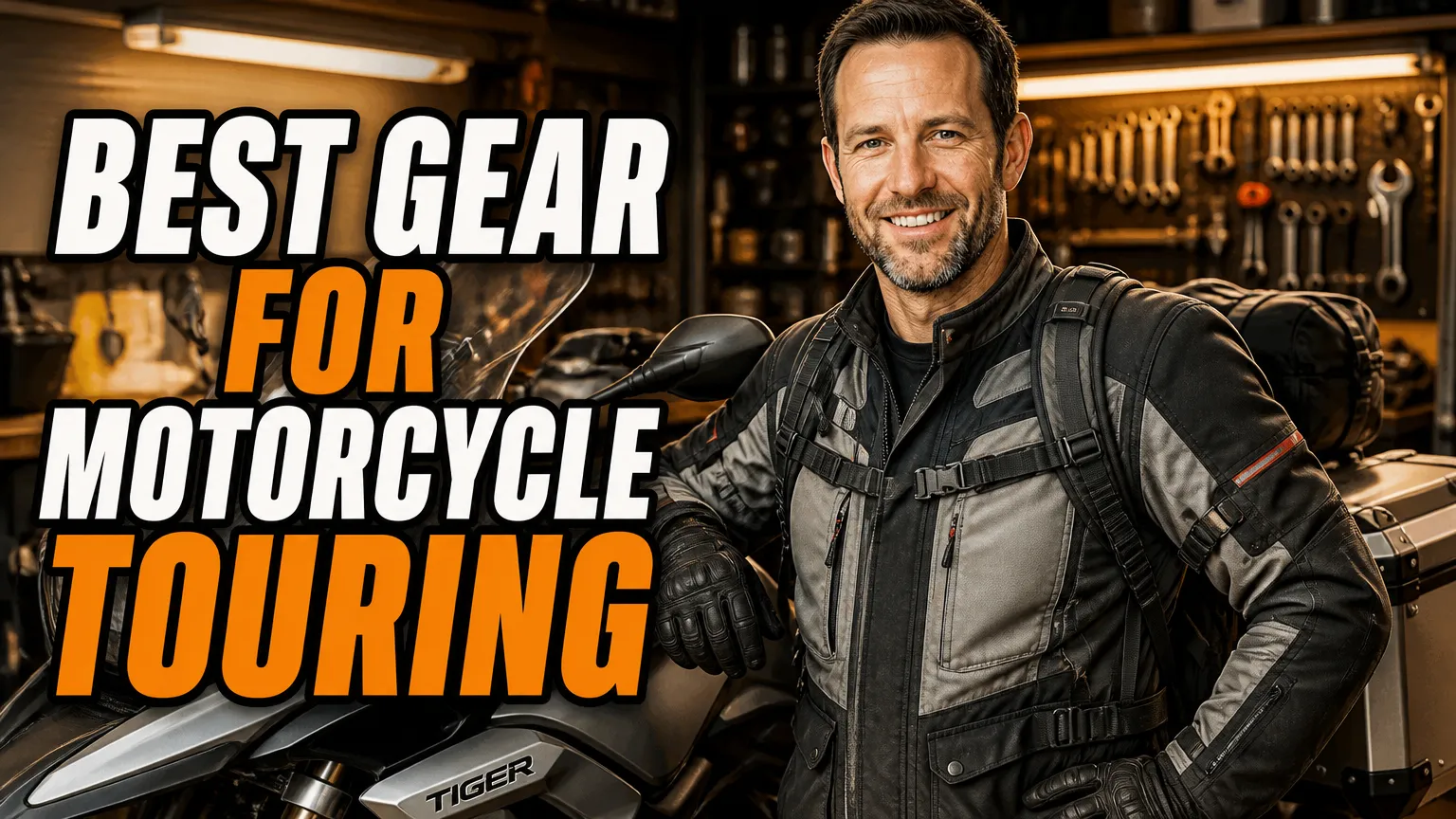
Long-distance riding asks more of my gear than a short commute does. I need protection that stays comfortable for hours, layers that handle changing weather, and luggage that keeps essentials secure without making the bike feel awkward.
For this list, I focus on specific, established products I’d consider for a touring setup, from helmet to earplugs. Fit, local certification, and the weather I expect all matter, so I treat my picks as a starting point rather than a substitute for trying gear on.
- I prioritize a correctly certified, comfortable helmet and protective clothing that fit in my riding position.
- I choose layers and waterproofing for the route, not just the forecast at home.
- I treat ear protection, luggage, and airbag options as useful parts of a complete touring setup.
- I check current product specifications, fit, and certification before I buy.
1. Shoei Neotec 3 — My Modular Pick for Touring
I like the Shoei Neotec 3 when I want a touring helmet that makes fuel stops and conversations easier. Its chin bar flips up, and the integrated drop-down sun shield lets me adapt quickly when sunlight changes without stopping to swap visors.
The Neotec 3 is a premium helmet, and its price commonly sits in the high hundreds of US dollars, depending on finish and retailer. It has an aerodynamic shell, a multi-position ventilation system, and a removable, washable interior. I check the exact certification for my market: the model is approved to ECE 22.06 in applicable markets, while US versions carry DOT certification.
What I check before buying
I never assume that a high-end helmet will fit my head just because it has good reviews. I try it on for several minutes, check for pressure points, and make sure the cheek pads hold it securely without causing pain. I also confirm whether a Pinlock insert is included or sold separately in my region.
If my touring priorities include weather protection and a sun visor, the Shoei Neotec 3 is a strong candidate. I still treat correct fit and current local certification as more important than any feature list.
2. Klim Badlands Pro A3 Jacket — My Choice for Rugged All-Weather Riding
I’d look at the Klim Badlands Pro A3 when I expect rough conditions, long days, and a wide range of temperatures. It uses a Gore-Tex Pro shell construction and substantial ventilation, with protective armor and reinforcement in high-impact and high-wear areas. Those features make it a serious piece of kit rather than a lightweight summer jacket.
The jacket’s premium price can run well over a thousand dollars, so I’d compare the current model and fit carefully before committing. Klim lists the Badlands Pro A3 as an adventure-focused design, but I’d verify the garment’s precise certification, included armor, and regional specifications instead of assuming every version is identical.
Why I’d consider it for a long trip
I value a shell that can handle rain without relying entirely on a separate liner, especially when I may be riding for hours in wet weather. I also like adjustable vents and useful storage, because staying comfortable and keeping small items accessible both make a touring day easier.
For a broader overview of choosing protective layers, I also refer to my guide to best clothes for motorcycle riding. I’d still check that the Badlands Pro A3’s fit lets me reach the bars naturally and keeps its armor in place while I’m seated.
3. Klim Badlands Pro A3 Pants — My Match for the Jacket
I like pairing the Klim Badlands Pro A3 pants with the matching jacket when I want a consistent, weather-oriented setup. The pants are designed for adventure touring and use a Gore-Tex Pro shell, protective armor, and reinforcement intended for demanding use. I check the current product listing for the exact armor and certification details before ordering.
These pants are expensive, but I see the value in a shell that can simplify wet-weather planning on a multi-day ride. I also pay close attention to the seat and knee fit: pants that feel fine while standing may pull or bunch when I sit in my riding position.
My fit and layering test
I try touring pants on with the base layer and boots I expect to wear. I bend my knees, sit as if I’m on the bike, and check that the knee armor remains aligned. I also test the connection between jacket and pants, because a secure overlap helps me feel better protected from wind and rain.
I wouldn’t buy the pants just because they match the jacket. I’d compare inseam options, closures, and comfort against my route, then make sure the full outfit allows me to move freely.
4. REV’IT! Sand 5 H2O Jacket — My Versatile Layered Option
I’d consider the REV’IT! Sand 5 H2O jacket for a tour that mixes warm stretches with cooler or wet days. Its layered design includes a waterproof hydratex layer and a thermal liner, so I can adapt the setup rather than relying on one heavy configuration. Ventilation and storage also make it appealing for changing conditions.
Armor and certification details can vary by garment version and market, so I check the current specification for the Sand 5 H2O before purchase. I also compare it with the Klim jacket based on climate: a layered jacket may give me flexibility, while a waterproof shell approach may suit a different preference.
Where I see the advantage
I appreciate being able to remove liners when the day warms up and add them back when temperatures drop. I test how easy the layers are to manage with gloves off the bike, since fiddly adjustments can become frustrating during frequent stops.
For a new rider building a complete outfit, I’d pair this research with my guide to best motorcycle clothing for beginners. I’d choose the Sand 5 H2O only after confirming its fit, armor coverage, and ventilation suit my own touring conditions.
5. Held Air N Dry II Gloves — My Pick for Changing Weather
I like the concept behind the Held Air N Dry II gloves: their two-chamber design gives me a choice between a more ventilated feel and a waterproof configuration. That flexibility can be useful on a tour where I may start in sunshine and encounter rain later. Held’s model uses a mix of leather and textile materials, with protective features that vary by specification.
Glove models and regional versions can differ, so I confirm the current construction, membrane, and protection details before buying. I also make sure I can operate the controls comfortably and reach the brake and clutch without excess material bunching at my fingertips.
How I judge touring gloves
I pay special attention to seams, closures, palm grip, and whether the gloves remain comfortable after a long period holding the bars. I bring the jacket I plan to wear when trying them on, then check whether the cuffs fit over or under its sleeves the way I prefer.
I never rely on glove waterproofing alone as a reason to skip a rain plan. I pack a backup option for a long trip if the forecast looks unsettled, because wet hands can make an otherwise manageable ride miserable.
6. Sidi Adventure 2 Gore-Tex Boots — My Supportive Touring Boot
I’d consider the Sidi Adventure 2 Gore-Tex boots for tours that include rain, rough stops, and hours on the bike. The design combines a Gore-Tex membrane with a tall protective structure, buckles, and a closure system intended to hold the boot securely. Sidi makes this model for riders who want more coverage than a casual riding shoe provides.
Boot certification and exact construction depend on the version, so I check the product label and current manufacturer information. I also try the boots with my touring socks and test them on the foot pegs, because a stiff boot can feel very different when shifting and braking.
My comfort check
I walk around in the boots before a trip and confirm that the buckles close without pressure points. I make sure the toe box gives me enough room, while the ankle and calf closures still feel secure. If I can’t operate the controls naturally, I keep looking rather than hoping the fit will improve on the road.
For me, waterproof boots are most useful when they’re paired with trousers that manage rain at the cuff. I check that overlap before I leave, especially if I’m expecting sustained wet weather.
7. Helite Turtle 2 — My Airbag Vest Consideration
I see the Helite Turtle 2 as an additional layer of protection to consider, not a replacement for a helmet, armor, or sound riding decisions. This tethered airbag vest attaches to the motorcycle and deploys when the rider separates from it, according to the product’s operating design. Its Turtle technology positions a back protector over the airbag system.
Before choosing the Helite Turtle 2, I’d read the current instructions closely and check the vest’s certification, sizing, cartridge requirements, and compatibility with my jacket. Tethered systems also require me to attach and detach the connection consistently, so I practice that routine while stationary.
Where it fits in my setup
I consider an airbag vest when I want another protective option for long rides and can accommodate it over my clothing. I check that it doesn’t restrict my reach or interfere with ventilation, and I follow the manufacturer’s guidance on fit and deployment clearance.
For more protective clothing and accessory ideas, I use this guide to best gear for motorcycle safety top protective clothing and accessories. I treat every airbag system as one part of a broader safety plan, not a guarantee against injury.
8. Mosko Moto Backcountry 35L Panniers — My Luggage Pick
I like the Mosko Moto Backcountry 35L panniers when I want tough luggage for a longer trip. The system uses 35-liter soft panniers designed to mount to compatible side racks, with removable waterproof inner bags that help keep packed items dry. The modular arrangement makes it easier for me to separate gear and carry the liners into a room or tent.
Before buying, I confirm rack compatibility for my motorcycle and check the mounting system, total capacity, and current kit contents. Soft luggage can be a practical choice for rougher routes, but I still pack carefully and secure loose straps so nothing can reach the wheel or exhaust.
How I pack for the road
I keep heavier items low and balanced between sides, and I reserve quick-access storage for rain gear, snacks, and tools. I also test the loaded bike close to home before a major trip, since added luggage changes handling and may affect how the motorcycle responds at low speed.
I don’t assume that waterproof inner bags make the entire luggage system waterproof. I pack electronics and other sensitive items in additional dry bags when the forecast or route calls for extra caution.
9. Nelson-Rigg SR-6000 Stormrider Rain Suit — My Backup for Downpours
I pack the Nelson-Rigg SR-6000 Stormrider Rain Suit when my regular riding gear needs an extra rain barrier. It’s a two-piece over-suit designed to go over motorcycle clothing, which means I can pull it on when weather turns rather than riding for hours in soaked outer layers. Nelson-Rigg markets it as waterproof, but I still check the current materials, fit, and sizing chart.
A rain suit only helps if I can put it on quickly and it fits over my jacket and pants. I try it on with my full touring outfit, check that the leg and sleeve openings work with my boots and gloves, and store it somewhere I can reach without unpacking everything.
My wet-weather routine
I pull over somewhere safe before adding rain gear, rather than struggling with it at the roadside. I also check that the suit doesn’t flap excessively at speed and that it leaves me enough room to move naturally.
When I expect cold rain, I think about warmth as well as waterproofing. I use the advice in my guide to best gear for riding motorcycle in cold weather stay warm and protected to plan layers that suit the temperatures I’m likely to face.
10. Alpine MotoSafe Tour Earplugs — My Small but Important Addition
I include the Alpine MotoSafe Tour earplugs because wind noise can become tiring over a long day. These filtered reusable earplugs are designed for motorcycling and are listed with an SNR of 17 dB. I like the idea of reducing harmful noise while retaining more awareness of surrounding sounds than I’d get from simply blocking my ears with an unfiltered plug.
I follow the product instructions for correct insertion and check the fit before setting off. Noise reduction depends on a proper seal, so I don’t assume a pair is working well just because it feels comfortable. I also replace or clean reusable plugs according to the manufacturer’s advice.
When I ride in colder weather
I pair earplugs with a helmet that fits correctly and doesn’t press painfully around my ears. In colder conditions, I may also need a face covering that works with the helmet and doesn’t interfere with breathing or visor clarity. I compare options in my guide to best winter face mask for motorcycle riding.
11. Warm & Safe Gen 4 Heated Jacket Liner — My Cold-Weather Layer
I’d add the Warm & Safe Gen 4 Heated Jacket Liner to a touring setup when I expect cold starts or sustained chilly conditions. It’s an electrically heated liner designed to be worn under a motorcycle jacket, with heating elements intended to provide warmth across the torso and sleeves. The liner requires a suitable power connection and controller, so I check exactly what’s included in the version I’m considering.
I confirm compatibility with my motorcycle’s electrical system and follow the manufacturer’s instructions for wiring and use. I also try the liner under my jacket before a trip, because extra layers can affect fit, armor position, and freedom of movement.
My approach to heated gear
I use heated clothing as a way to manage cold, not as a reason to skip insulating layers or weather protection. I start with a comfortable base layer, add the heated liner when needed, and make sure I can adjust the temperature without distraction.
For me, good touring gear works as a system: the helmet fits, armor stays put, layers suit the forecast, and everything is comfortable in riding posture. I buy for my route and body shape, check current product specifications, and test the complete setup before I commit to a long day on the road.
Frequently Asked Questions
What gear do I need for a motorcycle tour?
I start with a certified helmet, protective jacket and pants, gloves, sturdy boots, and earplugs. I also pack weather protection, luggage, and layers suited to the route.
Is a modular helmet good for touring?
I like a modular helmet such as the Shoei Neotec 3 for its convenient flip-up chin bar and built-in sun shield. I still check the helmet’s certification and fit before buying.
Should motorcycle touring gear be waterproof?
I prefer waterproof gear or a reliable rain suit because weather can change during a long ride. I also consider ventilation, removable liners, and how easily the gear dries.
How should motorcycle touring gear fit?
I choose snug protective gear that keeps armor in place without restricting movement. I test the fit in my riding posture and leave room for the layers I expect to wear.

Related Articles

5 Motorcycle Wrist Braces and Guards I’d Choose for Confident Riding
Compare five wrist braces and guards I’d consider for street and dirt riding, with fit, support, glove compatibility, and buying…
Jake Miller
11 min read

7 Under Armour Base Layers I’d Choose for Comfortable Motorcycle Rides
Discover seven Under Armour base layers for hot and cold rides, plus my fit tips and safety advice for wearing…
Jake Miller
10 min read

8 Best Motorcycle Base Layers for Staying Warm on Cold Rides
Compare eight rider-ready thermal base layers, from merino to synthetic options, with fit, warmth, layering advice, and picks for cold-weather…
Jake Miller
11 min read