
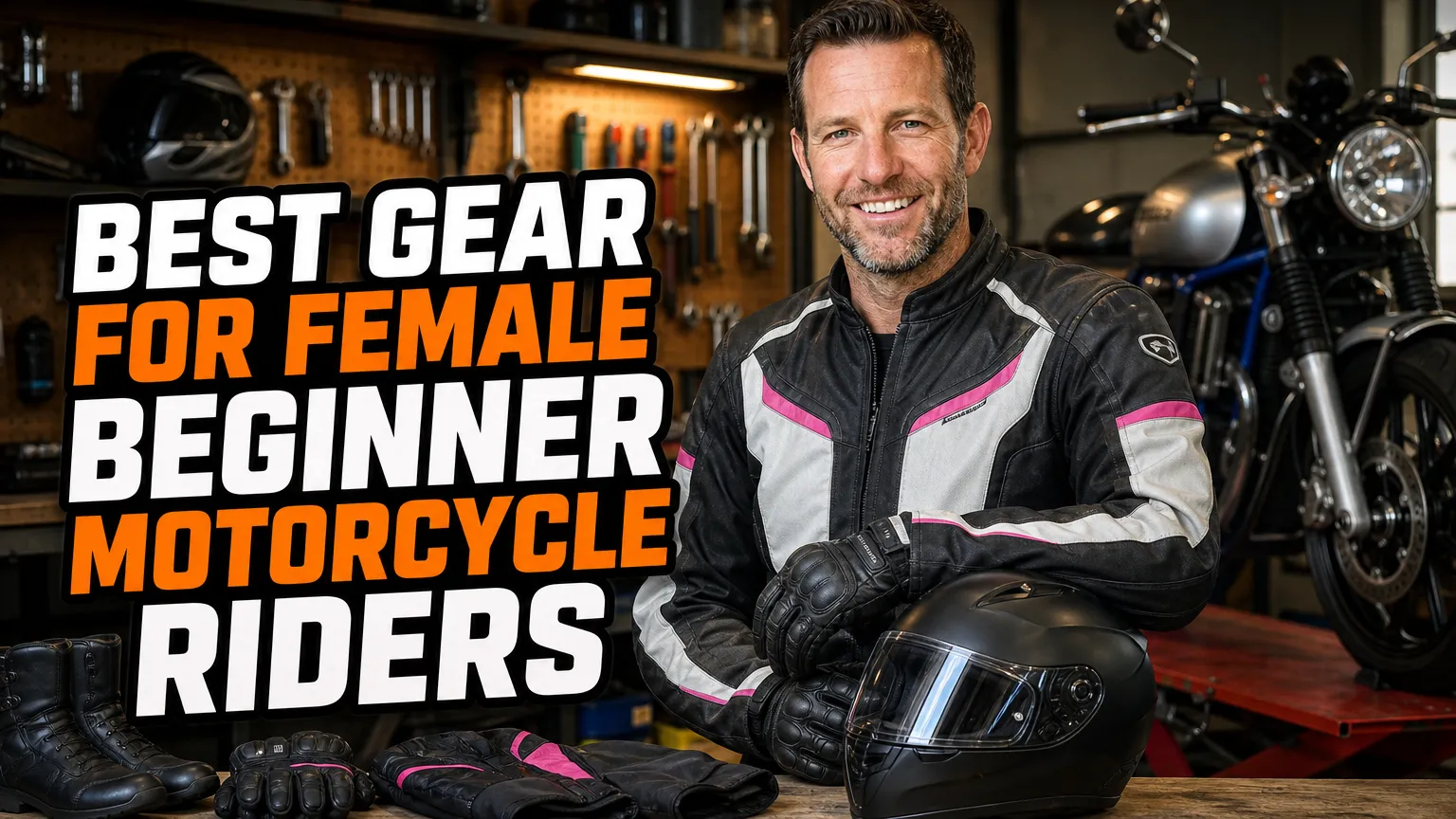
When I help someone put together the best gear for female beginner motorcycle riders, I start with protection and fit, not color or a bargain price. A jacket or helmet that moves around, pinches, or leaves gaps is hard to wear confidently, so I look for reliable protective features and a shape that works for the rider.
My picks below cover the essentials plus a few worthwhile extras. Gear details and prices can vary by market or model year, so I always confirm the current specifications, sizing, and safety certifications before I buy.
- I put a properly fitted, certified full-face helmet at the top of my shopping list.
- I choose jackets, pants, gloves, and boots with protective features that stay in place when I move.
- I treat an airbag vest, rain layer, and earplugs as useful additions for comfort and extra protection.
- I try gear on with my usual riding layers and check current certifications before purchasing.
How I choose gear for a new rider
I don’t assume that every woman needs a women’s-cut product, or that a pink version is automatically a better fit. I try on both women’s and unisex options when I can, then check that armor sits over my joints and that the sleeves, waist, and cuffs stay put when I reach for the handlebars.
For protection, I check the labels and product documentation rather than relying on marketing language. In Europe, clothing may carry a CE rating under EN 17092, and protectors are commonly labeled to the EN 1621 series; helmet standards vary by market, so I look for the certification required where I ride.
I also think in terms of a complete outfit. My guide to the best gear for motorcycle safety top protective clothing and accessories goes into the broader safety picture, while my picks here focus on useful, realistic choices for someone building a first kit.
1. Shoei RF-1400 — My full-face helmet pick
I start with the helmet because it is the piece I would never skip, even for a short ride. The Shoei RF-1400 is a premium full-face model with an AIM+ shell construction, a multi-position face shield, and an emergency quick-release system for trained responders. In the United States, it is sold with DOT certification and Snell M2020D certification; I always verify the label on the exact helmet I’m buying.
The RF-1400 is not a women-specific helmet, and I see that as a reminder to shop by fit rather than by a gender label. I check for firm, even cheek pressure, a snug fit around the crown, and no pressure points after wearing it for several minutes. The helmet should not rock freely when I move my head, and I would never buy one that feels loose just because it is comfortable in the store.
My main hesitation is the price: I typically see the RF-1400 in the upper hundreds of dollars, depending on finish and retailer. If that’s outside my budget, I would choose a less expensive helmet that fits well and meets the relevant standard rather than buying a poorly fitting premium model. For more everyday kit ideas, I also keep this guide to best motorcycle gear for daily riders handy.
2. REV’IT! Eclipse 2 Ladies — My warm-weather jacket pick
For a beginner riding in warm conditions, I like the REV’IT! Eclipse 2 Ladies because it combines airflow with abrasion-resistant textile panels. The jacket uses a polyester mesh construction with stronger textile sections, and it comes with CE Level 1 SEESMART protectors at the elbows and shoulders. It also has a pocket for a back protector, which I would fill with a compatible protector rather than assume the jacket includes one.
The women’s cut can make it easier for me to get a closer fit through the waist without excess fabric bunching up. I still test the jacket in a riding position: I reach forward, bend my elbows, and check that the cuffs and sleeves don’t pull the armor away from my joints. I find that this kind of fit check matters more than choosing a particular color or label.
The Eclipse 2 Ladies is usually a relatively accessible option compared with premium laminated jackets, though prices vary by retailer and season. I wouldn’t treat its mesh as a substitute for a warmer or waterproof layer; it’s a warm-weather jacket, and I’d add layers when the weather calls for them. For more outfit combinations, I’d browse the best clothes for motorcycle riding guide.
3. REV’IT! Victoria 2 Ladies — My riding-jeans pick
I like the REV’IT! Victoria 2 Ladies jeans as a more protective alternative to ordinary denim for casual rides. They use stretch denim, with reinforcement in key areas and included SEESMART CE Level 1 knee protectors. I check the product’s current specification for hip armor availability and compatibility, because hip protectors may be optional rather than included depending on the version and retailer.
My fit test is simple: I sit, squat slightly, and bring my knees up as if I were on the bike. I want the knee armor to cover my knees in the riding position, not slide toward my shins or sit too high. I also check that the waist stays comfortable when I lean forward and that the fabric does not restrict movement.
Riding jeans can feel familiar, which is one reason I find them approachable when I’m assembling a first outfit. But I don’t confuse motorcycle denim with regular jeans; the product’s protective construction and armor are the reason I’d choose it. I’d pair the Victoria 2 Ladies with proper boots and check whether adding compatible hip armor is an option.
4. Alpinestars Stella SMX-1 Air v2 — My ventilated glove pick
I consider gloves essential because my hands are exposed to wind, road debris, and the instinct to reach out during a fall. The Alpinestars Stella SMX-1 Air v2 is a women’s short-cuff glove designed for airflow, with mesh and perforated materials, synthetic suede in high-wear areas, and a hard knuckle protector. Its short cuff is convenient in warm weather, though I make sure it overlaps securely with my jacket sleeve.
When I try on the Stella SMX-1 Air v2, I check the fit with my hands wrapped around an imaginary handlebar. My fingers should reach the ends without pressure, and I should be able to operate the controls without the glove twisting or bunching. I also look for the current protective marking and product details on the specific pair, since features and certifications can vary between versions or markets.
These gloves are made for ventilation, so I wouldn’t choose them as my only pair for cold or wet weather. I’d rather find a secure fit and buy season-appropriate gloves than try to make one airy glove work in every condition. Before ordering online, I measure my hand and check the size chart, then confirm the retailer’s exchange policy.
5. TCX Street 3 Lady Air — My casual riding-boot pick
The TCX Street 3 Lady Air is a sneaker-style motorcycle boot that I’d consider when I want a casual look without wearing ordinary trainers. It combines suede leather and breathable mesh, with ankle protection, a reinforced sole structure, and a Groundtrax outsole designed for grip. It is CE-certified as motorcycle footwear under EN 13634, but I check the current product label and documentation before buying.
I pay close attention to the height and fit of any riding boot. With the Street 3 Lady Air, I check that the ankle protection lines up properly, the laces stay secured, and the sole feels stable when I stand on the footpegs. The lace area is one reason I’d tuck or secure loose lace ends before riding.
This is a ventilated, sneaker-like option, not a waterproof touring boot. I’d choose it for warm-weather commuting and shorter rides, then look for a waterproof model if I regularly ride in rain. For a beginner, I find its familiar style can make protective footwear feel easier to wear every day, provided the fit is secure and the boot is designed for motorcycle use.
6. Helite Turtle 2 — My added airbag protection pick
Once I have the core pieces covered, I consider an airbag vest as an additional layer. The Helite Turtle 2 is a tether-operated vest: a cord attaches to the motorcycle, and the system deploys when the rider separates from the bike with enough force. Its “Turtle” design places the airbag over a rigid back protector, and Helite lists protection features intended to cover the neck, back, chest, and abdomen.
I like that the Turtle 2 does not rely on an electronic subscription or charging routine, but I do have to remember to attach and detach the tether correctly. I would practice the routine while stationary and follow the manufacturer’s instructions about installation, inspection, and repacking after deployment. I’d also check the applicable airbag and back-protector certification details for the model sold in my region.
This vest is a substantial extra expense, often costing several hundred dollars, so I wouldn’t put it ahead of a properly fitting helmet, jacket, pants, gloves, or boots. I also try it over the jacket I plan to wear, since the vest needs enough room to inflate. For me, it’s a considered upgrade, not a shortcut around wearing the rest of my protective gear.
7. REV’IT! Cyclone 4 H2O — My packable rain-layer pick
I keep a rain layer available because getting wet can make a ride uncomfortable and distracting. The REV’IT! Cyclone 4 H2O is a lightweight over-jacket made to be worn over motorcycle clothing, with a waterproof construction and a compact packable design. I like an over-layer because I can add it when conditions change without needing to replace my warm-weather jacket.
I check the fit over my actual riding jacket before heading out. I want enough room to move, cuffs that work with my gloves, and a hem that doesn’t ride up when I lean forward. I also remember that a rain shell is not protective riding armor, so I wear it over my motorcycle jacket rather than as a substitute for one.
The Cyclone 4 H2O is a jacket, not a complete rain suit, so I’d pair it with suitable waterproof overpants if I expect sustained rain. Before a trip, I pack the set where I can reach it without unpacking everything else. That small habit has saved me from having to choose between continuing in wet gear and stopping to hunt for a layer.
8. Alpine MotoSafe Tour — My reusable earplug pick
I include earplugs because wind noise can become tiring even when a ride feels quiet at first. Alpine MotoSafe Tour earplugs are reusable motorcycle earplugs designed to reduce harmful wind and traffic noise while allowing useful sounds to remain audible. The brand describes the Tour filters as offering around 17 dB of attenuation; I check the current packaging for the exact rating and instructions.
I roll and insert the plugs according to the maker’s directions, then check that they sit comfortably under my helmet. A poor fit can make them less effective or uncomfortable, so I take time to learn the insertion technique and replace them if they become worn or dirty. I never assume earplugs will make every sound disappear, and I stay alert to traffic and warning signals.
They are a small purchase compared with a helmet or jacket, but I find them easy to overlook when I’m focused on visible gear. I keep a clean pair with my riding kit and use them on longer rides or whenever wind noise becomes fatiguing. Comfort matters too: if a plug hurts under my helmet, I try a different size or style rather than forcing it.
My first-gear buying order
If I were building my kit from scratch, I’d buy in this order: helmet, jacket, gloves, riding pants, and protective boots. I’d then consider an airbag vest, rain layers, and earplugs based on my budget, local weather, and how often I ride. My guide to best motorcycle clothing for beginners is another useful starting point when I’m comparing a full outfit.
I’d also think about conditions before I buy accessories. For cold-weather riding, I’d plan a warm base layer and face covering that works with my helmet; I use the best winter face mask for motorcycle riding guide to compare options. I avoid bulky layers that interfere with my helmet fit or pull protective armor out of position.
My final fit check
Before I ride, I fasten every closure and move through the motions I’ll use on the bike. I check that my helmet is snug, armor sits over the right joints, gloves overlap my sleeves, and boots cover my ankles without limiting control movement. If a piece shifts, pinches, or prevents me from operating the controls comfortably, I keep looking for a better fit.
Good gear doesn’t have to be the most expensive gear, and I don’t expect one outfit to suit every rider or climate. I focus on dependable construction, recognized protective features, and a fit I can wear consistently. That combination is what makes me feel prepared as I build experience on the road.
Frequently Asked Questions
What motorcycle gear should I buy first as a beginner?
I would start with a correctly fitted, certified full-face helmet, then add an armored jacket, gloves, riding pants, and over-the-ankle boots.
Does women-specific motorcycle gear offer better protection?
Not automatically. I choose gear that fits securely and has appropriate protective features; women-specific cuts can help reduce loose or uncomfortable areas.
Is an airbag vest worth it for a new rider?
I consider an airbag vest a useful additional layer of protection, but I would buy core protective gear first and make sure the vest fits over my jacket.
How much should I budget for beginner motorcycle gear?
Prices vary, but I would budget for a quality helmet and complete protective outfit before spending on cosmetic upgrades. I also check current prices and certification details before buying.

Related Articles

5 Motorcycle Wrist Braces and Guards I’d Choose for Confident Riding
Compare five wrist braces and guards I’d consider for street and dirt riding, with fit, support, glove compatibility, and buying…
 Jake Miller
11 min read
Jake Miller
11 min read

7 Under Armour Base Layers I’d Choose for Comfortable Motorcycle Rides
Discover seven Under Armour base layers for hot and cold rides, plus my fit tips and safety advice for wearing…
Jake Miller
10 min read

8 Best Motorcycle Base Layers for Staying Warm on Cold Rides
Compare eight rider-ready thermal base layers, from merino to synthetic options, with fit, warmth, layering advice, and picks for cold-weather…
Jake Miller
11 min read