
8 Proven Dual-Sport Motorcycle Gear Picks for Dirt, Pavement, and Long Days
 Jake Miller
11 min read
Jake Miller
11 min read
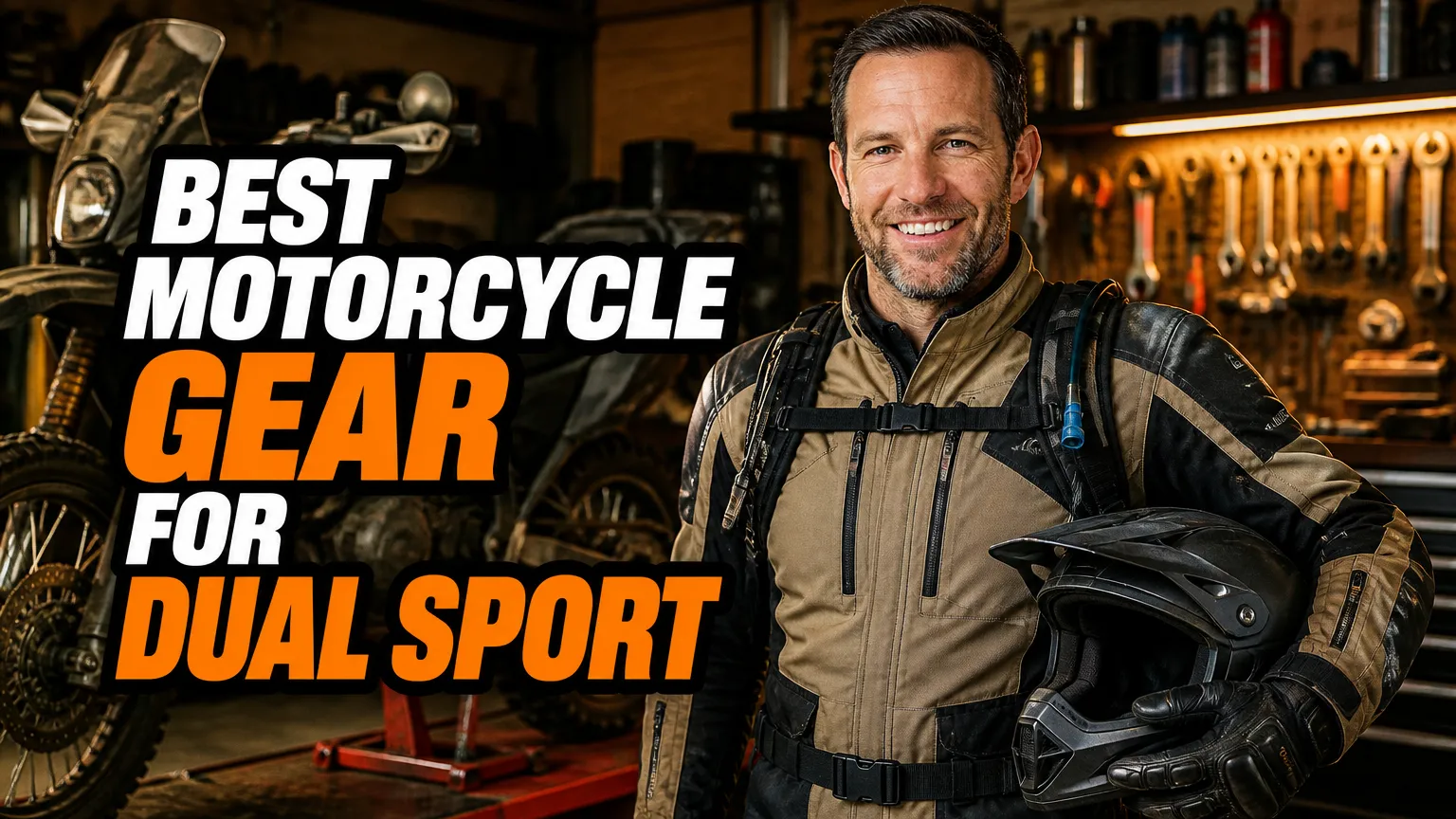
I’ve learned that dual-sport gear has to handle two very different jobs: protecting me on pavement and staying comfortable when the route turns rough, slow, or dusty. My favorite setup balances impact and abrasion protection with ventilation, weather adaptability, and enough mobility to move around on the bike.
There isn’t one perfect kit for every rider. I use the picks below as a practical starting point, then adjust for my climate, fit, riding pace, and how much of my day I expect to spend on dirt.
- I prioritize a correctly fitted, certified helmet and protective boots before adding comfort-focused extras.
- I choose ventilation for hot dirt rides and plan a separate rain layer when my gear isn’t waterproof.
- I treat armor fit as important: protectors only help if they stay in place while I ride.
- I test everything together before a long trip, including gloves, goggles, and the riding position.
1. Shoei Hornet X2 — My All-Round Dual-Sport Helmet
My helmet has to work through highway wind, trail dust, and frequent stops, so I like the Shoei Hornet X2 as a strong all-round option. Its peak, shield, and off-road-inspired shape give me the versatility I want for mixed riding without committing to a separate motocross helmet and goggles.
The Hornet X2 has a fiberglass composite shell, a removable peak, and a CNS-2 face shield designed for a wide field of view. Shoei sells it with a Pinlock EVO insert in many configurations, which I appreciate when temperature changes make my shield fog. I still check the exact package and current certification for the size and version I’m buying.
Why I like it on mixed routes
I find a peak useful on sunny, dusty trails, while the face shield is convenient for road miles and changing weather. The Hornet X2 is a premium helmet, typically priced in the high hundreds of dollars, so I consider it an investment rather than a budget pick.
My main advice is to try it on for a proper fit before I commit. A feature-rich helmet that moves around or creates pressure points is the wrong helmet for me, no matter how good its spec sheet looks.
2. KLIM Baja S4 Jacket — My Hot-Weather Choice
When I’m riding in warm, dry conditions, I want airflow without wearing a flimsy layer. The KLIM Baja S4 jacket uses extensive mesh and abrasion-resistant overlays, including leather in high-wear areas, to give me a more substantial feel than a simple mesh jacket.
The Baja S4 is built for ventilation and mobility rather than rain protection. Its armor and included components can vary by model year and market, so I always confirm exactly what’s supplied, including the shoulder, elbow, and back protection. I also budget for a separate rain shell if the forecast looks unsettled.
Where it fits in my kit
I reach for the Baja S4 when airflow matters more to me than an integrated waterproof membrane. For cooler starts, I layer underneath or pack a shell rather than expecting a highly ventilated jacket to block wind and rain.
KLIM jackets generally sit in the premium price bracket. I’d compare the jacket’s fit with the armor installed and make sure its sleeves still cover my wrists when I reach for the handlebars. For a broader look at protective layers, I also refer riders to this guide to best body armor for dual sport motorcycle riding.
3. KLIM Dakar Pro Pants — My Trail-Focused Riding Pants
I like the KLIM Dakar Pro pants for rides where I want freer movement and good ventilation, rather than a heavy waterproof construction. Their stretch panels help me move on the bike, while tougher materials and reinforcements in high-contact areas make them more suitable for demanding off-road use than ordinary casual trousers.
The Dakar Pro is an off-road-oriented pant, not a substitute for a fully waterproof touring pant. I check the current version’s armor inclusions and sizing carefully, because configurations can change. If the pair I’m considering doesn’t include the protection I need, I add compatible knee or hip armor rather than assuming it’s built in.
Fit and layering notes
I test these pants in my normal riding position, with my boots on. I want the legs to overlap my boots without pulling up, and I want enough room for any knee guards I plan to wear underneath. That small fitting step can prevent uncomfortable bunching during a long day.
For changing weather, I carry rain pants or plan to stop and layer up. When I’m helping a newer rider build a complete wardrobe, I also point them toward this practical overview of best clothes for motorcycle riding.
4. Alpinestars Tech 7 Enduro Boots — My Supportive Off-Road Pick
Boots are one place where I don’t like to cut corners. The Alpinestars Tech 7 Enduro is made for off-road riding, with a protective structure, a closure system that lets me adjust the fit, and an Enduro-specific sole designed to give me grip when I have to dab or walk on loose ground.
I value the boot’s combination of support and mobility. It feels more substantial than a street boot, which matters to me when I’m riding rocky tracks or standing on the pegs. The Tech 7 Enduro is usually a significant purchase, often landing in the several-hundred-dollar range, but I consider sturdy boots core protective equipment rather than an optional accessory.
How I check the fit
I try the boots on with the socks I’ll actually ride in and buckle them as I would on a trip. I want my heel held securely without numbness or painful pressure, and I make sure I can operate the shifter and rear brake comfortably.
I also check that the boot works with my pants and knee protection. A secure boot can still be a poor choice if my pant leg catches on the buckles or my knee guard shifts when I bend my leg.
5. Leatt 4.5 X-Flow Gloves — My Ventilated Glove Pick
My hands need a good balance of feel, airflow, and protection. The Leatt 4.5 X-Flow is a lightweight off-road glove with ventilated construction and a palm designed to give me a direct grip on the controls. It suits hot, dirt-heavy rides particularly well.
I don’t treat a breathable glove as a waterproof or cold-weather glove. On a longer trip, I may pack another pair for rain or low temperatures, because wet, chilled hands make it harder for me to use the controls comfortably.
What I look for in the fit
I check that the fingertips don’t bunch up and that I can fully close my hand around the grips. I also test the seams and palm against the bars, since a glove that feels fine in a shop can create a hot spot after hours of riding.
Gloves are personal, so I recommend trying them on with your own controls if possible. I look for a secure fit that doesn’t restrict movement, rather than choosing a size based on the label alone.
6. Leatt 3DF AirFit Body Protector — My Under-Jacket Armor Layer
For rides with more off-road exposure, I like the Leatt 3DF AirFit Body Protector as a dedicated layer under a compatible jacket. It uses soft impact-absorbing 3DF material and is designed to cover areas such as the chest, back, shoulders, and elbows, depending on the specific version.
I check the product’s current certification labels and included coverage before buying. Armor ratings and components can differ across versions, so I don’t rely on a product name alone. I also make sure my outer jacket has enough room to sit over the protector without pushing it out of position.
Armor only works when it stays put
I test the protector while reaching forward, standing on the pegs, and turning my upper body. If it rides up or leaves a gap when I move, I reconsider the fit or the layering combination.
I find that a close-fitting protector can work well for dirt-focused rides, but it may feel warmer than a jacket with integrated armor. For an overview of protective priorities beyond one specific product, I use this resource on best gear for motorcycle safety top protective clothing and accessories.
7. Leatt 3DF 6.0 Knee Guards — My Knee-Protection Upgrade
I like knee guards when I want extra protection for off-road riding or when I’m wearing pants that accommodate separate armor. The Leatt 3DF 6.0 Knee Guards combine a flexible, impact-absorbing construction with a design intended to stay in place while I ride.
As with any knee protector, I pay attention to coverage and movement rather than buying by model name alone. I bend my knee, walk around, and get into a riding crouch to see whether the guard shifts or creates pressure. The best protection for me is the pair I can wear comfortably and consistently.
Pairing guards with pants and boots
I check the full combination before a trip: knee guards, pants, socks, and boots. I want the pant leg to move smoothly over the guard, and I make sure the lower edge doesn’t interfere with the boot or bunch up behind my knee.
If I’m new to riding, I prefer to build a complete kit thoughtfully instead of buying pieces at random. This guide to best motorcycle clothing for beginners can help me think through that bigger picture.
8. 100% Accuri 2 Goggles — My Dust-and-Trail Eye Protection
When I ride in dusty conditions with an open-face or off-road helmet setup, I want goggles that seal comfortably and give me a clear view. The 100% Accuri 2 is a popular motocross-style goggle with a broad lens, multi-layer foam, and a frame designed for a close fit around the face.
I like that the Accuri 2 has lens options and is compatible with common tear-off systems, which can be useful when the route gets muddy. I still check that the goggles fit my helmet opening and don’t press uncomfortably against my nose. The right fit can vary a lot from one face and helmet combination to another.
Keeping my vision clear
I carry a clean lens cloth and avoid wiping grit across the lens, which can scratch it. If I expect rain, cold, or changing conditions, I plan for that separately rather than assuming goggles alone will solve every visibility problem.
For cold-weather rides, I think about face coverage and breathing comfort as well as eye protection. I use this guide to compare options for a best winter face mask for motorcycle riding when I need help choosing an additional layer.
How I Build a Dual-Sport Kit That Works Together
I start with fit and protection, then tune the kit for the route. For a hot, dry day, I might pair the Baja S4 jacket with the Dakar Pro pants, the Tech 7 Enduro boots, and the 4.5 X-Flow gloves. For a rougher trail, I add the Leatt body protector or knee guards if they fit comfortably beneath my outer gear.
For a long mixed-surface trip, I also plan for weather and breaks. I pack a waterproof layer when my main gear is ventilated, check that my helmet shield or goggles suit the route, and carry spare gloves if rain or temperature changes are likely. I’d rather plan for a change in conditions than expect one outfit to handle everything.
My final checks before I ride
- I confirm that my helmet fits securely and that its current certification is appropriate for where I ride.
- I check that armor stays over the areas it is meant to protect when I sit, stand, and reach for the bars.
- I test boots, pants, and knee guards together so they don’t catch or leave an uncomfortable gap.
- I try every glove and eye-protection option with my helmet and controls before setting off.
The best setup for me is the one that suits my route and stays comfortable enough to wear properly all day. I’d rather choose a well-fitting core kit and add specialized layers as needed than buy gear based only on features or appearance.
Frequently Asked Questions
What gear do I need for dual-sport riding?
I start with a properly certified helmet, protective jacket and pants, sturdy off-road-capable boots, gloves, and impact protection suited to the route.
Can I use motocross gear for dual-sport rides?
I can use motocross gear for dirt-focused trips, but I add weather protection and consider road comfort, visibility, and abrasion resistance for pavement miles.
Should I choose a waterproof or ventilated dual-sport jacket?
I choose based on climate and trip length. For hot, dry riding I prioritize airflow; for changeable weather I carry a waterproof layer or choose a jacket with a suitable membrane.
How should dual-sport boots fit?
I look for a snug heel and ankle, room for my toes, and enough space for riding socks without pressure points. I always test the fit while standing and seated on the bike.

Related Articles

5 Motorcycle Wrist Braces and Guards I’d Choose for Confident Riding
Compare five wrist braces and guards I’d consider for street and dirt riding, with fit, support, glove compatibility, and buying…
Jake Miller
11 min read

7 Under Armour Base Layers I’d Choose for Comfortable Motorcycle Rides
Discover seven Under Armour base layers for hot and cold rides, plus my fit tips and safety advice for wearing…
Jake Miller
10 min read

8 Best Motorcycle Base Layers for Staying Warm on Cold Rides
Compare eight rider-ready thermal base layers, from merino to synthetic options, with fit, warmth, layering advice, and picks for cold-weather…
Jake Miller
11 min read