
7 Best Body Armor Picks for Dual Sport Riders Who Leave the Pavement
 Jake Miller
11 min read
Jake Miller
11 min read
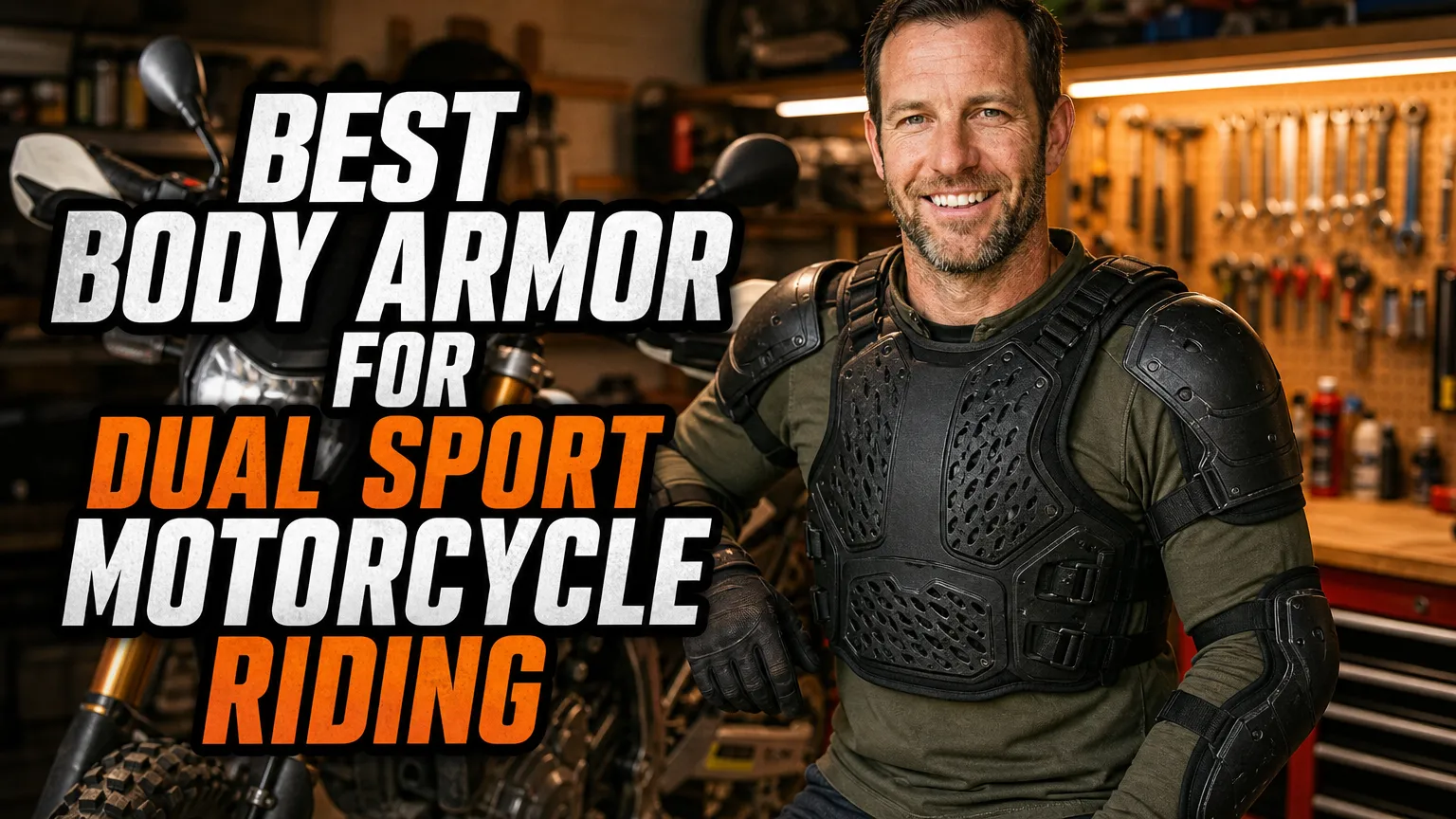
Dual sport riding asks a lot of protective gear. I might spend the morning standing on the pegs on a rocky trail, then ride home on pavement in changing weather. For me, the best body armor for dual sport motorcycle riding is gear that stays in place, breathes well, and suits the kind of terrain I actually ride.
I’ve narrowed this list to specific, established products with different strengths, from substantial chest-and-back protection to flexible jackets designed to layer under a shell. I always check the exact certification and fit of the version I’m buying, since product details and regional specifications can change.
- I’d start with the Leatt 5.5 Body Protector when I want extensive, integrated off-road coverage.
- For a close-fitting armor jacket under a riding shell, I’d compare the REV’IT! Proteus and Dainese Pro-Armor Safety Jacket 2.0.
- I prioritize correct fit and certified protectors over bulk, brand, or a long feature list.
- I check how the armor works with my jacket, hydration pack, helmet, and riding position before heading out.
How I Choose Armor for a Dual Sport Setup
I start with fit, not the product’s protection claims. Armor only helps where it stays over the part of my body it is meant to protect, so I move around in it and check coverage in both seated and standing riding positions.
Next, I look at the certification printed on the garment or protector. For motorcycle impact protectors, I check the relevant EN 1621 standard and the stated level; Level 2 generally has a more demanding impact-attenuation threshold than Level 1. I don’t assume every panel in a jacket has the same level.
I also decide whether I want a protective shirt under an abrasion-resistant outer jacket or a more substantial protector that can be worn over a base layer. Neither arrangement is automatically right for every ride. If I’m comparing the rest of my kit, I use this guide to best clothes for motorcycle riding as a starting point.
1. Leatt 5.5 Body Protector — Best for Broad Off-Road Coverage
The Leatt 5.5 Body Protector is the first product I’d consider when I want a dedicated off-road armor setup with coverage across the torso and limbs. Its design combines a protective outer structure with Leatt 3DF impact-absorbing foam in key areas, while the articulated layout is intended to accommodate movement on the bike.
Leatt lists certified impact protection for the 5.5, including chest and back protection. Certification levels can differ by panel, so I’d confirm the exact markings on the current model rather than assume the chest, back, shoulders, and elbows all share one rating.
Why I’d choose it
I like that the Leatt 5.5 Body Protector is a purpose-built system rather than a loose assortment of pads. For rocky trails and slower technical sections, I value having torso protection and limb coverage working together, especially when I’m moving between seated and standing positions.
The trade-off is bulk compared with a slim protector shirt. Before I buy the Leatt 5.5, I’d try it with my jersey, pack, and helmet, then check that its shoulder and chest sections don’t interfere with my riding posture. I’d also compare current retailer pricing, since availability and price vary by size and market.
2. REV’IT! Proteus Protector Jacket — Best for a Close-Fitting Layer
The REV’IT! Proteus Protector Jacket is a useful option when I want an armor layer that fits under an outer motorcycle jacket. It combines a close-fitting base with protective inserts, including SEEFLEX protectors at the shoulders and elbows and a SEESOFT back protector on specified versions.
I pay particular attention to the labels on the exact Proteus jacket I’m considering. Protector type and certification can vary by panel, and I check whether the chest area includes protection or whether I need to add a compatible chest protector separately.
Why it suits mixed-surface days
I prefer a more streamlined layer when I expect long road sections between trails. The REV’IT! Proteus Protector Jacket is easier to integrate with a weather-resistant outer shell than a bulky hard-shell rig, and a fitted layer can make it simpler to keep the protectors positioned consistently.
For me, the key is ensuring the outer jacket still fits correctly over it. If I’m building a broader safety setup, I also review this guide to best gear for motorcycle safety top protective clothing and accessories rather than treating body armor as a substitute for abrasion-resistant clothing.
3. Dainese Pro-Armor Safety Jacket 2.0 — Best for Flexible, Integrated Protection
The Dainese Pro-Armor Safety Jacket 2.0 uses Dainese Pro-Armor protectors in a ventilated jacket format. I’d look closely at it if I wanted integrated coverage in a layer that is designed to move with the rider, rather than wearing separate elbow, shoulder, and torso pieces.
Dainese has offered certified protection across the Pro-Armor range, but the exact certification and coverage depend on the protector and garment version. I verify the product label and included panels before purchase, especially for back and chest protection, which are not always included in the same configuration.
Where I think it fits best
I like this style for rides where I want a tidy, close-to-the-body layer beneath a compatible outer jacket. Flexible protectors can be more comfortable during a full day of changing posture, though fit still matters: I check that the jacket doesn’t ride up when I reach forward or stand on the pegs.
The Dainese Pro-Armor Safety Jacket 2.0 is not a replacement for a tough outer layer against abrasion. I’d pair it with a suitable motorcycle jacket or jersey-and-shell combination, and I’d make sure the whole system works together before taking it onto the road.
4. Alpinestars Bionic Tech V2 Protection Jacket — Best for a More Substantial Armor Jacket
The Alpinestars Bionic Tech V2 Protection Jacket is a full protective jacket built around a mesh chassis and impact protectors. Its coverage includes key upper-body areas, and the close-fitting construction makes it an option I’d compare with dedicated off-road armor systems when I want a single garment to hold multiple protectors in place.
Alpinestars uses its own protector families across the Bionic range, and ratings can differ between the back, chest, shoulders, and elbows. I check the documentation for the specific Bionic Tech V2 listing and make sure any advertised Level 1 or Level 2 rating applies to the panel I care about.
My fit check
I’d wear the Bionic Tech V2 with the base layer I plan to ride in and try it on the bike. I want the back protector to sit centrally, the elbow pieces to cover my elbows with my arms bent, and the shoulder guards to remain in place when I move around.
This type of jacket can feel warm in stop-and-go traffic despite mesh sections, especially under another layer. I’d consider the Alpinestars Bionic Tech V2 for active trail riding and check airflow carefully if my usual dual sport routes involve hot, slow climbs.
5. Leatt 3DF AirFit Body Protector — Best for Soft, Flexible Coverage
The Leatt 3DF AirFit Body Protector is built around soft, flexible 3DF impact foam and a close-fitting, ventilated design. I’d shortlist it when comfort and freedom of movement are high priorities, particularly for rides where I’m frequently standing, shifting my weight, or moving through slower technical terrain.
Leatt’s 3DF AirFit range includes coverage for areas such as the chest, back, shoulders, and elbows, but I verify which protectors are included in the exact model. I also check the panel-by-panel certification: a product name alone doesn’t tell me the rating of every piece of armor.
When I’d pick it over a hard-shell style
I’d lean toward the 3DF AirFit when I want a softer feel against my body and a protector that is easier to wear beneath a compatible outer layer. I still check that it doesn’t bunch up under my jacket and that it gives enough coverage for the type of riding I do.
Soft armor can be comfortable, but comfort shouldn’t come at the expense of secure placement. I test the Leatt 3DF AirFit Body Protector with my pack straps and jacket, since straps can press on armor or shift it out of position during a long ride.
6. Fox Titan Sport Jacket — Best for Entry-Level Off-Road Armor
The Fox Titan Sport Jacket is a familiar off-road style of upper-body protection, combining a lightweight mesh base with protective panels over key areas. I’d consider it when I want a relatively straightforward armor layer for trail use, rather than a feature-heavy road touring jacket.
Coverage and certification details can vary by product version and market, so I check the current Fox product information and labels before buying. I don’t assume that a molded panel is automatically a certified impact protector, or that every area has the same level of protection.
What I’d check before buying
I’d focus on how the Fox Titan Sport Jacket fits across the chest, back, and shoulders. I’d also check whether its shape works under my riding jersey and whether my hydration pack sits securely without compressing the armor or restricting my range of motion.
For newer riders, I’d compare this kind of armor with the rest of a complete kit rather than buying pads in isolation. My guide to the best motorcycle clothing for beginners can help put protection, outer layers, and fit into a broader gear plan.
7. Alpinestars Bionic Action V2 Protection Jacket — Best for Lightweight, Everyday Trail Use
The Alpinestars Bionic Action V2 Protection Jacket is a lighter option in Alpinestars’ protective jacket lineup. It uses a mesh construction and impact protectors in the main upper-body zones, making it one I’d compare when I want less bulk than a more substantial chest-and-back rig.
As with the other jackets here, I check the included protectors and their individual ratings on the specific version I’m purchasing. I also confirm whether back or chest protection is included, because listings and configurations may differ between retailers and regions.
My reasons for considering it
I’d choose the Bionic Action V2 when I want an integrated, relatively streamlined armor layer for trail rides and mixed-surface days. It can be a practical match for riders who prefer a soft jacket format, provided it fits securely and layers comfortably beneath their outer gear.
I wouldn’t treat “lightweight” as a reason to skip a careful fit check. I move my arms, lean forward, and stand on the pegs to see whether the Alpinestars Bionic Action V2 stays put and whether the pads continue to cover the areas they’re meant to protect.
How I Match Armor to the Rest of My Gear
I treat body armor as one part of a complete protective system. A protector jacket doesn’t automatically provide abrasion resistance, weather protection, or the right coverage for every riding condition, so I match it with an outer garment that fits over the armor without pulling tight or shifting the pads.
I also make room for practical details. I check whether my helmet and neck movement feel unrestricted, whether a hydration pack sits comfortably, and whether my gloves and boots still meet the ends of my sleeves and trousers when I’m in a riding position.
Weather changes my choices, too. In cold conditions, I layer without compressing the armor, and I consider the rest of my cold-weather setup, including best winter face mask for motorcycle riding and best gear for riding motorcycle in cold weather stay warm and protected.
My Final Shortlist
If I wanted extensive, dedicated off-road coverage, I’d begin with the Leatt 5.5 Body Protector. For a closer-fitting layer beneath an outer jacket, I’d compare the REV’IT! Proteus Protector Jacket and Dainese Pro-Armor Safety Jacket 2.0, checking the included panels and certification details for the exact model.
For a more flexible or straightforward trail setup, I’d also consider the Leatt 3DF AirFit Body Protector, Fox Titan Sport Jacket, and Alpinestars Bionic options. My final choice would come down to fit, coverage, verified protector ratings, and how well the armor works with the rest of my riding kit.
Frequently Asked Questions
What type of body armor works best for dual sport riding?
I look for armor that fits securely, offers suitable impact protection, and stays comfortable under or over my riding layers. A ventilated jacket or modular chest-and-back setup can work well.
Should I choose Level 1 or Level 2 motorcycle armor?
Level 2 protectors generally provide greater impact attenuation under the relevant test standard, while Level 1 can be lighter and more flexible. I check the garment label and protector certification before buying.
Can I wear body armor under a regular jacket?
Yes, if the jacket has enough room to avoid compressing the armor or restricting movement. I make sure each protector stays in position while I sit, stand, and move on the bike.
Is chest protection important for dual sport riding?
I consider chest protection useful for off-road riding, where falls and flying debris are possible. It should fit comfortably and work with my helmet, hydration pack, and other protective gear.

Related Articles

5 Motorcycle Wrist Braces and Guards I’d Choose for Confident Riding
Compare five wrist braces and guards I’d consider for street and dirt riding, with fit, support, glove compatibility, and buying…
Jake Miller
11 min read

7 Under Armour Base Layers I’d Choose for Comfortable Motorcycle Rides
Discover seven Under Armour base layers for hot and cold rides, plus my fit tips and safety advice for wearing…
Jake Miller
10 min read

8 Best Motorcycle Base Layers for Staying Warm on Cold Rides
Compare eight rider-ready thermal base layers, from merino to synthetic options, with fit, warmth, layering advice, and picks for cold-weather…
Jake Miller
11 min read