
8 Best Motorcycle Knee Guards for Street, Trail, and Adventure Riding
 Jake Miller
11 min read
Jake Miller
11 min read
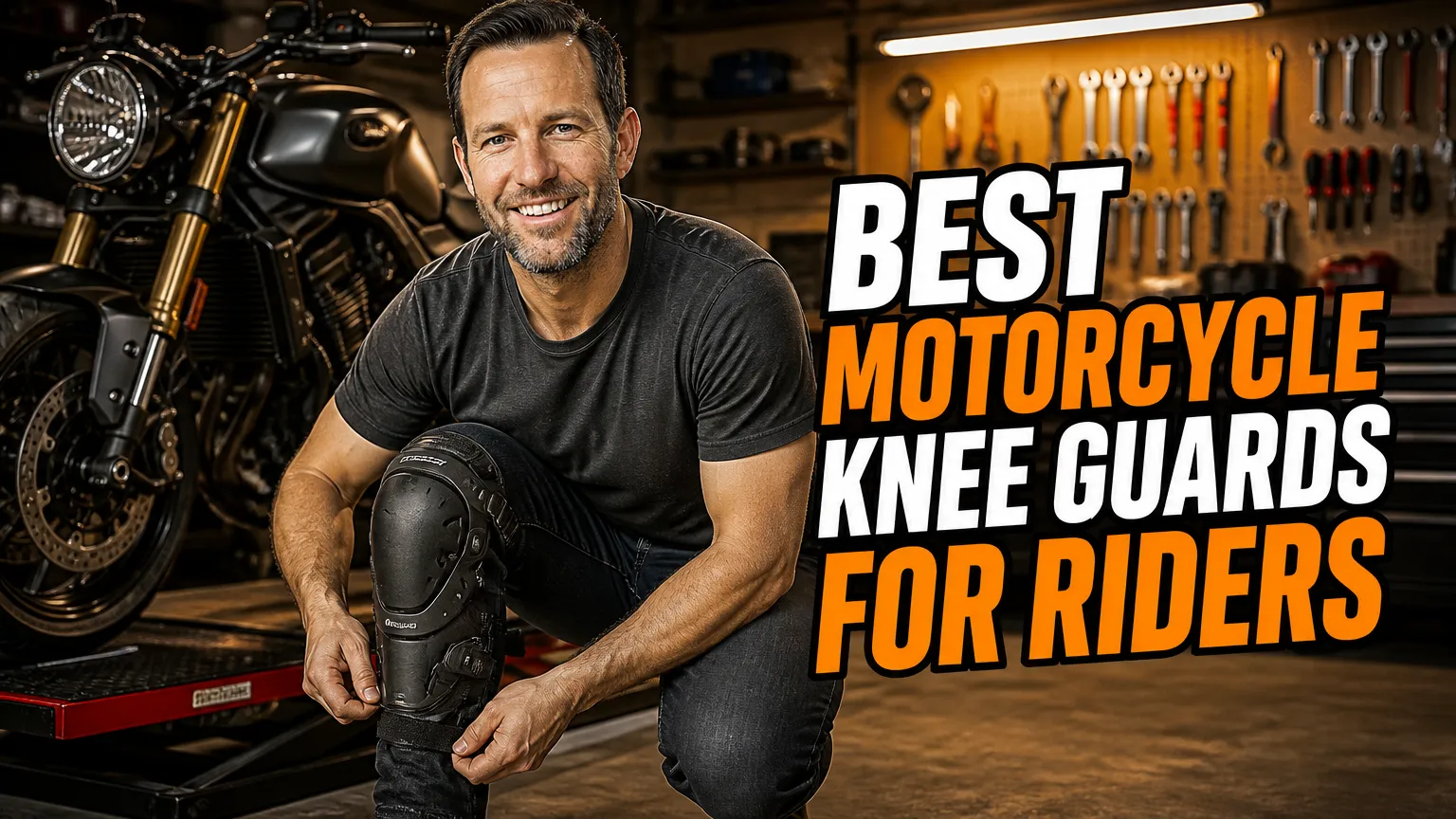
When I ride, I want knee protection that stays put, fits comfortably with my pants, and suits the terrain ahead. The best motorcycle knee guards for riders aren’t automatically the biggest or most expensive: the right choice depends on whether I’m commuting, riding dirt, or spending long days on an adventure bike.
I’ve learned to pay close attention to fit and certification, not just the look of a hard shell. Below, I compare eight real models and explain what stands out to me, where I’d use each one, and what I’d check before buying.
- I’d start with the Leatt Dual Axis for substantial coverage and a hinged hard-shell design.
- I’d choose the Dainese Pro-Armor Knee Guards 2.0 when a flexible, low-profile feel matters most.
- I look for EN 1621-1 certification, secure straps, and a guard that stays centered while I bend my knees.
- I match the guard to my riding: a trail-focused shell may feel bulky under snug street pants.
How I choose knee protection
Before I compare models, I think about how I ride and where I’ll wear the guards. A hard-shell protector with extended shin coverage can make sense for dirt and adventure use, while a flexible design may fit more easily beneath road pants.
I also check the label for EN 1621-1, the European standard for limb joint protectors. Level 1 and Level 2 indicate different impact-attenuation limits; Level 2 is designed to meet a more demanding threshold. I still treat certification as one part of the decision, alongside coverage, construction, and fit.
My best fitting tip is simple: I try the guards on with the pants and boots I actually ride in. I bend my knees, sit in my riding position, and walk around to see whether the protectors shift, pinch, or interfere with the boot opening.
1. Leatt Dual Axis — My pick for hard-shell coverage
The Leatt Dual Axis is where I’d start when I want a dedicated knee-and-shin guard with a protective outer shell. Its hard-shell sections sit over impact-absorbing 3DF foam, and the dual-pivot hinge is designed to follow the knee as it bends.
Leatt lists the Dual Axis as CE tested and certified to EN 1621-1 Level 1 for knee and shin protection. I like that it covers more than the kneecap alone, particularly for trail riding or adventure days when I’m exposed to brush, loose rocks, and awkward stops.
What I like and what I’d check
I’d consider the Dual Axis for off-road riding, commuting over rough roads, or anyone who prefers a more substantial exterior guard. The articulated design helps it move with the leg, but I’d still check for pressure points and ensure the shin section works with my boots.
Its size and hard-shell construction can feel bulky beneath close-fitting jeans. I’d more readily pair the Leatt Dual Axis with roomy riding pants or wear it over a base layer, then confirm the straps hold it in place without cutting into my leg.
2. Alpinestars SX-1 v2 — My hinged option for flexible movement
The Alpinestars SX-1 v2 Knee Protectors combine a protective shell with a dual-pivot hinge, so I get a more structured feel without choosing a completely rigid, straight guard. Alpinestars uses an asymmetrical design and extended coverage around the knee area, with padding intended to make the contact points more comfortable.
The SX-1 v2 is CE certified to EN 1621-1 Level 1. I see it as a useful middle ground for riders who want more coverage and a hard exterior than a slim sleeve-style protector provides, but still want the guard to articulate while riding.
Where I’d wear it
I’d look at the SX-1 v2 for street rides and occasional off-road use, especially if I prefer to wear guards over my base layer rather than squeeze them under narrow jeans. I’d check how the upper and lower straps sit when I’m seated, since strap comfort can matter just as much as the shell shape on a longer ride.
For a daily setup, I’d compare its bulk with the cut of my riding pants before committing. I also browse best motorcycle gear for daily riders when I’m putting together a comfortable kit that works beyond just the knee protection.
3. Dainese Pro-Armor Knee Guards 2.0 — My flexible, low-profile choice
When I want a guard that feels less like a motocross shell, I’d consider the Dainese Pro-Armor Knee Guards 2.0. Their flexible construction and ventilated design make them an appealing option for riders looking for protection that can sit beneath compatible motorcycle pants.
Dainese lists the Pro-Armor Knee Guards 2.0 as meeting EN 1621.1 Level 2. I appreciate that higher protection level, but I wouldn’t use the rating alone to decide: a flexible guard still needs to stay properly positioned over my knee throughout a ride.
My fit notes
I’d wear the Pro-Armor 2.0 for road riding when comfort and a close fit under pants are high priorities. I’d check that the pants have enough room for the guards and that the knee pockets, if present, hold them in the right place rather than letting them slide down.
This style is less of a wraparound hard-shell option than the Leatt Dual Axis. I’d choose it when I want a more discreet feel, then consider my broader kit too; my guide to best clothes for motorcycle riding is useful when I’m thinking about how protective layers work together.
4. Fox Racing Launch Pro D3O — My choice for trail-oriented comfort
The Fox Racing Launch Pro D3O Knee Guards pair an impact-absorbing D3O insert with a protective knee cap and a flexible, articulated design. I’d look at them for trail rides where I want a balance of knee coverage and movement instead of a bulky brace-like feel.
The model is built as a dedicated knee guard for riding, with a sleeve-style fit intended to help keep the protector in place. Fox’s product details and versions can vary by market, so I’d confirm the current certification information on the exact model and size I’m buying rather than assuming every Launch product has the same rating.
What suits me about this design
I like the idea of an impact insert working alongside an exterior cap: the insert is there to absorb impact, while the cap adds a protective surface over the knee. For trail use, I’d focus on whether the sleeve stays put when I’m standing on the pegs, walking the bike, and repeatedly bending my legs.
I’d try the Launch Pro D3O under my riding pants before taking it on a long ride. If I’m choosing gear for a new rider, I also consider comfort and sizing across the whole outfit, which is why I’d pair this research with best gear for female beginner motorcycle riders.
5. Leatt 3DF 6.0 Knee Guard — My soft-armor pick for mobility
The Leatt 3DF 6.0 Knee Guard is a soft, sleeve-style protector built around Leatt’s 3DF impact foam. It’s a very different proposition from the Dual Axis: I’d choose the 3DF 6.0 when flexibility and a closer fit matter more to me than a large external shell.
Leatt lists the knee protection as CE certified to EN 1621-1 Level 2, with a separate shin protection rating. I’d verify the exact label and current product details before buying, particularly if the knee and shin ratings are important to my decision.
When I’d pick the 3DF 6.0
I’d consider this model for trail riding, enduro-style use, or days when I want to move easily on and off the bike. Its soft construction can be more comfortable under suitable pants than a rigid protector, but I’d check the fit carefully so the guard doesn’t creep down as I ride.
For hot-weather use, I’d pay attention to the fabric and ventilation as well as the foam. No protector feels comfortable if it bunches behind my knee, so I’d spend a few minutes moving around in it before deciding it’s ready for a full day out.
6. EVS TP199 Knee Guard — My straightforward off-road option
The EVS TP199 Knee Guard is a hard-shell knee protector designed for off-road use. It combines a molded outer shell with padding and an adjustable fit, giving me the more traditional guard format I’d want when I’m riding trails and prefer a visible layer over my base clothing.
EVS has offered the TP199 as a CE-rated knee guard, but I’d check the specific product label and current listing for the rating and size details available in my region. I wouldn’t assume that an older listing, a retailer’s description, and the current model packaging always provide identical information.
My practical considerations
I’d shortlist the TP199 if I wanted a simple, adjustable protector and didn’t mind wearing a more noticeable shell. Before riding, I’d check that the knee cup remains centered when I bend my leg and that the straps don’t restrict circulation or press uncomfortably against the back of my knee.
Like other hard-shell guards, it may not fit neatly beneath slim road jeans. I’d treat the pants-and-guard combination as a system and test them together, rather than judging comfort from the protector alone.
7. Icon Field Armor 3 Knee — My pick for a more armored look
The Icon Field Armor 3 Knee is a substantial knee-and-shin protector with a molded outer chassis and impact-absorbing knee armor. Its extended profile gives me more coverage than a compact slip-in pad, so I’d consider it when I want an over-the-leg design that feels purpose-built for protective riding gear.
Icon positions the Field Armor 3 as a protective riding product with articulated, ventilated construction. Because model specifications and included armor can differ by version or market, I’d confirm the current certification and included components on the exact pair before ordering.
What I’d pair it with
I’d wear the Field Armor 3 with pants that leave enough room around my knees and lower legs. I’d also make sure the shin section doesn’t clash with my boots, since a guard that pushes against the boot cuff can become distracting over a long ride.
For a rider who wants a more discreet solution under casual-looking riding pants, this may feel like too much equipment. I’d compare its coverage and bulk with my intended use and browse best accessories for motorcycle riders when I’m rounding out the rest of my protection and comfort kit.
8. Alpinestars Bionic Pro Plasma Knee Protector — My lightweight armor option
The Alpinestars Bionic Pro Plasma Knee Protector uses Alpinestars’ Plasma impact-protection material in a lightweight, flexible design. I’d consider it when I want a close-fitting guard that moves naturally with my leg, rather than a long, hard-shell knee-and-shin protector.
Alpinestars specifies CE Level 1 protection to EN 1621-1 for this knee protector. I like having a clearly stated standard to check, while keeping in mind that a Level 1 rating and a comfortable fit don’t automatically make one model right for every riding style.
My use-case view
I’d look at the Bionic Pro Plasma for riders who prioritize mobility and want an option that can work with compatible pants. I’d test it in my normal seated position and make sure the protector covers my knee without a gap when I bend my leg or shift around on the bike.
For adventure riding, I’d think about whether I want a compact knee pad or additional shin coverage. If I’m comparing full riding setups for different body shapes and bike fit, I’d also check best adventure touring motorcycle gear for short riders.
How I get the fit right before riding
I measure and try knee guards on while standing, bending, and sitting in my usual riding position. The protector should cover the kneecap as I move, and straps or sleeves should feel secure without pinching. I don’t rely on a size chart alone, since leg shape and the thickness of my base layer can change the fit.
I also check how the guard interacts with my pants and boots. If I wear it under pants, I make sure the material doesn’t pull tight across the knee; if I wear it over a base layer, I check that the straps stay comfortable and the guard doesn’t rotate when I walk.
My final recommendation
If I wanted broad hard-shell coverage, I’d start with the Leatt Dual Axis. If I wanted flexible armor for a closer fit, I’d compare the Dainese Pro-Armor Knee Guards 2.0 and Leatt 3DF 6.0, paying careful attention to certification, comfort, and the pants I plan to wear.
Whichever model I choose, I treat the fit check as part of the purchase, not an optional extra. A well-rated guard that slips out of position isn’t the solution I want, so I take time to confirm that my knee protection stays comfortable and secure on the kind of ride I actually do.
Frequently Asked Questions
How should motorcycle knee guards fit?
I look for a secure, comfortable fit that keeps the protector centered over my kneecap when I bend my knee and move through a riding position.
Are hard-shell knee guards better than soft knee guards?
I choose based on the ride: hard shells can suit rough off-road use, while flexible guards are often easier to wear under road-riding pants. Fit and certified impact protection matter either way.
What CE rating should I look for in motorcycle knee guards?
I check for EN 1621-1 certification and note the protection level. Level 2 provides a higher impact-attenuation threshold than Level 1, but neither rating replaces a good fit.
Can I wear knee guards under motorcycle jeans?
Yes, if the jeans have enough room to avoid squeezing the guards or restricting movement. I try the full combination on before riding and check that the guards stay in place.

Related Articles

5 Motorcycle Wrist Braces and Guards I’d Choose for Confident Riding
Compare five wrist braces and guards I’d consider for street and dirt riding, with fit, support, glove compatibility, and buying…
Jake Miller
11 min read

7 Under Armour Base Layers I’d Choose for Comfortable Motorcycle Rides
Discover seven Under Armour base layers for hot and cold rides, plus my fit tips and safety advice for wearing…
Jake Miller
10 min read

8 Best Motorcycle Base Layers for Staying Warm on Cold Rides
Compare eight rider-ready thermal base layers, from merino to synthetic options, with fit, warmth, layering advice, and picks for cold-weather…
Jake Miller
11 min read