
8 Best Adventure Touring Gear Picks for Short Riders Who Need a Confident Fit
 Jake Miller
11 min read
Jake Miller
11 min read
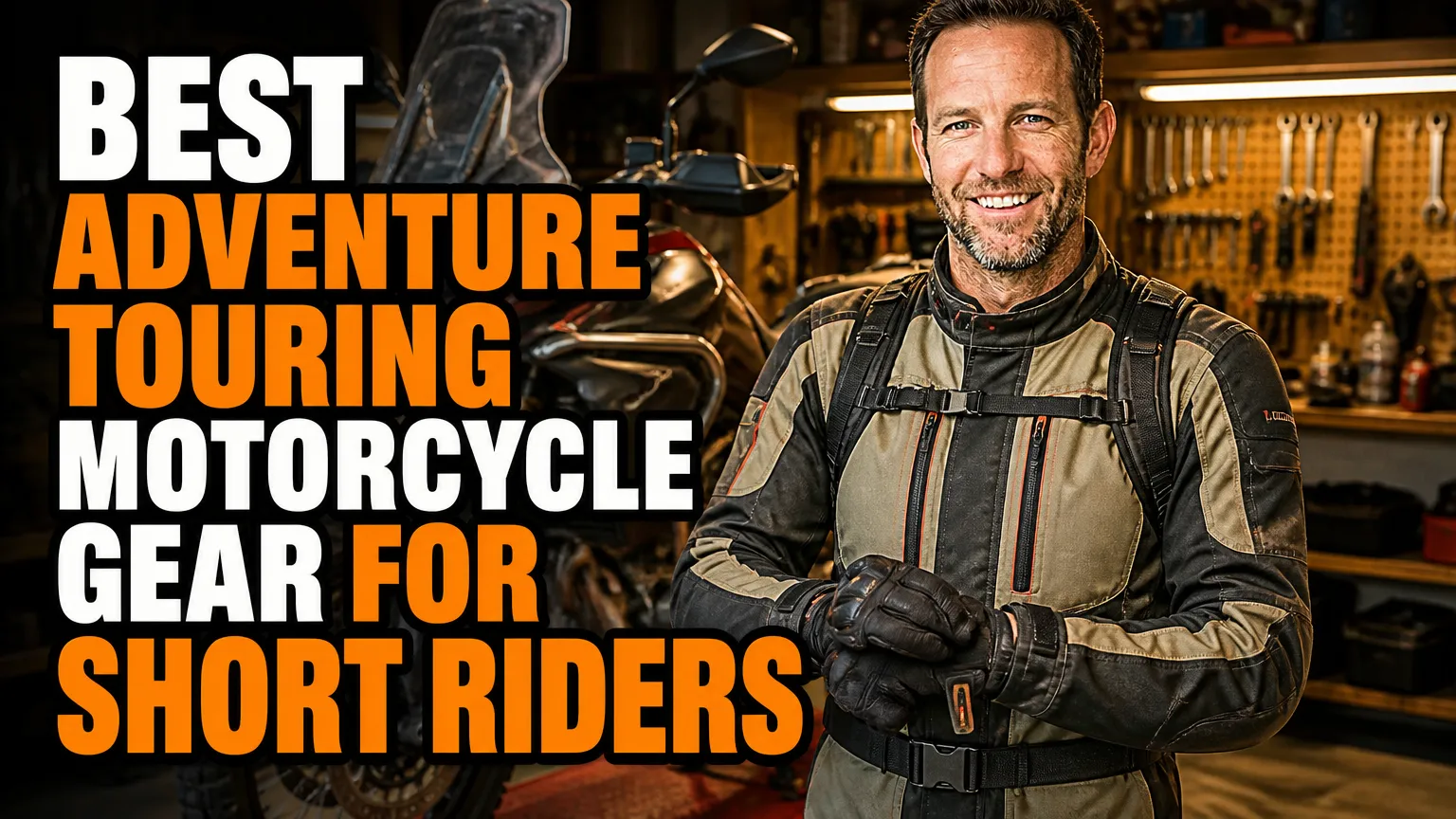
I know the little pause before a stop can feel like a big deal when I’m on an adventure bike and the ground seems just out of reach. The right riding gear won’t change a motorcycle’s seat height, but a secure, well-proportioned fit can make it easier to move, stay protected and ride with confidence.
For this guide, I’ve focused on real, named products with useful adjustment, touring features or shorter-cut designs. I don’t treat a women’s fit, a short boot or an adjustable cuff as a guarantee that something will fit every shorter rider; I use each as a reason to try the gear carefully on my own body and bike.
- I put secure armor placement and a comfortable seated fit ahead of a particular label or size chart.
- The Stella Andes jackets and pants offer touring-focused protection with fit adjustments worth checking.
- Forma Adventure Low boots are a useful option when a lower boot shaft suits my leg and riding needs.
- I test every item on the motorcycle, not just standing in front of a mirror.
How I choose adventure gear when I’m shorter
I start by sitting on my bike in the riding position I actually use. I check that jacket sleeves still cover my wrists, knee armor stays over my knees, and pants don’t bunch heavily behind them. I also make sure I can turn my head, reach the handlebars and operate the controls without the gear pulling tight.
Ground reach depends on more than height: inseam, seat width, suspension sag, boot sole and riding technique all matter. I avoid choosing oversized boots or bulky gear simply to gain a little reach. For a broader overview of clothing layers and fit, I also refer to my guide to best clothes for motorcycle riding.
1. Alpinestars Stella Andes V3 Drystar Jacket: A touring staple with useful adjustments
I like the Alpinestars Stella Andes V3 Drystar Jacket as a starting point for riders who want a women-specific adventure-touring cut. Its Drystar waterproof construction, removable thermal liner and touring-oriented design make it a practical option for changing conditions. It has CE Level 1 shoulder and elbow protectors, plus a pocket for a compatible back protector, which I would check separately before riding.
For my fit, the key advantage is being able to adjust the waist, cuffs and sleeves rather than relying on a loose size to create room. I check that the elbow armor remains centered when I reach forward to the bars; if it slides down while I ride, the jacket isn’t right for me, even if it feels comfortable standing up.
What I’d check before buying
The Stella Andes V3 is a substantial touring jacket, so I try it on with the layers I expect to wear underneath. I also compare the sleeve length and shoulder fit across sizes, since moving up for torso comfort can leave the cuffs too long. I generally see this model in the mid-priced touring range, with actual prices varying by size, retailer and sale.
2. Alpinestars Stella Andes V3 Drystar Pants: Matched touring protection
I pair the Stella Andes V3 Drystar Pants with the jacket when I want a coordinated touring setup. They’re designed as women’s adventure-touring pants and use a waterproof Drystar construction with a removable thermal liner. The model includes knee protection, and I verify the exact armor and certification listed for the size and version I’m buying rather than assuming every market listing is identical.
My most important fit check is the knee protector. I sit on the bike with my feet on the pegs and confirm that it covers my knee in that position, not only when I’m standing upright in a shop. I also check that the waist adjustment and jacket connection work together without pinching or leaving a gap.
I don’t assume a women’s cut automatically means a short inseam. If the legs are too long, I ask the retailer or manufacturer about available lengths and approved alterations before buying; moving armor or cutting through reinforced areas can compromise how protective pants work.
3. REV’IT! Sand 5 H2O Jacket: Layer flexibility for mixed-weather trips
The REV’IT! Sand 5 H2O Jacket appeals to me when I want an adventure-touring system that can adapt as conditions change. Its layered approach combines a protective outer jacket with removable waterproof and thermal components, so I can adjust what I wear as temperatures and weather shift. That versatility is useful on long trips, when one heavy jacket can feel wrong from morning to afternoon.
I pay close attention to its adjustment points at the waist, arms and cuffs. A closer fit can help keep armor in position, but I still check that the waterproof layer doesn’t bunch and that the sleeve ends meet my gloves when I lean forward. I’ve found it helps to try the jacket while wearing the base and mid-layers I’ll actually use.
My fit note
The Sand 5 H2O isn’t specifically a petite garment, so I treat its adjustability as a helpful feature, not a substitute for the right pattern and size. I’d compare it with a women-specific touring jacket and confirm that the elbow and shoulder armor align on my frame. For more safety-focused clothing considerations, I also use this guide to best gear for motorcycle safety top protective clothing and accessories.
4. REV’IT! Sand 5 H2O Pants: Adventure coverage with adjustable fit
I’d consider the REV’IT! Sand 5 H2O Pants alongside the Sand 5 jacket for a modular touring outfit. They’re built for adventure riding and use removable weather layers, letting me adapt the setup rather than wearing the same insulation in every climate. The adjustable waist and leg closures are particularly useful details to inspect when I’m trying to keep the fit tidy over boots.
For a shorter rider, pants length is only part of the puzzle. I check whether the knee armor stays over my kneecap when seated and whether the hem catches on the boot or gathers behind my knee. If the pants fit my waist but not my leg length, I ask about short sizing before I consider alterations.
Because versions and regional specifications can change, I confirm the listed armor, materials and waterproof-layer details with the seller. I also test the jacket-to-pants connection while seated; a comfortable standing fit can feel quite different once I’m reaching for the bars and bending my knees.
5. KLIM Artemis Jacket: A premium option for riders who want women-specific touring fit
When I’m shopping at the premium end, I look at the KLIM Artemis Jacket for its women-specific adventure-touring design and weather protection. Artemis models are known for a waterproof GORE-TEX construction and protective armor, but I check the current product specification for the exact generation, included armor and liner arrangement. This is a higher-cost choice, so I’d want a careful in-person fit check before committing.
What matters to me is whether the jacket’s shoulder, elbow and torso proportions suit my build without leaving excess material around the waist. I test the cuffs with my gloves and make sure the sleeves don’t ride up when I hold the bars. Even a well-made jacket can feel awkward if its armor lands in the wrong place on my frame.
I treat the Artemis as a strong candidate for riders who prioritize a feature-rich touring shell, not as a guaranteed petite fit. If the cut works for me, the investment may make sense for frequent travel; if it doesn’t, I’d rather choose a less expensive jacket that stays securely in position.
6. Forma Adventure Low Boots: A lower shaft to consider for easier stops
The Forma Adventure Low is the most directly relevant pick here when I’m looking for a shorter boot profile. It keeps an adventure-style design in a lower-height version, with a waterproof Drytex membrane, protective construction and a dual-density sole. I check the exact model details and sizing from the seller, since product specifications can vary across versions and markets.
A lower shaft may make it easier for me to bend my ankle and get a foot down, but I don’t choose boots on reach alone. I check that the fit is secure around my heel and ankle, that the sole feels stable on the pegs, and that the boot still offers the protection I want for touring. I also try them with my riding pants tucked or worn over the boot as intended.
What I won’t compromise
I don’t size up just to get a taller sole: a loose boot can move around and make shifting or braking less precise. If I need more ground reach, I first think about a lower seat, suspension setup approved for my motorcycle, and stopping technique alongside appropriate boots.
7. KLIM Adventure GTX Short Gloves: Less cuff bulk for a touring setup
I like the KLIM Adventure GTX Short Gloves as an option when a long gauntlet feels bulky under my jacket sleeve. The short-cuff format is easier to layer with some touring jackets, while the GORE-TEX waterproof design makes them worth considering for wet-weather travel. I confirm the current version’s construction and protective details before purchase, as specifications can change between model years.
Shorter hands can be especially sensitive to excess glove length. I check that my fingertips reach the glove ends without compressed seams, that the palm doesn’t wrinkle around the grips, and that I can operate the clutch, brake and switches easily. I also test whether the glove cuff and jacket sleeve overlap properly in my normal riding posture.
For cold-weather trips, I plan the whole layering system rather than expecting one glove to solve every problem. My guides to the best winter face mask for motorcycle riding and best gear for riding motorcycle in cold weather stay warm and protected can help me think through the rest of that setup.
8. Arai XD-5: An adventure helmet I’d choose by fit, not rider height
The Arai XD-5 is an adventure-style helmet with a peak and shield, making it a recognizable option for touring riders who split their time between pavement and less-traveled roads. A helmet won’t make my feet reach farther, but it is essential gear, and its balance and fit affect comfort over a long day. I check the exact certification and features for the model sold in my region.
I never choose a helmet based on my height or a size label alone. I follow Arai’s fitting guidance, have the helmet fitted by a knowledgeable dealer where possible, and check for even, firm contact without painful pressure points. I also make sure the peak and shield work with my riding position and that I can turn my head comfortably.
My broader rule is simple: fit matters more than matching every item to one brand. For newer riders building a complete kit, I’d also read my guide to the best motorcycle clothing for beginners before filling in any remaining gaps.
My final fit checklist before I ride
I put the full outfit on, close every zipper and fastener, and sit on the motorcycle. I check my range of motion, armor placement and whether fabric gathers where it could distract me. Then I practice reaching the controls and putting a foot down on both sides, using the same footwear and luggage setup I expect on the road.
I also remember that clothing can only do its job if it fits correctly and stays in place. If a jacket or pair of pants needs extensive changes, I ask a reputable specialist whether the alteration preserves protective seams, reinforcement and armor position. A short test ride in a safe area can reveal comfort problems that a fitting-room mirror can’t.
My best pick is ultimately the gear that fits my body, my motorcycle and my real riding conditions. I’d rather take time to compare sizes and test a seated fit than buy based on a label that promises a shorter cut. With well-fitted protection and a little practice at stops, I can focus more on the ride and less on my reach.
Frequently Asked Questions
What adventure motorcycle gear matters most for a short rider?
I prioritize protective gear that fits securely in a riding position, especially jackets, pants and boots that let me reach the ground and controls without restriction.
Can I shorten motorcycle pants or sleeves?
Sometimes, but I check with the manufacturer or a specialist alteration shop first. Any change must preserve armor placement, seam strength and protective coverage.
Are low motorcycle boots a good choice for short riders?
They can make ground contact easier, but I still choose boots with secure ankle and shin protection, a suitable fit and a sole that works with my foot pegs.
How should I check whether a jacket fits on an adventure bike?
I sit on the bike in my normal riding posture and check that the sleeves, shoulders, waist and armor stay in place without pulling or bunching.

Related Articles

5 Motorcycle Wrist Braces and Guards I’d Choose for Confident Riding
Compare five wrist braces and guards I’d consider for street and dirt riding, with fit, support, glove compatibility, and buying…
Jake Miller
11 min read

7 Under Armour Base Layers I’d Choose for Comfortable Motorcycle Rides
Discover seven Under Armour base layers for hot and cold rides, plus my fit tips and safety advice for wearing…
Jake Miller
10 min read

8 Best Motorcycle Base Layers for Staying Warm on Cold Rides
Compare eight rider-ready thermal base layers, from merino to synthetic options, with fit, warmth, layering advice, and picks for cold-weather…
Jake Miller
11 min read