
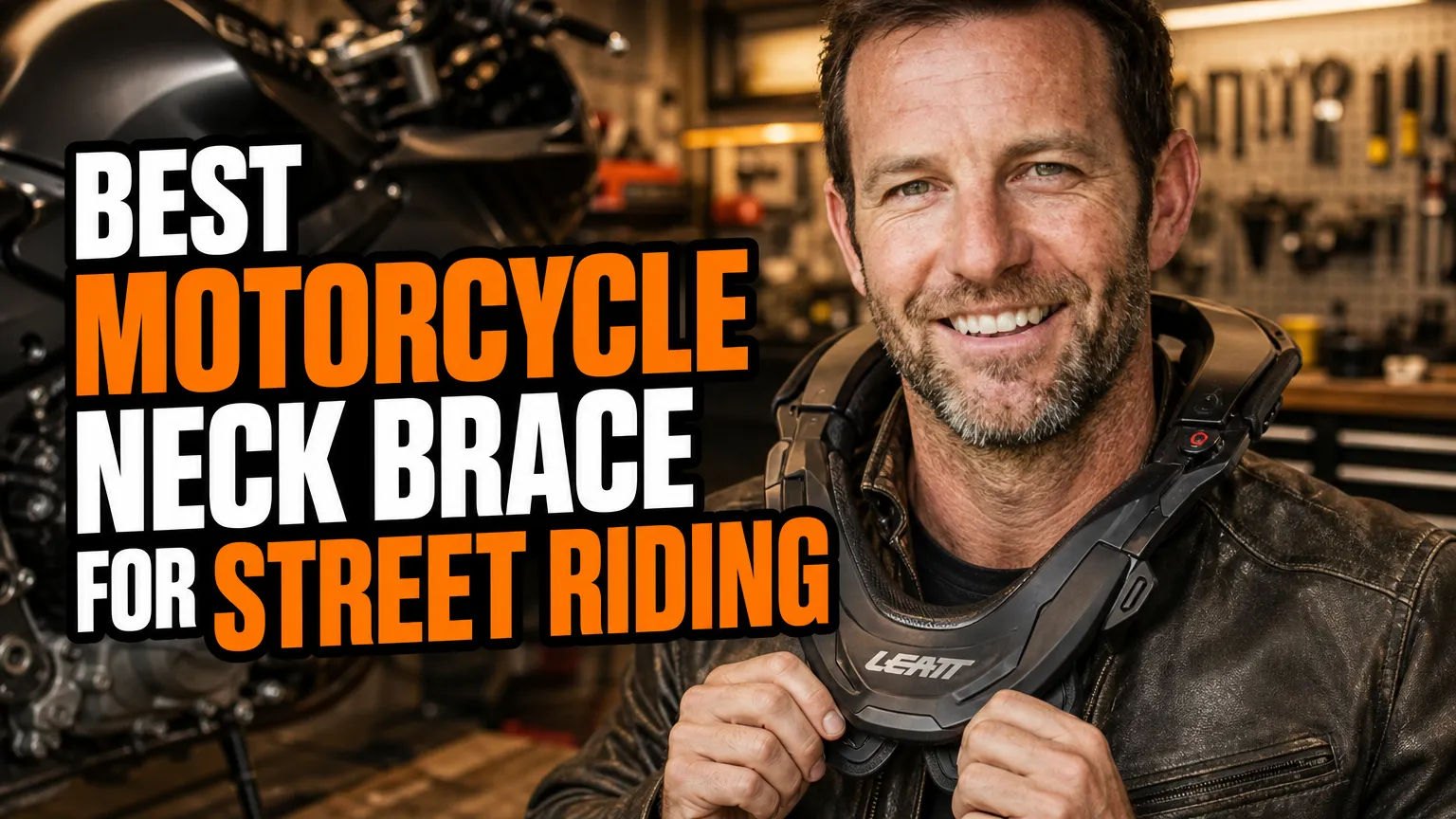
I look for gear that feels workable on ordinary rides, not just on a race track. A motorcycle neck brace can be harder to choose for street use than a helmet or jacket because fit depends on how the brace meets both your helmet and the rest of your gear.
In this guide, I compare six specific models I’d consider, explain what I’d check before buying, and share where each one may suit a street rider. I don’t treat a neck brace as a guarantee against injury; I see it as a piece of protective equipment that has to fit correctly and work with the rest of my setup.
- I’d start by checking helmet, jacket, and riding-position compatibility, not by picking the most expensive brace.
- The Leatt 5.5 is my balanced all-round option; the Atlas Air is worth considering if low weight and mobility matter most.
- Leatt’s 3.5 is a more approachable entry point, while the 6.5 Carbon is a premium choice.
- A neck brace is not a substitute for a certified helmet, protective clothing, or careful riding.
How I choose a brace for road use
I start with fit. The brace should sit as its manufacturer intends, remain stable when I move naturally, and work with my helmet without pushing it into an awkward position. I check both the size chart and the brand’s fitting instructions rather than assuming that a brace that feels comfortable in a shop is automatically a good match.
Next, I consider my jacket. A tall collar, shoulder armor, or a built-in back protector can affect where a brace sits. I also think about how I ride: a tucked sport-bike posture, an upright commuter position, and a long-distance touring setup can all feel different. My wider gear checklist includes best gear for motorcycle safety top protective clothing and accessories, because a neck brace is only one part of a protective setup.
I also separate a structured neck brace from a soft neck warmer or collar. A warmer can help with wind and cold, but it is not the same kind of equipment. For cold-weather comfort, I’d look at the best item for neck when riding motorcycle in cold weather and the best winter face mask for motorcycle riding separately.
1. Leatt 5.5 Neck Brace — My balanced all-round pick
The Leatt 5.5 Neck Brace is where I’d begin if I wanted a well-known, adjustable design without moving straight to a carbon-fiber premium model. Leatt builds this brace around a rigid frame and adjustable fit components, including a rear thoracic strut. The brand’s CoreFlex rear section is designed to flex with body movement rather than behaving like one solid piece.
That adjustability is the feature I value most for street use. I’d use the included adjustment options to work toward a stable fit with my helmet and jacket, then check that my normal head movement still feels natural. I would not assume the same setting works for every rider, especially when body shape, jacket armor, and riding posture vary.
What I like and what I’d check
I like that the Leatt 5.5 is designed as a substantial, adjustable neck brace rather than a simple padded collar. It is typically priced in the mid-to-upper range for motorcycle braces, with exact retail prices varying by seller, size, and region. I’d check the current product listing for included parts and sizing details before ordering.
My main reservation is bulk. A structured brace can feel noticeable under or over street gear, and I’d want to try the Leatt 5.5 with the jacket I actually ride in. I’d pick it for riders who value adjustability and a feature-rich design, provided the fit works with their complete setup.
2. Atlas Air Neck Brace — My lightweight, mobility-minded option
The Atlas Air Neck Brace appeals to me when I want to prioritize a lighter, less restrictive feel. Atlas uses a split-frame design, a layout intended to allow more independent movement between the sides of the brace. I’d still treat that as a design characteristic to assess in person, not a promise that every rider will find it more comfortable.
For street riding, I would pay particular attention to how the Atlas Air sits around my collarbones and how its frame meets the back of my helmet. My shoulders and neck move differently when I’m checking traffic than when I’m riding in a fixed, forward-facing position, so I’d test those movements before committing to a long ride.
Who I think should consider it
I’d put the Atlas Air on my shortlist if I find heavier, more rigid-feeling braces distracting. It generally sits in the mid-priced range, although actual prices and availability can vary. I’d confirm the exact size, adjustment options, and included fit pieces with the retailer rather than relying on an old listing.
My caution is that low weight by itself doesn’t make a brace the right choice. If it shifts, catches on my jacket, or interferes with my helmet, it would not suit my needs. I’d choose the Atlas Air for its mobility-focused design only after checking the fit on my own body and gear.
3. Alpinestars BNS Tech-2 — My option from a major road-gear brand
The Alpinestars BNS Tech-2, also referred to as the Bionic Neck Support Tech-2, is a structured neck-support product from a brand many riders already know for motorcycle equipment. Its design uses a rigid support frame with padded contact areas, and Alpinestars provides sizing and fitting guidance that I’d follow closely.
I’d consider the BNS Tech-2 if I already use Alpinestars gear or want to compare another established design against Leatt and Atlas. But I wouldn’t assume that a familiar brand name guarantees a better fit. Before buying, I’d check whether the model is currently offered in my size and whether the manufacturer’s intended setup works with my helmet and jacket.
My street-riding fit check
Because this is a structured support rather than a soft wind collar, I’d pay attention to how it sits when I’m upright and when I lean forward. I’d also make sure jacket shoulders or a back protector do not push it out of position. As with any brace on this list, I’d treat fit instructions as essential, not optional.
Prices can vary with stock and region, so I’d compare current retailer listings instead of relying on a fixed figure. For me, the Alpinestars BNS Tech-2 is most compelling when its sizing and shape suit the rider better than the alternatives, not simply because it carries a familiar logo.
4. Leatt 3.5 Neck Brace — My simpler starting point
The Leatt 3.5 Neck Brace gives me a lower-priced way to consider the brand’s structured brace format. It uses a three-dimensional frame design and a rear support section, while keeping the product positioned below Leatt’s more adjustable or premium models. Exact materials and specifications can differ between versions, so I’d verify the current listing before purchasing.
I’d look at the 3.5 if I wanted to compare a simpler brace with more expensive options or if I was buying my first one and had a firm budget. Street riders should still take fit seriously: an entry-level price does not mean I can skip trying it with my helmet, jacket, and normal riding posture.
Where I see the trade-off
The main attraction is value. The Leatt 3.5 is generally positioned below models such as the 5.5 and 6.5 Carbon, though retail prices shift. I’d check what adjustment features are included in the exact version I’m considering instead of assuming it has the same fit range as a higher-tier model.
I’d also be honest about my expectations. If I need more adjustment to get a stable fit, or if the 3.5 conflicts with my jacket, I’d move on rather than trying to make it work. Riders assembling a complete kit may also find it useful to review best motorcycle clothing for beginners and compare how every layer fits together.
5. Leatt 6.5 Carbon Neck Brace — My premium lightweight pick
The Leatt 6.5 Carbon Neck Brace is the high-end option in this group, with a carbon-fiber frame that distinguishes it from Leatt’s lower-priced braces. I’d consider it when reducing the weight of a rigid brace is a priority and the premium price is acceptable. I’d verify the current specification, package contents, and sizing with the seller before making a decision.
In my view, a premium material is only worthwhile if the brace fits well and I prefer how it feels on a ride. Carbon construction may appeal to riders who want a lighter product, but it does not remove the need to check helmet clearance, contact points, and compatibility with protective clothing.
Who I’d recommend it to
I’d put the 6.5 Carbon on the shortlist for experienced riders who already know they want a structured brace and are willing to pay more for a premium construction. It is typically priced at the top end of this selection. I’d compare its fit directly with the Leatt 5.5 before spending extra, since comfort and compatibility matter more to me than a product tier alone.
If I were new to neck braces, I wouldn’t buy the 6.5 Carbon simply because it is the most expensive model here. I’d first establish that a brace suits my riding and that I can wear it correctly with my gear. The broader clothing picture matters too, which is why I’d also review best clothes for motorcycle riding.
6. EVS R4 Neck Support — My padded, collar-style alternative
The EVS R4 Neck Support is a different proposition from the more rigid frame designs above. It uses a padded collar-style construction intended to sit around the neck and shoulders. I include it because some riders prefer a softer, more compact form of neck support, but I would not treat it as interchangeable with a structured brace such as the Leatt 5.5 or Atlas Air.
That distinction matters when I compare products. The R4’s padding and shape may feel less cumbersome to some riders, but the design and intended use differ from a rigid brace. I’d read EVS’s current product information carefully and make sure I understand what the R4 is designed to do before deciding it meets my needs.
When I’d choose it
I’d consider the EVS R4 if I prefer a padded collar format and want to try a less rigid-feeling option. It is often less expensive than premium carbon-fiber braces, though I’d check current pricing and availability. My deciding factors would be comfort, secure positioning, and whether the product’s intended use matches my expectations.
I wouldn’t select the R4 just because it feels soft in a shop. I’d check whether it remains in place, whether it works with my jacket, and whether I’m comfortable with its specific design. If I want the features of a rigid brace, I’d compare it with the Leatt, Atlas, and Alpinestars models instead of assuming all neck supports offer the same approach.
How I make the final choice
Before buying, I’d try the brace with the helmet and jacket I actually wear. I’d follow the manufacturer’s fitting instructions, check that the brace stays positioned as intended, and move through the head and shoulder motions I use in traffic. If I can, I’d ask a knowledgeable retailer to help me confirm the size and setup.
I’d also consider comfort over the length of a typical ride. A brace that feels fine while standing still may feel different after an hour in a riding position. I’d check for pressure points, restricted movement, and interference with jacket collars or armor, and I’d stop using a setup that seems unstable or improperly fitted.
Finally, I’d keep my expectations realistic. I see a neck brace as one possible part of my protective equipment, not a guarantee against injury. I still prioritize a properly fitted, certified helmet, abrasion-resistant clothing, gloves, boots, and sound riding habits. That complete approach helps me decide whether a brace belongs in my street-riding kit at all.
Frequently Asked Questions
Do motorcycle neck braces work with street-riding gear?
They can, but I always check the brace against my helmet, jacket, and riding position before using it. A poor fit can interfere with movement or sit incorrectly.
Which neck brace is designed specifically for road riding?
The Leatt STX Road was designed with road riders in mind, but availability can be limited. For current options, I compare off-road-style braces and recommend checking fit carefully for street use.
Can I wear a neck brace over a motorcycle jacket?
Some braces are designed to sit over compatible gear, but the fit depends on the brace and jacket. I follow the manufacturer’s instructions and make sure the brace does not shift or restrict movement.
Does a neck brace guarantee protection from injury?
No. I treat a neck brace as one part of a broader safety setup, not a guarantee or a replacement for a certified helmet, protective clothing, and careful riding.

Related Articles

5 Motorcycle Wrist Braces and Guards I’d Choose for Confident Riding
Compare five wrist braces and guards I’d consider for street and dirt riding, with fit, support, glove compatibility, and buying…
 Jake Miller
11 min read
Jake Miller
11 min read

7 Under Armour Base Layers I’d Choose for Comfortable Motorcycle Rides
Discover seven Under Armour base layers for hot and cold rides, plus my fit tips and safety advice for wearing…
Jake Miller
10 min read

8 Best Motorcycle Base Layers for Staying Warm on Cold Rides
Compare eight rider-ready thermal base layers, from merino to synthetic options, with fit, warmth, layering advice, and picks for cold-weather…
Jake Miller
11 min read