
9 Best Boots for Motorcycle Trail Riding That Actually Protect Your Feet
 Jake Miller
11 min read
Jake Miller
11 min read
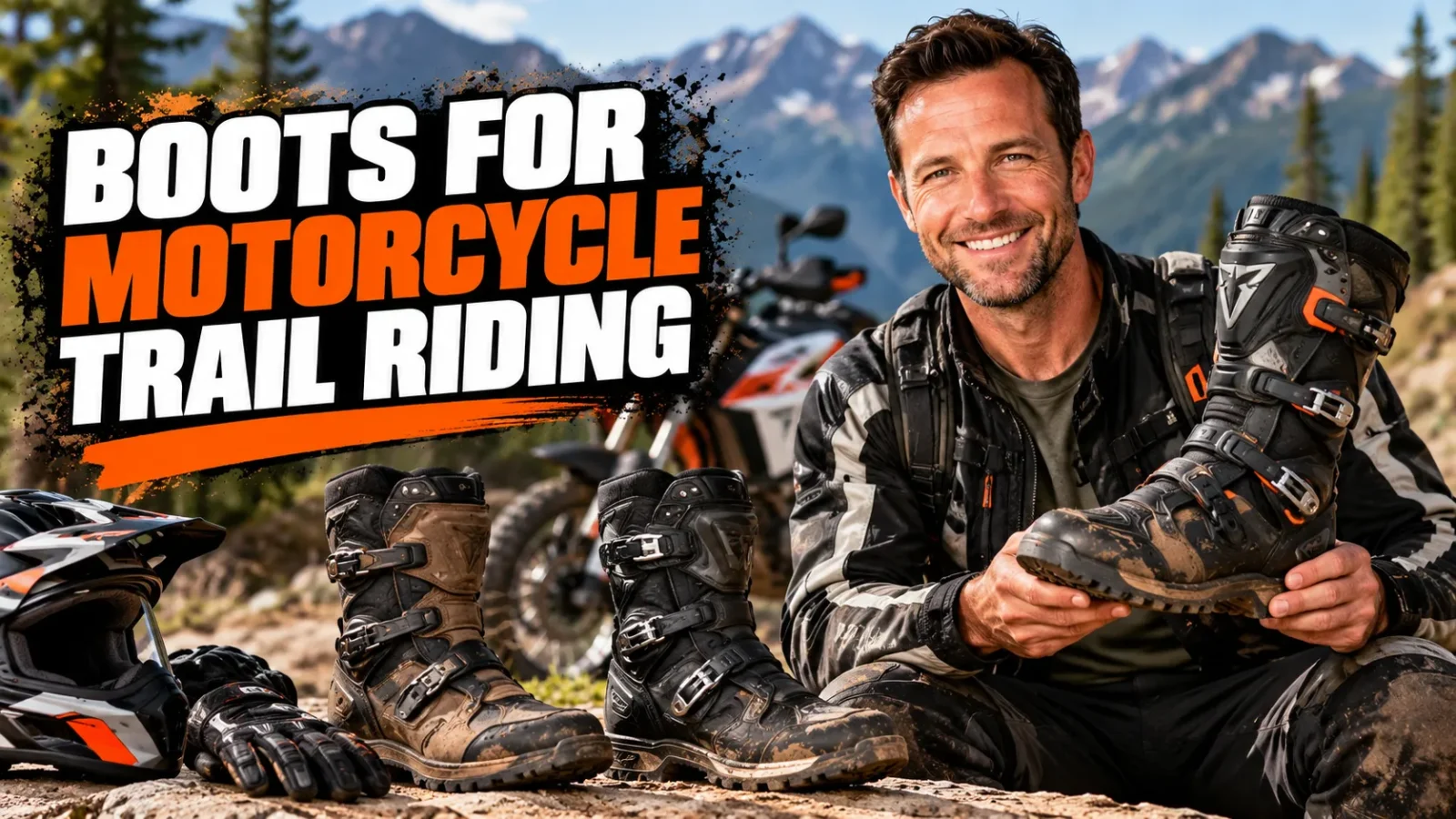
I’ve eaten dirt more times than I’d like to admit, and every single time, my boots were the difference between walking away laughing and limping back to the truck. Trail riding beats up your feet and ankles harder than almost any other kind of motorcycling. Rocks, roots, ruts, and the occasional unplanned dismount all add up fast.
Over the years I’ve rotated through a small closet’s worth of off-road boots, testing them on everything from mellow forest fire roads to gnarly rock gardens that made me question my life choices.
This list is built from that real-world abuse, not a spec sheet skim. If you want the deeper foundational breakdown on boot construction, sole types, and armor standards, my Ultimate Guide to Motorcycle Boots is a great companion read to this list.
- My overall top pick is the Alpinestars Tech 7 for its balance of protection, price, and comfort on technical trails.
- If you want race-level protection and don’t mind the price, the Alpinestars Tech 10 and Sidi Crossfire 3 SRS are the best in the game.
- Riders on bigger ADV bikes mixing trail and gravel should look at the Forma Adventure or Sidi Adventure 2 Gore-Tex instead of a pure MX boot.
- Budget-conscious riders can get genuinely solid protection from the Thor Radial or Fly Racing Maverik without spending $500+.
- Fit and break-in matter more than brand loyalty — always try before committing to a long trail day.
1. Alpinestars Tech 7 — My Overall Top Pick for Trail Riding
The Alpinestars Tech 7 has been my go-to trail boot for the last few seasons, and I keep recommending it because it just gets the fundamentals right. It’s a step down from the full race-spec Tech 10, but honestly, for trail riding rather than motocross racing, that’s exactly what you want.
It uses a microfiber and TPU construction with a replaceable inner bootie, dual compound rubber sole, and a shift pad built into the toe box that actually survives years of abuse. The ankle brace system flexes enough for comfortable trail riding but still locks down hard in a fall.
I’ve worn mine through rocky New England single-track and sandy Southwest washes, and they’ve held up impressively well. At around $300-$330, they sit in that sweet spot of “serious protection” without “race team budget.”
Why It Works So Well for Trail Riding Specifically
Trail riding involves way more standing, walking, and repositioning than motocross does. The Tech 7’s flex points are tuned for that kind of varied movement, so my calves and ankles don’t feel wrecked after a long day of technical terrain.
2. Sidi Crossfire 3 SRS — Best Premium Boot for Serious Trail Riders
If money isn’t the main constraint and you want the best ankle protection money can buy, the Sidi Crossfire 3 SRS is what I’d point you toward. Sidi has been making boots in Italy for decades, and it shows in the fit and hardware quality.
The SRS (Sidi Retention System) buckle closure is genuinely the best I’ve used — it distributes pressure evenly instead of creating hot spots like cheaper ratchet buckles do. The dual-injected sole and internal ankle brace give a locked-in feeling that inspires real confidence over rocky trail sections.
These run $650-$700, which is a real investment. But I’ve had a pair last me four seasons of hard trail use with only sole replacements needed, so the cost-per-ride math actually works out reasonably well.
3. Alpinestars Tech 10 — Best for Maximum Protection on Technical Trails
When I’m riding gnarlier trails with big rock gardens or root-covered climbs, I reach for the Alpinestars Tech 10. This is Alpinestars’ flagship race boot, and the protection level is noticeably higher than the Tech 7.
It features a dual-stage exoskeleton chassis, a removable and adjustable calf diameter panel, and their most advanced brace system for controlling excessive ankle rotation. The rear brace works with your leg’s natural movement instead of fighting it, which sounds subtle but matters a lot after hour three of rocky trail.
At $600+, it’s an investment piece, but if you’re doing aggressive technical trail riding regularly, this is the boot that motocross pros wear for a reason. It’s genuinely built to a higher protective standard.
4. Gaerne SG-12 — Best for All-Day Comfort on Long Trail Rides
Gaerne doesn’t get talked about as much as Alpinestars or Sidi in the US, but the Gaerne SG-12 deserves way more attention from trail riders. I found it noticeably more comfortable out of the box than most competitors, with less break-in time needed.
It uses a full grain leather and microfiber upper with a nylon buckle closure system that’s simple but effective. The internal Gel Flex insole is a small detail I really appreciate on longer trail days — my feet feel less beat up after six hours in the saddle.
Priced around $500-$530, the SG-12 sits between the mid-tier and premium categories. If comfort is your priority over ultimate race-level rigidity, this is the trail boot I’d steer you toward.
5. Fox Racing Instinct 2.0 — Best Modern Design and Ventilation
The Fox Racing Instinct 2.0 impressed me with how much thought went into airflow. Trail riding in summer heat is miserable in a boot that traps sweat, and Fox clearly designed this one with that problem in mind.
It has a TPU external heel and toe cap for impact protection, combined with a lighter, more flexible chassis than a lot of traditional MX boots. The micro-adjustable buckles let me dial in a precise fit even with thick trail socks.
At roughly $400-$430, it’s a solid mid-range option, especially if you value a boot that doesn’t feel like a ski boot when you’re walking around camp between rides.
6. Forma Adventure — Best Hybrid Boot for ADV-Style Trail Riding
Not everyone doing “trail riding” is on a lightweight enduro bike. If you’re taking a bigger adventure bike down forest trails and gravel roads, a pure motocross boot can feel overkill and uncomfortable for the street portions.
That’s where the Forma Adventure comes in. It’s built with a full-grain leather and technical fabric upper, waterproof and breathable membrane, and a more walkable sole than dedicated MX boots while still offering shin and ankle armor.
I’ve used these on mixed routes where half the day is highway and half is loose trail, and the comfort trade-off is worth it for that use case. Priced around $280-$320, it’s also more affordable than most dedicated MX race boots. For more on this category, my Best Motorcycle Boots for Adventure Riding guide covers several similar hybrid options in depth.
7. Sidi Adventure 2 Gore-Tex — Best Waterproof Hybrid for Trail and Touring
The Sidi Adventure 2 Gore-Tex is another hybrid pick I genuinely rate highly, especially for riders dealing with unpredictable weather. The Gore-Tex membrane keeps water out during stream crossings and surprise downpours without turning your feet into a sauna.
It has a replaceable rubber sole, adjustable calf width, and a more relaxed flex than a full MX boot, which makes long trail-to-town transitions much more bearable. The reinforced toe and shin protection still hold up fine for moderate trail technicality.
Expect to pay around $450-$500. If you’re the type who rides forest service roads one day and interstate slab the next, this boot bridges both worlds better than most.
8. Thor Radial — Best Budget Pick for New Trail Riders
I always tell newer riders not to overspend on gear before they know how often they’ll actually use it, and the Thor Radial is exactly the boot I point them to. It punches well above its price point for genuine off-road protection.
It has a TPU outer shell, replaceable inner liner, and a solid buckle closure system that doesn’t feel flimsy despite the budget-friendly price. It won’t match the Tech 10’s ankle brace sophistication, but for casual trail rides, it’s more than adequate.
At around $180-$220, it’s one of the more accessible entries into serious trail-specific footwear. It’s a smart way to figure out if trail riding is your thing before dropping $600 on Sidi’s flagship.
9. Fly Racing Maverik — Best Value for Regular Weekend Trail Riders
The Fly Racing Maverik is my other go-to budget recommendation, and I actually think it edges out some pricier boots in day-to-day comfort. It uses a lightweight microfiber build with dual compound soles and a simplified two-buckle-plus-strap closure.
The flex feels natural for trail riding specifically, since it’s not trying to be a full race-spec brace system. That makes it comfortable for a weekend warrior doing moderate single-track without a ton of huge jumps or extreme impacts.
Priced around $230-$260, it’s become a favorite among riding buddies of mine who ride trails twice a month rather than every weekend. Good protection, reasonable price, no complaints after two seasons of testing.
What I Actually Look for in a Trail Riding Boot
After going through this many pairs of boots, I’ve developed a pretty firm checklist. It’s less about brand hype and more about specific features that matter once you’re actually out on rocky, unpredictable terrain.
Ankle Support and Brace Systems
This is non-negotiable for me. Trail terrain twists ankles constantly, even at low speed, so a boot with a real internal or external brace system (like what Alpinestars and Sidi build) makes a measurable difference in preventing rolled ankles.
Sole Grip and Shifter Feel
A dual-compound sole with good grip matters more on trails than on pavement since you’re often standing on wet rocks, roots, or loose dirt while balancing the bike. I also pay attention to how precise the shift lever feel is — a numb toe box makes missed shifts way more common.
Fit and Break-In Time
I’ve learned the hard way that a boot that feels fine in the shop can feel completely different after two hours of trail riding. Always try boots on with the socks you’ll actually wear, and if possible, walk around and squat in them before buying.
Trail Boots vs. Other Riding Boot Styles
It’s worth noting that “trail riding” boots are a distinct category from cruiser boots, touring boots, or fashion-forward street boots. If you’re curious how these compare more broadly, I’ve written a full breakdown on what are the best boots for motorcycle riding across every riding style.
I also get asked a lot whether combat-style boots work for light trail use. Generally I don’t recommend them for technical trail riding since they lack proper ankle bracing, but for casual dual-sport commuting, some riders make it work. My piece on the best combat boots for motorcycle riding covers that trade-off in more detail.
A Note for Women Riders
Fit differences matter a lot in off-road boots, particularly in calf width and heel volume. Several brands now make women’s-specific lasts that fit noticeably better than a unisex sizing chart would suggest. I dug into this topic more in my guide to the best motorcycle riding boots for women if that’s relevant to your search.
My Final Take
If I had to pick just one boot off this list for the average trail rider, it’s still the Alpinestars Tech 7. It hits the right balance of protection, comfort, and price for the kind of technical single-track most of us are actually riding on weekends.
But your ideal pick really depends on your riding style. Aggressive technical riders should look hard at the Tech 10 or Sidi Crossfire 3 SRS, while ADV-leaning trail riders will be happier in the Forma Adventure or Sidi Adventure 2 Gore-Tex.
Whatever you choose, don’t skimp on this piece of gear. Your feet and ankles take more abuse on trails than almost anywhere else on a bike, and the right boots are one of the cheapest insurance policies you can buy for your body.
Frequently Asked Questions
Do I need motocross boots for trail riding or can I use adventure boots?
It depends on the terrain. If you’re doing technical single-track with rocks, roots, and river crossings, a proper MX-style boot like the Alpinestars Tech 7 gives better protection. If your trail riding mixes gravel roads and light single-track on a bigger ADV bike, a hybrid boot like the Forma Adventure or Sidi Adventure 2 Gore-Tex is more comfortable for standing at a gas pump too.
How much should I expect to spend on a good pair of trail riding boots?
Solid entry-level trail boots start around $180-$250 (like the Thor Radial or Fly Racing Maverik), while top-tier race-level boots with full hinge systems, such as the Alpinestars Tech 10 or Sidi Crossfire 3 SRS, run $600-$700.
Are waterproof trail boots worth it?
For pure off-road MX-style boots, most riders (including me) skip waterproofing since these boots vent water out quickly anyway. But if your trail rides also involve street miles or cold, wet climates, a Gore-Tex option is worth the extra cost. Check out my thoughts on waterproof motorcycle boots for riding Harleys if you split time between trail and pavement.
What’s the difference between trail boots and adventure touring boots?
Trail boots prioritize flex-free ankle protection and mud/rock clearance for technical off-road use, while adventure touring boots balance protection with walkability and weather sealing for long highway stretches between dirt sections. I break this down further in my guide to the best motorcycle boots for adventure riding.

Related Articles

9 Best Cowboy Boots for Motorcycle Riding You Can Actually Ride and Walk In
I break down the 9 best cowboy boots for motorcycle riding, covering heel height, shifter wear, ankle support, and comfort…
Jake Miller
11 min read

9 Best Motorcycle Boots for Hiking That Actually Work Off the Bike
I tested and researched the top hybrid motorcycle boots for hiking. Here are 9 real picks that protect on the…
Jake Miller
11 min read

9 Best Non-Motorcycle Boots for Cruisers That Still Ride Right
Not into moto-specific boots? I break down 9 real, non-motorcycle boots that hold up on cruisers—tough leather, good grip, and…
Jake Miller
13 min read