
10 Best Hiking and Motorcycle Boots for Plantar Fasciitis (Tested & Ranked)
 Jake Miller
12 min read
Jake Miller
12 min read
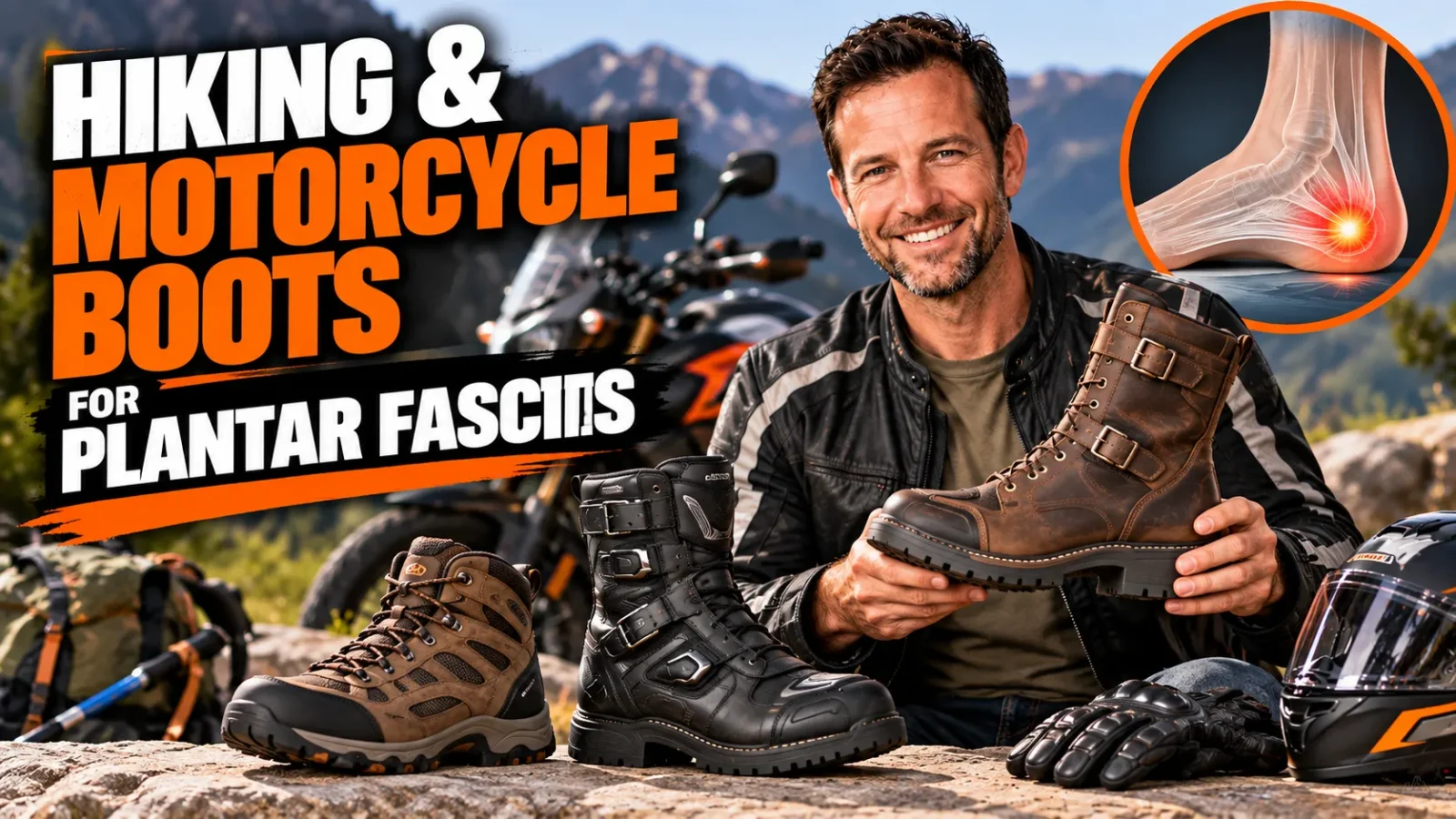
I’ve lived with plantar fasciitis for the better part of six years now, and I’ll be honest with you: it changed how I shop for boots forever. That stabbing heel pain when I step out of bed, or worse, when I’m three miles into a hike or two hours into a ride, isn’t something I wish on anyone.
What I’ve learned through a lot of trial, error, and honestly wasted money, is that not all “supportive” boots are created equal. Some brands slap “orthopedic” on the box and call it a day. Others actually engineer real arch support and heel stabilization into the build.
I put together this list from boots I’ve personally worn on trails, on my bike, or that come so highly recommended by fellow sufferers that I couldn’t leave them out. If you want the deeper mechanics of boot construction first, my Ultimate Guide to Motorcycle Boots is a great primer before you dive into this list.
- My top all-around pick for hiking is the Oboz Bridger B-DRY thanks to its built-in O FIT Insole and rock-solid arch support.
- For riding, the Sidi Adventure 2 Gore-Tex gives me the best blend of a removable footbed, ankle protection, and all-day comfort.
- Removable insoles matter more than brand hype—every boot on this list lets you drop in a custom orthotic if you need one.
- Budget doesn’t have to mean sacrifice—the Merrell Moab 3 Mid proves you can get real support under $130.
- I always recommend breaking any new boot in gradually over 1-2 weeks before a long hike or ride.
What I Look For Before I Even Try a Boot On
Before we get into my picks, I want to walk you through my personal checklist. This is exactly what I evaluate every single time a new pair lands at my door.
A Removable, Contoured Footbed
If the insole doesn’t come out, I don’t buy it. Period. I need the option to swap in my own orthotic, and a fixed footbed means I’m stuck with whatever cushioning the manufacturer decided was “good enough.”
A Firm Heel Counter
This is the structural cup around your heel. A mushy heel counter lets your foot roll inward with every step, which is basically gasoline on the plantar fasciitis fire. I press my thumb into the back of every boot before buying—if it collapses easily, I pass.
Moderate Heel-to-Toe Drop
Completely flat boots (zero-drop) can aggravate an already-inflamed fascia because they stretch the tissue further with each stride. I’ve found a modest 8-12mm drop takes pressure off the arch without feeling clunky.
Torsional Rigidity for Riding
On the motorcycle side, this matters even more. A boot that twists too easily under the ball of your foot doesn’t just hurt—it’s also a safety issue if you’re working a shifter or brake pedal all day. Check out my thoughts on what are the best boots for motorcycle riding for more on this.
1. Oboz Bridger B-DRY — Best Overall Hiking Boot
The Oboz Bridger B-DRY is the boot I reach for on 90% of my hikes, and it’s not close. Oboz builds every pair with their proprietary O FIT Insole, which was actually developed with input from a podiatrist to address exactly this kind of heel and arch pain.
The footbed has a deep heel cup and a firm arch shelf that genuinely cradles your foot instead of just cushioning it. I’ve hiked 12-mile days in these without the usual afternoon flare-up I used to dread.
Construction-wise, you’re getting a nubuck leather upper, a Vibram outsole for grip, and a waterproof B-DRY membrane that’s held up through creek crossings and sudden downpours. They run around $170-$185, which feels fair given how long mine have lasted.
My honest take: if you only buy one hiking boot off this list, make it this one. It’s the gold standard I compare everything else against.
2. Vasque Breeze LT NTX GTX — Best for Long-Distance Trail Support
The Vasque Breeze LT NTX GTX has a slightly stiffer chassis than the Oboz, which I actually appreciate on longer, rockier trails where my foot needs more structure underneath it.
It uses a dual-density EVA midsole—firmer on the medial (inner) side specifically to combat overpronation, which is a huge factor in plantar fasciitis flare-ups. That’s a detail most hiking boots don’t bother with.
The Gore-Tex lining keeps things dry, and the NTX outsole gives solid traction on wet rock. Expect to pay somewhere around $180-$200. It’s pricier, but for anyone doing serious backcountry mileage, I think it’s worth it.
3. Merrell Moab 3 Mid Waterproof — Best Budget Pick
I recommend the Merrell Moab 3 Mid Waterproof to almost every friend who tells me their heel is killing them but doesn’t want to spend $200 to find out if support even helps. At roughly $120-$140, it’s the most accessible boot on this list.
The Moab 3 comes with an EVA midsole and Merrell’s “Kinetic Fit Advanced” removable contoured insole. It’s not quite as structured as the Oboz or Vasque, but for casual day hikes or trail walking, it’s genuinely comfortable right out of the box.
I’ve also swapped in a custom orthotic under mine, and there’s plenty of room in the toe box to accommodate it without feeling cramped. That flexibility is rare at this price point.
4. Keen Targhee III Waterproof Mid — Best Wide-Fit Option
If you’ve got a wider foot, or your plantar fasciitis pain comes with any swelling by the end of the day, the Keen Targhee III has been a lifesaver for me. Keen’s roomier toe box design takes pressure off the front of the foot, which indirectly reduces strain on the arch.
It features a dual-density EVA footbed and a supportive shank in the midsole that prevents the boot from flexing too much under the arch. That rigidity is exactly what an inflamed fascia needs.
Priced around $150-$170, it’s a solid mid-tier choice, and I’ve found the oiled leather upper breaks in fast without needing weeks of wear before it feels right.
5. Danner Mountain 600 Leaf GTX — Best for All-Day Comfort
The Danner Mountain 600 Leaf GTX feels more like a running shoe than a traditional boot, which honestly surprised me the first time I laced them up. That lightweight build doesn’t mean it skimps on support, though.
It uses an OrthoLite footbed—the same technology found in a lot of orthopedic-grade athletic shoes—paired with a TPU shank for torsional stability. My heel pain noticeably eased on multi-day trips wearing these compared to stiffer, heavier boots.
At around $200-$220, it’s on the pricier end, but if comfort-per-mile is your priority over rugged durability, I think it earns its price tag.
6. Sidi Adventure 2 Gore-Tex — Best Motorcycle Boot Overall
Switching gears to motorcycle boots, the Sidi Adventure 2 Gore-Tex is my personal daily rider, and it’s the boot I recommend most when people ask about the best motorcycle boots for plantar fasciitis.
It’s got a genuinely supportive footbed with a deep heel cup, plus a semi-rigid sole that resists twisting when you’re standing on the pegs or working foot controls all day. That rigidity is huge for plantar fasciitis because it stops your arch from collapsing under load.
You also get a replaceable Vibram sole, a Gore-Tex membrane for weatherproofing, and a shifter pad that holds up to serious mileage. Expect to spend $400-$450, which is steep, but this is genuinely adventure-touring-grade gear.
I’ve done 500-mile days in these without the usual burning sensation setting in by hour six. That alone makes them worth the investment for me.
7. TCX Drifter WP — Best Mid-Range Motorcycle Boot
The TCX Drifter WP sits in a nice middle ground—casual enough to walk around town in, but built solidly enough for real riding protection. I keep a pair specifically for shorter commutes where I don’t need the bulk of a full touring boot.
It has a removable, anatomically shaped insole with decent arch definition, plus a TPU heel counter that keeps your foot locked in place. That stability matters when you’re braking hard and your whole foot pressure shifts forward onto the ball of the foot.
Priced around $180-$210, the Drifter WP also has a waterproof membrane and abrasion-resistant suede/textile upper. For riders who split time between hiking-boot-style comfort and moto protection, this one’s hard to beat.
8. Alpinestars Corozal Adventure Drystar — Best for Adventure Riders
If you’re doing serious adventure or dual-sport riding, the Alpinestars Corozal Adventure Drystar is worth every penny. I’ve paired this with custom orthotic insoles for long off-road days, and the extra room in the footbed made it possible without feeling squeezed.
It’s got a supportive nylon midsole shank, a reinforced heel and ankle brace system, and Drystar waterproofing that’s kept my feet dry through genuinely miserable weather. The firm structure through the arch has made a real difference on days when I’m standing on the pegs for hours.
At $270-$300, it’s mid-tier for adventure boots, and I think it hits a sweet spot between protection, comfort, and price. If you’re exploring adventure-specific options further, my guide to the Best Motorcycle Boots for Adventure Riding covers more ground here.
9. Forma Adventure Low — Best Lightweight Motorcycle Boot
The Forma Adventure Low is my pick for riders who want moto protection without the weight and bulk of a full touring boot. I actually recommend this one a lot to newer riders too, since it doesn’t feel intimidating to walk in.
It’s got a removable comfort footbed, a reinforced shank for arch support, and a lower-cut design that still includes ankle protection via internal reinforcements. For plantar fasciitis specifically, the firmer sole plate is what makes the real difference for me.
At roughly $160-$180, it’s one of the more affordable “real” motorcycle boots on this list. If you’re newer to riding gear generally, I’d also point you toward my Best Motorcycle Boots for Beginners roundup for more entry-friendly options.
10. Rev’It! Discovery GTX — Best Premium Touring Boot
I saved the Rev’It! Discovery GTX for last because it’s genuinely the most “orthopedic-feeling” motorcycle boot I’ve tried. It uses a Gore-Tex liner for weatherproofing and a supportive internal ankle brace, but the standout for plantar fasciitis sufferers is the footbed.
Rev’It gave this boot a noticeably contoured arch support built right into the removable insole, so even before adding a custom orthotic, I found meaningful relief compared to flatter touring boots. The sole is also reinforced against twisting, which keeps your foot stable through long days in the saddle.
It runs $380-$420, positioning it as a premium option. But for touring riders logging serious highway miles, I think the comfort payoff justifies the cost.
A Few Extra Things I’ve Learned Along the Way
Break-In Time Isn’t Optional
Even the most supportive boot in the world can aggravate your fascia if you jump straight into a big hike or long ride on day one. I always give a new pair at least a week of shorter walks before trusting it on anything demanding.
Insoles Are Consumable, Not Permanent
Stock insoles compress over time, usually faster than the boot itself wears out. I replace mine every 6-12 months depending on mileage, and it’s honestly cheaper than buying a whole new pair of boots.
Don’t Neglect Maintenance
Leather that dries out and stiffens unevenly can create new pressure points against an already sensitive foot. I clean and condition mine regularly, and if you need a refresher, my guide on how to clean motorcycle boots walks through the exact process I use.
Socks Matter More Than People Think
I pair every boot on this list with a compression-style hiking or moto sock. It reduces micro-movement inside the boot, which in turn reduces the friction and shifting that can aggravate the fascia over a long day.
My Final Thoughts
Living with plantar fasciitis doesn’t mean giving up hiking or riding—it just means being a lot more deliberate about what goes on your feet. Every boot on this list has earned its spot through actual miles, not marketing copy.
If I had to boil it down: the Oboz Bridger B-DRY is my go-to on the trail, and the Sidi Adventure 2 Gore-Tex is what I reach for on the bike. Start there, and adjust based on your budget and how much support your specific foot needs.
Whatever you choose, don’t rush the break-in period, and don’t be afraid to drop a custom orthotic into any of these—every single one leaves you room to do it.
Frequently Asked Questions
What makes a boot good for plantar fasciitis?
The best boots combine a supportive, contoured footbed (ideally removable so you can swap in orthotics), a firm heel counter to stop excess pronation, a slightly elevated heel-to-toe drop, and a stiff-enough midsole that doesn’t let your arch collapse with every step. I look for these four traits in every boot I recommend, whether it’s for hiking or riding.
Can I put custom orthotic inserts into motorcycle boots?
Yes, but only if the stock insole is removable. Boots like the best motorcycle boots for plantar fasciitis models I mention here all have pull-out footbeds, which gives you room to drop in a rigid orthotic without cramming your foot into a too-tight shell.
Are hiking boots or motorcycle-specific boots better for plantar fasciitis relief?
It depends on your riding style. Motorcycle boots offer ankle protection and abrasion resistance you need on a bike, while hiking boots often have more advanced orthopedic cushioning technology. I actually rotate between both depending on whether I’m commuting or adventure riding.
How long do supportive boots last before the cushioning breaks down?
In my experience, most EVA midsoles start losing meaningful support after 500-800 miles of walking or roughly a year of regular riding use. If your heel pain suddenly returns after months of relief, it’s usually a sign the midsole has compressed and it’s time for a replacement or a fresh insole.

Related Articles

9 Best Cowboy Boots for Motorcycle Riding You Can Actually Ride and Walk In
I break down the 9 best cowboy boots for motorcycle riding, covering heel height, shifter wear, ankle support, and comfort…
Jake Miller
11 min read

9 Best Motorcycle Boots for Hiking That Actually Work Off the Bike
I tested and researched the top hybrid motorcycle boots for hiking. Here are 9 real picks that protect on the…
Jake Miller
11 min read

9 Best Non-Motorcycle Boots for Cruisers That Still Ride Right
Not into moto-specific boots? I break down 9 real, non-motorcycle boots that hold up on cruisers—tough leather, good grip, and…
Jake Miller
13 min read