
8 Best Cooling Vests for Motorcycle Riders, Tested Through Brutal Summer Heat
 Jake Miller
11 min read
Jake Miller
11 min read
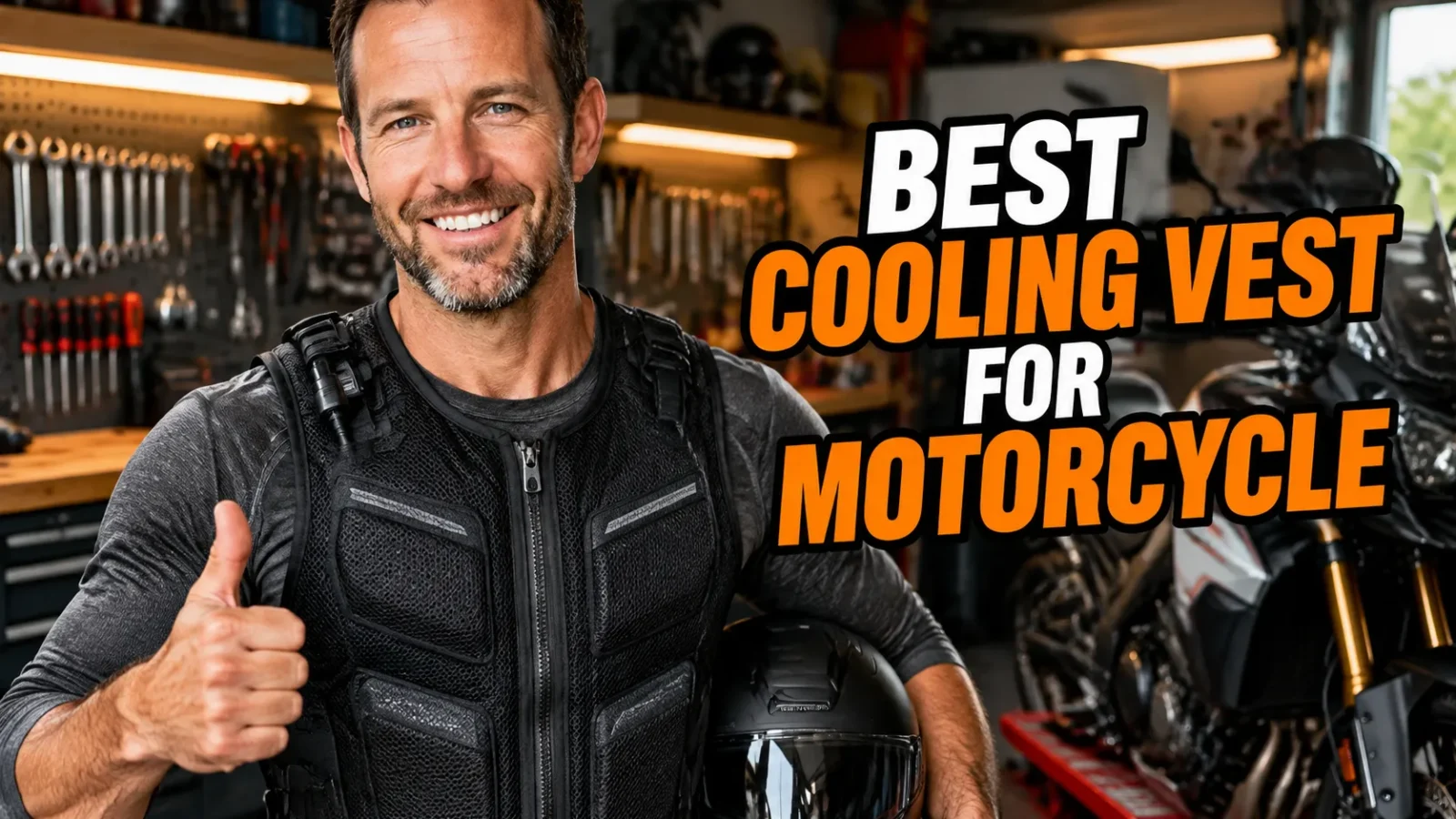
I have ridden through four straight summers in the Southwest, and I have made every dumb mistake a hot-weather rider can make. I have worn a black leather jacket in 108°F traffic, I have tried stuffing frozen water bottles down my shirt, and I have absolutely cooked myself on a 400-mile day across Nevada. Eventually I figured out the one piece of gear that actually changes the equation, and it is not another vented jacket. It is a cooling vest.
If you are building out your hot-weather setup from scratch, my broader Ultimate Guide to Motorcycle Jackets covers how airflow, materials, and venting all work together. But this article is narrower: I am going to walk you through the eight cooling vests I would actually spend my own money on, and explain exactly who each one is for.
- Evaporative vests (HyperKewl, Chill-Its, MiraCool) are cheap, light, and brilliant in dry heat, but they weaken as humidity climbs.
- Phase change vests (Glacier Tek, Polar Products, Inuteq) work in any climate and are my pick for humid regions and stop-and-go traffic.
- Active ice water systems (Veskimo) are the nuclear option for extreme heat and long-distance touring, but they cost more and weigh more.
- None of these replace CE rated armor. A cooling vest is a comfort layer you wear with a proper riding jacket.
- Fit matters as much as the vest itself. Too bulky and you block your own airflow, which defeats the whole point.
1. TechNiche HyperKewl Plus Evaporative Cooling Vest
If someone asks me for one cooling vest recommendation and nothing else, this is the one I hand them. The HyperKewl Plus from TechNiche is the benchmark evaporative vest in this category, and I have used mine on everything from 20-minute commutes to full-day desert rides.
How It Actually Works
You soak the vest in water for about two minutes, wring it out, and put it on. The quilted inner core holds the water and releases it slowly as air passes over the fabric, which pulls heat off your torso. In dry Arizona heat I have gotten a solid six to eight hours of genuinely useful cooling out of a single soak.
The outer shell is a light nylon with a zip front, and it fits close to the body without feeling clammy. It is not armor, obviously. It is a layer you wear over a t-shirt and under a vented or mesh jacket.
The Honest Downsides
In humid air, this vest gets noticeably weaker. Evaporative cooling depends on dry air, so if you live in the Southeast, expect maybe half the performance I get in the desert. It also adds bulk, so check your jacket sizing before you commit.
Price is usually in the $65 to $90 range, which makes it one of the best value picks in the whole category.
2. Ergodyne Chill-Its 6665 Evaporative Cooling Vest
The Chill-Its 6665 is what I recommend when someone wants to try this whole concept for the price of a tank of gas. Ergodyne builds this for industrial workers, and that shows in the construction: simple, tough, and cheap.
Why It Earns a Spot
It uses a PVA inner layer that you activate by soaking, and it holds water well enough for a full commute. There is a full-length zipper, a couple of pockets, and a high-visibility colorway option that I actually like for visibility in traffic. Expect to pay somewhere around $45 to $60.
If you want a step up from this one, Ergodyne also makes the Chill-Its 6215 Premium Phase Change vest, which uses rechargeable packs instead of water. That is a bigger investment, but it works in humidity.
Who It Is For
Short commutes, dry climates, and riders who are not sure they will like a cooling vest at all. It is also a great spare to keep in a saddlebag for passengers.
One thing worth saying clearly: comfort gear does not change what happens in a crash. If you want to understand how protection is actually graded, read up on motorcycle jacket safety ratings explained. Your cooling vest does zero of that work.
3. Glacier Tek Cool Vest
This is the vest I reach for when humidity kills the evaporative option. Glacier Tek uses phase change material packs that absorb heat at a fixed temperature rather than relying on evaporation, which means it keeps working in a Georgia summer just as well as a Nevada one.
The Real-World Performance
You get roughly two to three hours per set of packs, and they recharge in ice water in about 20 to 30 minutes. That recharge speed is the part I appreciate most, because I can swap packs at a fuel stop and be back to full cooling before my coffee is finished.
The vest itself is a fitted shell with dedicated pack pockets front and back, and it is built to a much higher standard than the cheap evaporative options. Pricing generally lands between $200 and $350 depending on configuration.
The Catch
It is heavier and bulkier than a soaked HyperKewl, and it costs several times more. In really dry heat, I honestly prefer the evaporative route because it is lighter and cheaper. But if you ride in humidity or you are stuck in slow traffic where airflow is minimal, phase change is the smarter buy.
4. Polar Products Kool Max Cooling Vest
Polar Products has been making body cooling gear for industrial, medical, and military users for decades, and the Kool Max line is their workhorse. What I like here is the modularity: you can order different pack configurations and choose how much cooling you carry.
What Makes It Different
The Kool Max packs are designed to stay at a comfortable, non-shockingly-cold temperature, which matters on a motorcycle. Packs that are too cold against your chest for two hours are genuinely unpleasant, and Polar Products gets that balance right.
It is a zip-front vest with adjustable straps and clearly labeled pack pockets. Prices usually run from about $180 to $300 depending on how many packs you order.
Who Should Buy It
Riders who want phase change performance but prefer to tune exactly how much bulk and cooling they carry. If you want the maximum pack count for a long tour, this is a strong option.
5. Veskimo Personal Cooling System
This is the extreme end of the spectrum, and I want to be upfront: it is not for everyone. The Veskimo system uses a small backpack reservoir full of ice water and a battery-powered pump that circulates chilled water through a vest worn under your jacket.
How It Feels on the Road
It feels like air conditioning. That is genuinely the closest description I can give. On a 115°F day crossing the Mojave, this is the only thing I have used that made the heat feel irrelevant rather than merely survivable.
Runtime is roughly two to three hours per fill, and you refill the reservoir with ice and water at stops. Expect to pay somewhere in the $400 to $500 range for the full system.
The Trade-Offs
It is heavy, it is expensive, and you are now carrying a pump and a water reservoir on your back. On a sportbike with a forward lean, that weight is noticeable. On a touring bike, it is barely a consideration.
Also, because the vest goes under your jacket, you need a jacket with enough room to accommodate an extra layer. My motorcycle jacket fitting guide covers how to size for that without ending up with a flapping parachute.
6. Inuteq Bodycool Cool Over Vest
Inuteq is a Dutch company that supplies cooling technology to motorsport teams, and the Bodycool line is their rider-facing product. It uses phase change packs and is designed to be worn over a base layer, which is exactly how I want a cooling layer to sit on a bike.
Why Motorsport Riders Like It
The fit is athletic and slim, so it does not balloon under a jacket. The packs are thin and distributed across the torso rather than lumped in one block, which keeps your movement natural when you are shifting weight through corners.
Because it is phase change rather than evaporative, humidity is a non-issue. It is also one of the few cooling vests I have used that feels like it was designed by people who actually ride.
Availability and Price
It is easier to find in Europe than in the US, and pricing generally starts around the €200 mark. If you are in North America, you may need to order internationally or look for a distributor.
7. FlexiFreeze Cooling Vest
FlexiFreeze takes the simplest possible approach: removable panels of pure frozen water that slide into pockets in the vest. No pumps, no phase change chemistry, no soaking. You freeze the panels, you insert them, you ride.
The Upside
It is remarkably effective in extreme dry heat and it is dead simple to understand. You get roughly two to three hours per set of panels, and you can carry a spare set in a cooler if you are touring.
Pricing tends to sit around $90 to $130, which makes it a reasonable middle ground between the cheap evaporative vests and the premium phase change options.
The Downside
It is the bulkiest option on this list by a wide margin. The panels are rigid when frozen, and they do not conform to your body the way PCM packs do. Under a snug jacket, that rigidity is noticeable.
This is also the vest I would least want to crash in if I were wearing it as an outer layer, so keep it under a proper jacket. If you are weighing up jacket materials for hot weather, my breakdown of Leather vs. Textile Jackets: Which is Right for You? is a good companion read.
8. OccuNomix MiraCool Deluxe Cooling Vest
This is the cheapest thing on my list, and I am including it because sometimes cheap is exactly right. The MiraCool vest uses polymer crystals woven into the fabric that swell up when you soak the vest, holding water for hours of slow evaporation.
What You Get for the Money
Usually somewhere between $25 and $40. It is light, it packs down small, and it works well enough for a 30-minute commute in dry heat. I keep one rolled up in my top case as a backup for passengers or for days when I forget to re-soak my main vest.
It is not as durable as the HyperKewl, and the fit is more sack-like than athletic. But at this price, I am not going to complain.
Who It Is For
Budget-conscious commuters, riders in dry climates, and anyone who wants a spare without spending real money.
How I Choose Between Them
Here is the shortcut I use. If the air is dry and I am moving, I grab an evaporative vest, because it is lighter, cheaper, and the airflow does the work for me. HyperKewl Plus is my default, with the MiraCool or Chill-Its as the budget version.
If the air is humid, or if I know I will be sitting in traffic with almost no airflow, I go phase change. Glacier Tek, Polar Products, and Inuteq all do the job, and the extra weight is worth it when evaporation simply is not happening.
And if the forecast is genuinely dangerous, I go active. Veskimo is the only thing I have found that makes a 115°F desert crossing feel like a normal ride.
One Last Safety Note
Every vest on this list is a comfort product. None of them protect you. You still need a jacket with proper armor, and you should understand what those ratings actually mean before you trust them.
Start with Understanding Safety Ratings: What is “CE” for the basics, then go deeper with CE Rating Explained so you know the difference between a real Level 2 back protector and a foam pad with a sticker on it.
Cooling vests keep you sharp, and a sharp rider is a safer rider. But they are a comfort layer, not a shield. Get both right and your summer riding gets dramatically better.
Frequently Asked Questions
Do cooling vests actually work while riding a motorcycle?
Yes, but only if you match the type to your climate. Evaporative vests work brilliantly in dry desert heat but fade fast in humid air, while phase change (PCM) vests and ice water systems keep working regardless of humidity. The catch is that they need airflow, so they perform best under a mesh or vented jacket rather than a solid leather one.
Can I wear a cooling vest underneath my motorcycle jacket?
In most cases, yes. A soaked evaporative vest adds roughly 1 to 2 inches of bulk, so you may need to size up your jacket or loosen the waist and arm adjusters. Check my motorcycle jacket fitting guide before you buy anything new.
How long does a motorcycle cooling vest stay cold?
Evaporative vests soaked in water typically deliver 5 to 10 hours of cooling depending on humidity, wind, and how wet you keep them. Phase change vests run about 2 to 3 hours per set of packs and recharge in ice water in 20 to 30 minutes. Ice water circulating systems last 2 to 3 hours per reservoir fill.
Is a cooling vest a replacement for proper motorcycle armor?
Absolutely not. A cooling vest is a comfort layer, not a protective one. You still need a proper riding jacket with CE rated armor underneath or over it. If you are unsure what those ratings mean, start with Understanding Safety Ratings: What is CE.

Related Articles

7 Best Hoodies for Motorcycle Riding: Real Gear I Actually Wear on Two Wheels
I tested the best hoodies for motorcycle riding, from Kevlar-lined stealth options to armored commuter picks. Here's what actually protects…
Jake Miller
8 min read
9 Best Vests for Motorcycle Riding: Real-World Picks I Actually Wear
I've ridden thousands of miles in motorcycle vests. Here are 9 real, tested picks — from armored leather to hi-vis…
Jake Miller
11 min read
8 Best Heated Vests for Motorcycle Riding: Wired and Battery Picks for Cold Commutes
I've ridden through freezing winter commutes with eight heated vests. Here's which 12V wired and battery powered heated vests actually…
Jake Miller
11 min read