
Why Your Bike Buzzes at Speed: A Rider’s Guide to Killing Motorcycle Vibration
 Jake Miller
11 min read
Jake Miller
11 min read
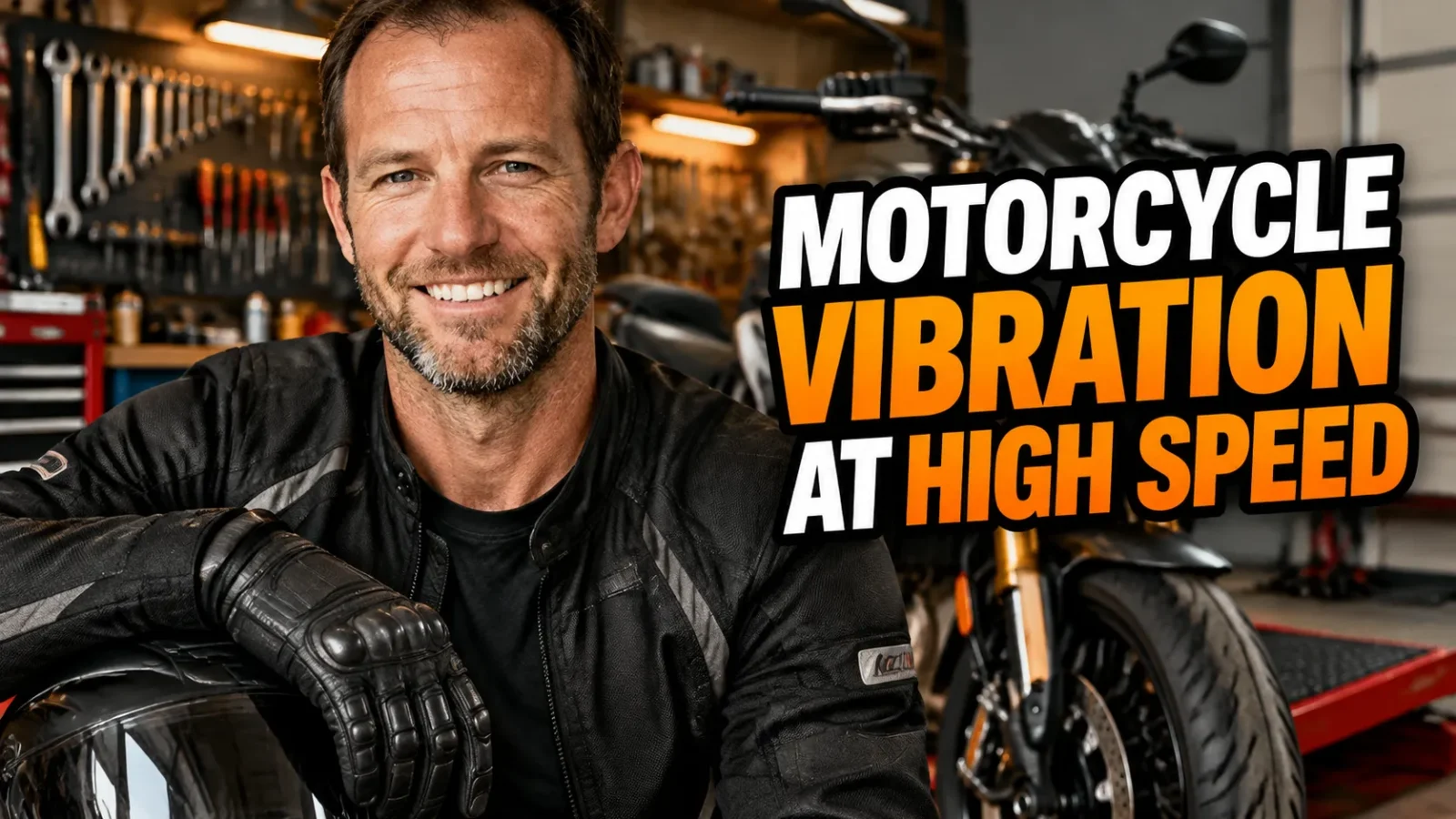
I still remember the first time it happened to me. I was cruising down a stretch of highway on my old twin, sitting right around 75 mph, when my hands started to go numb. Not cold, not tired. Numb. The kind of tingle that creeps up from your fingertips and settles into your wrists like static electricity.
I pulled over at the next exit, convinced something was about to fall off my bike. Nothing was loose. Nothing was broken. The vibration was just there, humming through the frame like a bad habit.
That day kicked off a two-year obsession with tracking down motorcycle vibration at high speed. I’ve since torn apart wheels, swapped bar ends, re-torqued engine mounts, and spent a genuinely embarrassing amount of money on seats. Some of it worked. Some of it was a waste. This is everything I learned, written for the rider who’s currently staring at their bars wondering if this is just how bikes are supposed to feel.
Spoiler: it isn’t. And before you touch a single bolt, the single biggest quality-of-life upgrade I made was swapping out my stock perch for the Best Motorcycle Seat. It didn’t fix the vibration, but it stopped the vibration from reaching my spine, and that changed everything about how long I could ride.
- Most high speed vibration comes from wheel balance, tire wear, or engine mounts, not from the engine itself.
- Handlebar buzz and footpeg tingle are usually resonance problems, and resonance can be tuned out.
- A seat swap is the fastest way to stop vibration from wrecking your body on long rides.
- If the vibration appeared suddenly, stop and inspect before you ride another mile.
- Cheap fixes first: balance, torque, grips. Expensive fixes last.
First, Let’s Separate the Two Kinds of Vibration
I wasted months chasing the wrong problem because I didn’t understand this distinction. There are two completely different things happening on a vibrating bike, and they need completely different fixes.
The first is mechanical vibration. Something is physically out of balance or out of spec. A wheel weight flew off. A tire is cupping. An engine mount bolt backed out. This kind of vibration is a symptom of a real fault, and it usually gets worse the faster you go.
The second is resonant vibration. Your engine produces a frequency at a specific RPM, and at a specific speed that frequency matches the natural frequency of your frame, bars, or pegs. When those two frequencies line up, the vibration amplifies dramatically. It’s not a fault. It’s physics.
Here’s why this matters: if you have a resonance problem and you start replacing engine parts, you’ll spend a fortune and fix nothing. If you have a mechanical problem and you start adding bar end weights, you’ll mask a symptom that could eventually hurt you.
How I Tell Them Apart in About Five Minutes
I use a simple test now. I find the exact speed where the vibration peaks, then I accelerate through it and see if it fades.
If the vibration peaks at one narrow speed range and smooths out above and below it, that’s resonance. If it keeps getting worse the faster I go, that’s mechanical. If it’s present at idle and scales with RPM regardless of speed, that’s engine character.
That one test has saved me from buying so many unnecessary parts. Try it before you spend a dime.
My Checklist for Tracking Down High Speed Vibration
I work through this in order now, cheapest and most likely first. Every single time. I’ve learned the hard way that jumping to the exotic fixes first just empties your wallet.
1. Tires and Wheel Balance
This is where I start, and honestly, this is where the answer lives about 60 percent of the time in my experience. A tire that feels perfect around town can shake your teeth loose at 80 mph, because imbalance gets more violent with speed.
I check for missing wheel weights first. Then I look for cupping or flat spots on the tread. Then I check tire pressure, because a tire that’s a few PSI off will wear unevenly and start vibrating at speed.
If the tire is worn or the balance is off, I get it rebalanced. It’s cheap, it’s fast, and it resolves more high speed vibration complaints than any other single fix.
2. Wheel Bearings and Steering Head
Grab your front wheel with the bike on a stand and try to rock it side to side. Any play at all means worn wheel bearings. I’ve caught this on a used bike I bought, and the vibration it caused felt exactly like an out-of-balance tire.
While you’re there, check the steering head bearings. A loose steering head will let the front end shimmy at speed, and that shimmy reads as vibration through the bars.
3. Engine Mounts and Fasteners
This is the one people forget. Your engine mounts are literally designed to isolate vibration from the frame. When they wear out or a bolt backs off, the engine starts transmitting everything directly into the chassis.
I go around the bike with a torque wrench once a season now. Engine mounts, exhaust hangers, footpeg brackets, subframe bolts. It takes twenty minutes and it has caught two loose mounts that would have become real problems.
4. Chain and Sprockets
A worn or unevenly stretched chain creates a rhythmic vibration that gets more noticeable the faster you go. I check for tight spots by rotating the wheel and feeling for variation in chain tension.
If the chain has a tight spot, no amount of adjusting will fix it. It’s stretched unevenly and it needs replacing. I’ve made the mistake of trying to ride out a bad chain. Don’t do that.
5. Fuel Delivery and Throttle Bodies
This one surprised me. A bike running slightly lean or with throttle bodies out of sync will vibrate more than it should, especially at higher RPM. It’s not a mechanical imbalance, it’s an engine running rough.
If your vibration comes with a slight surge or hesitation, get the fueling checked. A throttle body sync on my old twin smoothed out a buzz I’d been blaming on the bars for months.
When the Vibration Is Just Resonance
If you’ve worked through the checklist and everything checks out, congratulations. You have a resonance problem, and resonance is actually easier to fix because you’re not chasing a fault. You’re just changing the frequency at which things shake.
I think of it like tuning a guitar. You’re not fixing a broken string. You’re changing the tension so it stops vibrating at the frequency that bothers you.
Handlebar Buzz: My Favorite Fixes
Handlebar buzz is the most common complaint I hear, and it’s the one I’ve spent the most time on. Numb fingers ruin a ride faster than almost anything else.
Heavier bar end weights are the classic answer, and they do work, but only up to a point. What they actually do is shift the resonant frequency lower, which can move the buzz out of your cruising range. That’s a win, but it’s not a cure.
What worked better for me was combining three things: heavier bar ends, softer and thicker grips, and a proper throttle body sync. Together, those three changes took my bars from “numb hands in thirty minutes” to “comfortable all day.”
I also experimented with filling my bars with lead shot. It works, and it’s cheap, but it’s messy and permanent. I’d try grips and bar ends first.
Footpeg and Floorboard Tingle
Footpeg vibration is a different beast because your feet are directly connected to the frame. I’ve found that rubber-mounted pegs make a huge difference, and if your bike came with solid-mounted pegs, swapping to rubber-mounted ones is one of the best comfort upgrades you can make.
For touring riders, floorboards with rubber isolation are the way to go. The difference on a long day is not subtle.
Seat Vibration: The Fix Nobody Talks About Enough
Here’s the thing I wish someone had told me years ago. You can spend months chasing the source of the vibration, or you can accept that some vibration is inherent to your bike and focus on isolating yourself from it. The second approach is faster, cheaper, and honestly more effective.
Your seat is the single largest contact point between you and the bike. A stock seat with thin foam transmits everything straight into your spine. A well-designed seat with the right foam density and a gel or damping layer acts as a shock absorber for vibration.
After my seat swap, my perception of the vibration on my bike changed completely. The bike still buzzed. My body stopped caring.
If you’re tall and struggling to find a perch that also damps vibration, I’d point you toward the Best Motorcycle Seat for Tall Riders, because geometry and damping have to work together. Tall riders who end up with a seat that’s too low end up gripping the bars harder, and gripping harder makes vibration feel worse.
Short riders have the mirror-image problem. If you’re stretching to reach the ground or the bars, you’re tense, and tension amplifies every buzz. The Best Motorcycle Seat for Short Riders solves the reach problem, which lets you relax your grip, which makes the vibration fade into the background.
Model-Specific Notes From My Own Garage
Vibration is often model-specific, because every frame has its own resonant frequency. I’ve spent time on a few bikes that are notorious for this, and here’s what I found.
On my Harley touring bike, the vibration was never really about the engine. It was about the seat and the floorboards. Once I fitted the best motorcycle seat for harley touring and swapped to rubber-isolated floorboards, the bike went from “buzzy at 70” to “smooth all day.” The engine didn’t change at all.
Sportsters are a different story. They’re rigid-mounted, so vibration is part of the character. You’re not going to eliminate it. What you can do is manage it, and the biggest lever is the seat. The Best Seat for Harley Sportster made my Sportster genuinely rideable on longer trips, and I stopped dreading highway stretches.
On my KLX250, the vibration was mostly a function of the single-cylinder engine and the lightweight frame. There’s no magic fix, but I found that the right foam density made a real difference on long dual-sport days. If you ride one of these, the best motorcycle seats for kawasaki klx250 options are worth looking at, because the stock perch is genuinely punishing on a long ride.
When Vibration Is Actually a Warning Sign
I want to be clear about this, because I’ve seen riders ignore a real problem because they assumed it was just “character.”
Stop riding and inspect your bike if the vibration appeared suddenly, if it’s getting worse over a short period, if it comes with a wobble or a weave, or if it’s accompanied by any new noise. Those are not resonance symptoms. Those are mechanical faults, and some of them can put you on the ground.
I once ignored a subtle new vibration for a week because I assumed it was just my tires. It turned out to be a failing wheel bearing. I got lucky. Don’t rely on luck.
My Bottom Line After Years of Chasing This
Here’s what I’d tell a friend who asked me about motorcycle vibration at high speed tomorrow.
Start with tires and balance, because that’s the answer most of the time and it costs almost nothing to check. Then torque everything. Then, if the vibration is still there and everything checks out, accept that you’re dealing with resonance and start tuning it out rather than hunting for a fault that doesn’t exist.
And do yourself a favor: upgrade your seat early. I spent way too long treating my seat as a comfort item when it’s actually a vibration control device. The right seat doesn’t stop the buzz, but it stops the buzz from reaching your body, and that’s the whole game.
Ride smooth, and if your hands go numb, don’t just grip tighter. That’s the one thing I know for certain makes everything worse.
Frequently Asked Questions
What is the most common cause of motorcycle vibration at high speed?
In my experience, wheel balance and tire wear are the usual suspects. A tire that was fine at 40 mph can shake violently at 80 mph once a wheel weight flies off or a belt shifts inside the casing.
Can a new seat really reduce vibration?
Yes, but not the way you think. A seat does not cancel engine vibration, it isolates it. The right foam density and gel layer act as a damper between the frame and your body, which is why the best motorcycle seat can transform a buzzy bike.
Should I use heavier bar end weights to stop handlebar buzz?
Heavier bar ends help, but they mostly shift the frequency at which the bars resonate. I have had better luck combining them with softer grips and a proper throttle body sync.
Is high speed vibration dangerous?
It can be. Numb hands and feet slow your reaction time, and a genuine wheel or chassis issue can escalate into a wobble. If the vibration appeared suddenly, stop and inspect the bike before riding on.

Related Articles

Rusty Bolt Rescue: How I Remove Rust from Motorcycle Bolts Without Snapping Them
Rusty motorcycle bolts? Here's how I remove rust from motorcycle bolts safely, from penetrating oil soaks to vinegar baths, plus…
Jake Miller
11 min read

How to Properly Tie Down a Motorcycle: A Rider’s Field Guide to Straps, Anchors, and Zero Regrets
Learn how to properly tie down a motorcycle from a rider who has done it hundreds of times. Straps, anchor…
Jake Miller
10 min read

Basic Motorcycle Maintenance: My Honest Daily, Weekly, and Monthly Routine
I've spent years wrenching in my own garage. Here's my honest, no-nonsense guide to basic motorcycle maintenance, from daily checks…
Jake Miller
8 min read